

Input tax: claiming tax rebates through tax deduction

It can be difficult for entrepreneurs to keep a clear view of things when it comes to bookkeeping and taxes. To break it down, every business is subject to sales tax, which means that you are obligated to pay taxes on your annual income. However, you also have the right to claim input tax deductions. Ultimately, this means that you don’t have to pay every penny of sales tax; consumers can alleviate some of the burden.
The terms ‘input tax’, ‘corporate tax’, and ‘sales tax’ often cause a great deal of confusion, as they are often used in tandem or even interchangeably. But what exactly are these concepts? How do you calculate input tax and what should you keep in mind when making a claim? Read on for an explanation of how the input tax process works.
Output tax: definitions
Output VAT is regarded as the value 1108 added tax that is calculated and charged on the sale of goods and services from your business, if you are VAT-registered. This must be calculated on sales to other businesses and to consumers. VAT paid on sales between two businesses must also be specified in a sales document.
Input tax
Input VAT is the value added tax that is added to the price when you purchase goods or services that are liable to VAT. If the buyer is VAT-registered, the buyer can deduct the amount of VAT paid from their settlement with the tax authorities.
Profit from claiming VAT
As an entrepreneur, you usually need to purchase goods, raw materials, and/or make use of services. These trading expenses might include the purchase of wares and commissioned repairs. For these kinds of expenses, VAT is paid at the normal rate (20% at the standard rate and as low as 5% at the reduced rate. There is also a 0% rated allowance for certain goods and services, e.g. most food and children’s clothes.)
By doing this, you are making a refundable input tax payment but without claiming a profit.
However, the additional money spent on input tax does not go on to benefit the business who sold the goods or services. The company must then transfer the amount to the tax office at the end of the tax year. HM Revenue and Customs then claims this as corporation tax.
This method ensures that consumers – not companies – ultimately pay via the VAT added to products or services. The tax burden, therefore, has no influence over a company’s profits or losses.
Input tax may only be deducted from operating expenses that are deductible. To this end, operating expenses must be recognised as necessary expenses for operational purposes. Non-deductible expenses include, for example, household and lifestyle expenses, gifts, income tax and other personal taxes, fines, legal fees, and other criminal charges.
How to calculate input tax: an example
A carpenter in Manchester needs materials in order to construct a garden shed, so she buys the raw materials from Company X. They sell her wooden panels with a total value of £1000. With the additional sales tax of 20% (the average in Maine), the selling price becomes £1200 gross. If the carpenter purchases the product at the named price, Company X owes Revenue and Customs the £200 of sales tax. Company X does not make a loss because the amount was paid by the consumer during the initial transaction process; the carpenter essentially paid the input tax.
The carpenter can now complete her shed with the parts she has acquired. The shed has a value of £2000, and with the added sales tax of 20%, the selling price has become £2400 gross. When the shed is sold, the customer pays the £400 VAT. The carpenter is then refunded the original £200 so that she no longer carries the cost of the input tax of the raw materials. All this simply means that ultimately, the carpenter only pays £200 of sales tax, rather than £400.
A VAT refund situation occurs when the input tax is higher than the output tax for a certain period. At the end of the tax year, you will either be refunded or need to pay the difference.
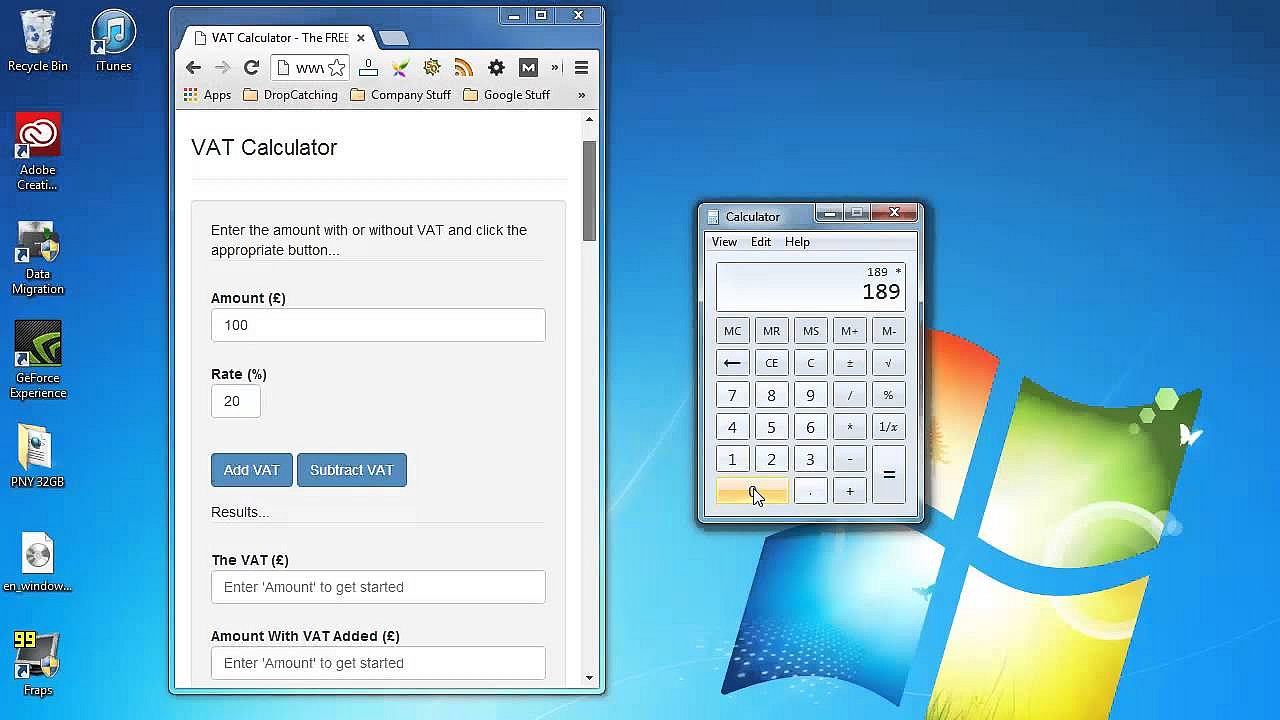
For another detailed explanation of how to calculate input tax, check out the example given in this video:
 To display this video, third-party cookies are required. You can access and change your cookie settings here.
 How do you claim sales VAT?
To claim a refund on VAT, you first need to submit a VAT Return to HM Revenue and Customs (HMRC) every 3 months. This period is known as your ‘accounting period’. The VAT Return records figures for the accounting period such as:
- your total sales and purchases,
- the amount of VAT you owe,
- the amount of VAT you can reclaim,
- and what your VAT refund from HMRC amounts to.
Important: You must submit a VAT Return even if you have no VAT to pay or reclaim. As a business, you should have all of your receipts, statements, and invoices archived as part of your bookkeeping measures. If you are eligible to claim deductions, you must gather these receipts and calculate the amount of VAT that you have paid during the year. To submit your return, you need to apply for a VAT number and create an online account at HM Revenue and Customs.
More types of deductible taxes and expenses
The majority of items purchased by business owners are deductible as long as they explicitly contribute towards operations and expenses. Although claims are valid for business activities, it is permitted for these expenses to also have a personal use. However, claiming expenses for purchases that are purely for personal use is strictly prohibited. You must keep records to support your claim and show the VAT was paid.
Exceptions
The following expenses do not qualify for VAT claims:
- Entertainment expenses
- Purchases bought using the VAT Flat Rate Scheme (except some capital assets worth more than £2,000)
There are also special rules for working out how to reclaim VAT for:
- Cars (i.e. buying, repairing, fuel costs)
- Staff travel expenses (i.e. accommodation and transport expenses)
- Businesses that are partly exempt from VAT.