

What is the CSAT (Customer Satisfaction Score)?

In the past, many companies mostly concentrated on product quality. What they didn’t know then was that customer satisfaction does not only depend on this but also other stages of the customer journey. This includes, for example, the initial consultation, the ordering processes and the customer service. Various studies have shown that a smooth buying experience can increase the overall satisfaction and loyalty of customers and can therefore result in them spending more money on the company’s offers in the long run.
This knowledge is becoming increasingly more important for entrepreneurs who are focusing their marketing efforts more on the needs of their customers. However, as a highly subjective target, satisfaction is harder to measure than other conventional KPIs (Key Performance Indicator) such as impressions or clicks. There are now several models that can be used to measure customer satisfaction: one of the most popular models is the Customer Satisfaction Score (CSAT). In the following, you will find out what exactly it’s all about, how it’s measured, and how you can best use it to gain reliable information on the satisfaction of your customers.
Definition: Customer Satisfaction Score
The Customer Satisfaction Score is a value used to measure customer satisfaction in relation to a company or corporate performance. It is of particular interest to businesses that have regular direct contact with their customers - for example, if your business is involved in social media and also offers support via direct messaging. Additionally, the CSAT is suitable for evaluating call centres that have to handle a large number of customer inquiries and are therefore often operated by external service providers.
How can the Customer Satisfaction Score be measured?
The Customer Satisfaction Score is measured by a survey that often consists of a single question, but occasionally more. This question can be something along the lines of:
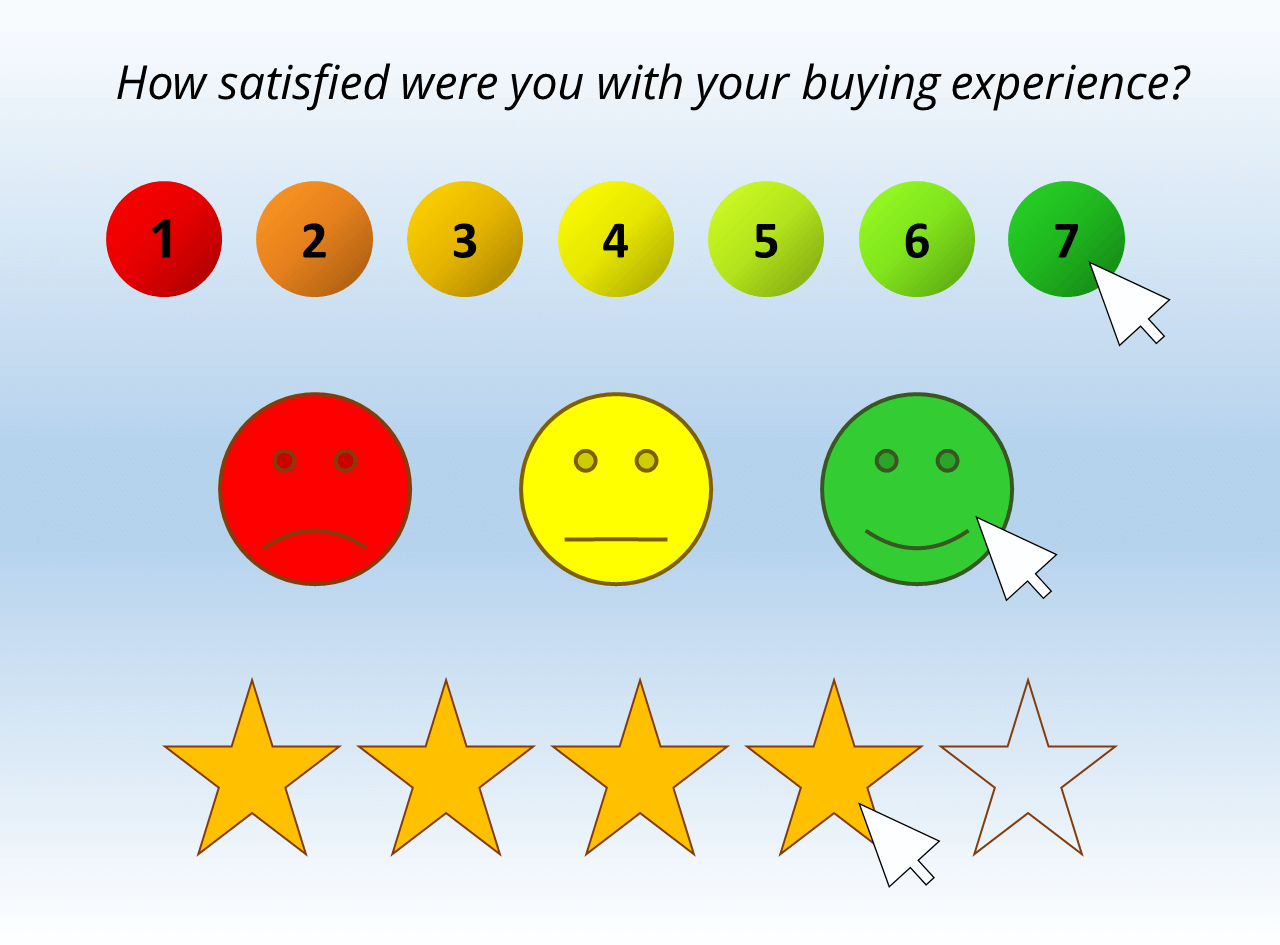
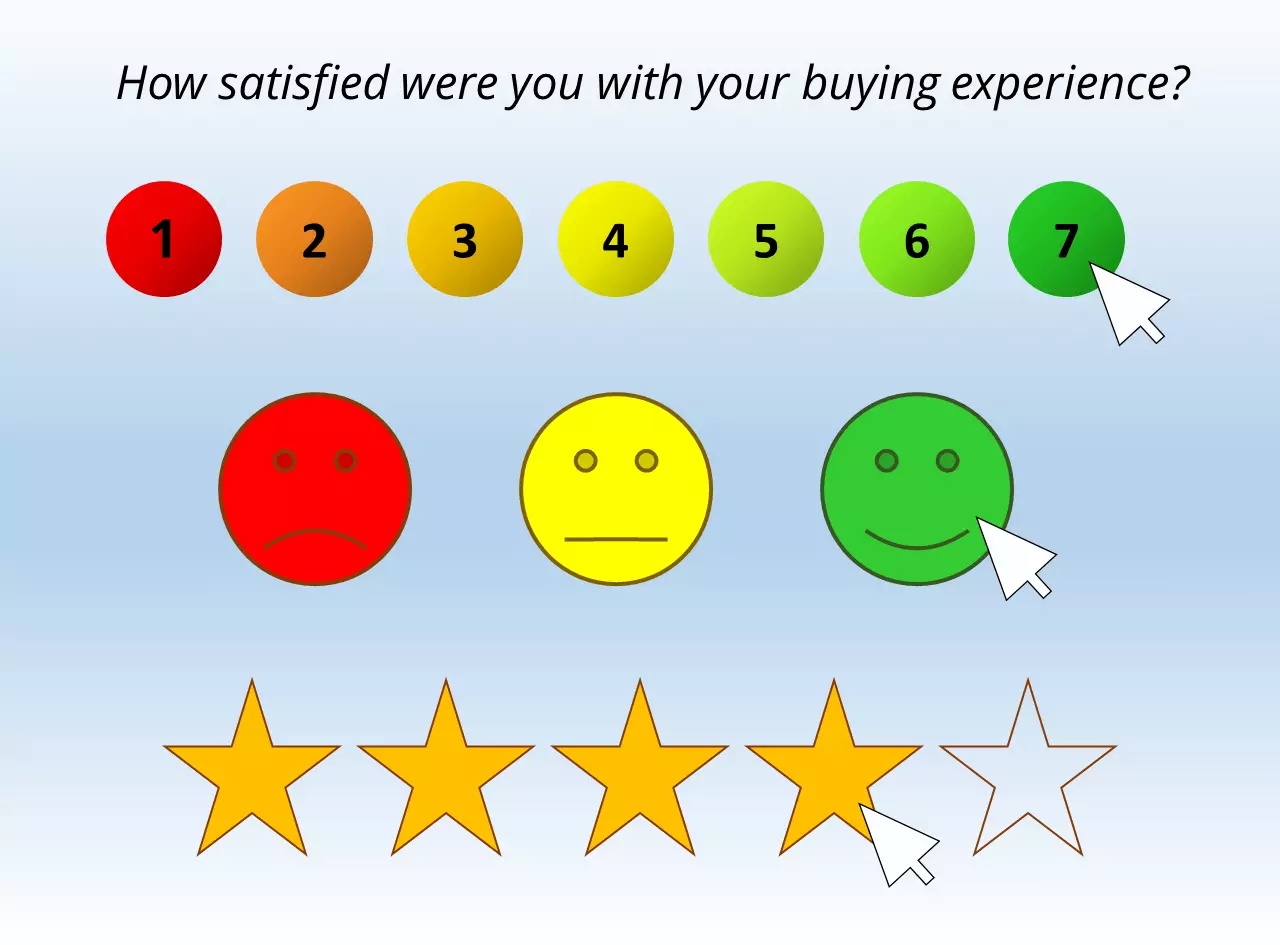
“How satisfied were you with your buying experience?”
The customer is given the opportunity to answer this question with the means of a scale. They can usually choose between the values of 1 to 3 or 1 to 5, and in some cases from 1 to 10.
Larger scales are not always the better choice. For example, psychology studies have found that people from countries with a high value of individualism (for example, the US) often rate products and services as superlatives like “fantastic” or “awful”. In contrast, people from countries with more collective values (such as China) tend to make milder judgements such as “good” or “insufficient”. Such cultural biases can result in false survey results. This is why smaller scales reflect the mood of a variety of international customers much better, which is why some companies prefer a system with coloured emojis: green stands for satisfied, yellow for neutral, and red for dissatisfied.
Common challenges of the CSAT survey
There are basically no limits when it comes to designing a CSAT survey. Ideally, it should be relatively short and easy to understand. In addition, it is also advisable to formulate your question(s) to refer to a longer period of time (including later surveys) so that the results can be compared. If you also include a text box in the survey where respondents can provide more detailed feedback, you will get additional information to help you interpret the data better.
Choosing the right time for data collection is extremely important. Since it is a matter of measuring a volatile and situation-dependent mood, your CSAT survey should take place directly after an interaction with your company. This increases the likelihood of the customer remembering the interaction with your company well. For example, a customer satisfaction survey could be conducted after the completion of an order process via an app, or after a live chat with customer support on your homepage, or at the end of reading an informative article.
However, it makes less sense to invite the customer via email to complete a survey weeks or even months after the initial interaction. Many companies are guilty of this and use a method of contacting their customers according to a fixed schedule or before a subscription expires. However, with the time that has passed, most customers are then unable to reliably remember how satisfied they were with the company’s performance.
Calculating the Customer Satisfaction Score
The Customer Satisfaction Score is practically the average rating of your company based on your customers’ survey responses. With just numeric scales, the average score can easily be calculated by dividing the sum of all scores by their number. If you use a simpler system that just provides answers like “satisfied”, “neutral”, and “dissatisfied”, you can still easily calculate the CSAT percentage, i.e. the total percentage of satisfied customers. All you have to do is divide the number of positive ratings by the number of ratings and multiply it by 100.
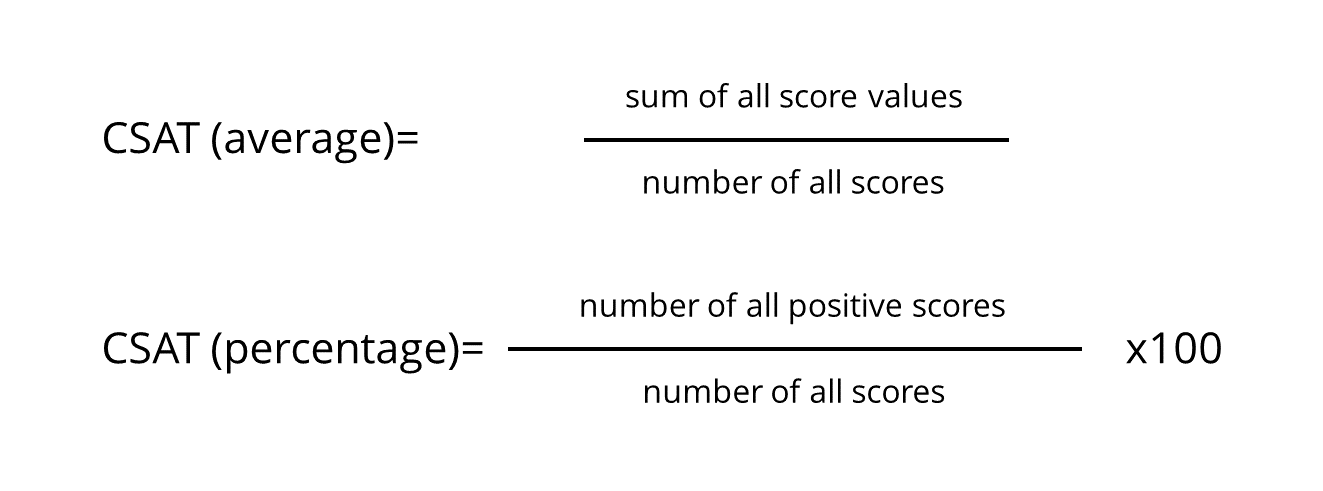
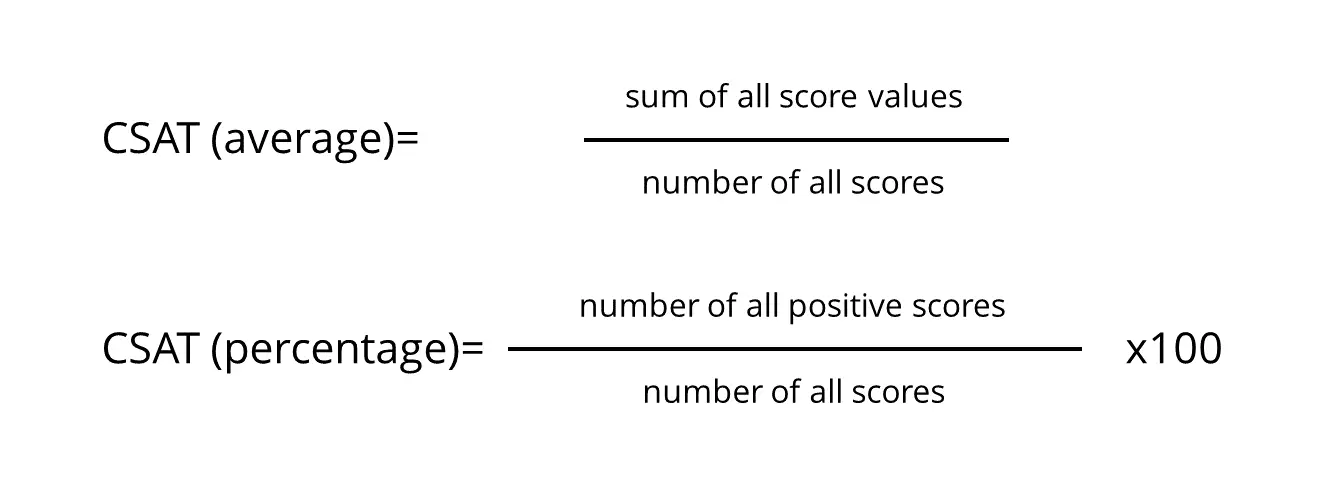
The calculation of the CSAT is very simple, but you can also use external tools such as QuestionPro or HubSpot.
What are the benefits of the CSAT?
The CSAT survey is a simple method of finding out how satisfied your customers are with, for example, the purchasing process or certain business performances. It is relatively inexpensive to implement and provides easy-to-understand data about customer opinion and possible problems. The design and rating scale can be quickly and easily adapted to your target group.
CSAT surveys also show your customers that you take their needs and feedback on products and services seriously. You can reinforce this positive impression by regularly informing them about innovations or changes that you have made based on their feedback.
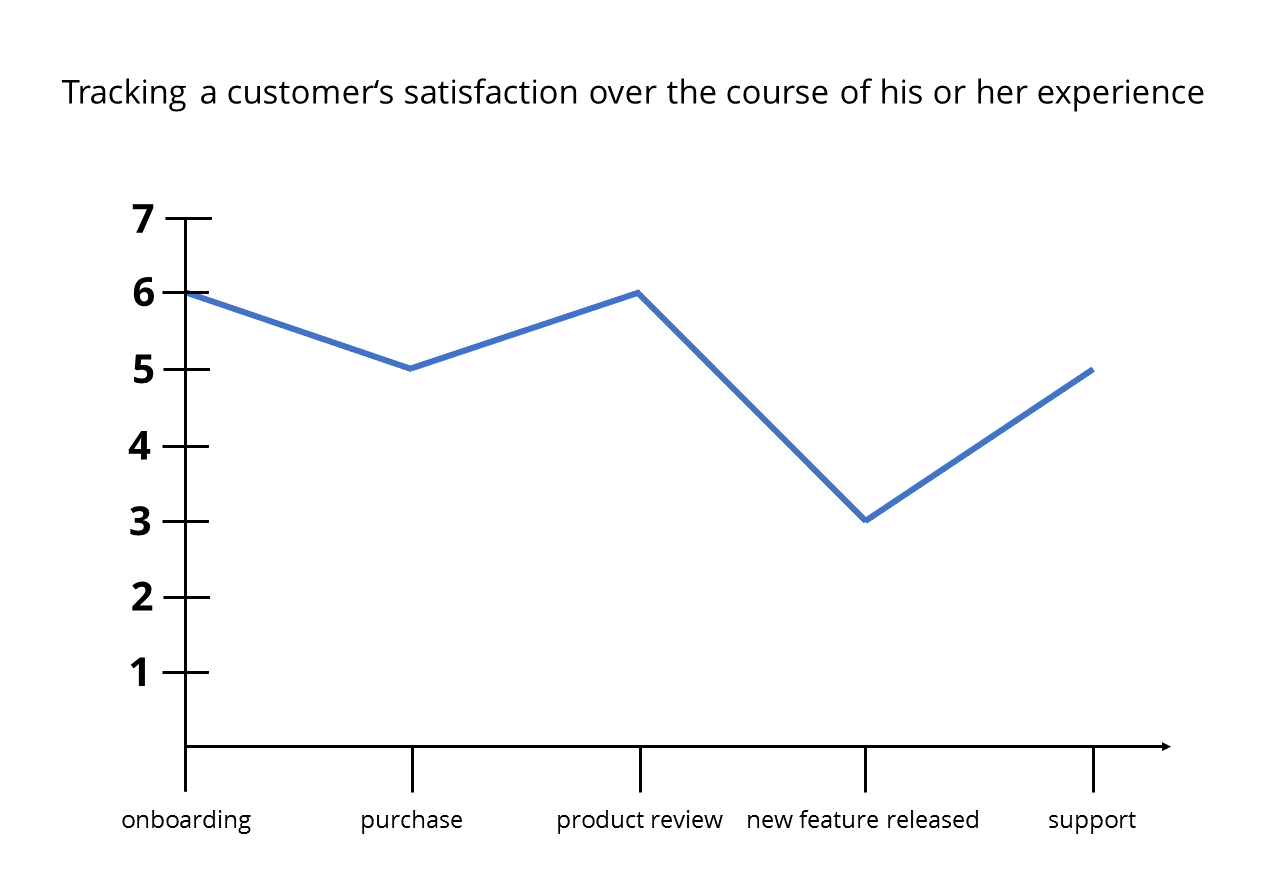
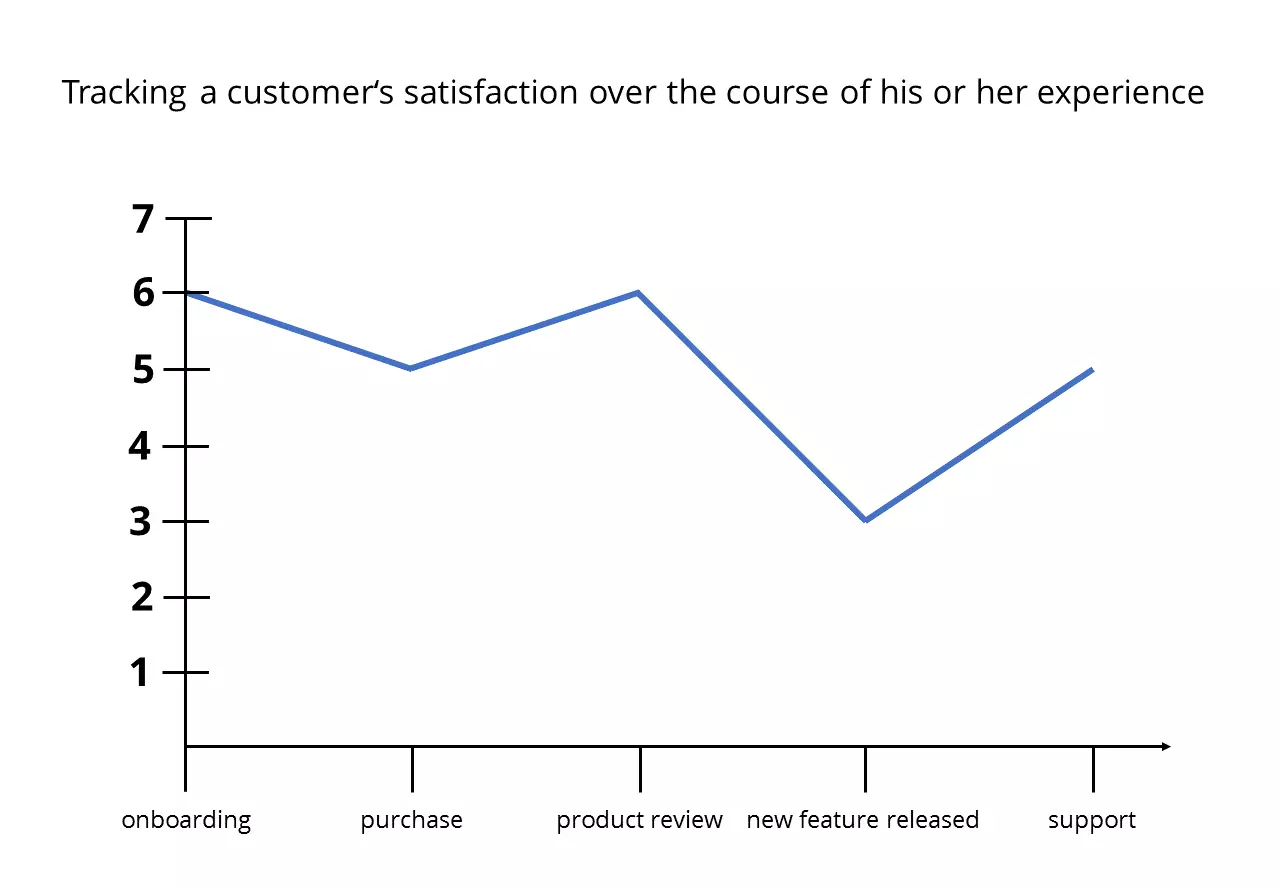
Since a CSAT survey takes very little time, it can be used more than once and at various stages of the customer journey. This allows you to find out about customer satisfaction at numerous key moments of the customer lifecycle and, for example, receive ratings on customer advice, the purchasing process, product quality, new features or customer support. If the customer was dissatisfied for any reason, it is then easier to determine where exactly the problem occurred and how to take action in order to make the buying experience more enjoyable in the future. Experience has shown that short CSAT surveys achieve higher response rates than emails with an integrated link.
What are the disadvantages of the CSAT and how can they be addressed?
The basic problem with any type of satisfaction survey is that it requires additional effort from the customer, which may not appeal so much to the customer. Under these circumstances, it can prove difficult to obtain valid samples. Often, the customers that complete surveys are those that want to vent about a defective product or an unfriendly customer support member. Also, even if this is not the case, customers who are satisfied or feel neutral about a product or service rarely complete such surveys. This inevitably results in falsified results in which, certain customer groups are considered more strongly than others. The same happens when satisfaction surveys do not cover all stages of the customer lifecycle.
Now CSAT surveys have the advantage of being quick and easy to carry out and allowing instant conclusions to be drawn about the emotional state of the customer directly after an interaction. However, this advantage also conceals some of the biggest weaknesses of the Customer Satisfaction Score: the queried values are extremely volatile snapshots that depend on how the customer feels on a particular day. The customer may simply not have had enough time to comprehensively assess the interaction with your company. They therefore usually react spontaneously and emotionally to such surveys.
Additionally, ‘satisfaction’ in itself is a very subjective term and does not mean the same thing for every customer. This also makes it difficult to compare Customer Satisfaction Scores from different companies and industries (keyword: benchmarking).
Thus, the CSAT is unable to provide a comprehensive overview of customer satisfaction. Instead, it must be seen as part of a more complex overall picture and can only be used in combination with other measurement models to provide a meaningful analysis. In addition to extensive email surveys and social media monitoring, many companies also use the following three metrics:
- Net Promoter Score (NPS): this KPI is often used together with, or as an alternative to, the CSAT. With the basic question ‘would you recommend the company to others?’, it captures the overall proportions of fans and critics of your company. The NPS makes it possible to predict concrete behavioural intentions of your customers and to assess their loyalty to your company.
- Customer Effort Scores (CES): the CES records the effort required by the customers to resolve their issue. For example, the time it took to navigate your homepage, or the number of calls and emails it took to resolve a problem, both play a role.
- Things Gone Wrong (TGW): this metric concentrates on the dissatisfaction of the customers. It relates the frequency of complaints to the total number of interactions. This metric allows you to quickly identify where your company needs the most improvement.
Conclusion: The CSAT alone is not enough
The Customer Satisfaction Score measures the satisfaction of your customers, the Net Promoter Score the loyalty of your customers, the Customer Effort Score the effort required during the interaction with your company. While all of these KPIs are interrelated, less effort means more satisfaction and more satisfaction promotes loyalty. From this perspective, it is obvious that the CSAT alone is not enough to provide a clear picture of how your customers evaluate your company’s performance. If you want reliable data about your customers and their attitude to your business performance, you should combine several metrics. In this way, you can tailor the customer journey, the purchasing process and the actual offer to consumers in the best possible way - and new customers quickly become satisfied regular customers.
Please note the legal disclaimer relating to this article.
Reviewers

Anne-Laure Wolber
Anne-Laure has been part of the IONOS Digital Guide since its inception in 2016. As an expert in the startup category, she focuses primarily on the strategic integration of SEO, GEO and conversion rate optimisation. Over the years, she has also gained extensive experience in related performance disciplines such as lead generation and native advertising. As a polyglot, she leverages her multilingual background to develop content strategies with precision and impact for international audiences.

Christian Heldmaier
Christian Heldmaier is an experienced online marketing and SEO specialist from Karlsruhe. He has been working as an SEO Manager at IONOS since July 2020.