

Artists and Patreon: The Path to Financial Independence?

Gone are the days when artists had to grab the attention of big sponsors. Global networking makes it possible to obtain a large number of small sponsors: some projects are raking in huge sums through the crowd-funding platform. Patreon is a different kind of crowd-funding platform. It isn’t used to collect large single amounts for a specific project. Rather, it’s a place where musicians, writers, illustrators and comic-book authors receive regular income from their community. This enables them to immerse themselves in their work. For example, some creatives (on Patreon they’re referred to as “creators”) purchase better equipment with their earnings, others give up a time-consuming side job so that they can concentrate on a project. Some even hire employees.
Fans (referred to as “patrons”) can use the platform to directly support their favourite artists, and to get in touch with them and the fan community.
How Patreon Works for Supporters
Anyone who wishes to support a creator needs a Patreon account and should be able to use one of the payment options accepted by the platform. You can set up an account in just a few steps. You can set up an account either by providing your e-mail address or by registering with your Facebook account.
When you log in via Facebook, Facebook can view your Patreon profile information and donation recipients. You can revoke some permissions, but it’s possible that information may have previously been transferred to the social media platform. Should you have any objections, please contact the service directly.
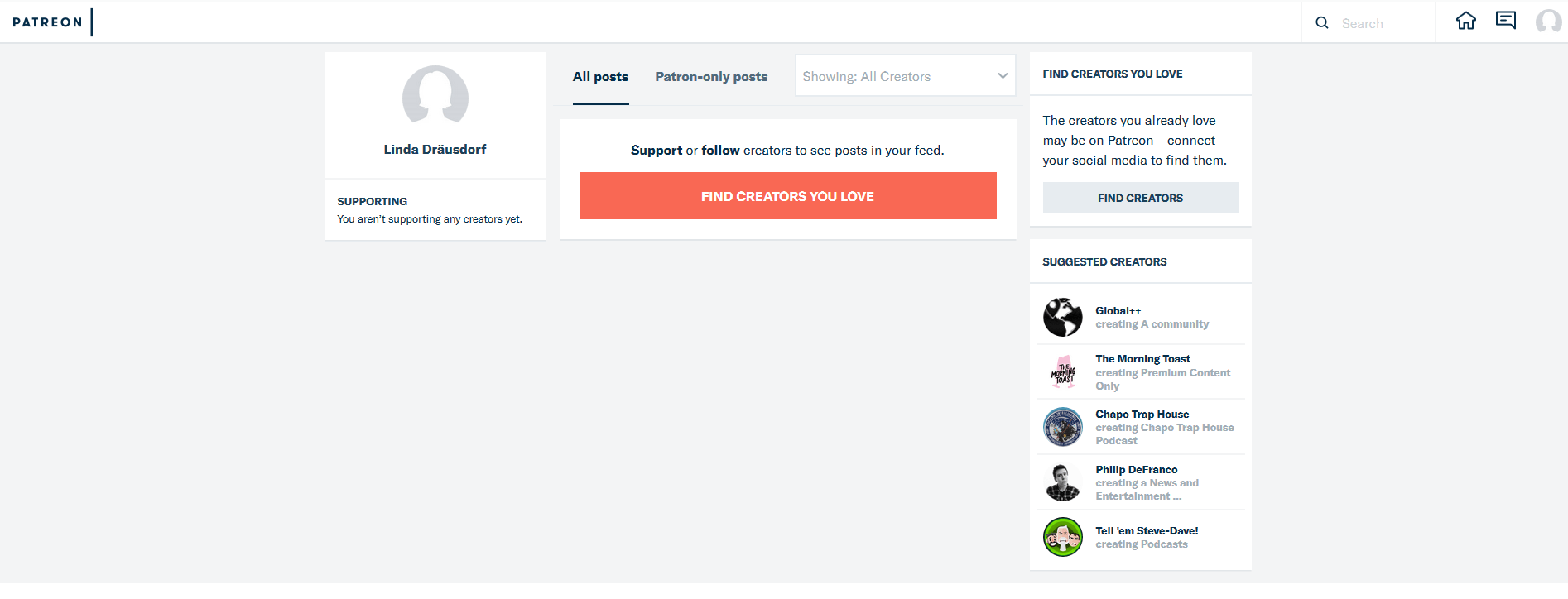
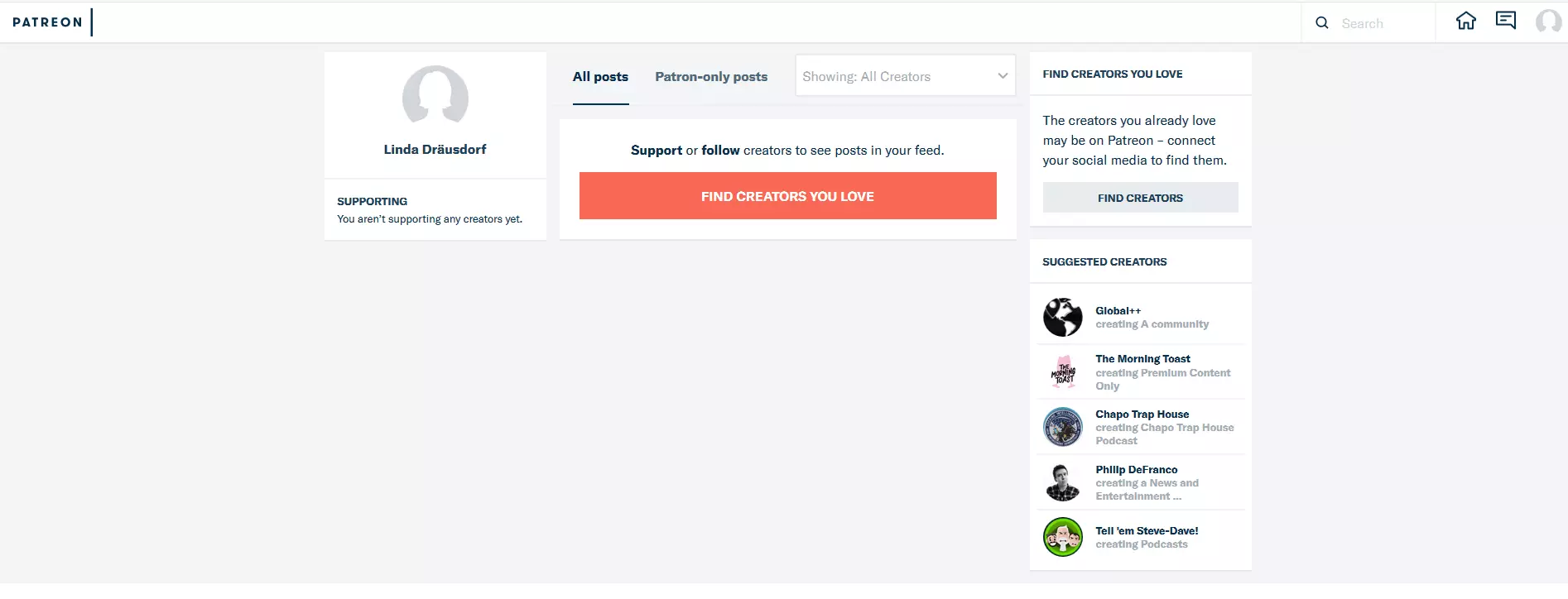
After registering, you’ll be taken to your user profile. Patreon first recommends some of the most popular projects. Alternatively, you can enter the name of a project you’d like to support.
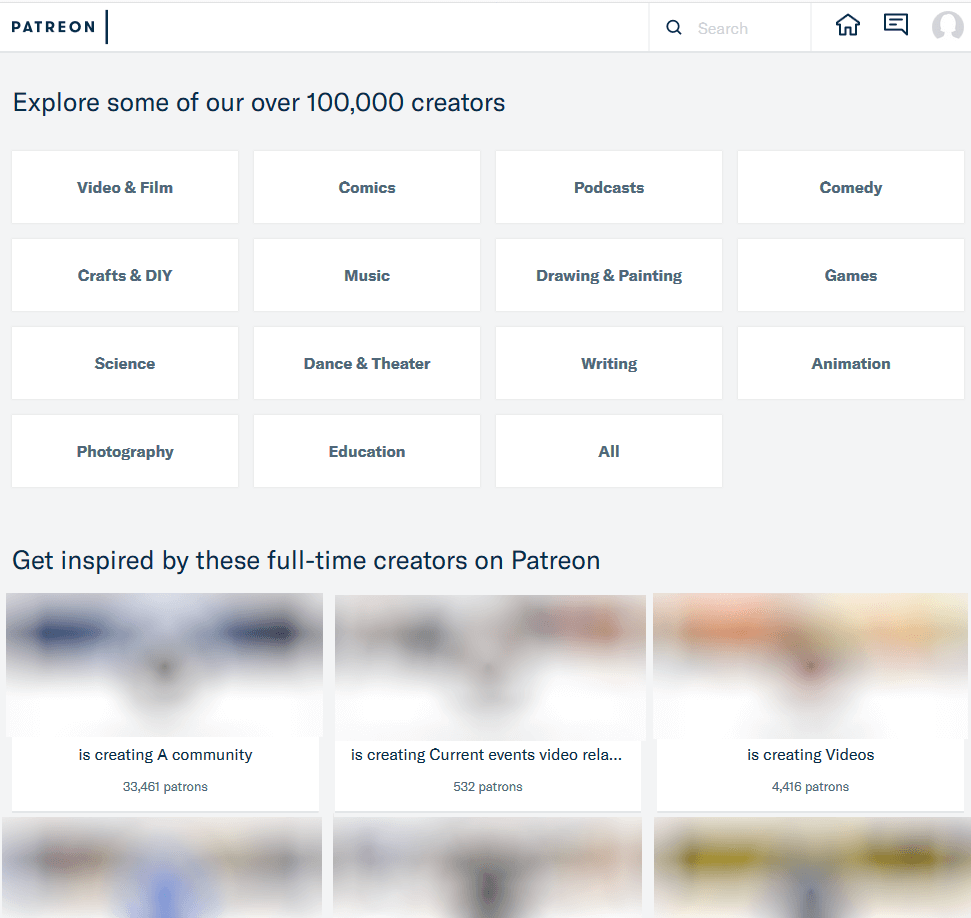
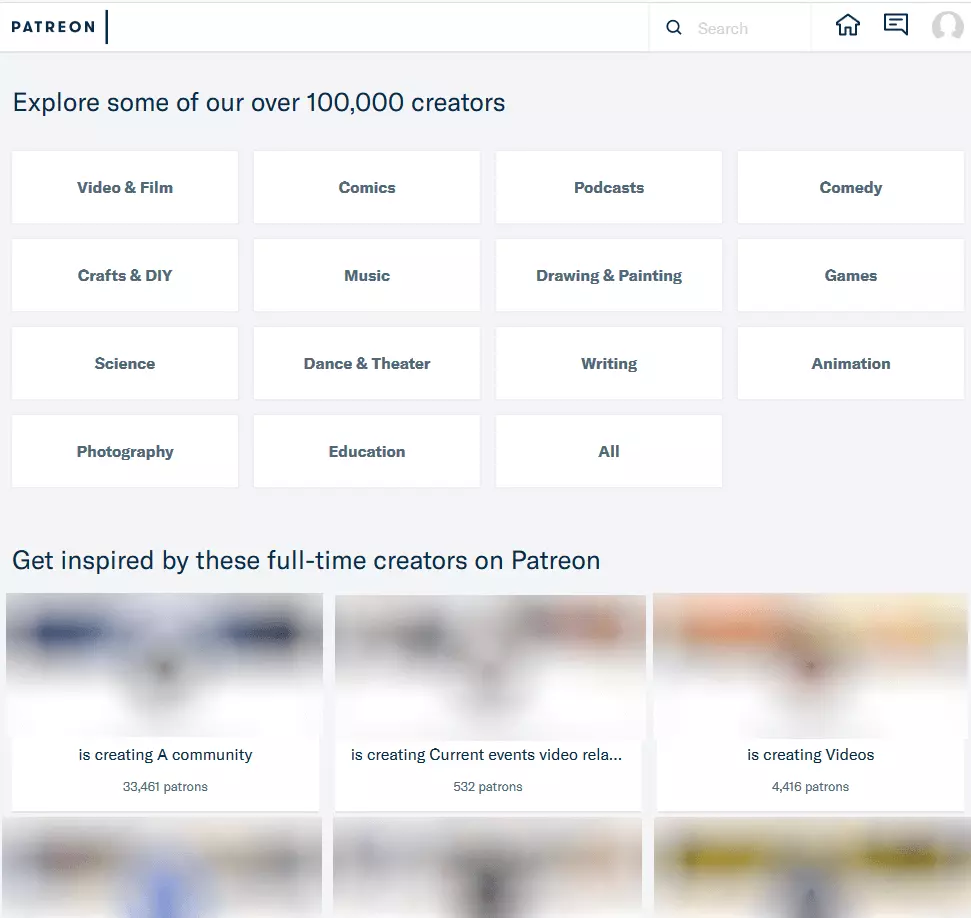
If you do not have a specific creator in mind, then you can perform a search using keywords. Clicking on your profile photo in the top right corner will bring up a drop-down menu. If you click on “Explore creators”, you get to a new page. In this area patrons can browse new projects in various subject areas. The list includes the Top 20 for each respective area.
When you click on a project, you are brought to the profile page for that particular creator. This is where content creators introduce themselves. The feed allows you to see all posts. You will not be able to access many of them because they are paid posts that can only be viewed by paid subscribers. Creators frequently release free content on other platforms, such as YouTube. Patreon, in contrast, is where they place bonus material and occasionally also grant you early access to their work than you would receive on other platforms. With a click on the “Become a patron” button, you join the group of sponsors.
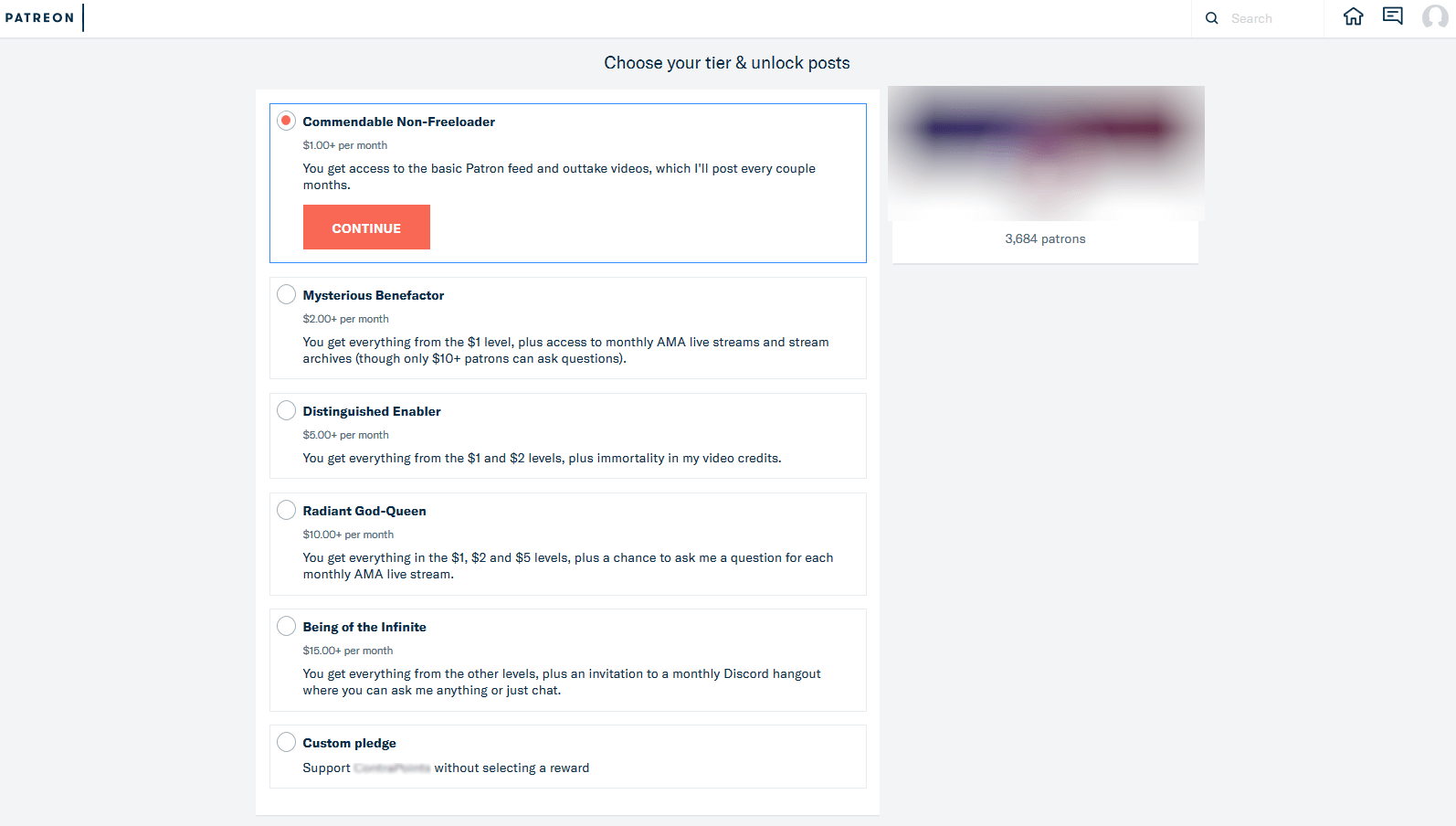
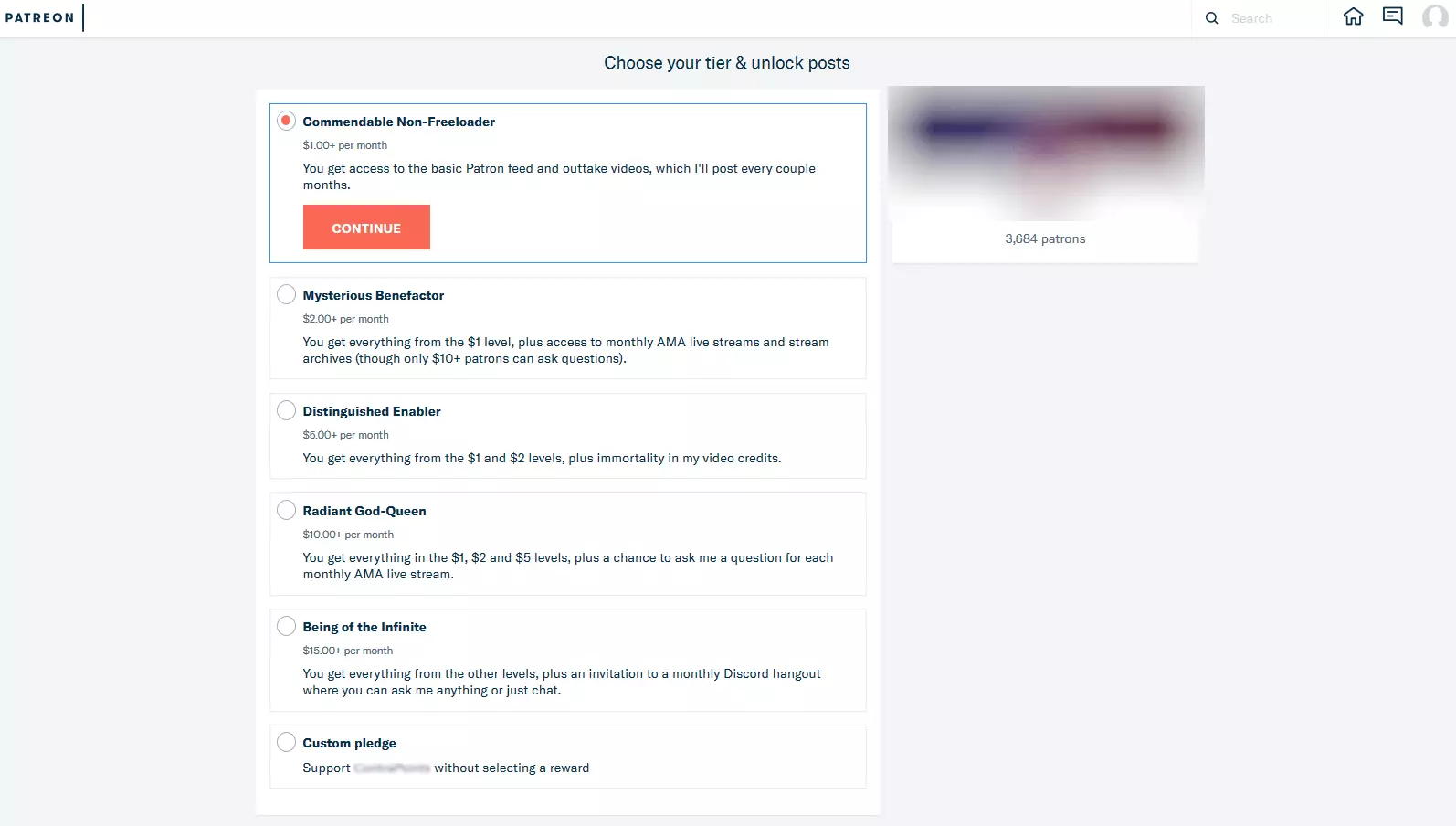
As a sponsor you can make ongoing payments to the individuals you’ve chosen. The creators themselves can choose the different membership levels based on the size of the contribution amount. The benefits provided are also determined by the project manager themselves. There are two basic options: You can pay either a fixed monthly amount or you can sponsor every content contribution that appears during the month. For example, an author receives two pounds for every short story that they publish. If the individual publishes four short stories in one month, they’ll receive 8 pounds. If they publish three short stories, they’ll receive 6 pounds from you on the first day of the following month.
Anyone who is worried about their budget being strained due to a large number of posts can set up a monthly maximum for contributions. For example, a language course provider will receive three pounds per learning video and you set your limit at three contributions. The channel posts four videos in one month. However, because you are not sponsoring the fourth video, the project will still only receive nine pounds from you.
Many patrons use advance payments. In this case, Patreon immediately deducts the first monthly contribution. In this case, it makes sense to start the subscription at the beginning of the month. As shown in the picture above, the contribution tier list usually begins at one US dollar. Due to the exchange rate and VAT, this ends up being just under a pound for UK Patreon users.
Another incentive for making payments is the tier order. In addition to bonus material, anyone who is enough of a “fan” may want personal interaction with the individual, merchandise, or a voice that can be heard within the community. The higher the tier, the more appealing the offering should be for the patron. Usually you receive all the benefits of the lower tiers in an upper tier.
Select the amount you would like to donate and click on the “Continue” button that then appears. Now you are taken to the payment options. Because Patreon is headquartered in the US, the amounts are calculated in US dollars. This requires a suitable cross-border payment method. You can only become a patron if you own a credit card. You can enter the card information directly or you can use a PayPal account that’s linked to a credit card.
After completing the payment, you'll see all the post-paid content that’s been unlocked for your tier. Some Patreon creators also regularly offer group chats. For this purpose, the platform provides a link to a Discord server.
To cancel a Patreon subscription, go to the membership area. You can find it in the drop-down menu when you click on your profile icon in the top-right corner. It’s under “Memberships”. Click on “Edit” next to the respective Patreon account. You will then access your account’s payment management area. Now click on “Edit or Cancel Payment.” A pop-up window prompts you to choose between editing your payment method and cancellation (“Cancel your Payment”). Confirm this one more time by clicking on the red “Cancel your Payment” button.
How Patreon Works for Creatives
Artists and other professional categories that earn their living mainly as freelancers must often wait a long time before someone buys their work. Only then do they have some latitude when it comes to paying the rent and paying for materials. Those who can save for old age are very few in number. This is why in most cases a second income source is needed just to make ends meet. Even when admirers buy a work or merchandise, it is often not enough to make a living. This is where Patreon comes in. Using the platform, creatives set up the basis for a regular monthly income.
First Step
The registration process for a creator is a more comprehensive than that of a subscriber. To begin, click on the “Start My Page” button on the homepage. Once you’ve entered your name and email address, an assistant guides you through the process for setting up your project page.
Do you already work as a full-time professional in your field? Via the “Already a full-time creator?” link you access a form that asks for your background knowledge as well as your organization’s basic information. With the right qualifications, you can be eligible to have a personal launch expert assist you.
The Patreon registration assistant asks you what type of art you create and if your content is suitable for young audiences.


In the next step you’ll design your page. Here you choose a profile picture and a banner for your project. In a text box you explain to potential subscribers exactly what you are doing. Is it a longer project, such as a serial? Do you publish individual articles on your area of expertise? Or do you offer additional material to existing fans who want more? Anything is possible as long as you clearly explain why regular support is in the sponsor’s interest.
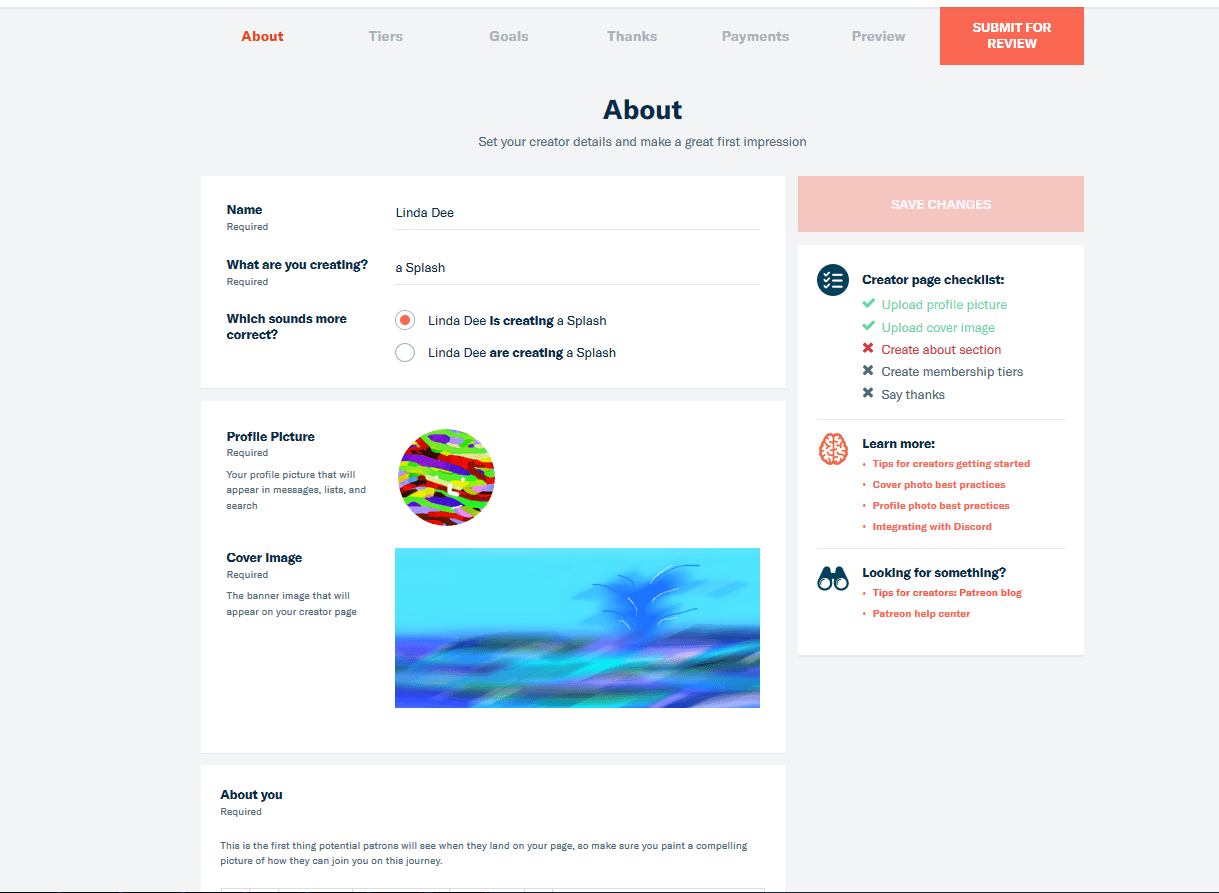
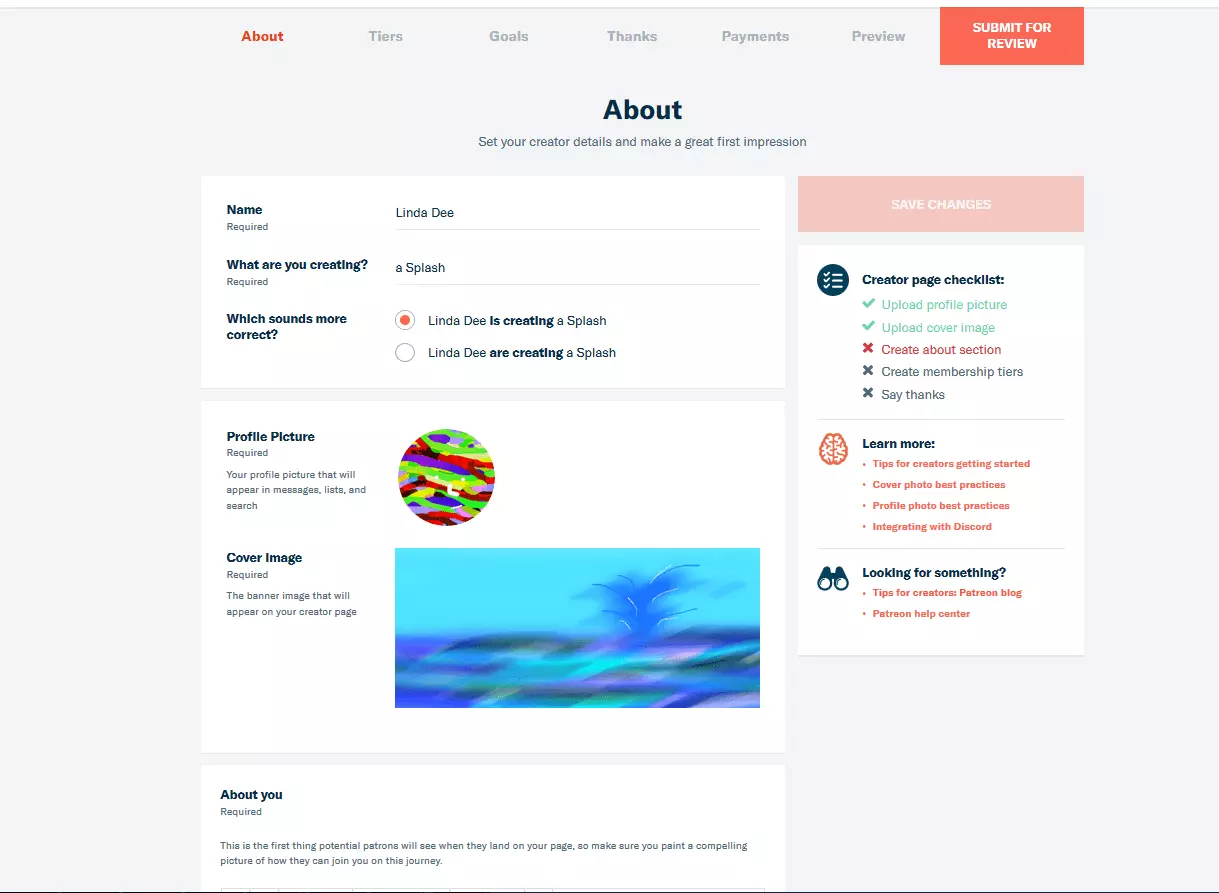
Then determine your sponsorship tier, set your first stretch goal, and write a short thank you message for new sponsors. In the “Payments” tab, you set up when your sponsors will have their first payment debited – immediately or on the first of the month. You can decide whether to charge only for paid posts or rather on a monthly basis.
In the “Preview” tab you can see how your site will look. If you’d like to get a second opinion, you can send a shareable link to third-parties. If everything is to your satisfaction, click on the “Submit for Review” button to review your Patreon application. As soon as your project has been approved, you can publish your first post. Patreon supports the following content within the tool.
- Text
- Image
- Audio
- Video
- Livestream
- Links
- Surveys
Earn Money with Patreon
In addition to rewards for a specific donation level, there are also stretch goals. These are a creator’s medium-term goals. These goals help you to grow your account and you can also use them to measure your progress. This way you can see if Patreon is worth your while. If a stretch goal is reached (for example, revenue of 3,000 pounds per month), you can commit to an additional reward for yourself. This can be a better camera for higher image quality or an employee who helps you publish updates more often. Some content is time-consuming but strong in demand. Achieving a stretch goal can be the motivation you need to begin the project.
According to Patreon's own data, around 2 million sponsors support 100,000 creators, who on average double their income on Patreon each year. In order to earn a decent living with Patreon, you must understand how to promote yourself – across many different channels as well. You have to offer the sponsors something that interests them and has long-term appeal. For many creatives, the constant availability required by rewards and social media is very demanding.
Be strategic: Openly communicate what you need to do your job. Don’t offer rewards that cost more time and resources than Patreon brings in. For example, the Patreon blog advises illustrators not to offer large works of art for low sponsorship levels. Too many interested parties would impose a workload on the artists that would not be physically possible.
These benefit strategies have already proven themselves on the platform:
Bonus learning: This strategy is built upon the premise that the donor wishes to learn more. For a certain amount, they can obtain access to tutorials, training videos or an online course designed by you. This model is not only great for freelance instructors, it’s also suitable for artists. For example, they can share their expertise in a video that demonstrates their process when utilising a specific technique. In short videos you can also offer a preliminary taste of upcoming work. The long version will then only be sent to sponsors who have achieved a specific minimum contribution level. It is also ideal to create a space for exchanges, such as a community chat in which you assign interested parties bonus assignments or answer their questions.
Tangible Works and Direct Service: Patreon projects often involve digital content. This is not exclusively the case, however. For a much larger amount, some creatives produce physically tangible works such as personalised and self-fired ceramic cups. Others offer services, such as a personal consultation on the topic in question or a practice session.
A Nice Community Feeling: Anyone can lead a group, even if they aren’t an expert in a field yet. This is because group members share the same interest, exchange ideas and help each other, such as when you are currently working on another part of your project. Simply joining a community can motivate people to subscribe to your account. Higher-level sponsors, for example, are given a voice when you invite them to participate in surveys or organise Q&A sessions. Livestreams with a chat forum are also very popular.
Anything for the Fans: Every public figure attracts fans - and they are not only enthusiastic about the project, but also about the person themselves. Good rewards for sponsors of this category – such as listing their names in the credits of a video – are a token of recognition. Some filmmakers even name characters after their biggest donors. Fans especially enjoy exclusivity. This includes behind-the-scenes insights and more contact with their idol. Some creatives write brief personalised messages, others chat with individual sponsors.
Equal Privileges for All: Anyone who has a lot of low-income fans – teenagers, for example – would do well to establish only one tier that doesn’t require special permissions. In accordance with the “Pay what you want” principle, the sponsors pay as much as is comfortable for them. This in no way disadvantages them in comparison with the other sponsors. Nevertheless, it gives an incentive to donate a small amount. This is because official sponsors are offered something that is denied to other fans. This can be longer videos, access to the exclusive community, or access to teaching material.
Behind the Paywall: With this strategy, the content is paramount. Anyone who wishes to see certain content must pay a contribution. There are three categories of content behind the paywall. There’s the archive, premium content and additional content.
The archive contains all the older posts. The most recent contributions are often freely available. This gives potential sponsors the opportunity to get to know your work. Then they decide if constant access to all your posts is worth a subscription.
Premium content should dive deeper into a subject or provide more quality. For example, non-paying users receiving a short crash course in blind stitching. Paying subscribers receive a pattern and more detailed instructions on how to make a pillow or stuffed animal themselves and on how to end this type of stitch.
Additional content is no different from what you normally offer. It’s just more content. This type of paywall is also suitable for narrative media such as podcasts, as long as it does not interrupt a serial for non-payers. This could frighten off new users. In addition, these fans are likely to ensure your advertising revenue on other channels.
Patreon for Creativity Without Borders
Patreon enables people to support one another across cities, countries, and even continents. A fan of a German YouTube gamer can support them from their home in the US, and vice-versa. Patreon has been tailored to the US market until now, and the internationalism of the Patreon community is growing. However, the currency is in dollars and the overwhelming majority of sponsors is based in the US.
YouTube gaming channels are already familiar with it: Now the video platform is also expanding the YouTube sponsor button to other major channels. On YouTube fans donate directly to their favourite channels and in exchange get benefits such as personalised emojis and additional content. However, YouTube has been demanding 30% of this revenue to date. Compared with the competition, that is too much. Patreon, for example, charges only a 5% fee.
One of the best known international projects is the gaming podcast “The Pod”, formerly known as “Auf ein Bier”. With 3,700 sponsors, The Pod is Patreon’s German success story par excellence. The three operators are all from Gamestar, a gaming magazine with one of the biggest circulations in Germany; so they already had a German fanbase, and now have the potential to take it further. What was new was their idea: at the time, there were no podcasts about gaming. At the same time, they waited for a trend to develop. The popularity of podcasts has experienced a sharp increase in recent years.
Patreon is a promising source of income for self-employed artists. Use the links provided to make interactions as enjoyable as possible for your fans and to simplify payments. The platform demands a lot of attention because subscribers expect transparency and rewards. But the work pays off: with the income from Patreon, many creatives can live off of their art and also enjoy directly interacting with their fans.