

The 10 best YouTube alternatives at a glance

YouTube is the undisputed leader among video portals and can confidently be described as top dog in the industry. More than two billion Internet users surf YouTube and there’s little question that the platform is recognised as an effective marketing tool. Videos can be uploaded with just a few clicks and can easily be embedded on any external website using automatically generated HTML codes. Its range of features and ease of use make it difficult for competing portals to get their foot in the door, but what actually are the alternatives to YouTube?
Some alternatives include services like Dailymotion, DTube, Vimeo, Twitch, Vevo, Odysee, Wistia, Brightcove, Instagram Video, and VidLii, which offer private and professional users a wide range of options for posting or viewing content. Read on to explore our overview of 10 YouTube alternatives and their advantages and disadvantages.
Ask, create and research with the European alternative to ChatGPT. Robust security and unlimited chats give you peace of mind.
Overview of 10 YouTube alternatives
| Platform | Pricing model | Key features | Suitable for |
| Dailymotion | - Free for viewers and uploads - Pricing policy for video promotion and ads |
- Large video upload specifications: 60minutes/2GB (Advanced users: no restrictions) - Optional monetisation of videos - Intuitive and clear layout |
Entertainment, lifestyle, and sports industries |
| DTube | - Free for viewers and uploads - Monetisation based on cryptocurrencies |
- Blockchain as basis for content storage of published videos - main block producers are chosen by the community |
Lifestyle, News, Gaming |
| Vimeo | - Free version for viewers - Free basic membership - Vimeo Plus £6/month - Vimeo PRO £16/month - Vimeo Premium £70/month - Vimeo Enterprise price upon request |
- An exchange platform for creative minds - A focus on artful content such as music videos, short films, and documentaries - Generous storage options depending on the plan - Customisable player |
Computer electronics & technology, science, art, entertainment |
| Twitch | - Free for viewers - Free for streamers/uploaders - Twitch Prime/Turbo £3.99 to £12.99/month |
- Live streaming platform for gamers - Owned by Amazon - IRL function allows live streaming - User-generated content is the main component |
Gaming, entertainment, computer electronics & technology |
| Vevo | - Free for viewers and uploads - Free for artists |
- Support for established artists and newcomers in music business - music videos with video trademark on third-party platforms |
Music artists |
| VidLii | - Free for viewers - Free for creators |
- Fully functional video platform with charm of a student project | Entertainment |
| Odysee | - Free for viewers and uploaders - Monetisation based on cryptocurrency |
- Blockchain as basis for content storage of published videos | Lifestyle, Technology, Finances, News, Gaming |
| Instagram Video | - Free for viewers and creators |
- Video section of Instagram, which is composed of IGTV and feed videos | Entertainment, art, science, lifestyle |
| Wistia | - Free version available - Wistia Pro around £73 per month - Wistia Advanced: price available on request |
- Video hosting platform - Brand building and awareness |
Computer electronics & technology, business, health |
| Brightcove | - Unknown: price available on request | - Video hosting platform with various products & solutions | Computer electronics & technology, finance, health |
All information is up to date as of January 2022.
The best alternatives to YouTube in detail
Dailymotion
Dailymotion is a video portal from France and is currently one of the best YouTube alternatives, especially in its home country where user numbers are high. It’s the same situation in many other countries, where Dailymotion finds itself in second place, just behind YouTube. The company estimates its worldwide number of users to be over 250 million, with 3.5 billion videos played on Dailymotion each month.
Dailymotion scores with its upload specifications: video files can be up to 2GB in size and up to 60 minutes in length (restrictions do not apply to advanced users). Numerous video and audio formats are supported, so that uploaders can choose between, for example, .mov, .mpeg4, .mp4, .avi, and .wmv files. Users are recommended to use H.264 / AVC as a video codec, and AAC at a frame rate of 25 FPY as an audio codec. A resolution of up to 3,840 x 2,160 (4K) is possible. This makes the portal particularly suitable for demanding uploaders: large files are just as welcome as image quality.
The layout is clear and intuitive. Embedding and sharing videos on external platforms is also very simple: just one click and the HTML code is automatically generated.
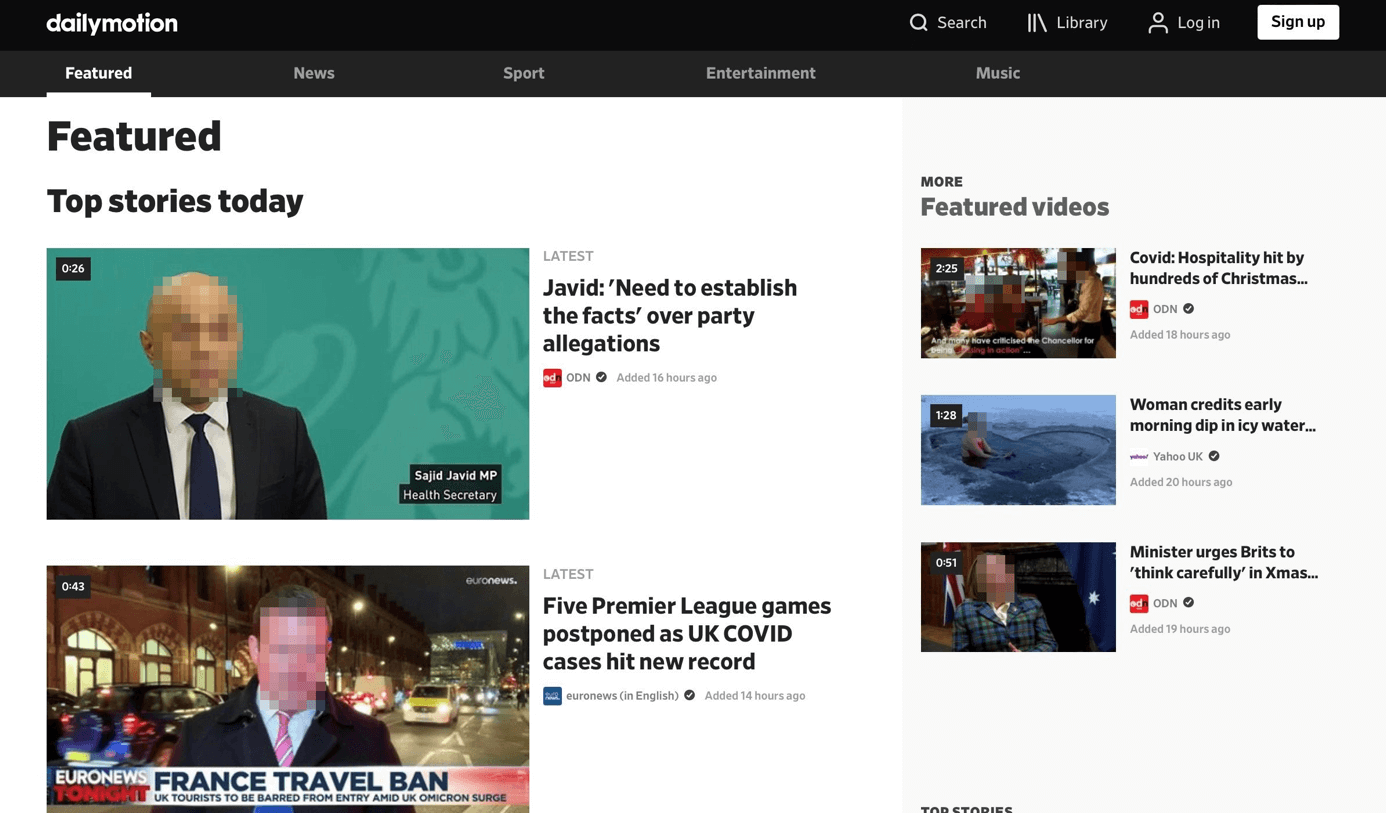
There are even more features for “partners”, since it’s not just YouTube that you can make money with. You can also make money with videos on Dailymotion, adjust the player, and oversee revenue with the analysis tool. This makes Dailymotion one of the best alternatives to YouTube, especially for bloggers who want to make their content available on a paid basis or offer separate premium content. If you want to use Dailymotion’s website monetisation, you can either activate your site to allow it, or embed a special widget from the provider. Some notable partners already take part in this program, including CNN.
Dailymotion offers an impressive range of apps: the YouTube alternative is used on many smart TVs, set-top boxes, and Sony PlayStation, and can be viewed comfortably from the sofa. The service can also be used via iOS or Android apps.
| Advantages | Disadvantages |
|---|---|
| ✓ Widest-reaching YouTube alternative | ✗ Video thumbnails can only be posted by users with verified affiliate account |
| ✓ Extensive upload functions | |
| ✓ Clean layout | |
| ✓ Video files up to 2GB and 60 minutes long possible for all users | |
| ✓ Optional monetisation of videos | |
| ✓ Apps for numerous devices |
DTube
In 2016, US company Steemit launched the same-named social media and blogging platform which allows for the decentralised sharing of content of different formats on the basis of blockchain. Video uploads are made via YouTube alternative DTube, which is part of the Steemit network. DTube is based on the IPFS protocol that enables a distributed storage of the uploaded videos on the various computers involved in the blockchain - unlike YouTube which stores all data on Google’s servers.
The production of new blocks for the Steem blockchain is the responsibility of the DTube “leaders” (currently 15 parties), who are determined by all users through a voting process. All registered users, who can receive rewards in the form of crypto currency for the video upload and for liking, and commenting, have five votes. A big advantage over YouTube and many other video platforms is that DTube is entirely ad-free.
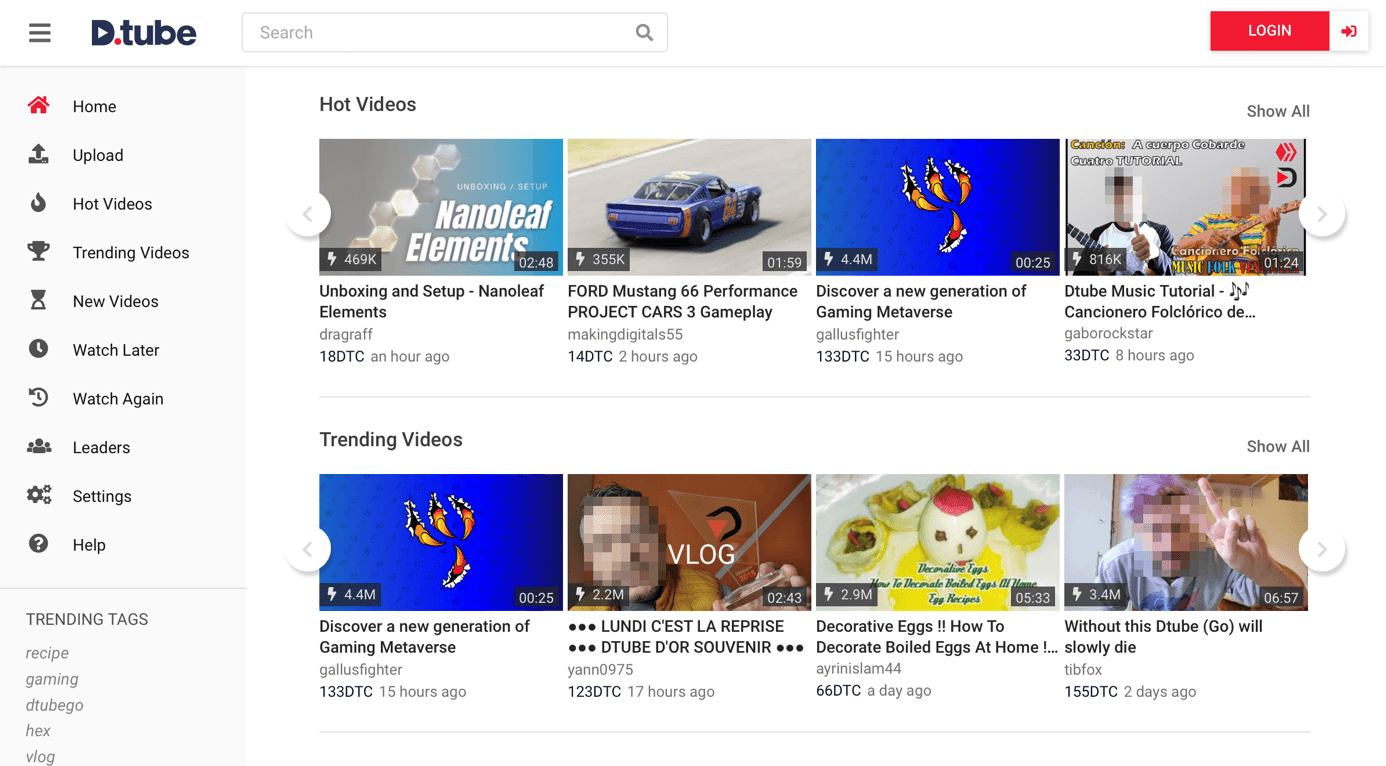
Because of technologies such as blockchain and the requirement to use individually generated keys to log in to the platform, DTube can take some getting used to at the start. To make things a little easier, the developers of the web application have deliberately chosen a design that emulates YouTube. This creates a more familiar environment. Users have the following three options to upload their content:
- Peer-to-peer: The most anonymous option to upload videos, which chooses between the BTFS, Skynet, and IPFS protocols.
- Third-party URL: The simplest type of video upload which lets users embed video URLs from third-party platforms like Twitch, YouTube, Dailymotion, Instagram, LiveLeak, Vimeo, or Facebook.
- Data upload: The best option for upload of smaller files.
DTube’s concept makes for a pioneering alternative to YouTube. As of 2019, the platform has over 189,000 registered content creators and content curators who share a video on the blockchain every three minutes, on average. However, with two million unique visitors each month, the platform is still in the early stages.
| Advantages | Disadvantages |
|---|---|
| ✓ Decentralised storage of content | ✗ Lower user numbers |
| ✓ No ads | ✗ Less content available |
| ✓ Censorship protection |
Vimeo
Vimeo is a US video service that launched in 2004 and specialises in artistically ambitious videos. It’s not surprising then, that the service was founded by filmmakers and directors, who wanted to provide a distribution platform for their work. For example, lots of impressive short videos, documentaries, and even music videos can be found on this platform. If you’re interested in independent production, Vimeo offers one of the highest quality YouTube alternatives. Websites using this platform include marriott.com, gap.com, and thewirecutter.com.
Vimeo claims to be an exchange platform for creative minds, which is reflected on the website: here you can see top stories and curated videos, presented like an interactive gallery. Accordingly, the service offers its users a generous framework for video uploads, which are top-quality. The basic version is free and allows 500 MB to be uploaded per week. With ‘Vimeo Plus’ the amount increases to 5 GB per week, and 20 GB per week with ‘Vimeo Pro’, where you can also publish short films in 4K ultra-HD resolution. When it comes to uploading, there are hardly any limitations, at least not with professional accounts. Only the image data is automatically reduced if a video exceeds 60 FPS during uploading.
The Pro version allows you to add three team members to your account, customise the player, and sell content by video on demand. 90% of transaction costs are paid to the creator. There is also an extensive package with various tools, analysis programs, and a completely advertisement-free user interface. Commercial providers get up to 5 TB (terabytes) of storage space with ‘Vimeo Business’ with no weekly restriction. Up to ten team members can use marketing and workflow tools with this kind of account. A new live-streaming function can be activated in the Pro version (inclusive of 7TB storage space).

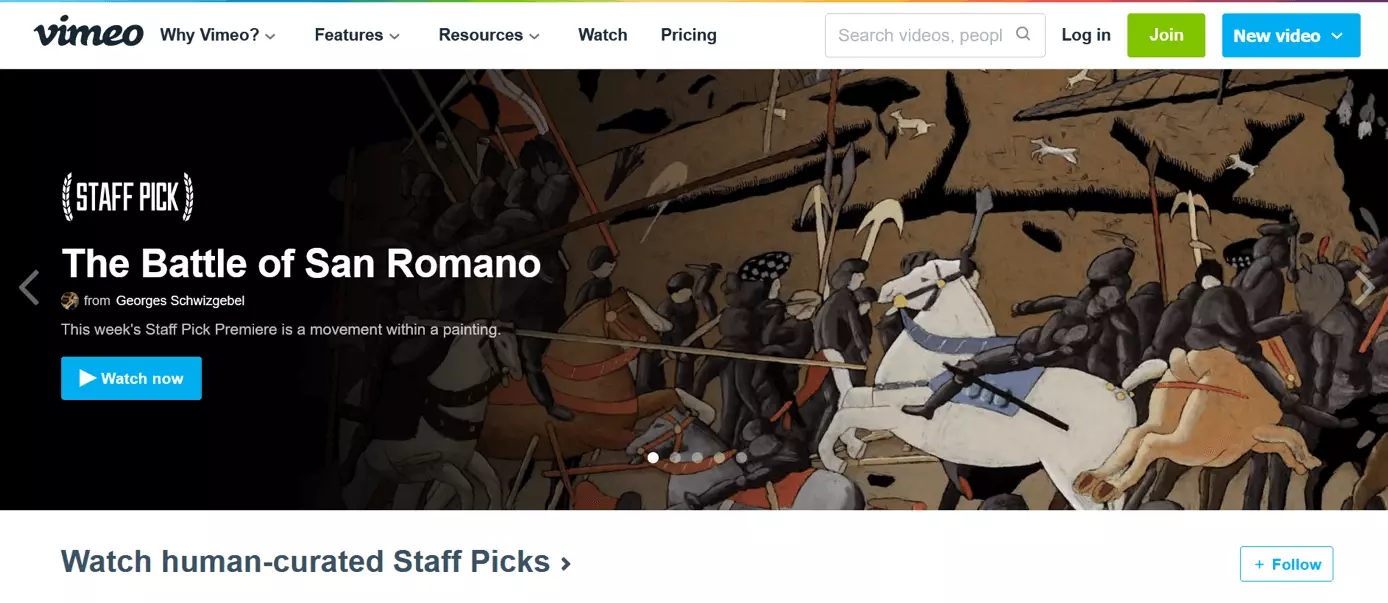
In addition, there are many video tutorials located in the help centre that provide support for using the platform. Vimeo speaks primarily to professional filmmakers, marketing managers, and artists. In turn, this means that many of this YouTube alternative’s main features have to be paid for.
Users can profit from the innovative content in the free version and make the most of numerous apps: Vimeo is also available on mobile operating systems such as Android, iOS, and Windows smartphones. In addition, the service can be used on various devices in your own living room, e.g. on Chromecast, Apple TV, Xbox 360, or Smart TVs from manufacturers such as Panasonic, Philips, and Samsung. Vimeo’s competent community is there to provide useful help and valuable feedback on uploads.
| Advantages | Disadvantages |
|---|---|
| ✓ High-quality content | ✗ Less reach than Dailymotion, for example |
| ✓ Platform especially favoured by professional content creators | ✗ Important upload features must be paid for |
| ✓ Extensive (fee-based) account upgrades that offer practical tools and tutorials | ✗ Accounts not used for a year will be deleted by Vimeo (with warning) |
| ✓ Constructive chats possible with the community | |
| ✓ Apps for numerous devices |
Twitch
A YouTube alternative that is especially popular with gamers is Twitch, a live streaming portal that originally concentrated on video games and e-sports. Twitch.tv went online as a beta version on June 6, 2011 and had already attracted 45 million viewers per month on approximately 6 million channels. In 2014, Amazon acquired the company for USD 970 (GBP 705) million, and since 2016, Amazon Prime customers can make the most of “Twitch Prime”. This service offers free games and subscriptions, game loots, and ad-free streaming. Since 2015, the video portal has organised an annual convention called TwitchCon, which takes place in select US and European cities. San Diego and Amsterdam have been designated for 2022.
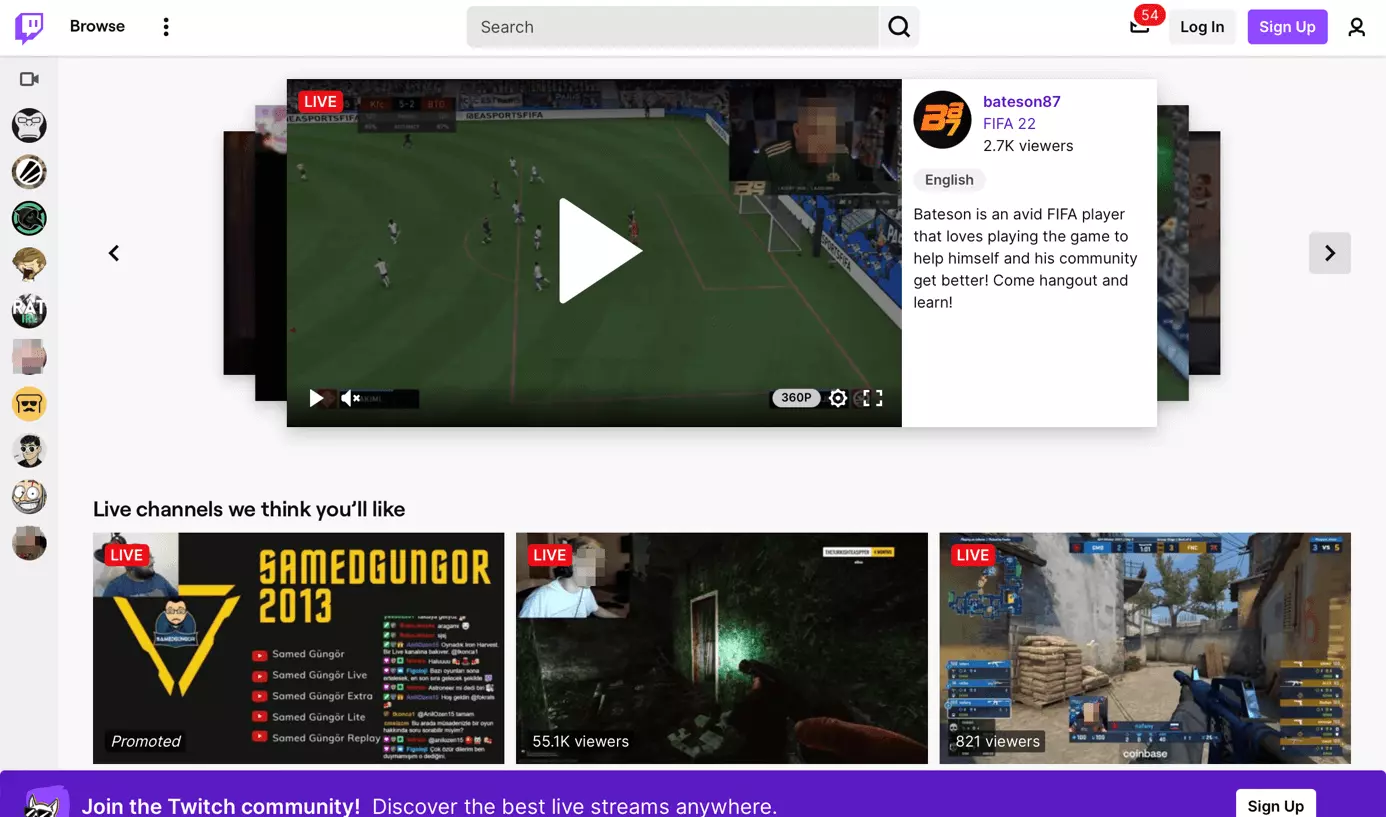
In essence, Twitch has a very similar concept to YouTube: the content is free for everyone. By registering free via email or Facebook, users can access additional features, such as adding friends, the chat function, or the following of certain channels – this all adds to the strong social aspect of the service. All registered users can stream all content. For those not playing via PlayStation or Xbox, all you need is the appropriate software such as the Open Broadcaster software. In 2016, the IRL function was unveiled, which allows users to share moments from their own lives and discuss them with other users. An affinity for gaming is not necessary – user-generated content is the main component of Twitch, alongside professional streams of large e-sport events.
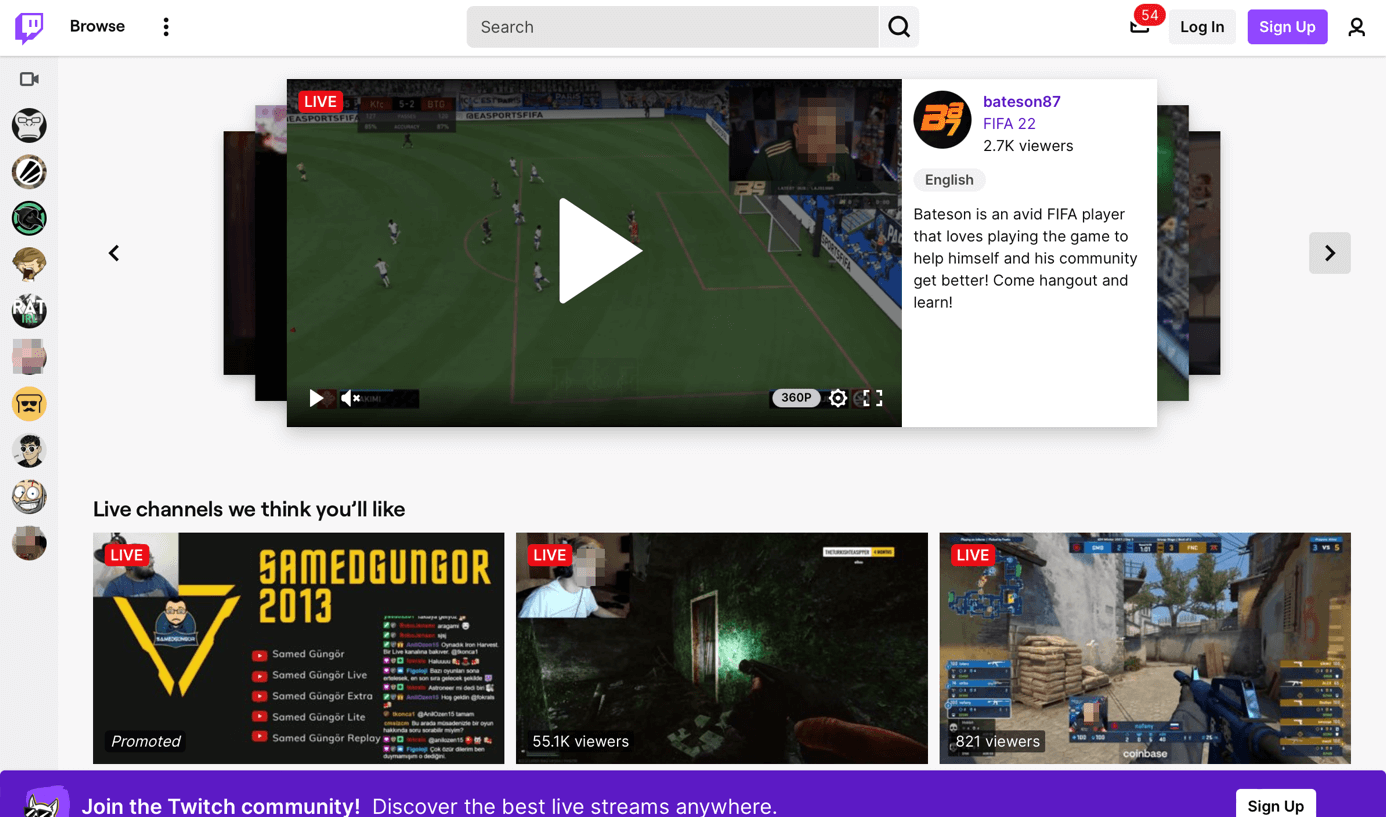
Additionally, professional and larger channels have the opportunity to earn money through Twitch’s partner or affiliate program. To be invited, streamers must meet certain conditions: for example, the user’s streaming activity must be regular and there must be a fixed audience. In return, as a streamer in the affiliate program, you have the option of offering different subscription packages for a fee or participating in the cheering program. Cheering allows users to buy so-called bits to support their favourite channel. The affiliate program offers a chance to embed ads, making Twitch a profitable platform for streamers with professional content and ambitions.
The main difference between Twitch and YouTube comes down to the fact that there are only live videos on Twitch as opposed to recorded videos. If required, short snippets of streams can be saved as highlight videos which users are able to access again in the future.
| Advantages | Disadvantages |
|---|---|
| ✓ User-generated content | ✗ Many features only available for payment or with Amazon Prime account |
| ✓ Strong community aspect | ✗ Several conditions must be met for inclusion in the partner program |
Vevo
Sony and Universal Music, the brands behind Vevo have labelled the video platform the largest music platform worldwide. However, this distinction isn’t technically correct as of 2018. Streaming of music videos via the website or the native Vevo app is no longer supported. Around 26 million monthly Vevo content requests are being made via third-party services such as YouTube, Apple TV, LG Channels or Roku for which Vevo functions as a content distributor. Artists such as Ariana Grande, The Weeknd, Taylor Swift or Camila Cabello are using the service.
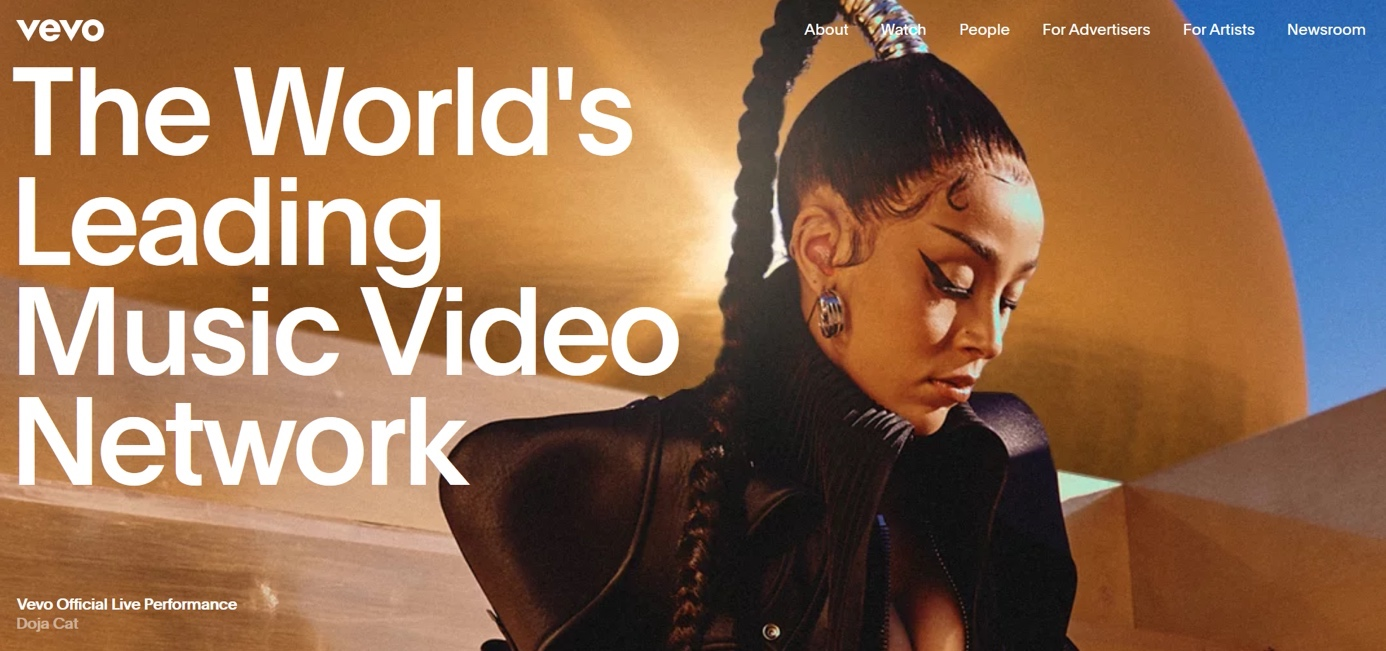
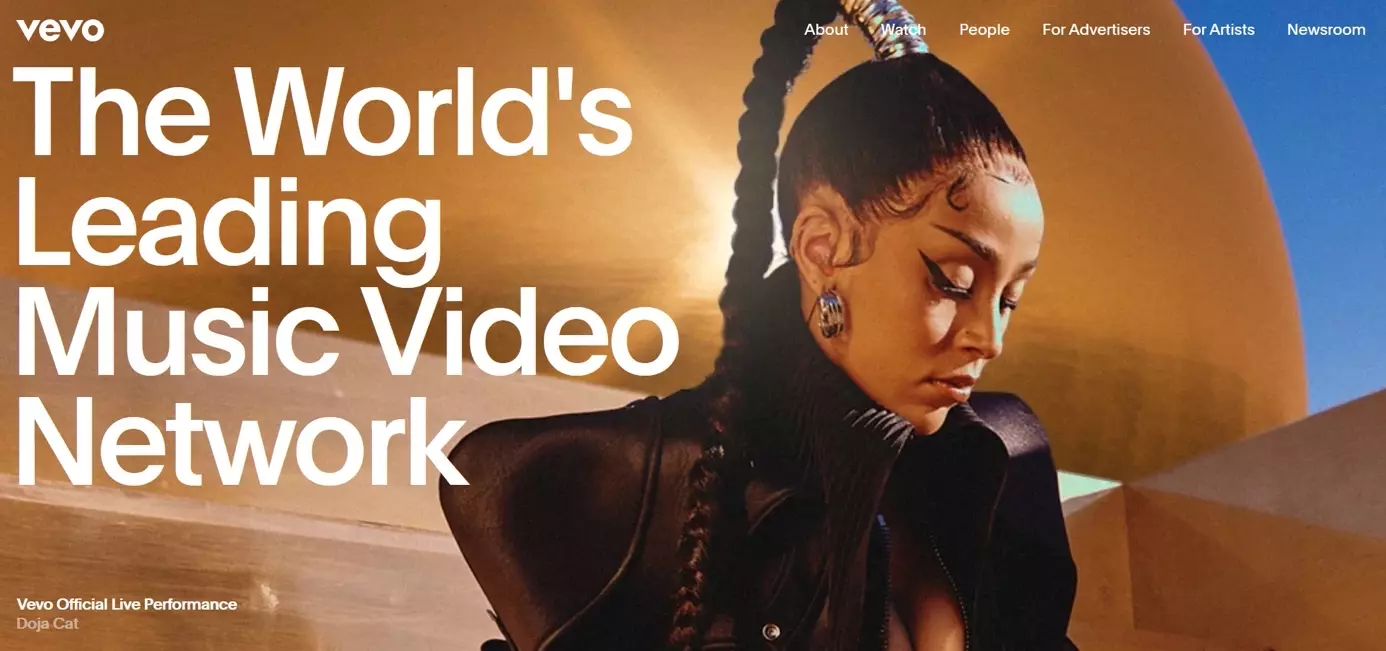
Aside from official music videos of supported artists, Vevo also provides various formats such as live studio performances, concert clips, “Behind the Scenes” features and interviews. The “DSCVR” category is a platform for emerging artists.
| Advantages | Disadvantages |
|---|---|
| ✓ Huge range of official music videos by major artists | ✗ Only available via third-party providers |
| ✓ Different formats focusing on stars and musical newcomers. |
VidLii
Travelling back in time to 2008 is impossible? With VidLii, you’ll instantly feel like you’ve stepped back in time. The video portal is reminiscent of the early days of YouTube, both in terms of functionality and appearance. Visiting VidLii it becomes clear why the site was created: to feature amateur clips and recordings. One won’t find professionally edited videos here. VidLii evokes the playful and experimental spirit of Web 2.0 that made YouTube popular. Almost every conceivable category is represented – from cars to technology, from news to entertainment. There is also a category for music, but it doesn’t feature any current music clips.
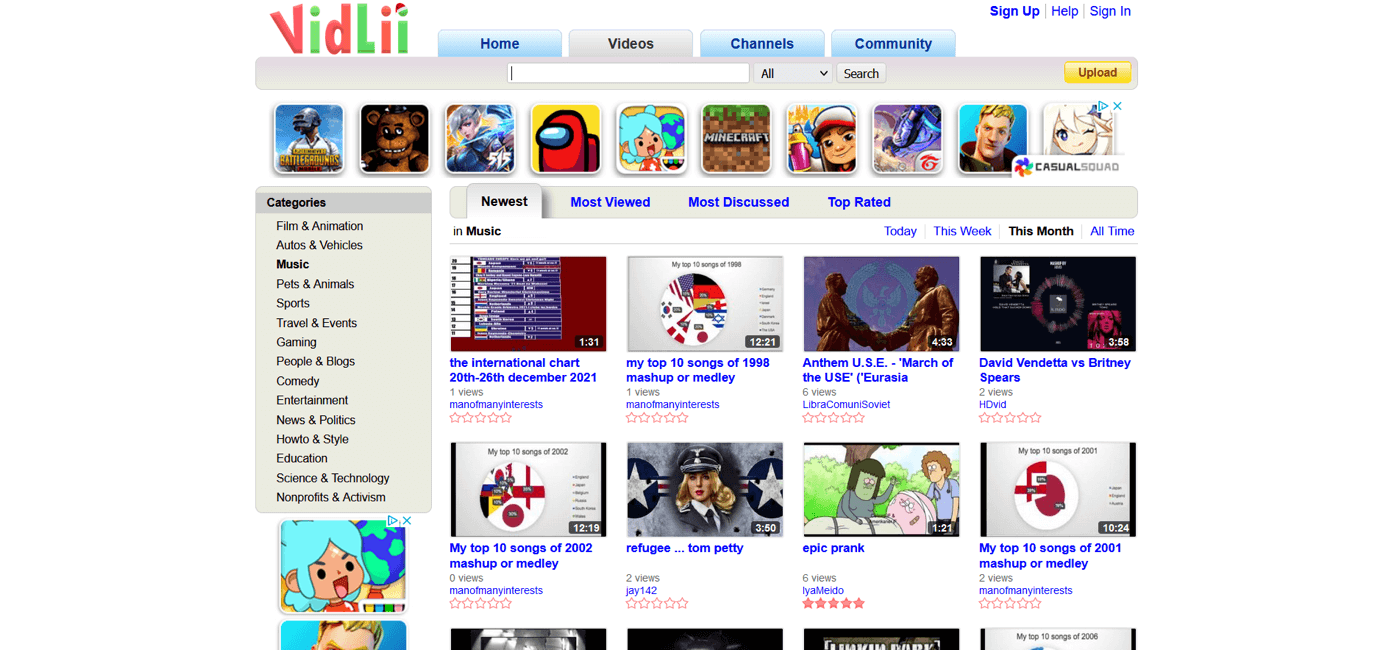
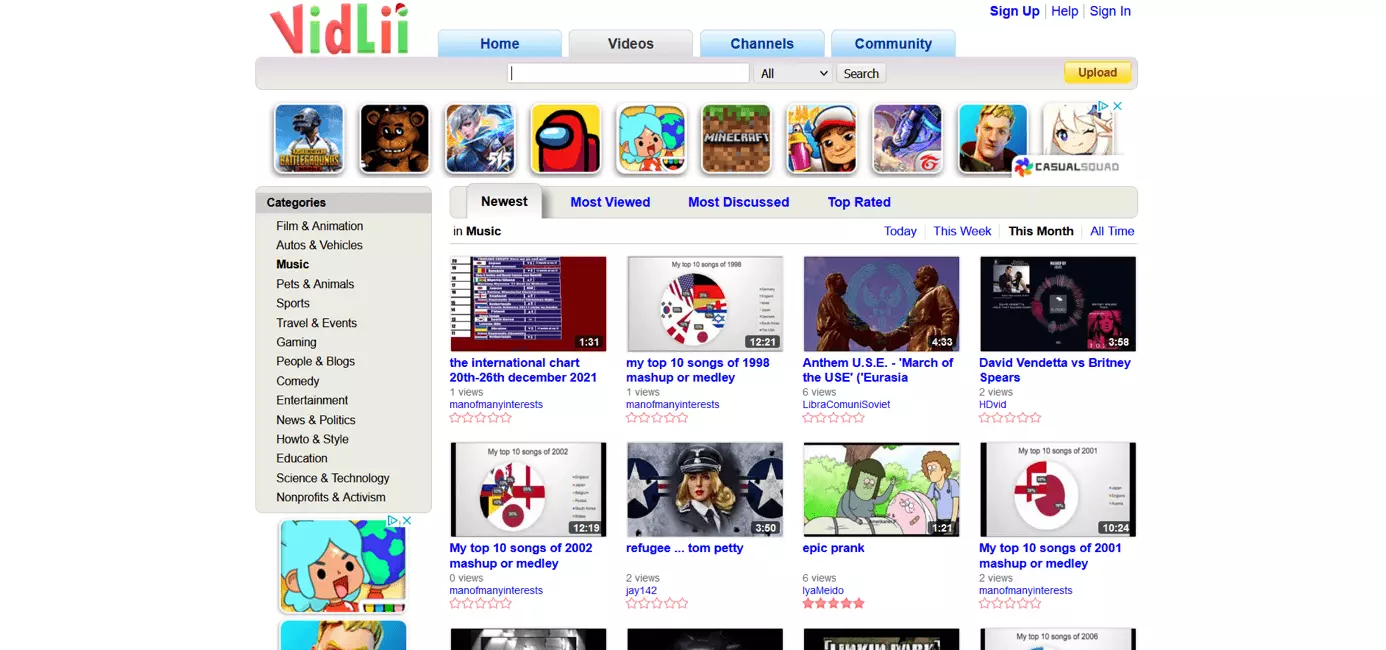
VidLii was launched in 2015 by a college student, initially under the name “ClipBits”. At the time of its launch, the website adopted the YouTube look of 2005. Since then, the appearance of the video portal has changed several times alongside its name. ClipBits became VidBit and finally VidLii in 2017. The focus of the portal is on usability. Uploading and sharing videos should be fun and as simple as possible. Registered users can create a public video channel or share their content with family and friends only. They can follow other channels, and there is also a rating system for videos: tried-and-tested stars – a YouTube blast from the past.
Could VidLii be a serious YouTube alternative? For users who miss the original, amateurish character of YouTube and are put off by the monetisation of the modern platform, VidLii may well be an option. However, those looking for high-quality and relevant content are unlikely to find it on VidLii. The number of subscribers barely exceeds double digits for the most popular channels.
| Advantages | Disadvantages |
|---|---|
| ✓ User-generated content | ✗ View relevant content |
| ✓ Wide variety of topics covered | ✗ Low reach |
| ✓ High usability | |
| ✓ Retro design | |
| ✓ Free |
Odysee
Odysee launched globally in September 2020. Much like DTube, this YouTube alternative is based on blockchain technology and includes the use of cryptocurrencies. Content creators and those who recruit other users can earn so-called “LBRY Credits”. LBRY is also the name of the protocol that is used to build the blockchain. If you don’t want to use the content network via the browser, you can install the LBRY apps for Windows, macOS, Linux, Android, or iOS.
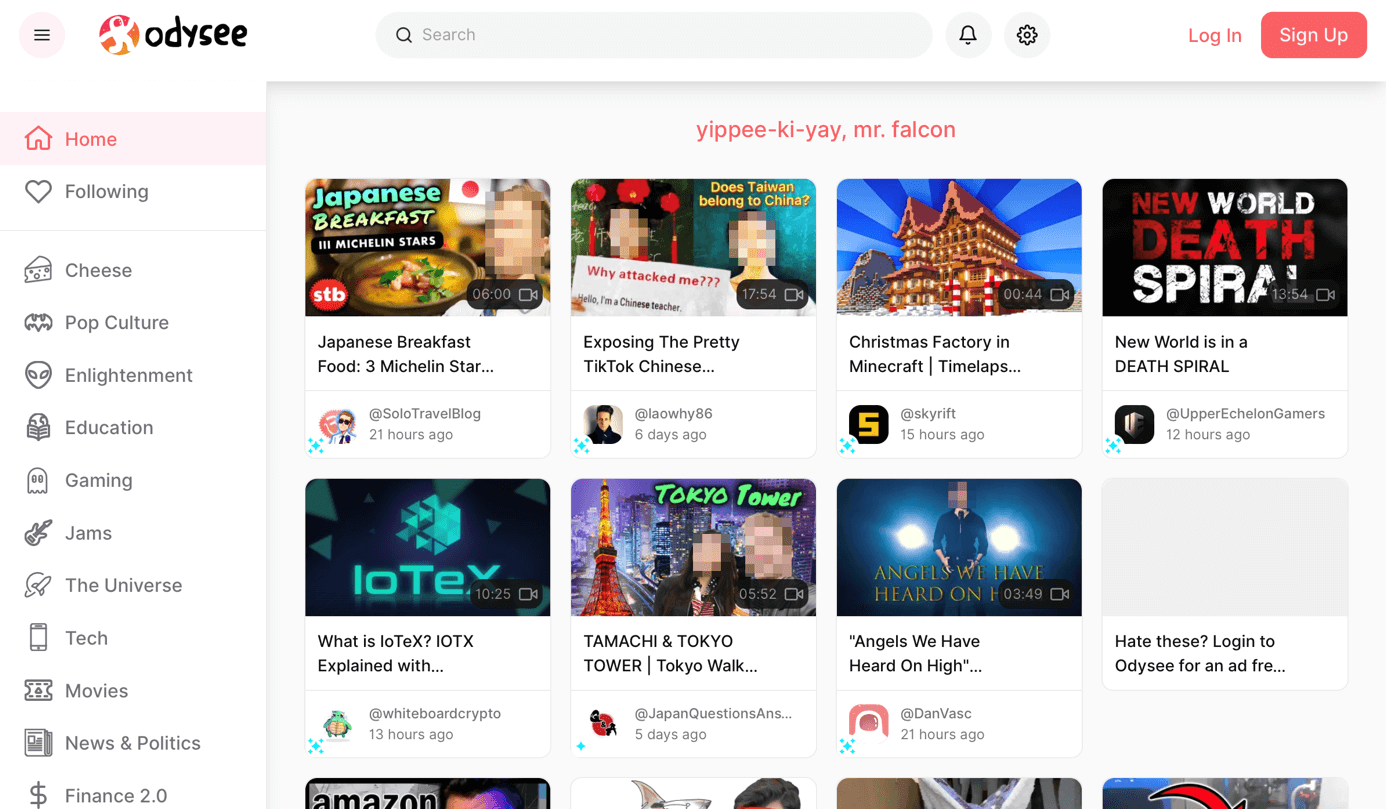
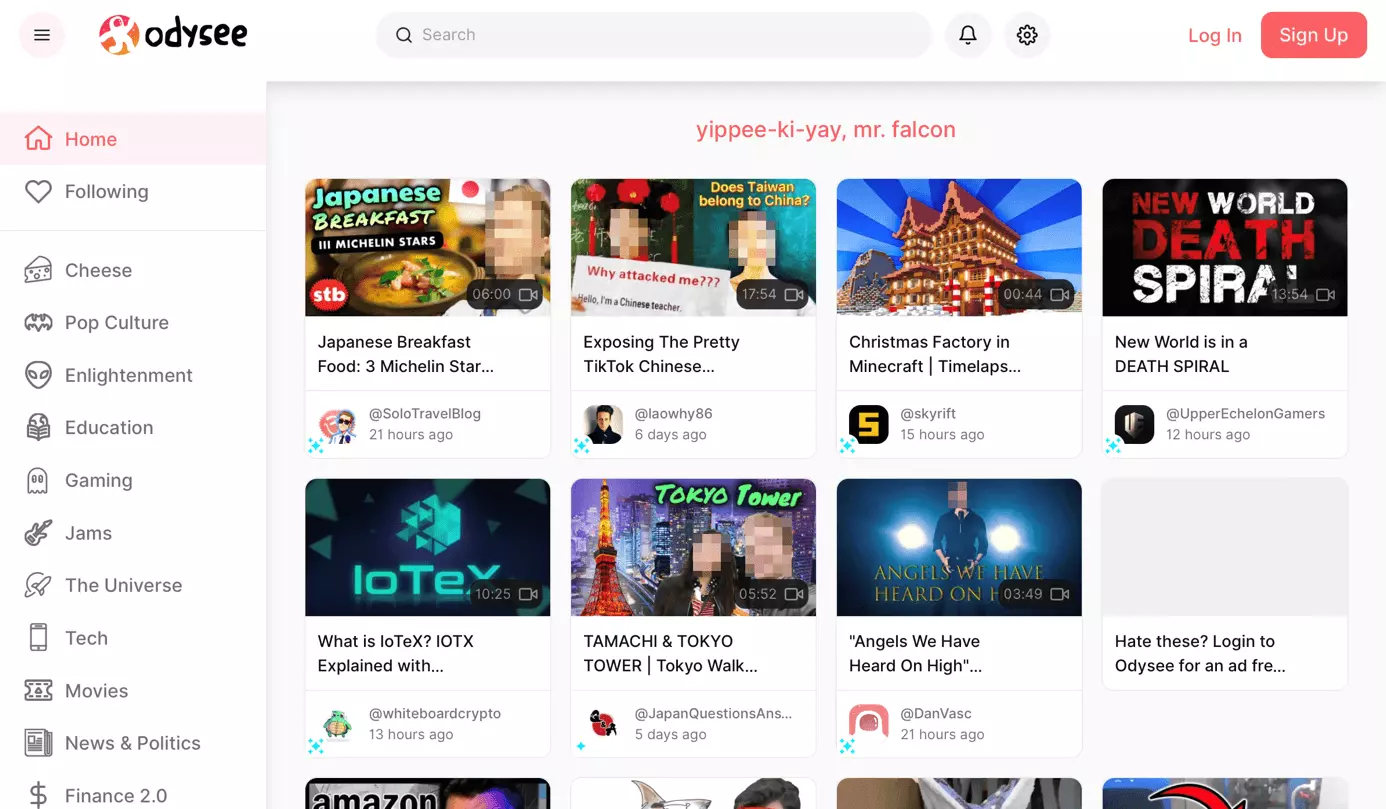
Much like other blockchain alternatives to YouTube, Odysee is independent from a central unit and users have complete control over the content. Of course, odyssey users need to adhere to certain guidelines: trademarked or copyrighted content may not be distributed, nor content that glorifies violence. However, Odysee does not have censorship authority like Google. The platform is ad-free, as the channels are monetised exclusively on the basis of the cryptocurrency. On the one hand, content creators receive LBRY credits for views, on the other hand, viewers can make donations (similar to Twitch).
When it comes to video uploads, Odysee has some strict requirements: at least 10 wallet credits are required, otherwise the upload option remains deactivated. Users can buy credits or receive them as a reward for views, email verification, member recruitment and more. Once the option for uploading videos is activated, users can publish clips with a size of up to 4GB. The Odysee team recommends the MP4 format (H264/AAC) and a resolution of maximum 720p.
The structure and design of Odysee are based on YouTube, which should make switching to or trying out the blockchain platform appealing to die-hard fans of the Google platform. As an alternative to the homepage featuring popular clips, users can call up categories such as ‘Technology’, ‘Finance 2.0’ or ‘The Universe’ from the left side menu to obtain a thematically sorted selection of videos.
| Advantages | Disadvantages |
|---|---|
| ✓ Free and ad-free | ✗ Fewer users and video content |
| ✓ Decentralised storage of content | ✗ Videos cannot be embedded on other websites |
| ✓ Protection from censorship |
Instagram Video
Instagram is a social media app known for sharing photos, but users can also post videos. Instagram Video is a dedicated area for sharing videos. It combines Instagram’s own TV channel IGTV and feed videos since October 2021. Here, users can upload their video content via the app or on the web and comment or like content shared by other users. The recommended video format is MP4, while video length can be a minimum of fifteen seconds and a maximum of one hour.
One feature that makes Instagram Video stand out from other YouTube alternatives is the option to design or decorate video content with filters and emojis. Furthermore, featured locations and Instagram users can be tagged in a video. Mobile phones rejoice: thanks to mobile optimisation, Instagram Video enables clip views on mobile phones in portrait and full-screen mode.


Like many other social platforms, so-called hashtags are important on Instagram Video. Hashtags make it easy to find videos that match user interests or are trending when searching for keywords. Social sharing and Instagram video reach are solid and as with YouTube, the platform is a good place for influencers to showcase products and brands.
| Advantages | Disadvantages |
|---|---|
| ✓ Social media platform with enormous reach | ✗ Searching for specific videos not possible (only for hashtags, accounts, etc.) |
| ✓ App and web version available | |
| ✓ Plenty of design features |
Wistia
Wistia is a video hosting platform founded in 2006 that has made it its mission to support companies in the creation and distribution of videos. Video marketing is now an indispensable tool for building and increasing brand awareness. Videos created with the help of Wistia are not only characterised by fast loading times, but are also search engine optimised. It is therefore not surprising that the video platform is used by smaller companies and well-known brands such as Starbucks and Tiffany.
In addition, Wistia publishes its own series and podcasts, some in collaboration with freelancers. These include the documentary “One, Ten, One Hundred,” which won a Webby Award in 2019 that features a video production agency taking on the challenge of creating three commercials, each with a different budget.
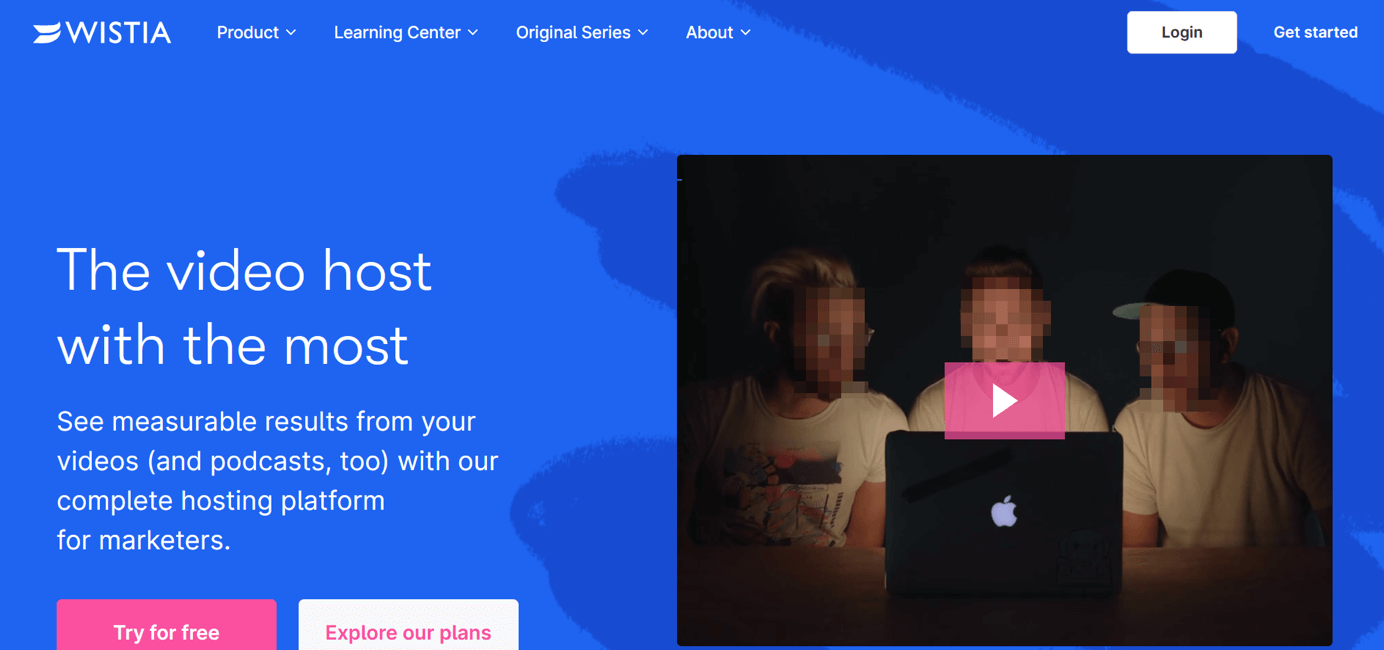
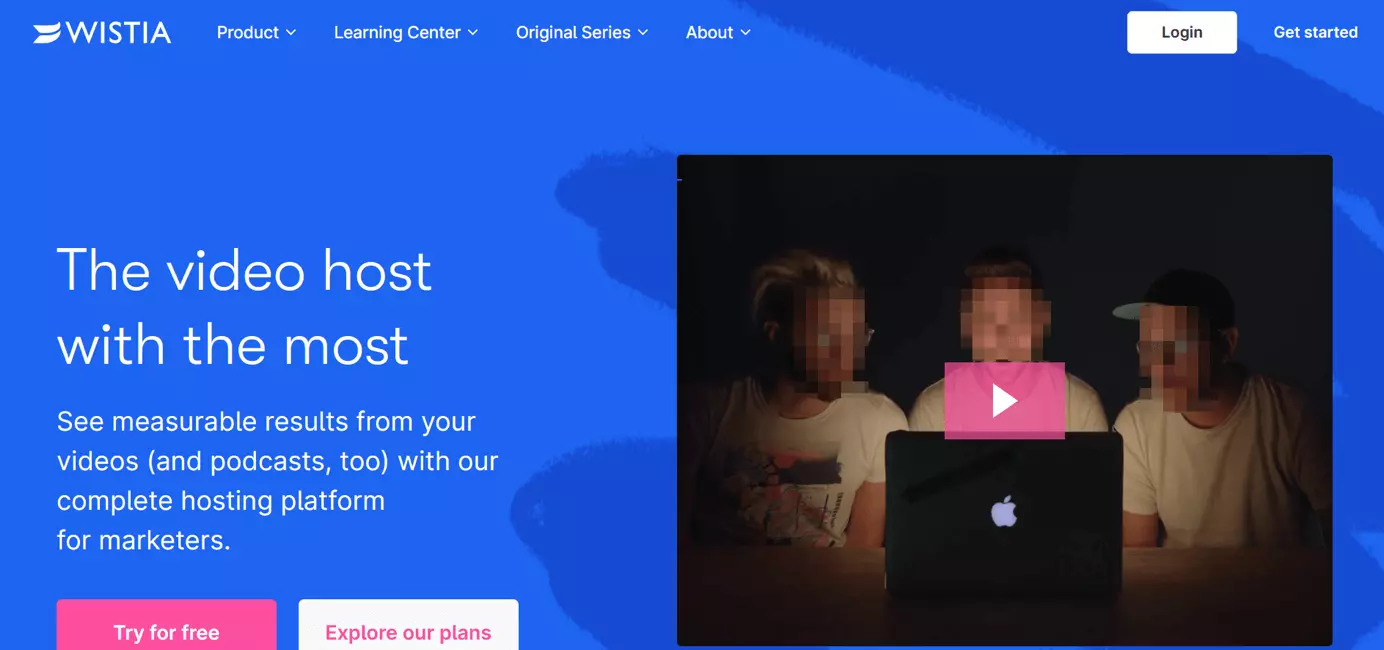
Wistia has a total of three pricing plans users can choose from. The free option offers general functionalities like a customisable video player and interactive video tools. Up to 250 people can subscribe to a channel and three videos can be embedded elsewhere. The Pro version, on the other hand, costs £73 per month and adds to the range of options including email notifications for subscribers and a watermark for video players. If you need even more features and no restrictions like a 250-subscriber limit, contact Wistia for an Advanced account.
| Advantages | Disadvantages |
| ✓ Professional video platform for companies | ✗ Expensive Pro and Advanced pricing model required for more features, etc. |
| ✓ Many standard features included in the free offer | ✗ Focused on business |
| ✓ Search engine optimised videos |
Brightcove
US-based software company Brightcove helps organisations publish and optimise broadcast-quality video content. Brightcove’s video communications platform is called Video Cloud. Here users can upload their videos and access API and SDK tools and real-time video analytics. Other offerings, such as the Video Marketing Suite, are designed specifically for customers who wish to use their video content for marketing purposes. Their services range from search engine optimisation to interactive video content.
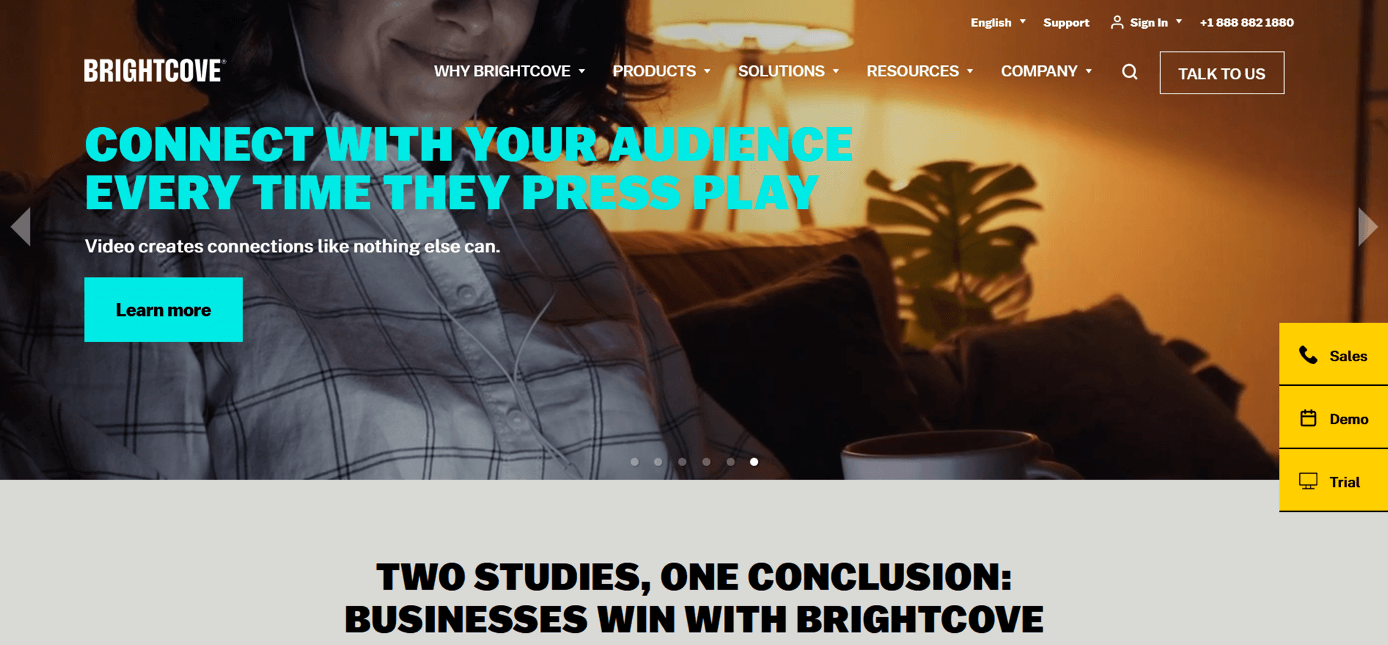
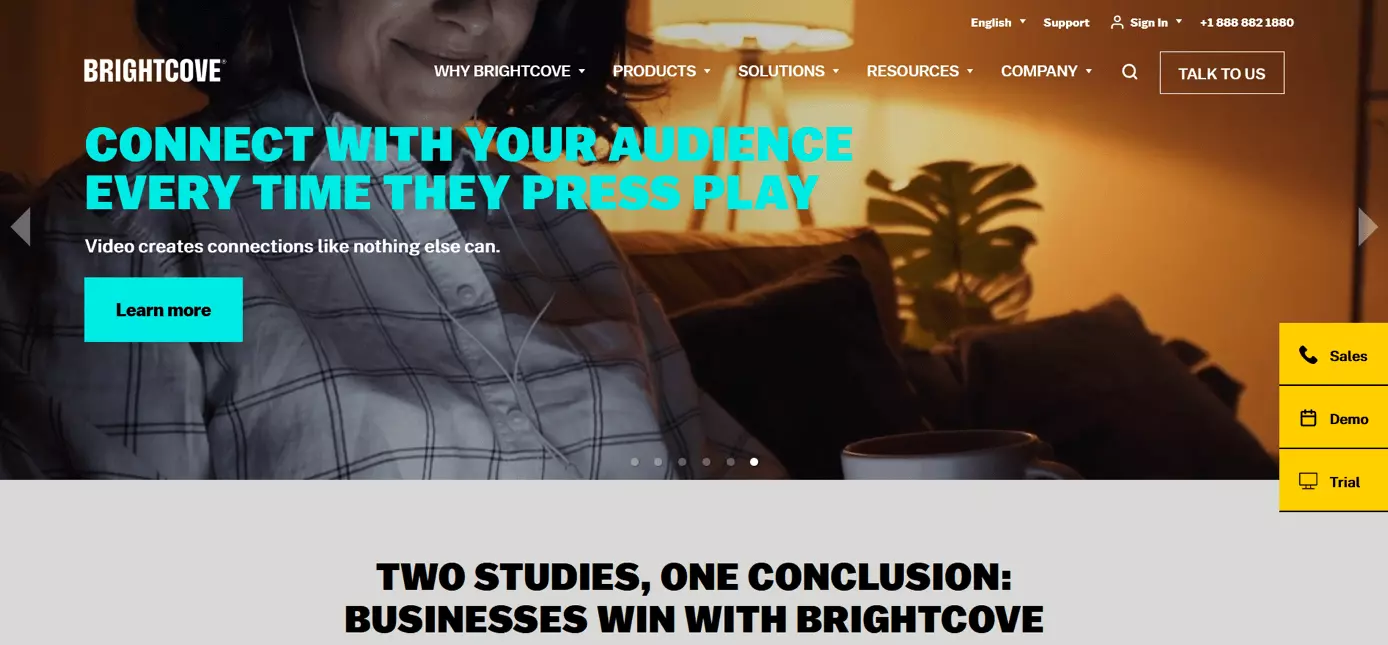
Unfortunately, Brightcove does not provide a breakdown of its pricing. If you wish to learn more, fill out a contact form or contact the provider by phone. However, there is a detailed guide available on its support page, which features important details about the Video Cloud and the like. The page is titled Brightcove Documentation.
| Advantages | Disadvantages |
|---|---|
| ✓ Diverse range of products and solutions | ✗ Costs unknown, contact Brightcove for information |
| ✓ Broadcast video quality | ✗ Not a video sharing platform |
| ✓ Detailed support page |
Summary
The overview shows that all 10 featured YouTube alternatives have found their niche: while Dailymotion is still the closest to YouTube’s principle, Vimeo distances itself from its competitors with its high-quality and artistically ambitious content. Vevo is a great platform for music artists –even if the service no longer offers its own platform. Twitch has become a streaming provider for gaming and e-sports, while VidLii is reminiscent of YouTube’s early days. Dtube and Odysee are taking a new approach to content storage with blockchain technologies, while Instagram Video is enjoying huge popularity among social media apps. Wistia and Brightcove are helping businesses when it comes to video hosting.
All 10 YouTube alternatives offer benefits that cater to different demands and target groups. Many providers have taken the leap and are now available on mobile devices and on gadgets in people’s living rooms.
Reviewer

Melissa Senn
Melissa Senn has been with IONOS since 2016 and focuses on website, e-commerce, social media, and AI in the Digital Guide. As a digital strategist, she uses her extensive SEO and GEO experience to transform complex technological trends into practical content.