

What is ray tracing? The graphics technique explained!

Ray tracing is a type of graphics technology that realistically calculates visible and invisible rays of light. It enables lifelike lighting in computer games and animated 3D graphics and is increasingly used as a hardware feature in the form of real-time ray tracing. So, what exactly is ray tracing?
- KVM based dev servers for developers
- Scalable to enterprise cloud level
- Pay-as-you-go, per-minute billing
Ray tracing: Explained
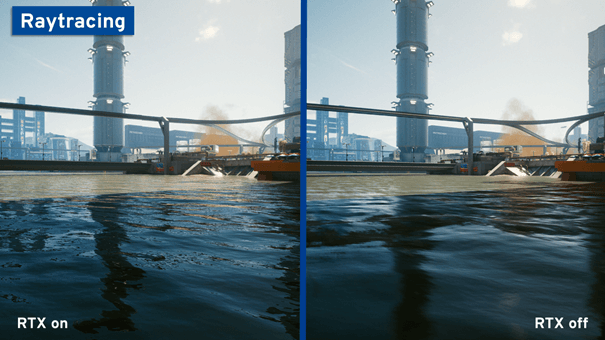
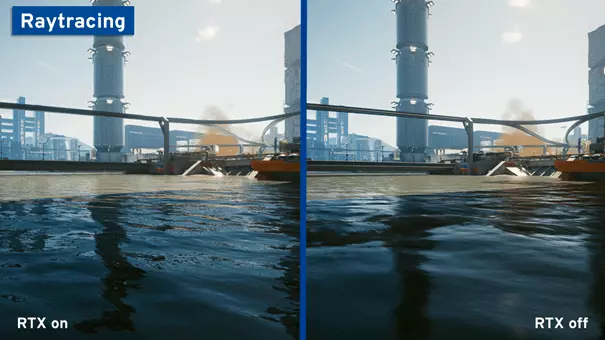
As a graphic technology, ray tracing allows for the fluid simulation of lighting effects. An algorithm emits rays in the form of a 3D graphic, traces the rays’ paths and then calculates a realistic lighting model. Anyone that is familiar with computer games and graphics cards will inevitably be familiar with ray tracing too, as it is usually used with these technologies. The most recent and most famous example is the ‘GeForce RTX’ generation of graphics cards from Nvidia. RTX graphics cards (RTX stands for ray tracing) have supported real-time ray tracing as a hardware feature since 2018.
What function does ray tracing fulfil?
In principle, the function of ray tracing is simple. First, a 3D graphic with 3D objects is designed with 3D modelling software (e.g., Blender or Cinema 4D) and is then animated as a scene. To simulate lifelike lighting in realistic 3D landscapes, light sources are placed to make 3D objects ‘visible’. This is where ray tracing comes into play. Like in all 3D animations, a virtual camera acts as the eye of the viewer. With the help of ray tracing technology, the algorithm draws rays and lines between objects and the camera and works out whether these are visible for the camera and how many pixels each line needs.
In addition, ray tracing identifies whether rays of light come from original light sources or from reflected objects in the field of view of the camera. The algorithm then defines pixel colours based on the tracked rays, reflections, incidence of light and surface textures. Even objects and light sources that cannot be seen are included in the rendering. The result is a realistic lighting model with complex light and shadow effects in real time. In addition, Nvidia’s RTX technology works with a type of artificial intelligence known as ‘Deep Learning Super Sampling’ in order to get an optimal resolution and frame rate.
What different types of ray tracing are there?
The extent to which ray tracing affects the realism of a 3D graphic depends on the type of ray tracing used. Below we have listed different ray tracing methods in ascending order according to the computing power required and historical development:
- Hidden-surface determination: This rudimentary determination process does not include shadow or light effects in the animation.
- Shadow simulation: Direct light sources and hard shadows are used but reflection effects are not calculated.
- Recursive ray tracing: In addition to direct light sources and hard shadows, ray tracing for mirror reflection is used with translucent or reflective objects.
- Diffuse ray tracing: In addition to direct lighting and refraction, umbra/penumbra and soft shadow edges are rendered.
- Path ray tracing: The lighting model includes and records visible and invisible light sources, reflections, and refractions through lit objects. This creates realistic shadow simulations according to the play of light.
Where is ray tracing used?
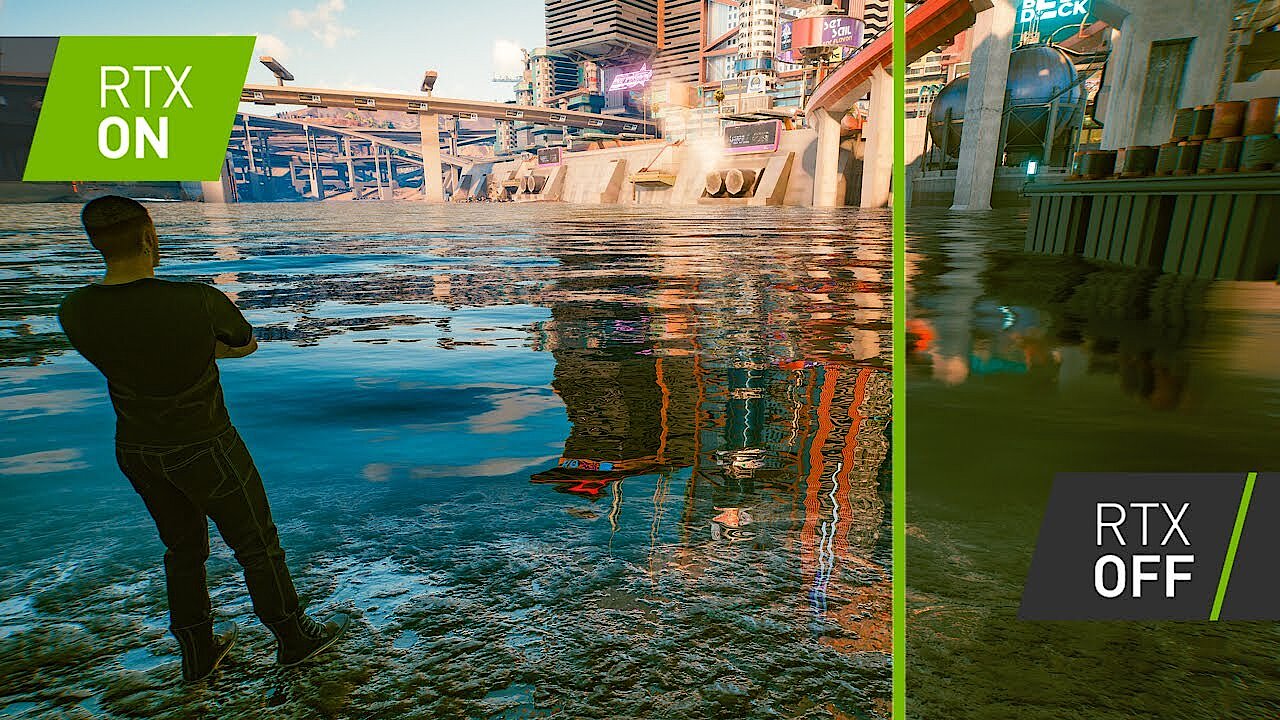
Ray tracing is primarily used in 3D computer graphics and has become more well-known by computer gamers since Nvidia’s RTX graphics card generation was introduced in 2018. With ray tracing that is activated or supported by hardware, it is now possible to create even more effective and realistic light effects in video games. The graphic effects not only include light effects visible in the field of vision (so-called screenspace effects), but also reflections, light, and shadow outside the field of vision – including a global, virtual sun. Since this requires enormous computing power, even for hardware with ray tracing, this feature has only been used in a few games so far.
Ray tracing as a graphics technology is still only in its infancy. Currently, the Nvidia’s RTX 3000 series (the 2nd generation of Nvidia RTX graphics cards) represent the next step in ray tracing as they offer even more ray tracing arithmetic units. Due to the different equipment of PCs and the enormous performance requirements, the technology, which is revolutionary in its approach, remains a niche graphics technology for the time being. The newer console generations, such as the Xbox Series X or PlayStation 5, are making the first steps towards supporting global ray tracing through the implementation of hardware which supports the technology.
 To display this video, third-party cookies are required. You can access and change your cookie settings here.
 What are the technical requirements for ray tracing?
Until now, only a few hardware and software systems supported ray tracing technology. To display games and animations with fluid ray tracing, a fast, powerful computer and RTX graphic card are essential. Often costly PC upgrades are needed in order to possess the necessary computing power. Graphic cards that offer ray tracing support include the first and second Nvidia RTX generation graphic cards (e.g., the GeForce RTX 2070 and GeForce RTX 3070). Certain AMD graphics cards from the Radeon-RX-6000 generation, such as the RX 6800 and RX 6900 XT, also already support ray tracing.
The following games use ray tracing:
A range of different PC and computer games already offer ray tracing support.
PC games with ray tracing
- Minecraft RTX
- Shadow of the Tomb Raider
- The Witcher 3: Complete Edition
- Call of Duty: Black Ops Cold War
- Control
- F1 2021
Console games with ray tracing:
- Gran Turismo 7
- Halo Infinite
- Watch Dogs: Legion
- Gears 5