

PHP 7.1 EOL - support is expiring

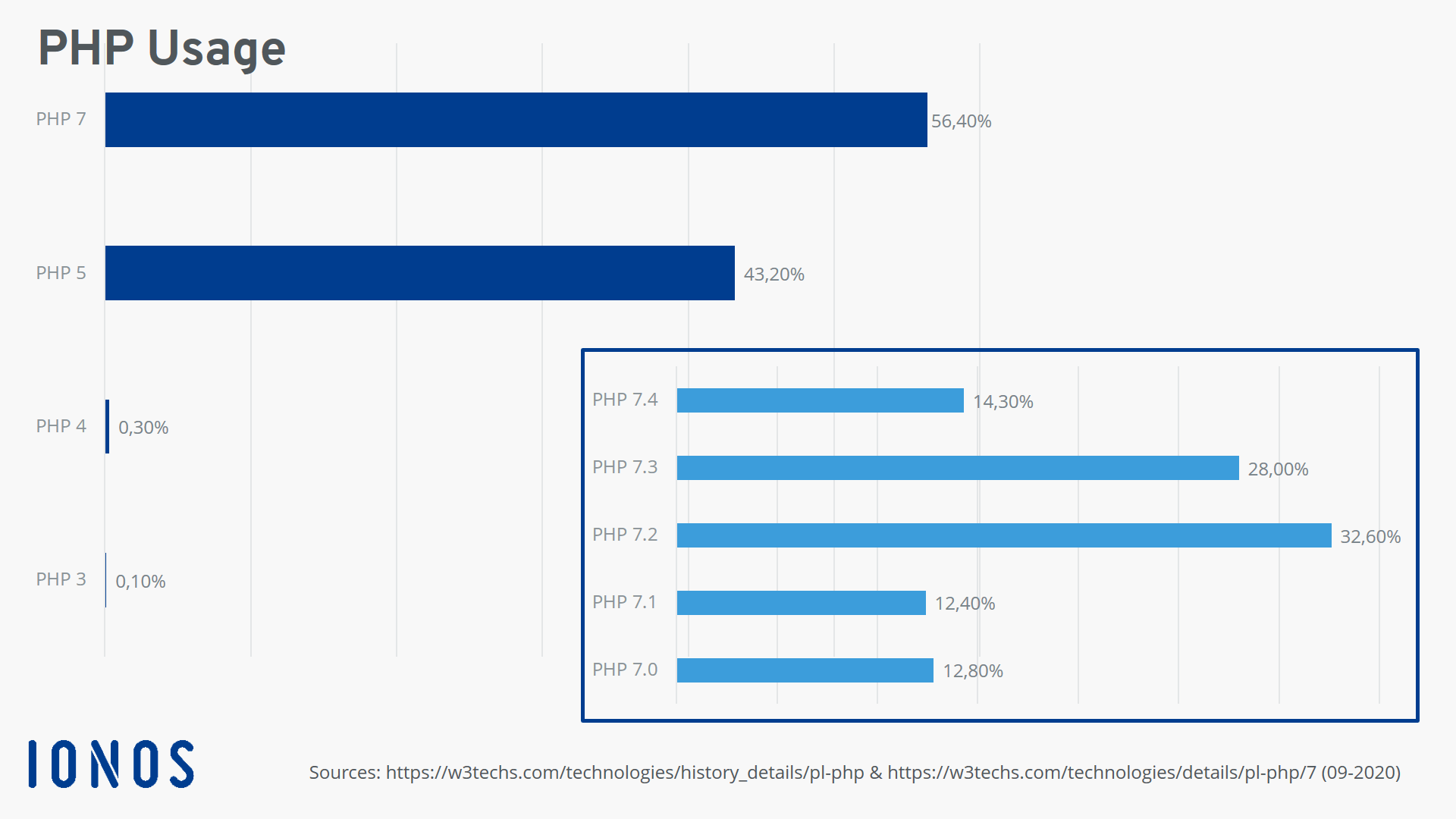
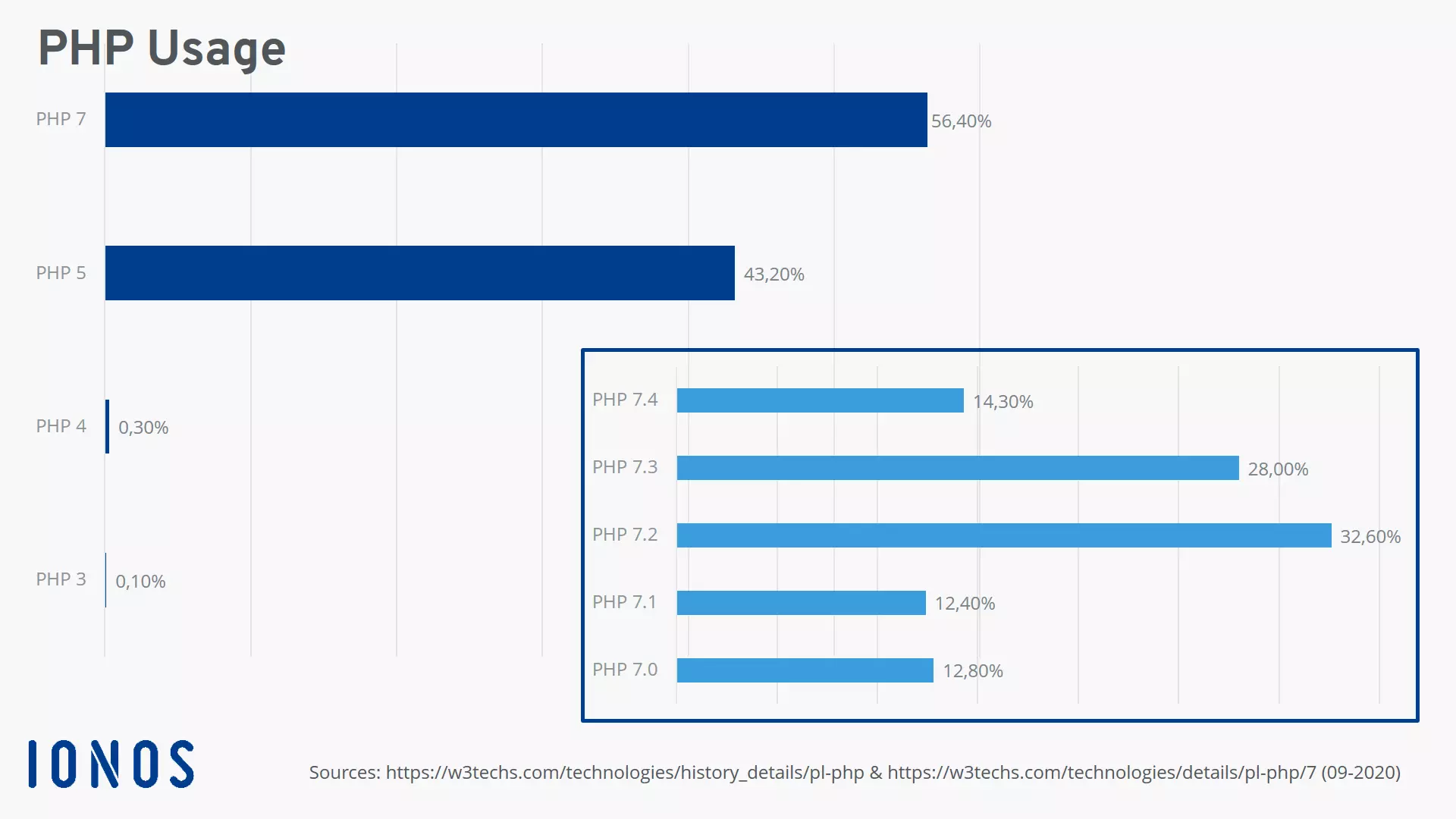
PHP is used worldwide to equip websites with special features. Similar to JavaScript, a website with PHP can contain more functions than just the pure HTML document, with these functions being similar to those found in complete programs. PHP 7.1 is currently one of the most popular versions of the scripting language. But not for much longer since PHP 7.1’s days are numbered. The developers have announced an end-of-life date (EOL). After that, support for this version will come to an end. What does this mean for users?
PHP 7.1: Why is this version so popular?
After skipping a version number (PHP 6 never saw the light of day), PHP 7.0 was released in December 2015. A year later, version 7.1 came out. The 7-series came with even more advantages compared to PHP 5. The fact that less memory was used but the performance was much better, meant that many users quickly switched to the new version. In addition to the core, the parser, lexer, and bytecode generator had also been thoroughly revised.
But good performance is not the only reason why many users like to stick with outdated PHP versions. While some simply breeze through the change, others worry about destroying their entire web presence during the changeover. There’s always a risk: it could be that after changing to a new PHP version, the rest of the code has to be adapted and plug-ins may not work as well as usual so you have to find new ways to implement features. Most of the time, however, the migration effort is much less than many web developers assume - especially within the same version. Larger changes are next expected with PHP 8. This new version should start after PHP 7.4 and is planned for 2020 or 2021.
PHP 7.1 - End of life
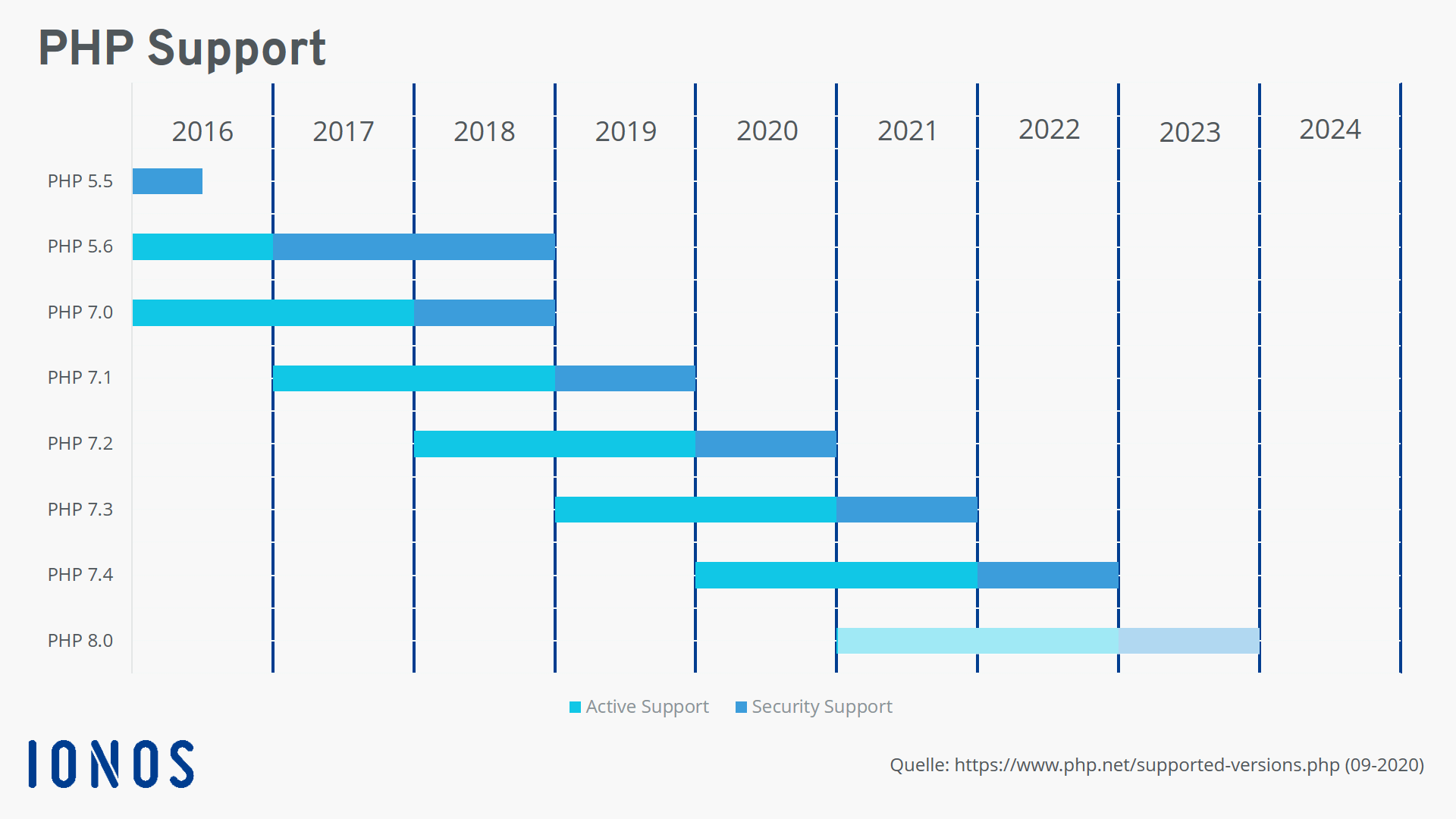
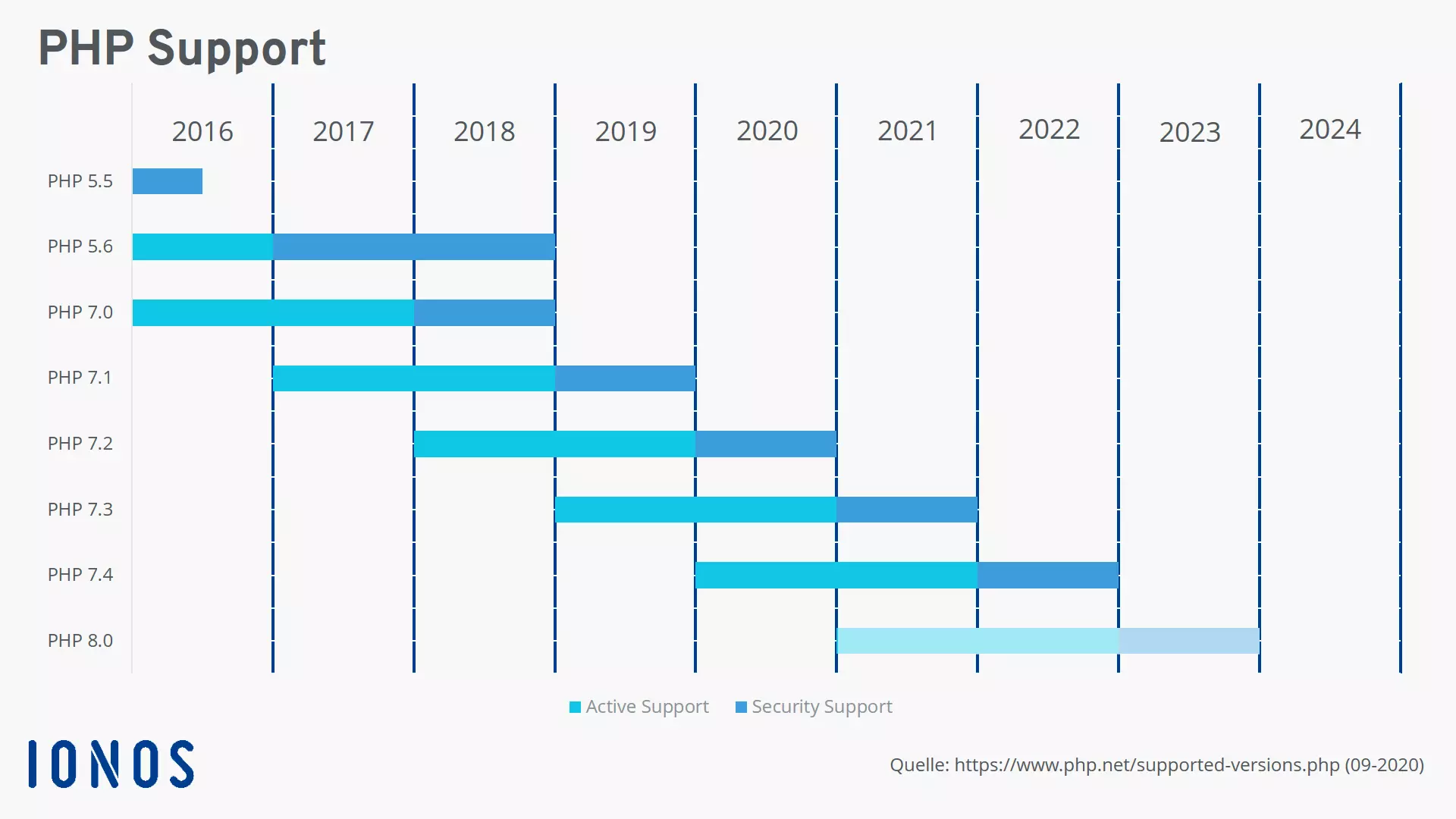
Support for PHP 7.1 expires on the 1st of December, 1, 2019. While active support was discontinued a year earlier, the developers continued to deliver security updates in recent months to prevent users from becoming victims of cyberattacks. However, this support is now also being phased out. While PHP 5.6 was so popular that it was decided to extend support, PHP 7.1 will follow the planned lifecycle.
#PHP 7.1 is now in security fix only mode. 7.1 security support runs until Dec 1st 2019.
— php.net (@official_php) January 1, 2019
All prior versions of PHP are no longer supported by the PHP project. Plan your upgrades to PHP 7.3!https://t.co/9sR8EquI8p
Older versions are no longer supported by the development team in order to free up capacity so that the team can concentrate on further developments. As a rule, PHP versions follow a very specific pattern when it comes to their releases: Every year, around the beginning of December, a new version of the scripting language is released. This version will then be actively supported for two years. This is followed by 12 months of security support. After that the version is declared dead (end of life) and all users are asked to switch to a newer PHP version.Older versions are no longer supported by the development team in order to free up capacity so that the team can concentrate on further developments. As a rule, PHP versions follow a very specific pattern when it comes to their releases: Every year, around the beginning of December, a new version of the scripting language is released. This version will then be actively supported for two years. This is followed by 12 months of security support. After that the version is declared dead (end of life) and all users are asked to switch to a newer PHP version.
What do PHP 7.1 users need to do now?
PHP 7.3 has already been released. PHP 7.4 will also be available in December 2019. It therefore makes sense to switch to one of these newer versions. An upgrade to 7.2, on the other hand, doesn’t make much sense: at the moment, the support for PHP 7.1 has completely ended and the active support for version 7.2 will also end. This version will then only receive security support - again for one year. For version 7.3, on the other hand, support will not expire until December 2021.
PHP 7.4 is getting closer.
— php.net (@official_php) October 18, 2019
Release Candidate 4 is now available for testing. Time is running out to find those last minute bugs!https://t.co/OiSDK7E0xS pic.twitter.com/2dMKPrdLfL
Under no circumstances should you continue to rely on PHP 7.1 in the long term. After the developers discontinue the security support, there’s no guarantee that the product will still be secure. Any security gaps won’t be closed, meaning attackers could easily exploit these vulnerabilities.
IONOS customers benefit from another delay: you can opt for Extended Support from us. This means you will continue to receive security updates and will not have to worry about gaps in the scripting language.
If you are not sure which version to use for your website, you can usually find out in your hosting provider’s control centre. Sometimes it’s even possible to change versions there. Although the switch can theoretically be completed in just a few clicks, it could still take some time. For example, if you work with WordPress, you may experience problems after switching.
It therefore makes sense to test the new version in a safe environment before you try out the online version of your website. However, even if the switch involves further work, a change makes more than sense: as well as providing better security, newer PHP versions also promise better performance.