

What are the main email marketing trends?

Many of the trends for email marketing may seem familiar to you – a sign that these tendencies are becoming more important than ever. Other methods, such as A/B testing or responsive design, have become so standard that they no longer need to be explained here.
These are the 9 email marketing trends
Generally, this year’s email marketing trends are also aimed at inspiring readers and challenging them with new ideas. The biggest challenge with newsletters is providing users with useful content and original advertising messages. Data protection is a growing challenge here. That’s why it’s important to find ways to measure success in a way that does not disrupt user privacy.
- Accessibility
- Hyper-personalisation
- Omnichannel marketing
- Automation
- User-generated content
- Interactive content (gamification)
- Plain text emails
- Artificial intelligence (AI)
- Data protection and privacy
- Fast drag and drop editing
- AI-powered text generation
- Seamless syncing with IONOS eCommerce
Accessibility
Your clientele is diverse, and your newsletter should reflect that. It will be even more important to design your emails in a way that makes all recipients feel addressed and able to access the content. This includes people with visual impairments. Therefore, don’t get too creative with the colour selection, and ensure you include strong contrasts. This helps both people with visual impairments and those who are colour blind. Enough white space, i.e., blank spaces, visually structures the text and makes it even easier to read.
Also, assume that people who can’t see at all will be receiving your newsletters. Blind people often use a screen reader. This software captures the content on the screen and then reads it aloud. So, for your newsletter content to be expressed, it must also be perceived as text. That’s why you shouldn’t exclusively place content in graphics. For HTML newsletters, use additional alt texts that put the image content into words.
For newsletters, you can follow the same tips that apply to accessible websites:
- Clear text design with plenty of whitespace
- High contrast and restrained colour design
- Correct HTML formatting
- Meaningful alternative texts for images
- Clearly recognisable buttons and links
However, accessibility can also refer to the language used. Not every mail recipient can decode nested sentences and understand foreign words. If you offer a version in simple language in addition to the detailed text, you will actively be promoting inclusion.
Hyper-personalisation
Hyper-personalisation is an advanced approach to customising emails that goes beyond traditional personalisation methods, such as addressing recipients by name. Instead, this newsletter trend leverages modern technologies like artificial intelligence, machine learning, and big data to create personalised content based on recipients’ behaviour, preferences, and history.
With AI-driven data collection and analysis, newsletters can be generated in real-time according to current interests and needs. The larger the data pool, the more promising the results. However, it is crucial to keep data privacy in focus and ensure that the collection and processing of sensitive data always comply with state laws.
Typical applications of hyper-personalisation include:
- Product recommendations based on previous purchases,
- Time-sensitive offers tailored to the current season or local events
- Individually optimised subject lines and call-to-actions.
Omnichannel marketing
A growing trend for companies is the omnichannel marketing approach. This means your newsletters should become a puzzle piece within an omnichannel marketing strategy that covers all the relevant channels (digital, analog and physical), rather than a stand-alone means of customer communication.
Email marketing is arguably the most important constant in an omnichannel marketing strategy. Newsletters are an effective tool for customer retention and are known to have a high ROI (return on investment). You gain valuable insights about your target group(s) that can directly be applied to actions on other channels. In addition, there is a high level of flexibility when designing your email campaign: you can test different strategies and adjust the goals you are pursuing easily.
Give your newsletters an individual touch and a feeling of exclusivity by creating your own email address with IONOS. You’ll benefit from features such as virus protection and modern spam filters as well as a forwarding service and email archiving.
Automation
While automation is not a new email marketing trend, it is a continuing one and it is becoming increasingly important. In the past, it might have been sufficient to send a message once a week and schedule a dispatch date in advance. Good automation reacts to users’ behaviour. This way, you can accompany different users in their purchase decisions.
Good newsletter automation works via triggers. Depending on how your customers act (or don’t act), you send an automated, prepared email. Simple triggers can be registration or purchase, for example, after which you send a confirmation. But it can be more complex if you build chains and let them branch out. For example, with well-set automation, you send different messages depending on whether the reader opened your last newsletter or it ended up unopened in the trash. A/B tests can also be perfectly controlled by way of email automation.
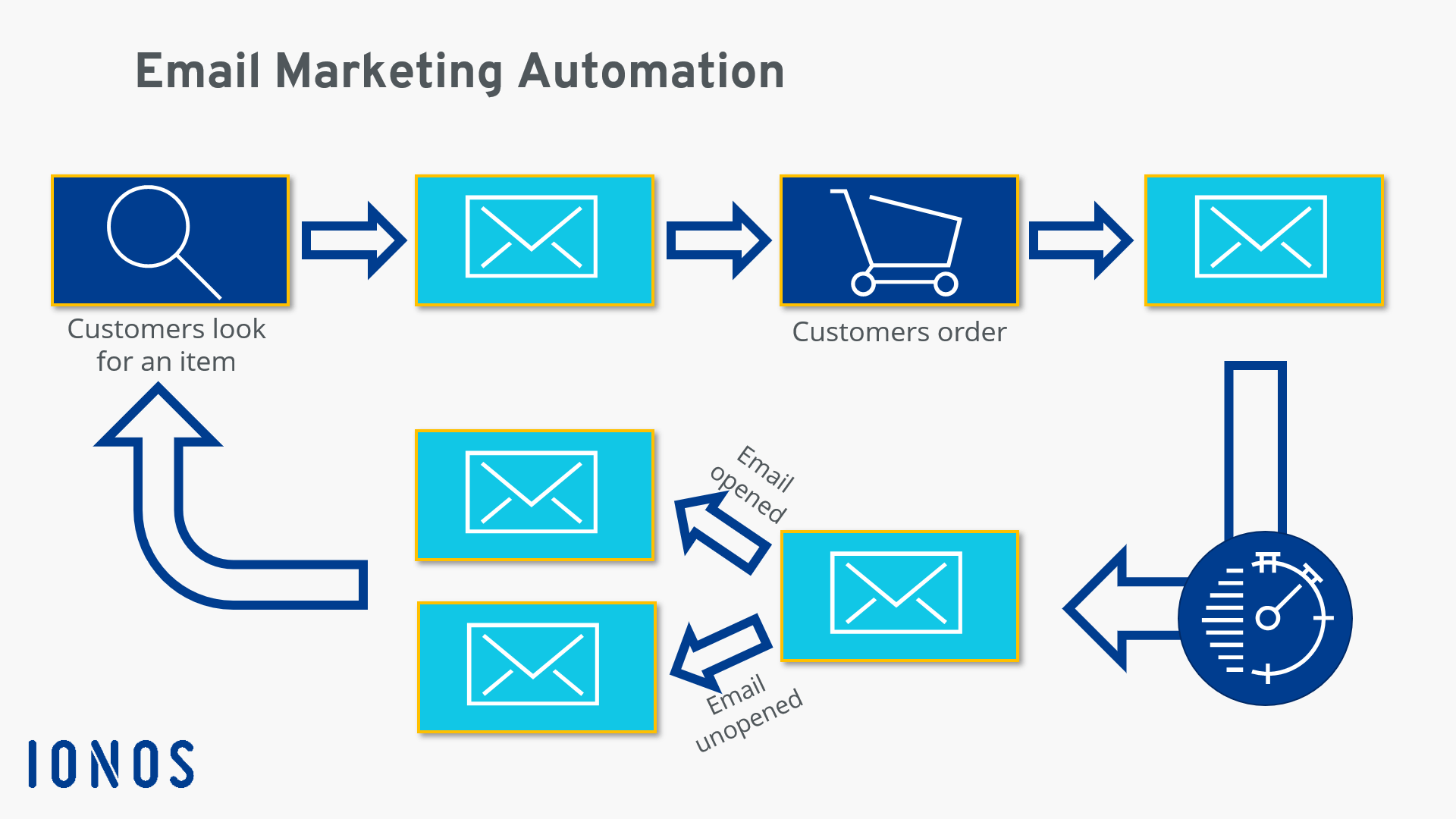
Thanks to automation, you can get two things done at once: on the one hand, you can react much faster and more individually to each user. Depending on how your customers act online, you can prepare the right email for them and can send it in real-time. On the other hand, you save resources because automation processes mean you need less time and fewer staff members to run effective email marketing.
User-generated content
Trying to convince readers of products or services is always a challenge, regardless of how well you have designed your newsletter. The reality is that you cannot beat the persuasiveness and trustworthiness of reviews and opinions from other users. User-generated content can be a real marketing asset and an important email marketing trend.
Another option to make your newsletters more personal is to include content from users or customers. The most popular method involves adding customer reviews into emails. A positive comment about your products or services in the introduction of your newsletter will immediately reflect positively on your readers and spark interest. More detailed reviews are well received because they take the reader’s perspective and are thus more credible than traditional advertising messages. Also, unboxing videos (if relevant to your business) are a valuable stylistic device.


You can also incorporate user-generated content into your email marketing campaign by engaging your readers through a survey and collecting informative data on their shopping preferences etc. Add a call to vote into the first email and follow it up with the survey in your subsequent newsletter. You can personalise it even more by organising challenges, for example, on social networks and then present the winners in your newsletter.
Email marketing and user-generated content (UGC) go hand in hand: Newsletters lend themselves to showcasing UGC, but they are also an effective tool for collecting contributions from users. An automated and timed email following a purchase may entice customers to leave a review.
Interactive content (gamification)
Another email trend is aimed at interactive content. This means that users can influence the content when reading the email. This is based on the idea of gamification: typical game elements that challenge the reader are inserted into the email. The principle works because the user experiences a sense of success from playing and doing well, even though they don’t technically get anything for winning. However, you can create incentives if you want to, by distributing small prizes, such as vouchers, as a reward.
But it doesn’t always have to be a game. Anything a reader can click on will increase their interest. For example, several tabs can be integrated within an email so that the reader can click through the offer. In the spirit of user-generated content, surveys can be filled out directly in an email for great results. This gives you a double advantage: on the one hand, you can collect interesting data from the survey and on the other hand, your email will get more attention.
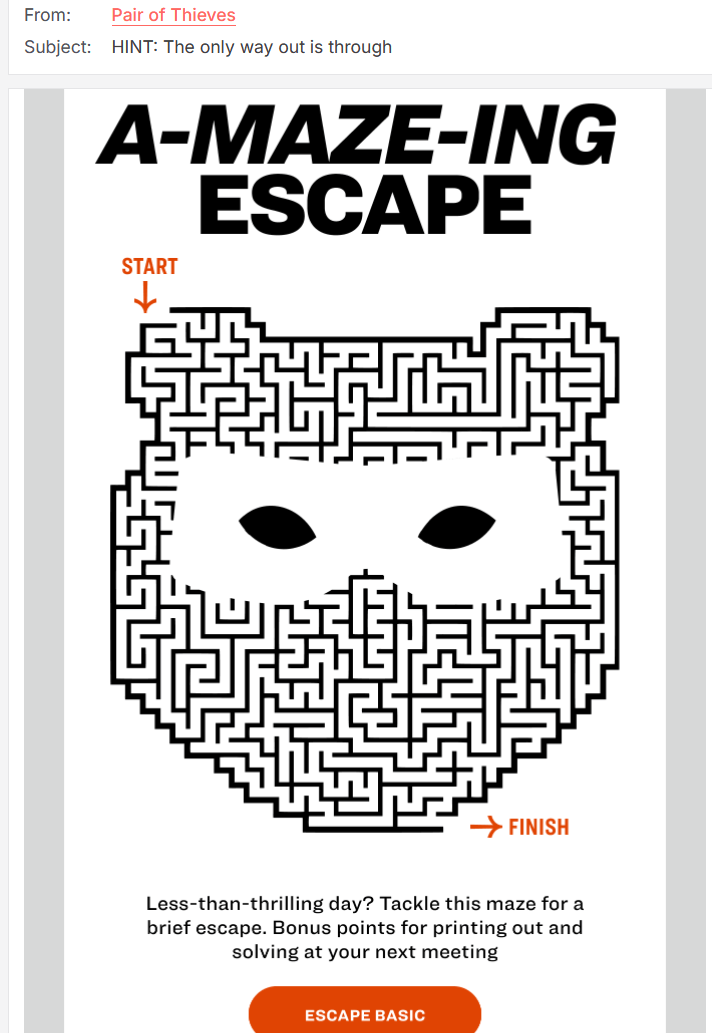

Not every user can display interactive elements correctly, so make sure your email looks acceptable and interesting to read even without these elements present. You can also provide a link so that the content can be displayed in the browser.
Plain text emails
Although interactive and elaborative content is part of our list of successful email marketing trends, you might notice that a countermovement is happening at the same time: some marketers are going back to plain text emails. This ensures that all users see the email as intended. For example, recipients do not have to consent to downloading or displaying images (external content).
However, the option deprives you of plenty of design options to attract attention which means you’ll need to convince readers through the content of your texts. Write texts that intrigue readers and win them over; texts that are ideally followed with a call-to-action. Keep it short for newsletters: large blocks of text tend to discourage readers. You can include lists to break up the typeface a bit.
The advantages of a plain text email include correct presentation. These types of newsletters are usually inexpensive and quick to produce. While graphically complex emails may require the assistance of designers and photographers, plain text emails are easy to produce. Plain text emails may stand out from the crowd and attract more attention from readers, because they look very different from more graphic ones.
Artificial intelligence (AI)
AI is increasingly expanding beyond the field of computer science. After global players like Google, smaller companies are now also relying on artificial intelligence and machine learning. As a result, another emerging email marketing trend is leveraging artificial intelligence for creating and distributing newsletters—beyond just hyper-personalisation. While this development is still in its early stages, it is advisable to get involved now and stay ahead of the curve. The focus is primarily on optimisation and predictive analytics.
For example, artificial intelligence can determine the best dispatch time. It is not only possible to determine the optimal time for large groups, but you can also do this for individual recipients as well. The same applies to the very important subject line: if it isn’t appealing enough, the email won’t be opened. AI can also help here, although it goes one step further. Thanks to the enormous amount of data that artificial intelligence can process, it also makes it possible to make predictions. This way the computer can determine beforehand how well a certain image in a newsletter will be received, for example.
- Fast drag and drop editing
- AI-powered text generation
- Seamless syncing with IONOS eCommerce
Data protection and privacy
Another email trend is competing with the possibilities of artificial intelligence and shouldn’t be ignored: data protection. This, of course, isn’t a new topic. Data protection is, was, and will continue to be an important task for marketing specialists. The large amount of personal information makes it easier to advertise on the internet (especially in combination with AI). You need to comply with the laws, however. If you fail to do this, your (future) customers will lose faith in you.
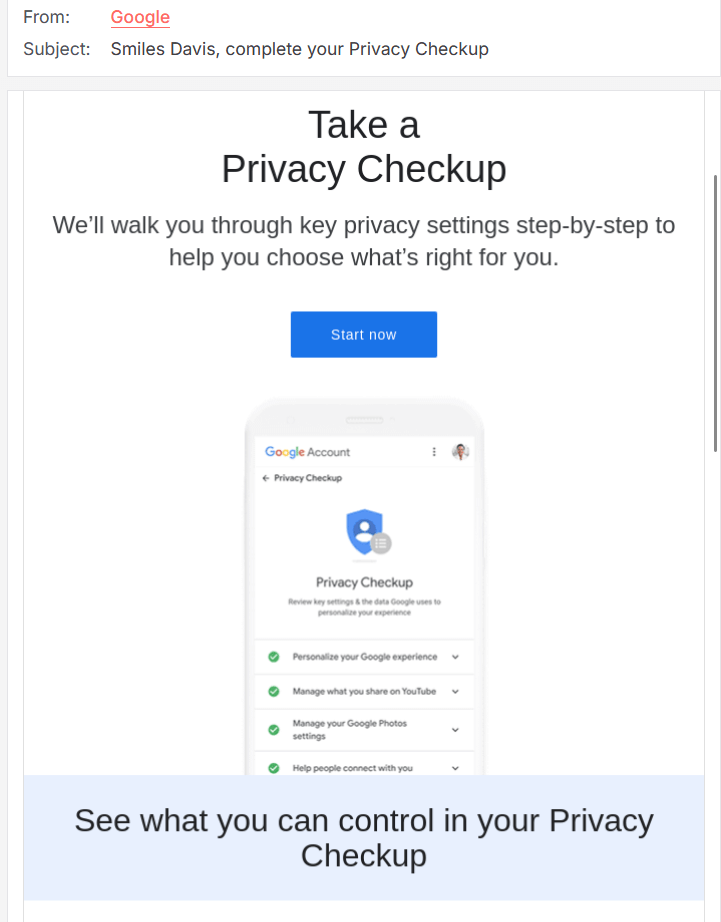

In the UK, data protection is governed by the UK General Data Protection Regulation (UK GDPR) and the Data Protection Act 2018 (DPA 2018). These laws set strict requirements for handling personal data, ensuring that businesses process information lawfully, fairly, and transparently. If you send marketing emails to individuals in the UK, you must adhere to these regulations. Under UK GDPR, businesses must obtain explicit consent from customers before collecting and using their personal data for marketing purposes. Data collected for one purpose (such as completing a purchase) cannot be used for advertising without separate consent. However, UK GDPR does allow data processing under other legal bases, such as contractual necessity, legal obligation, or legitimate interest.
Businesses also have extensive documentation and transparency obligations. This means they must inform users about what personal data is collected, why it is collected, and how it will be used. Additionally, individuals have the right to request deletion of their personal data (the ’Right to Be Forgotten’), although businesses may refuse if they are required to retain the data for legal, contractual, or security reasons. Moreover, organisations must ensure that personal data is securely stored and protected from breaches, leaks, or unauthorised access. Failing to comply with UK GDPR can result in severe fines and damage to a company’s reputation. By following these data protection regulations, businesses can build trust with their customers while ensuring they meet legal requirements for handling personal data in the UK.
Another key principle is ‘privacy by default’, meaning that the most restrictive data collection settings must be enabled by default, and personal data may only be transmitted after explicit user consent. For email marketing, this means businesses must ensure clear and transparent opt-in procedures (such as double opt-in in GDPR-compliant countries) and allow users to easily opt out of marketing communications.
Ideas for successful newsletter campaigns
Throughout the year, you have many opportunities to adapt your email marketing seasonally and increase customer engagement. To help you stay ahead and plan your successful campaigns in advance, we have compiled some key dates for you:
| Date | Event for Newsletter Campaign |
|---|---|
| 1.1. | New Year’s Day: Wish your customers a great start to the new year. |
| 9.2. | Super Bowl: The American football spectacle is internationally popular. |
| 14.2 | Valentine’s Day: Romantic themes work best around Valentine’s Day every year. |
| 8.3. | International Women’s Day: Sending congratulations to your female customers is always a good idea. |
| 20.3. | First Day of Spring: As flowers start to bloom outside, it’s a great time to introduce new colours and fresh ideas in your mailings. |
| 30.03. | Mother’s Day: Not just for florists – Mother’s Day is a time for gifting all kinds of presents to mothers. |
| 20.4. | Easter: The Easter holidays primarily appeal to families. |
| 13.5.–17.5. | Eurovision Song Contest: This year, the European singing competition will take place in Basel. |
| 15.6 | Father’s Day: A great opportunity for businesses to promote gifts and experiences for dads. |
| 15.6.–13.7. | FIFA Club World Cup: This year marks the first expanded FIFA Club World Cup, with 32 teams competing in the USA. |
| 31.10. | Halloween: Halloween is growing in popularity in many countries, not just the U.S. and the UK. |
| 28.11. | Black Friday: Originally from the U.S., Black Friday has become a major success, especially in e-commerce. |
| 1.12. | Cyber Monday: Many online stores use Cyber Monday to kick off their holiday sales. |
| 25.12. | Christmas: Throughout the Advent season, and especially around Christmas Eve, festive promotions work well in newsletters. |
| 31.12. | New Year’s Eve: The end of the year is the perfect moment for a reflection – let your customers be part of it. |
- Write perfect emails with optional AI features
- Includes domain, spam filter and email forwarding
- Best of all, it's ad-free
Reviewers

Melissa Senn
Melissa Senn has been with IONOS since 2016 and focuses on website, e-commerce, social media, and AI in the Digital Guide. As a digital strategist, she uses her extensive SEO and GEO experience to transform complex technological trends into practical content.

Jeanna Raffa
With over 18 years of experience in online marketing, Jeanna Raffa possesses extensive expertise in digital marketing. Since 2020, her focus has been on providing practical information regarding email, office, and cloud storage solutions.