
What is AI telephony and how can it be of benefit?

AI telephony uses artificial intelligence to answer, process and respond to phone calls automatically. Instead of navigating rigid call menus, callers simply tell a digital phone assistant what they want. The assistant can understand the request and respond to what they say. It then either completes the task itself or routes the call to the right person.
What is AI telephony?
AI telephony goes far beyond traditional phone systems or IVR systems such as ‘Press 1 for …’. Traditional systems rely on predefined rules and keypad inputs. AI in telephony understands spoken language in its natural form. This means callers can describe their issue in their own words instead of navigating menus. The system analyses both the wording and the intent behind the request. Unlike traditional systems, AI-based ones improve over time as they process more conversations. AI telephony can ask follow-up questions, summarise information, and trigger actions automatically. Companies can also adjust processes quickly and easily, removing the need to redesign entire call flows. Phone interactions are also more natural and efficient as a result.
How does AI telephony work?
Several technologies work together to power AI telephony. First automatic speech recognition converts spoken language into text. Then natural language processing (NLP) analyses the meaning of the request as well as the structure of the sentence(s). A key step in this process is intent recognition. The system identifies what the caller wants to do, such as booking an appointment or requesting support. The AI also extracts relevant details such as names, dates or specific issues.
The system then uses dialog logic to determine the correct response or action. The answer is then converted back into spoken language using text-to-speech technology. Modern systems also use machine learning to improve through real conversations. As well as this, they can connect to external tools such as calendars or CRM systems using APIs, allowing them to complete certain tasks automatically.
- Makes appointments, gives advice, forwards calls
- Picks up immediately, day and night
- Can be seamlessly integrated into existing systems
- Test free of charge
What benefits does AI telephony offer businesses?
One major advantage of AI telephony is 24/7 availability. AI systems can handle calls at any time, regardless of business hours or staff availability. In call centres AI can automate routine inquiries and take the pressure off employees. Fewer calls require manual handling, which helps reduce costs as well. What’s more, AI call bots provide callers with faster answers, which boosts customer satisfaction. Service quality also remains consistent because AI doesn’t get stressed or lose focus. Call data can also be analysed to identify areas for improvement.
AI telephony also scales easily, so even large call volumes can be handled without difficulty. When integrated with existing systems, it creates seamless workflows and removes the need for manual data transfer. Companies also benefit from improved reachability while maintaining consistent service quality.
Which tasks are best suited for AI telephony?
AI telephony works best for routine requests with clear workflows. It many cases it acts as the first point of contact, sorting requests before passing them on. Depending on the situation, the AI either handles the request itself or helps employees with it.
Appointment scheduling
AI telephony can automatically check availability and schedule appointments. Callers simply describe their preferred time frame instead of going through call menu. The system checks available times in the connected calendar and suggests suitable slots. If the requested time isn’t available, it offers alternatives. It can send confirmations during the call or afterwards by email.
Tier 1 support
In Tier 1 support, AI telephony answers frequently asked questions. To do this, it pulls information from knowledge bases to ensure accuracy. If the request can’t be handled automatically, the system gathers details before transferring it to support staff. This shortens handling times and improves service quality. In these cases, AI telephony acts as an initial filter.
Hotline and customer service
AI telephony can also improve hotline operations. The system understands requests as soon as they come in and routes callers to the right person. It can also handle common requests such as status inquiries, contract details or simple changes. The service also remains available outside business hours. Over time, this increases customer satisfaction and prevents potential customer loss due to poor availability.
Handling orders and requests
AI telephony also works well for handling orders and requests over the phone. Callers simply state the products, quantities or services they need. The system captures all relevant details and checks them against linked systems. It can also answer follow-up questions about availability, delivery times or prices. Orders can then be sent directly to ERP or inventory management systems.
What AI telephony solutions are available?
The AI telephony market is growing quickly and includes a wide range of solutions. Integration, scalability and data protection should all be taken into account when choosing a platform. Companies should also look closely at the features each solution offers.
IONOS AI Receptionist
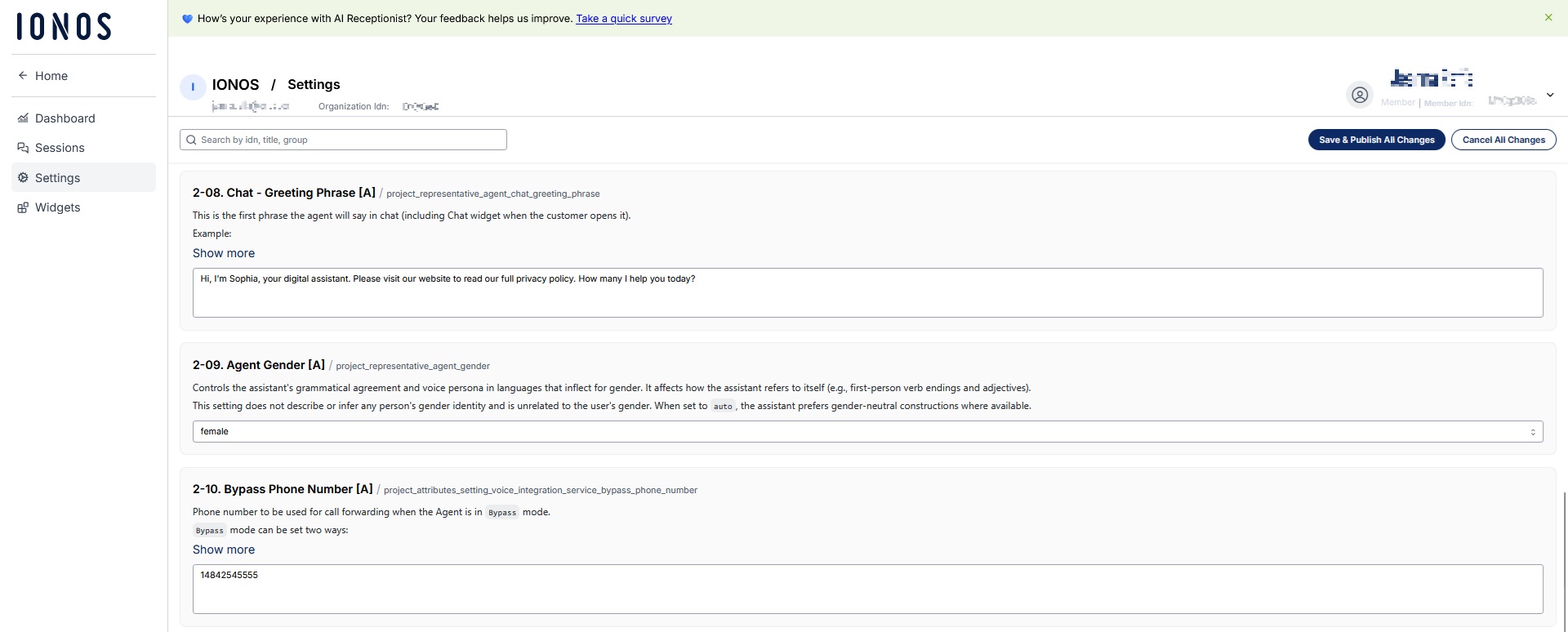
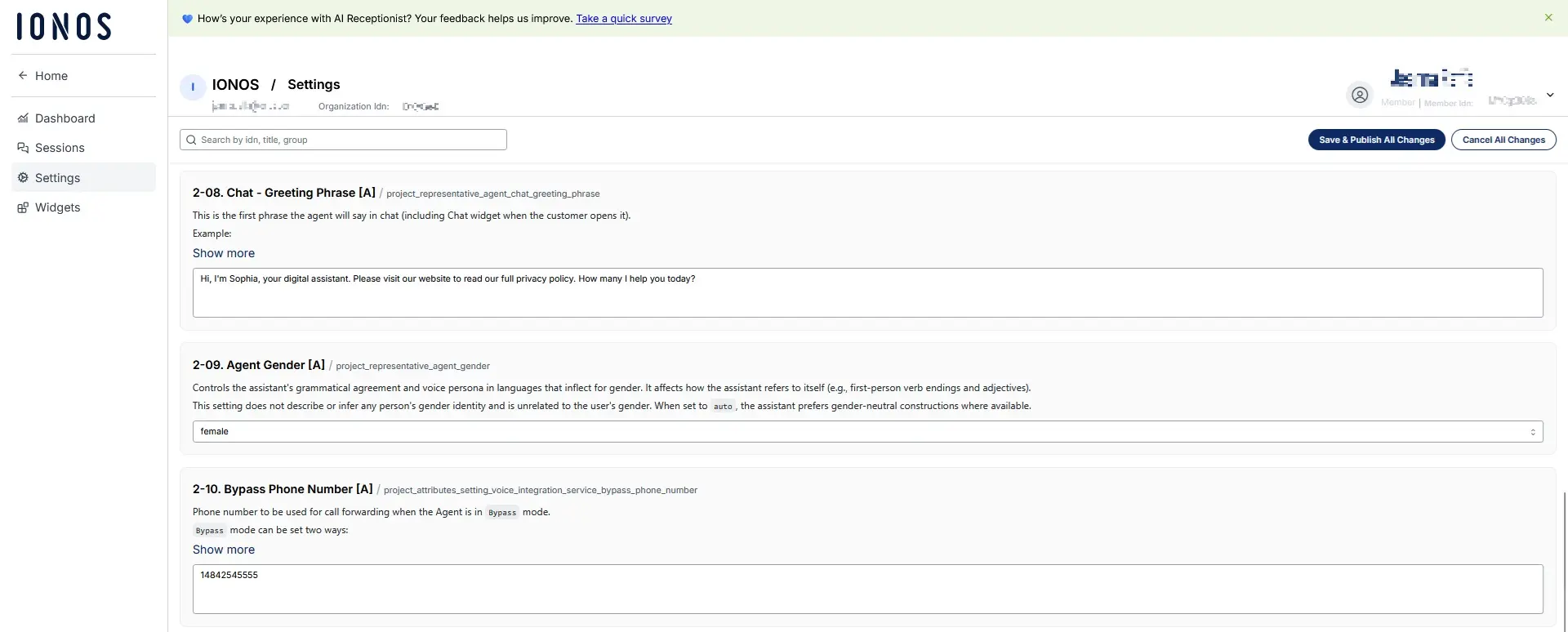
The IONOS AI Receptionist is a ready-to-use solution for small and medium-sized businesses. It integrates with existing telephony and IT systems and can be set up without any programming skills. The assistant automatically pulls information from your company website to answer common questions. Data protection and GDPR compliance are central to the IONOS AI Receptionist and all data is stored on servers in the EU. The assistant runs on reliable infrastructure with clearly defined service levels. It can be used for customer support, appointment scheduling and hotline operations, making it well suited for a wide range of professional uses.
Google Dialogflow
Google Dialogflow is a conversational AI platform commonly used to build virtual agents for contact centres. It provides advanced speech recognition and intent detection. The system is primarily designed for developers. Before deploying it in production, teams typically need to configure and train the agent and build additional integrations. Ready-to-use functionality is limited, and telephony integration usually requires connectors, partner solutions or additional services. This means Dialogflow is best suited for large organisations with in-house development teams.
Amazon Connect
Amazon Connect is a cloud-based contact centre service from AWS with AI-powered features. The system is modular and designed to scale easily. Basic setups can be created relatively quickly. More advanced call flows and automations, however, usually require technical expertise. Many AI capabilities rely on integrations with other AWS services. While Amazon Connect offers a high degree of flexibility, it is not designed as a typical plug-and-play solution. It is aimed primarily at larger organisations that already use AWS and have the technical resources to run it.
Twilio Voice
Twilio provides voice and AI components that developers can use to build AI-powered telephony solutions. Most implementations use APIs to build custom integrations. Ready-to-use assistants are limited. Instead, the platform emphasises high customisation. Using Twilio typically requires programming skills, especially when building dialog logic and integrations. This means Twilio is well suited for custom telephony solutions. For smaller companies, however, the development work may prove to be too much.
What should you keep in mind when using AI telephony?
Companies should check what technical, organisational and legal requirements apply before introducing AI telephony. A stable phone and Internet connection is essential. Dedicated hardware is usually not required because many solutions run in the cloud. Data protection is especially important, especially when handling personal data under the GDPR. Call data may include personal information such as names or addresses, so it must be transmitted and stored securely. Depending on the purpose, this data should also only be retained for a limited period. Companies should also be transparent with callers, for example by clearly stating when AI systems or call recordings are used.
It’s also important to consider how easily AI telephony can integrate with existing systems. APIs can connect to CRM, ticketing, or calendar tools so data is shared automatically. This helps create smooth workflows, free from manual steps or system breaks.
- Makes appointments, gives advice, forwards calls
- Picks up immediately, day and night
- Can be seamlessly integrated into existing systems
- Test free of charge