
Demand generation – strategy for sustainable customer relationships

It’s no secret that the customer is king – and not only in terms of customer service. If you look at the big picture, the mind-set is imperative for any economic enterprise because without it, there is no profit. So it's no wonder that successful marketers who have to juggle KPIs, channels, and capital never lose sight of their consumers. The aim: to first get them interested in the product or service and then turn them into buyers who, in a best case scenario, enter into a long-term relationship with the company.
In order to do this, marketers have a variety of methods and strategies at their disposal, which can be summarised under a common generic term: demand generation. But what does this rather abstract buzzword mean and how does it differ from other strategic marketing approaches?
What is demand generation?
The term "demand generation" is mainly used in connection with the relationship models business-to-business (B2B), business-to-administration (B2A), and business-to-customer (B2C). Although it is often used quite laxly and almost inflationary, experts and media always use similar wording when trying to define demand generation: an integrated and measurable marketing approach that should create lasting interest for a company and therefore lead to more turnover.
Looking at all parts of this definition individually, it becomes apparent how demand generation stands out from other marketing and customer acquisition strategies:
- Integrated: Demand generation combines several marketing approaches and methods and provides them with a holistic basic strategy (the development of sustainable customer relationships).
- Measurable: As with any e-commerce strategy, the success of demand generation is tied to pre-defined KPIs. As a data-driven concept, it can be continuously checked and optimised based on feedback from the subsequent stages of the funnel.
- Sustainable interest: The focus of demand generation is clearly set on creating sustainable customer and business relationships. All measures involved are orientated towards this goal and should generate long-term attention and enthusiasm for a company’s products or services.
- Sales: Demand generation aims to have a direct impact on sales. For this reason, close integration with sales is the aim.
Measures used in this marketing approach are specifically designed for long term instead of only being used intermittently (e.g. in a bulk mail campaign). These include, for example:
- Interacting with customers via social media
- Sharing blog posts in business forums
- Hosting webinars
- E-book campaigns
- Personalised newsletters
- Organising and participating in events
Differentiation from lead generation
Confusion sometimes seems to exist regarding the distinction between demand generation and lead generation - even among professional marketing service providers who should actually know better.
Lead generation refers to the acquisition of interested parties – so-called leads – who disclose personal data (names, e-mail addresses, telephone numbers, etc.) (cold leads) in exchange for content requiring registration (e.g. newsletters or competitions) and ideally have a specific interest in the company’s product or service (hot leads).
With demand generation, however, this interest does not necessarily have to be in the purchase of a product or service. Instead, it can manifest itself differently: For example, a potential customer may want to find out more about a company's offerings by browsing the website, contacting customer service via social media, or anonymously trying out a free trial version – without providing any information. Therefore, the two terms are like fingers and thumbs: demand generation is not always lead generation; but lead generation can basically be understood as a component of demand generation, since no leads can materialise without existing demand.
Differentiation from inbound marketing
Inbound marketing is also sometimes confused with demand generation. This only refers to a selection of marketing measures that can contribute to demand generation.
Inbound marketing follows an approach depending on which customers come to the company by way of searching for information or to solve a problem – provided that you’re technically competent enough to help the customer. Especially in the B2B area, it is necessary to create added value in the form of blog posts, videos, podcasts, newsletters, newsfeeds, e-books, case studies, white papers, or webinars on current industry topics to draw attention to your company. This includes the use of SEO and social media to position yourself as a thought leader and information hub.
This is in direct contrast to traditional outbound marketing, in which a company tries to address its target group directly by means of posters, flyers, and television advertising. Inbound marketing therefore also focuses on building a long-term relationship with customers and business partners – according to demand generation marketing.
How does demand generation marketing work?
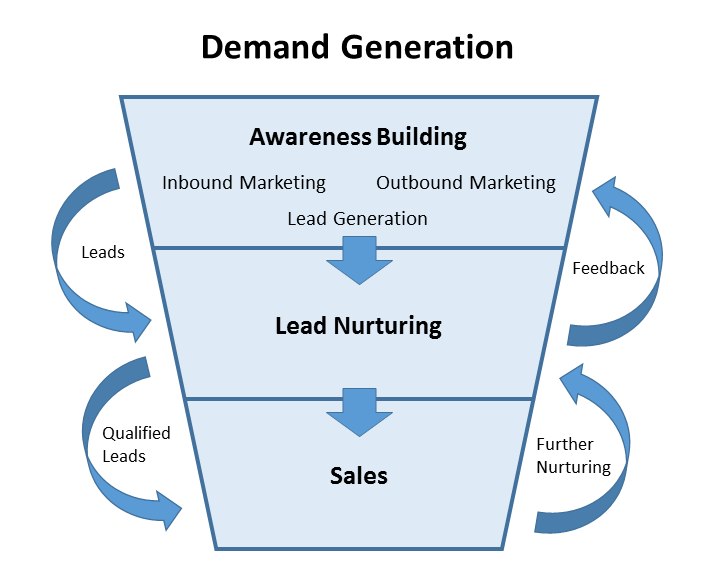
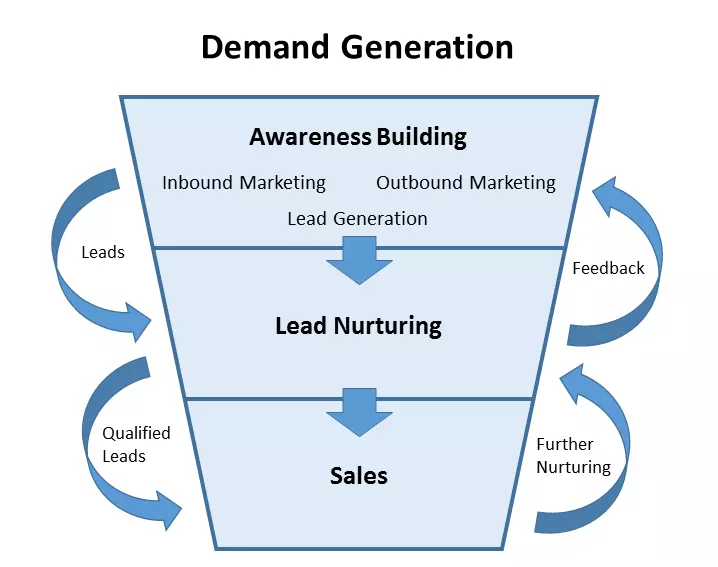
In a conventional marketing funnel, demand generation is basically the beginning of a process that can be roughly divided into three stages when acquiring new customers: awareness building, lead nurturing, and sales. However, the holistic concept also takes effect at all other points of the marketing funnel, i.e. retaining existing customers, recovery, and reactivating active contacts.
Awareness building
In the narrower sense of the demand generation term, a combination of inbound and outbound marketing is intended to generate long-term demand to attract potential buyers for a product, service, or company in general. These prospects may become qualified leads, which is why lead generation is also included in this step. The concept of demand generation does not rely on the mere number of interested parties, but claims to carry out a qualitative pre-selection before the actual lead generation takes over. This is intended to increase efficiency and ultimately the conversion rate.
Lead nurturing
Once leads have been generated, the process moves to the next step. Through lead nurturing, the established relationship between the customer and the company can be further deepened by various methods of contact maintenance. Content, SEO, and SEA are still used, but will be more personalised – e.g. in the form of individualised e-mails based on customer data. In addition, free trial versions, online product demonstrations, and reference management (such as customer reviews) come into effect. The ultimate goal is to filter out only the most qualified, meaningful leads from each touchpoint of the customer journey and prepare them for marketing in order to achieve a better ROI.
Sales
Next, the qualified contacts are evaluated – this is called lead scoring. Leads are then passed on to the sales department in the course of lead routing. Demand generation also plays a fundamental role here: in order to ensure a successful purchase, demand generation marketers and sales managers must continually compare their ideal customer profiles (ICP), i.e. the criteria for a sales-relevant lead. This commandment reaffirms that demand generation as a data-driven marketing concept is heavily dependent on feedback from all levels of the funnel.
Demand generation: practical examples
To recap: Successful demand generation marketing must use inbound and outbound marketing to attract prospects who, best case scenario, become leads with at least a non-binding purchase intention. Ongoing lead nurturing should transform these short-term contacts into long-term customer and business relationships. Through close integration with sales, demand generation aims to make a visible contribution to sales growth. The following examples illustrate what a demand generation strategy like this can look like:
Free content and tools
According to demand generation logic multi-valued content (and other inbound marketing tools) are suitable for arousing sustained enthusiasm for a company. But the content provided must also be relevant and tailored to the needs and interests that customers have at the various stages of their customer journey. A well-placed white paper may attract enough attention to lure a reader to the company’s website. Videos with detailed instructions for a product or service then generate a concrete interest and are more likely to make the person interact further with the company. Lastly, a practical freeware tool that requires registration may generate the qualified lead.
Producing free content like this is associated with corresponding costs (e.g. for programming an app), but it is worth it: unique content of high quality can serve as a kind of work sample for the company and therefore create a basis of trust for customer contact right from the start. This increases the likelihood that potential customers will return regularly for new giveaways and resources, advertise for a company as voluntary "brand ambassadors," and finally register as potential customers with their personal contact data.
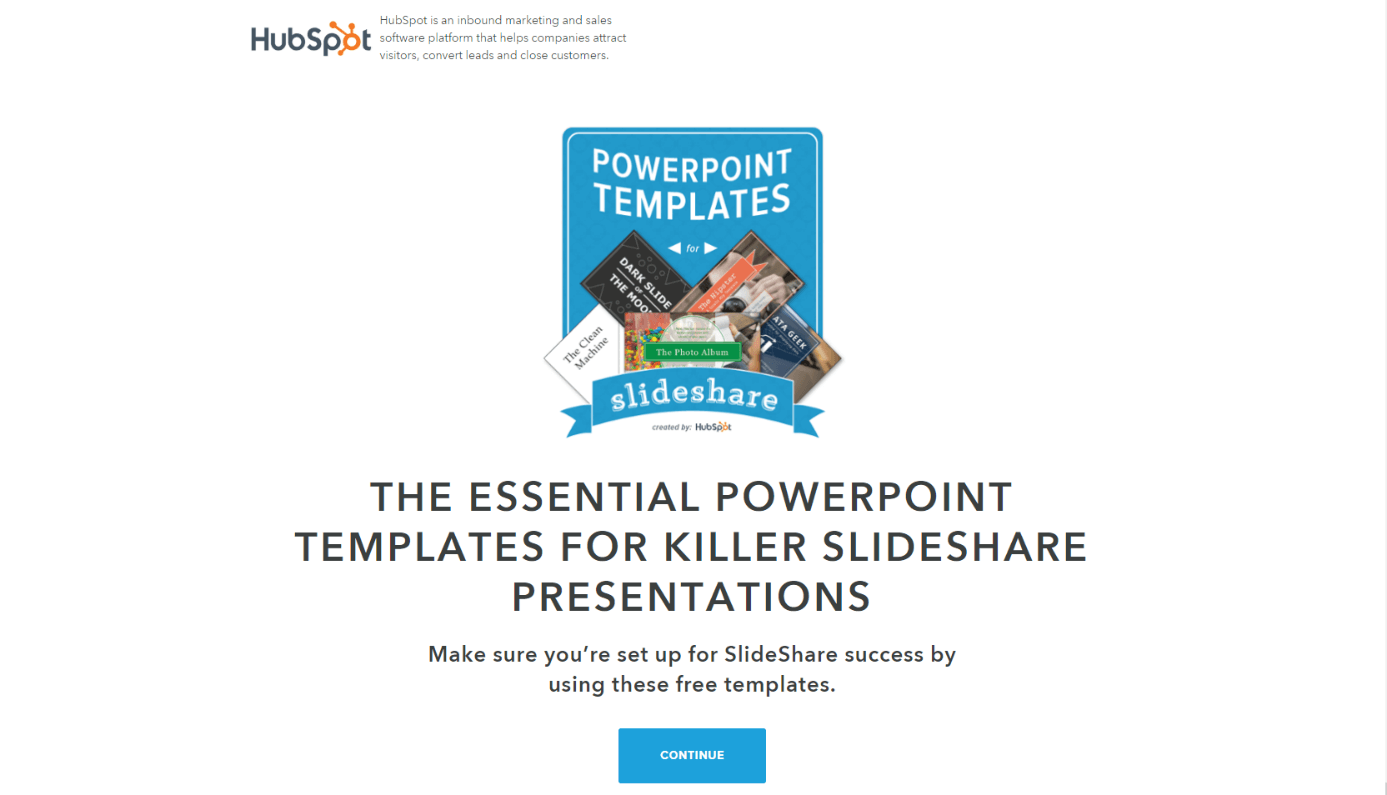
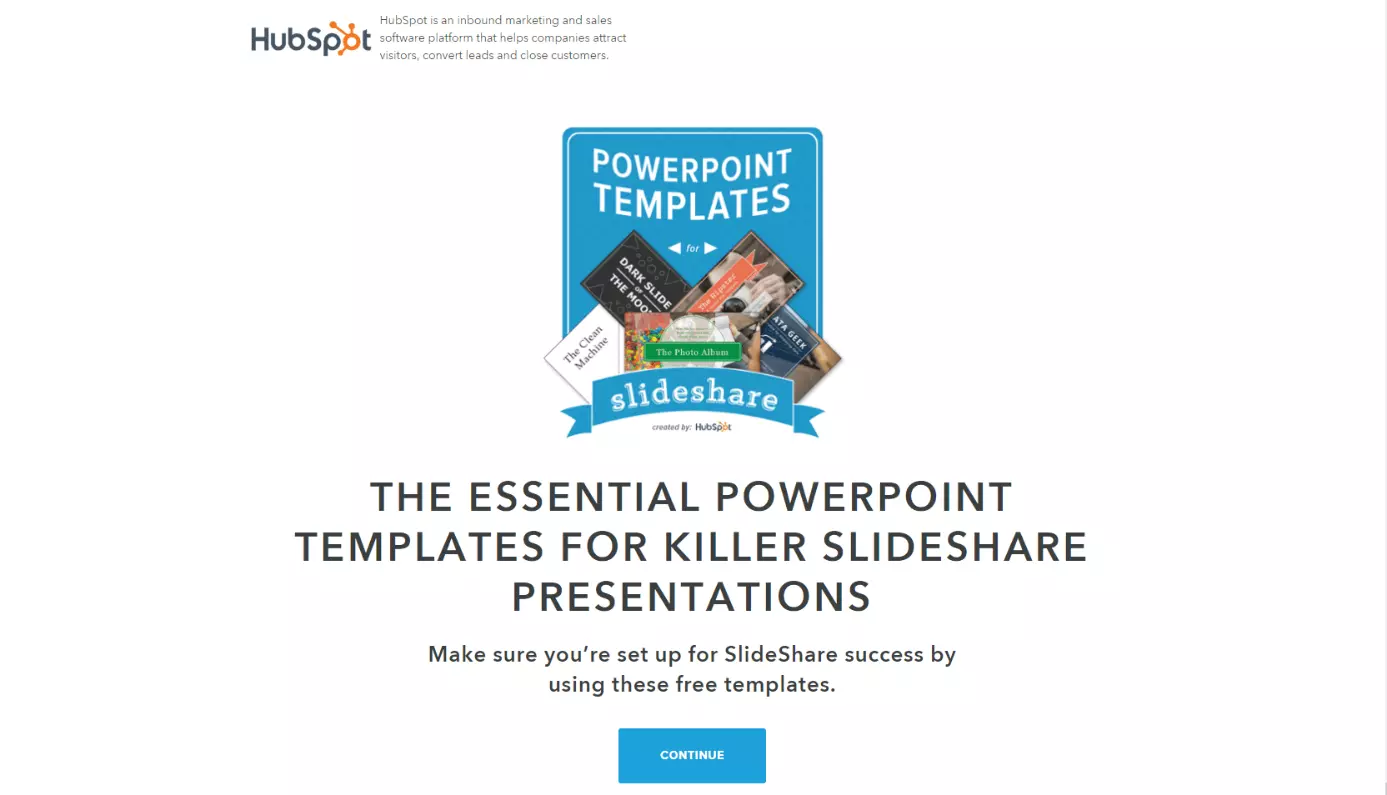
HubSpot is a good example of this: the US company proves its own expertise in inbound marketing and sales not only by making its industry-relevant research results available to the public on a special "HubSpot Research" website. The company also offers a whole set of original infographic templates for PowerPoint presentations that can be downloaded for free.
Another good example: The popular mind mapping software, Mindjet, is available as a free 30-day trial version. However, for the purpose of lead generation, the manufacturer requires that those interested enter their personal data in order to use this service so that Mindjet can build up a comprehensive customer database. More freedom is offered by the product competitor WiseMapping, which is also among the best mind mapping tools on the market. The browser-based open source program is free of charge anyway, but the trial version can also be tried out completely anonymously. This way you can familiarise yourself with the functionality of the tool without entering any personal information. You can also donate to the developers' PayPal account if you wish – another indication of how different the interest generated by demand generation can look.
Webinars and events
Webinars are a very popular way to get into conversation with customers and industry colleagues. But although the seminars are relatively easy and inexpensive to produce in video form, the same quality criteria applies to them as to all other types of content: you should rely on original topics and unique statements instead of simply rehashing the same knowledge as the competition.
Visual aids can be just as effective in communicating complex topics as a charismatic and technically experienced speaker who answers further questions in a live chat. And if some people have missed the online seminar, they can still access it flexibly as an on-demand video on the website. In addition, a recorded live webinar can also be processed into other content forms such as blog posts, whitepapers, or short clips.
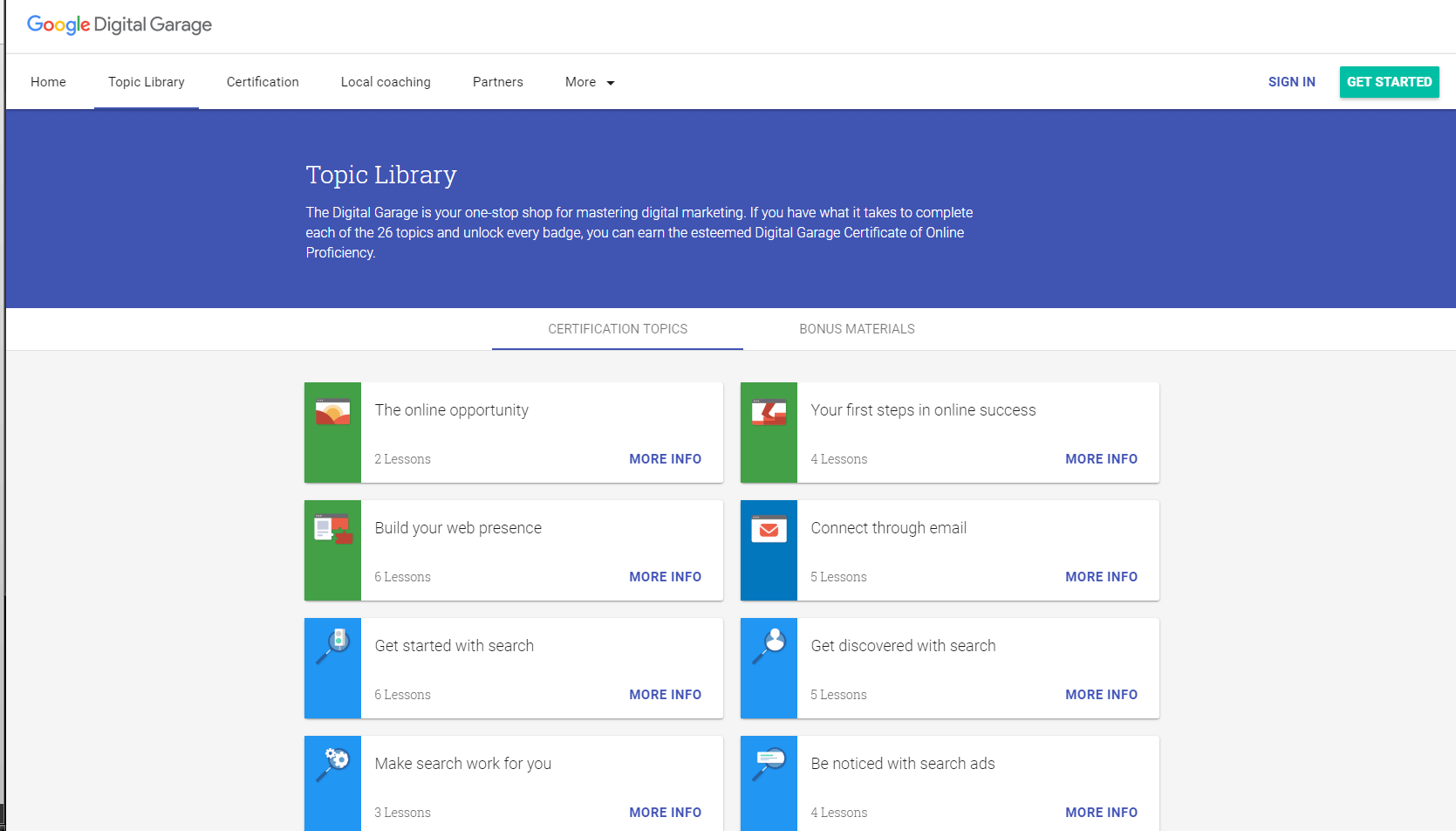
Google's "Digital Garage" is a good example of this. In addition to on-site training, the search engine giant offers a large selection of online courses on its portal entitled learndigital.withgoogle.com, which can be completed with a recognised certificate from the Interactive Advertising Bureau (IAB Europe). For this, you will complete a structured curriculum of 26 topics and acquire skills in areas such as mobile marketing, SEO, web analytics, and content marketing. It’s free, but requires prior registration, through which the group can collect a lot of leads for further marketing measures. In addition, the volume and professional production of the video material provided enables a long-lasting interaction between the course participants and Google, which can once again prove to be an outstanding information hub.
Sponsoring or participating in B2B events is another way of establishing yourself as a thought leader and connecting with relevant influencers that further reinforce this position. On these occasions, you can provide potential business partners with insight, i.e. insight into your own expertise, with your own contributions to discussions and workshops. The practical thing about it: as with the webinars, viewers are obviously interested in the topic in question and therefore have great potential to become qualified leads.
Personalised e-mail campaigns
E-mail campaigns can be a powerful tool for generating demand, provided they meet certain quality criteria. Especially in the B2B area, the need for explanations of products and services is often very great, which is why it makes sense to accompany the relatively extensive and lengthy purchasing and service processes with a well-prepared newsletter. This way, the customer builds up strong trust in the company at an early stage and can be made aware of further offers at the same time. In the newsletter, they should find useful information regarding their purchased product, such as tips on its correct use. However, as is often the case, less is more.
The trend in successful e-mail marketing is clearly moving away from regular mass e-mails and towards personalised messages that end up in the recipient's inbox when they are most needed. A thorough software-supported A/B testing of all e-mail components is the most effective measure for this, both for the initial contact and for one-to-one e-mails in the later stages of the customer journey.
The US low-cost airline JetBlue Airways, for example, accompanies its customers from the very beginning: A humorous "get to know you" e-mail addresses the recipient directly and gives the impression that the US low-cost airline already knows its customers well – long before they have revealed much information about themselves. With this tactic, JetBlue does not necessarily aim for a direct conversion, but primarily tries to recruit more members for its TrueBlue bonus program – turning indecisive people into qualified leads. Airbnb contacts the user at important times, for example with a newsletter on the first anniversary of an account registration, in which the holiday home agency suggests new interesting destinations based on customer data.