

Evergreen content – timeless content for websites

Every guide to search engine optimisation or online marketing emphasises the importance of providing up-to-date content at all times. But evergreen content is different. In fact, “evergreen” really isn’t the best word to describe this type of content. A better term would be “timeless content,” or content that doesn't go out of date.
What is evergreen content?
Encyclopaedia entries are a typical example of evergreen content. Wikipedia is a particularly good example. The site publishes content that remains relevant for years, such as articles about historical events or descriptions of buildings, cultural artefacts, and species of plants.
Evergreen content: Content that remains useful to readers for a long time, often across many years. This content must be of high quality to remain relevant.
Wikipedia even goes so far as to identify articles that fail to meet the guidelines of a timeless encyclopaedia by placing a so-called “recentism” tag at the top of the article. Wikipedia's explanation for this practice effectively illustrates the difference between evergreen content and news reporting:
“Wikipedia is not a newspaper. When dealing with contemporary subjects, editors should consider whether they are simply regurgitating media coverage of an issue or actually adding well-sourced information that will remain notable over time.”
Similarly, Wikipedia clearly contrasts the two concepts in stating what Wikipedia is not:
“Wikipedia considers the enduring notability of persons and events. While news coverage can be useful source material for encyclopaedic topics, most newsworthy events do not qualify for inclusion and Wikipedia is not written in news style. For example, routine news reporting of announcements, sports, or celebrities is not a sufficient basis for inclusion in the encyclopaedia. While including information on recent developments is sometimes appropriate, breaking news should not be emphasised or otherwise treated differently from other information. Timely news subjects not suitable for Wikipedia may be suitable for our sister project Wikinews, though that is not a particularly active project […].”
This means that an article about current events can later become evergreen content as long as the content is written with its long-term historical or educational significance in mind.
Further examples of evergreen content
Encyclopaedia entries and Wikipedia articles are not the only type of content with evergreen potential. Some blog posts that provide background information on current events can remain interesting even if the events are no longer current. The same applies to timeless infographics, although suitable text has to be added to these graphics for the purpose of search engine optimisation and findability.
How-to articles, step-by-step guides for repairs, or do-it-yourself projects can also remain relevant over time. Here too, the products mentioned in the content cannot be fashion items or short-lived trends.
The same applies to FAQs (frequently asked questions) about a topic. When people can’t find answers to their questions about a topic or product on their own, they search online for answers. Often, the same questions are asked over and over again. FAQs can be helpful for consumers who have problems with their device or software and don’t know how to phrase their specific question.
Evergreen content doesn’t have to be fixed
Evergreen content should be timeless. That's why it’s important to make sure that your content doesn't become outdated. Even timeless articles can benefit from changes that improve the content. To keep an article up-to-date, you can occasionally add a new photo or a tip that you or a reader came up with after the article was originally published. Wikipedia is a good example of how articles about historical events or long-deceased people are regularly expanded and updated.
Lists and collections also make good evergreen content, even if the contents of the lists change. For example, a list of the world's tallest buildings can be expanded to include a new building at any time. Even lists that might seem like they're made for eternity aren't written in stone. On the whole, however, these lists will remain evergreen content. People still search for the overall topic, not for individual current facts. Links from other sites can also remain unchanged.
When evergreen content is moderately updated with high-quality copy on a regular basis, it shows professionalism on the part of the authors and strengthens visitors’ overall trust in the website. This, in turn, lowers bounce rates. Readers will keep clicking within the website and continue to view other contents. Well-written evergreen content is, therefore, a perfect way to attract new visitors, as long as it can be easily found via a search engine.
When it comes to SEO (search engine optimisation), updates are equally important. That's because Google takes into account the date and frequency of updates, not just the content of a site. Many websites achieve regular updates when comments from users appear. These comments must be managed by content editors. It's best to update the content yourself by adding new material relevant to the topic.
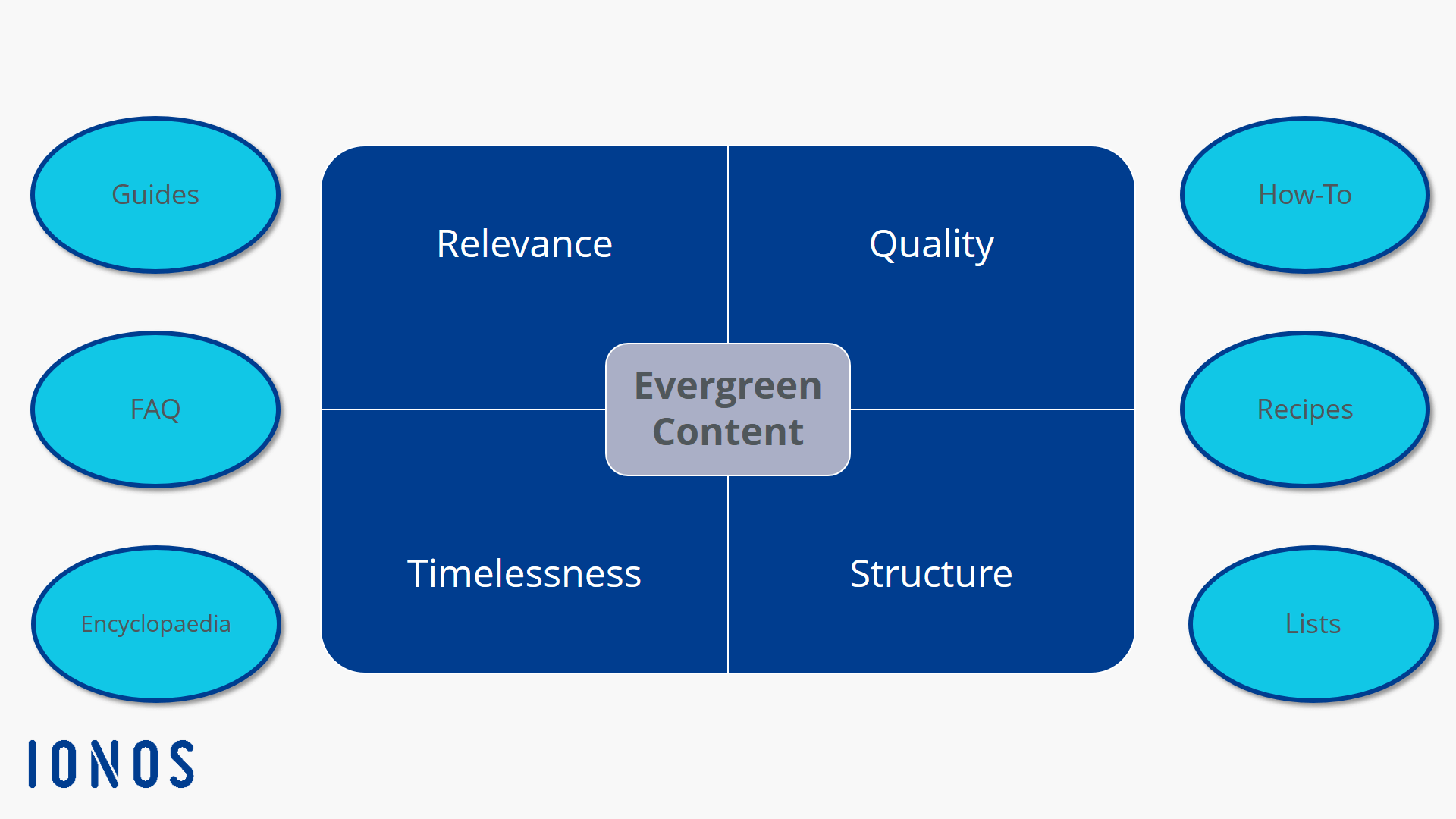
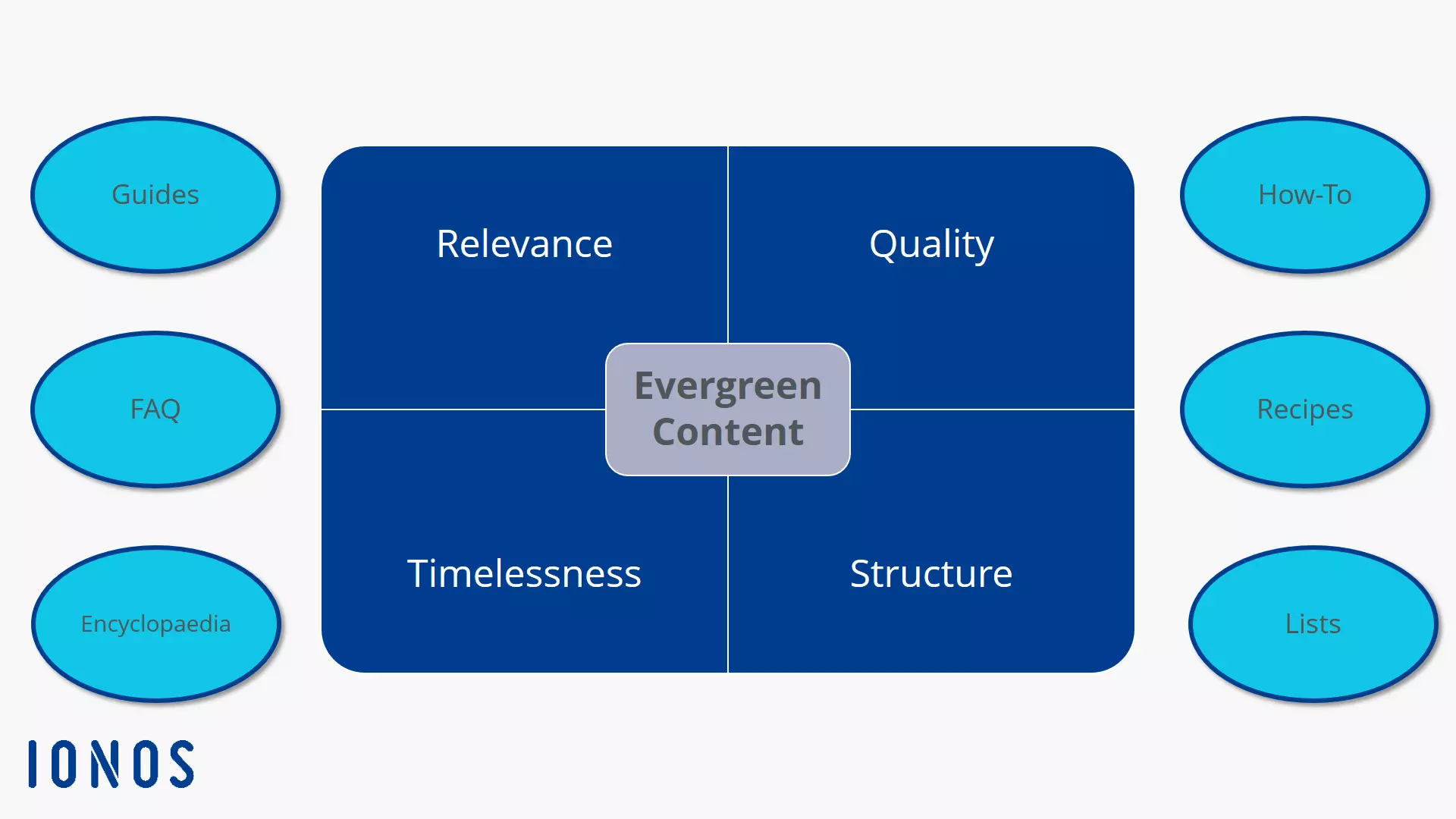
How does evergreen content work?
Evergreen content continuously attracts traffic to your website – at least in theory. However, the quality of the content is crucial, even more so than for news reporting. If you want your evergreen copy to remain interesting forever, it should cover only one topic and do it thoroughly and effectively. If you come across a site that covers a wide range of topics using copied content, this is a clear sign that the site is trying to achieve a high search engine ranking. The site won’t get much traffic, and even inbound links will be limited to auto-generated links from similarly structured pages. Worthwhile links from other sites with equally high-quality content – a sign of good search engine optimisation – will be non-existent when it comes to these sites.
The practice of blindly copying content should not be confused with content curation by professional editors. Evergreen content is a key element in content marketing, so it’s important to avoid making a negative impression.
Consider your audience
It's not a good idea to publish content on your website for the sake of adding evergreen content. Carefully consider your audience, otherwise the content will immediately stand out like a sore thumb.
For example, food recipes are generally interesting and make for good evergreen content, but they don’t belong on a technology website. Even when placed within a broad range of topics, evergreen content should not be too general or unrelatable for the site. Vegetarian recipes feel out of place on a butcher shop’s website. But as always, there are exceptions to this rule. A well-written recipe for a seasonal vegetarian dish can be a good way of advertising the shop’s meatless products.
Evergreen content on company websites
Evergreen content can also be useful for online stores with ever-changing products. Step-by-step guides for popular items, interviews with experts, or even an article about the history of the company can all serve to create trust and showcase expertise. Readers will stay on the site longer and will most likely browse the integrated online store. An encyclopaedia or wiki on topics relating to your product range or even just a glossary with short explanations of technical terms can use suitable keywords to attract visitors who happen to find your site using a search engine. If visitors get answers to their questions, it will strengthen trust in the brand. And visitors will return to the site later without using Google.
Well-written evergreen content that doesn't look like advertising copy will keep earning backlinks from news sites, personal blogs, and forums on the topic. Owners of these sites are usually hesitant about linking to online stores unless they're linking to affiliate sites.
Evergreen content is an advantage for any website because it attracts visitors who have general questions and aren't familiar with a brand yet. However, evergreen content requires regular care, just like evergreen plants. The biggest mistake you can make is to publish carelessly written or irrelevant content on an otherwise well-curated website and hope for more traffic. Your regular visitors will notice it straight away. They’ll navigate to a competitor’s site and you run the risk of diminishing your reputation in the age of social media.