

Nonprofit marketing: marketing for a good cause

What do you think of when you read the term ‘marketing’? Most associate marketing with elaborate advertising campaigns by profitable companies that try to sell their products to a wide clientele. The goal of this marketing is profit maximisation. This is not the case with nonprofit marketing. Advertising can be much more than just a sales strategy. But what is nonprofit marketing exactly? How does social marketing work, and how can you, as an entrepreneur, run your own nonprofit marketing concept campaign?
Definition: what is nonprofit marketing?
The nonprofit marketing title refers to any advertising that markets a socially-oriented offer. So-called nonprofit organisations (NPO’s) are not economically oriented and are therefore not concerned with profits or other economic goals, but rather with creating social and societal projects. The focus is on collecting donations for social purposes, such as animal and environmental protection, extra-curricular read-only support, or housing for homeless people. But that’s not all.
Even if the methods and instruments of NPO marketing are similar to those of profit companies, NPO’s sometimes have quite different tasks and objectives. Social marketing is therefore much more than the sending of e-mails and newsletters, or the distribution of leaflets in pedestrian zones, or even the provision of account data for donations. A nonprofit marketing scheme for a social project requires a holistic public relations inquiry that addresses the needs of the target groups and encourages them to help.
Nonprofit marketing must not be confused with social marketing. Social marketing is a strategy used by profit-oriented companies that want to improve their own image through social campaigns.
What are Nonprofit-Organisations (NPOs)?
Nonprofit organisations (NPO’S) or associations can be divided into economic, socio-cultural, political, and social NPO’S. They receive financial support either through state funds, donations, and/or membership fees. However, the profit gained is not distributed to the members of the organisations, but invested in the organisation or the project.
NPO’s are mainly dependent on volunteer helpers. Depending on the size and the orientation of the organisation, full-time staff may also be employed. In addition to their large number of voluntary employees, global NPO’s, such as Amnesty International and Greenpeace, also employ permanent staff to cope with daily administrative work.
The following table shows examples of different NPO types:
| Sponsorship | Type | Example |
| Social NPO |
|
|
| Sociocultural NPO |
|
|
| Political NPO |
|
|
| Economic NPO |
|
|
Goals, challenges, and difficulties of NPO’s
Whether in environmental protection, development aid, or human rights: Nonprofit organisations always pursue the goal of leading a social project to success. However, the way to this is posing different challenges to NPOs than to other profit-oriented companies. As a rule, NPO marketing has fewer human and financial resources available. Since the campaign does not gain any, or only minimal profit (for example, through the sale of own products), NPOs are usually dependent on self-financing or donations. However, the competitive pressure on the donation market is enormous. In Germany, for example, there are more than 500,000 clubs and 16,000 foundations competing for donations. Another issue: the ever-emerging negative headlines surrounding the misuse of donation funds. These diminish the credibility of NPO marketing initiatives and frighten potential donors. NPO’s therefore have to do a lot of work, and also show the highest level of professionalism in order to permanently foster sponsors and supporters for their projects.
Creating a nonprofit marketing concept
In order for your project to be a success, you need to have a good marketing concept. Since nonprofit organisations must hold their own in the market, their marketing tools are not significantly different from those of a profit-oriented company. In essence, both have the same goal: the project is to ‘sell’ well and appeal to a broad target group. The big difference, however, is that NPOs are focused on the realisation of their charitable project, rather than the numbers. However, depending on the size of the project, they need a certain amount of capital and personnel, and above all, many dedicated members.
Nonprofit marketing is based on so-called fundraising because of its limited financial and human resources. Through ‘procurement marketing’, NPOs try to address a broad target group and increase their active participation. The more people volunteer for the project and pay membership fees, the more successfully it can be implemented. In order to create incentives for social engagement, NPOs also use other marketing tools in addition to standard marketing measures. What does a well-planned non-profit marketing scheme look like?
Beginnings are always hard, but you should still try!
Many people want to make the world a little better. In the USA, one in three people contribute to the common good, through donations or voluntary work in clubs, initiatives, or other groups. Do you have a nonprofit project but are not sure how or where to start with it? Have a little courage. The world renowned human rights organisation Amnesty International also started out very small:
In May 1961, founder Peter Benenson came across a newspaper article on the arrest of two students who had been apprehended in a café in Portugal for raising a toast to freedom. Absolutely livid, Benenson called on the readers of the British newspaper The Observer to get involved with letters for the release of political prisoners. The ‘Appeal for Amnesty’ campaign has been a complete success and has marked the beginning of a global movement committed to the defense and enforcement of human rights. Today, Amnesty International is one of the most powerful and influential nonprofit organisations in the world, with more than 7 million members in more than 150 countries.
More information about Amnesty International can be found on their website.
First step: Setting yourself concrete goals.
The secret of success is – just like with every company – in precise planning. If you have an inspiring idea for a social project, first build a stable framework that you can expand on. First, lay down your basic principles and formulate your goals.
- What do I want to achieve with my project?
- Which target group do I want to address? (e.g. professional groups, stakeholders, public or private bodies)
- What is necessary to successfully implement a project?
The so-called SMART formula lends a hand to the target definition: The target should be specific, measurable, accepted, realistic, and terminable.
Example: Animal protection
Specific: Help for dogs in Bulgaria.
Measurable: $20,000 donation sum, 10,000 signatures in an online petition, 5,000 Facebook fans.
Accepted: is the project team in agreement with the objectives?
Realistic: Are the defined goals realistic? What knowledge could we draw from past projects? Can we assume that each subscriber donates at least $2 for the project?
Terminable: The measurable goals should be realised within a certain period (e.g. two months).
With clearly defined goals, you can ultimately evaluate the success of your project.
Second step: Analyse your environment.
In order to assess your position and chances of success in the market, you need to analyse your environment closely. You can do this with so-called stakeholder analysis. Stakeholders refer to all groups of people directly or indirectly affected by entrepreneurial activities. These include:
Internal claim groups:
- Owners
- Management
- Employees
External claim groups:
- External creditors
- Suppliers
- Customers
- Competitors
- The state
There is also strong competition in the non-profit market. Therefore, not only do you need to know the strengths and weaknesses of your organisations, but also what else could be beneficial or detrimental to your project. Identify all positive as well as negative stakeholders on which the survival of your NPO depends. You should take a closer look at the following in your analysis:
Competition
Like any company, non-profit organisations are dominated by strong competition. NPOs mainly fight for necessary resources, such as donations, members, etc. If, for example, there are three other organisations working in a similar way for the issue of animal welfare, the market you’re moving in is quite small and tough. You need to make sure that your NPO differs clearly from the others and you need to build on your nonprofit marketing scheme. Weigh your chances and risks carefully against each other and, if necessary, consider countermeasures to counteract possible risks.
Employees
There is a lot that needs to be organised in order to carry out a campaign, such as putting together, printing, and sending information or advertising banners, offering information stands and updating websites and data stock. However, you cannot overlook everyday office activities among the tasks of an NPO. The larger your organisation or project, the more you depend on the help of others.
Since most of the funds are used for the project itself, you mainly need volunteer helpers. Motivation plays a decisive role here. Strengthen this by making your employees understand that you have a common goal, and that you are dependent on their help. NPOs do not usually have a normal employer-employee relationship. The social project in the foreground often leads to a completely different cohesion, which is enormously important for the success of your NPO.
Customers and external creditors.
Clients and external creditors are important factors in the financing of your project. For example, you can make good use of your revenue in aspects such as memberships, or the sale of products. Donations from external creditors are also useful sources of money. Try to inspire profit companies or private donors for your project, and include them as positive stakeholders in your NPO.
Third step: fundraising.
Once you have set your goals and analysed your environment, you are ready to start implementing your project. Fundraising is one of your primary tasks. This means the procurement of all necessary resources – at the lowest cost possible. Carefully list everything you will need for the project, such as:
- Money (donations, membership fees, etc.)
- Contributions in kind (vehicle donations, technology, clothing etc.)
- Services (donations in the form of voluntary commitments)
From your list, you can then determine the marketing instruments and communications channels that need to be used. In general, you should make use of several communication options to obtain resources. Which one you choose, on the one hand, depends on the target group and, on the other hand, on the cost-benefit balance. In nonprofit marketing, you can choose between different, sometimes cost effective channels:
- Personal contact through events or house visits
- Internet (postal campaigns for members, donations, or a general newsletter)
- Event marketing
- Mass media (press, TV, radio)
- Telephone fundraising
- SMS donations
Especially in e-commerce, cost saving and time saving communication channels are easy to find. Online fundraising is particularly useful for petitions, memberships, and donations, because it can reach a large number of people within a very short time, at a very low cost. In addition to traditional e-mails, newsletters, and websites with donation forms, new ways of communicating have emerged. For example, entire online communities have formed on social media platforms (Facebook, blogs, etc.) to acquire donations, members, and other resources.
Examples of professional nonprofit marketing campaigns show that advertising messages over the internet can be a wild success. YouTube, in particular, has become the second-largest search engine to become a popular platform where NPOs can upload advertising clips without any effort and costs, and reach people all over the world.
Amnesty International regularly uploads small clips on YouTube and other social media platforms to educate the population about the world’s grievances and to protest human rights violations. To mark the 50th jubilee, they showed a video clip stating that their organisation stands for the freedom of the people of the world:
 To display this video, third-party cookies are required. You can access and change your cookie settings here.
The nonprofit organisation Greenpeace also uses expressive, emotional images and videos to enlighten the rabid nature of exploitation and to promote climate protection:
 To display this video, third-party cookies are required. You can access and change your cookie settings here.
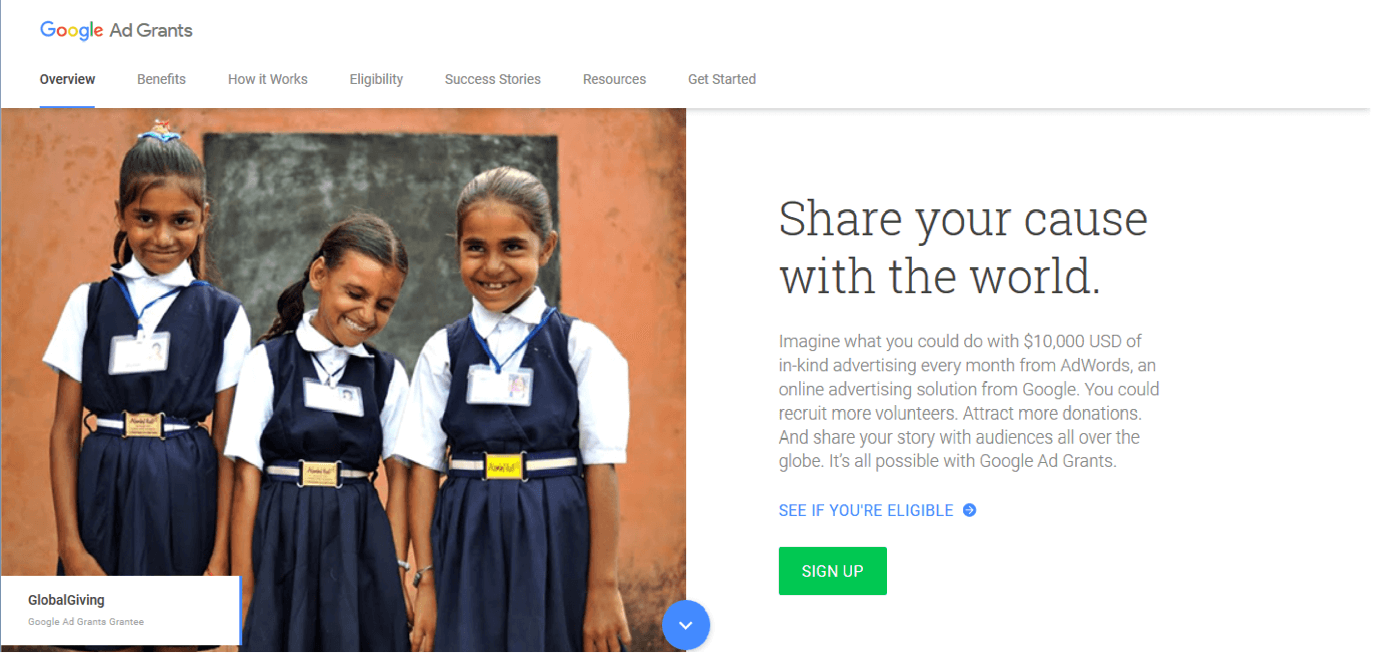
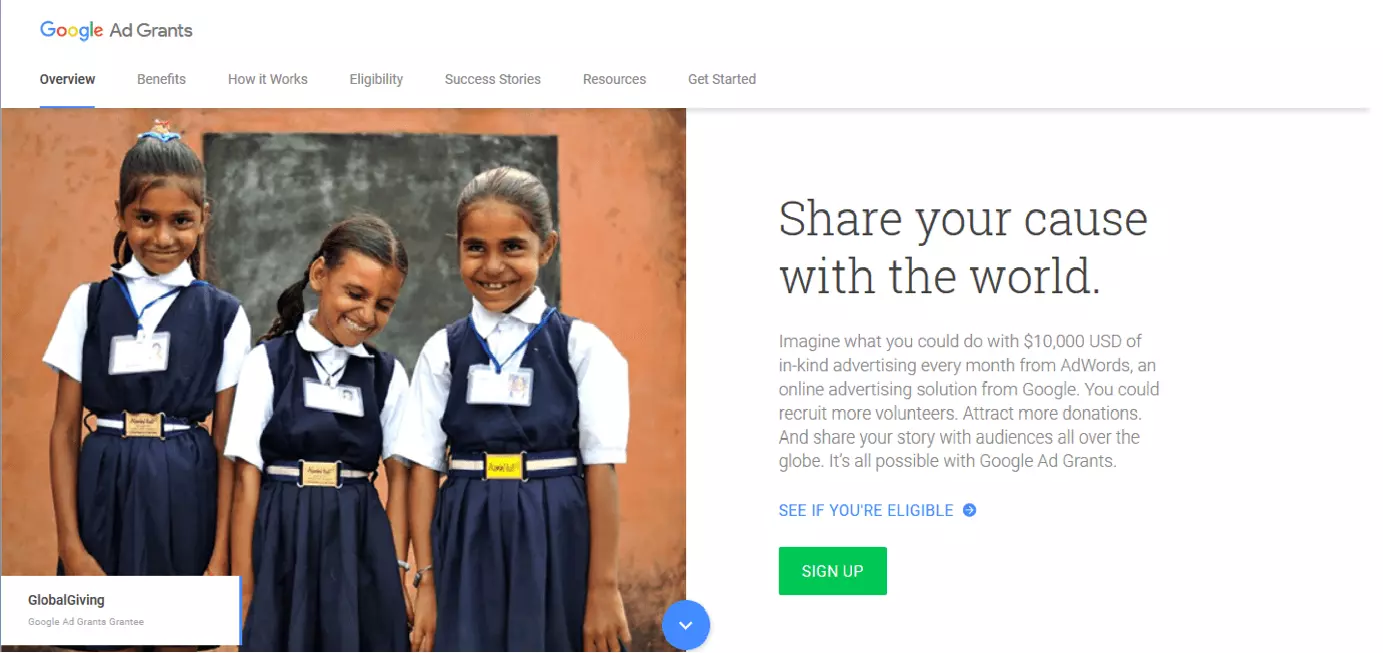
In the meantime, fundraising is becoming increasingly popular with search engines. Google provides nonprofit organisations with the opportunity to post free classified ads through the Google Ad Grants promotion program. Those availing of Google Ad Grants can use the Google AdWords tool free of charge, as part of a daily budget from Google.
Fourth step: Evaluate and optimise results.
Congratulations, you have successfully implemented your project. Now you have to take stock and evaluate the results: Have you reached your defined goals? Which NPO marketing measures did you bring to fruition and which failed? What lessons can you draw from it, and apply to the next campaign? Even if you are inspired by the success of your campaign, it is extremely important to carry out a final analysis and filter out possible weaknesses. This is the only way to optimise your nonprofit marketing scheme and expand on your success. In this regard, nonprofit marketing and profit marketing act identically.
Advantages and disadvantages of nonprofit marketing.
One could summarise that nonprofit marketing pursues a completely different concept than profitable marketing. The reasons for this are different prerequisites and goals. However, since the same market-economy rules and laws apply to nonprofit organisations as they do to profit based companies, NPOs must pursue fundraising (procurement marketing). This results in the various advantages and disadvantages of NPO marketing:
| Advantages | Disadvantages |
|---|---|
| Large target groups (relationship management) | Possibility of high competition |
| Effective, low-cost advertising | A lot of preliminary work is required (the better the image and the more members, the more successful the project) |
| Options for state funding | No ordinary employer/employee relationship (short-term and continual structural changes are a possibility) |
| Tax incentives | |
| Advertising for a good cause |
Reviewer

Melissa Senn
Melissa Senn has been with IONOS since 2016 and focuses on website, e-commerce, social media, and AI in the Digital Guide. As a digital strategist, she uses her extensive SEO and GEO experience to transform complex technological trends into practical content.