

Storytelling: stories as online marketing measures

People have been telling each other stories since the dawn of time: about everyday happenings, fantasy, educational, romantic, etc. – humanity has found narrative forms for just about anything. Stories stimulate our imagination, let us escape everyday life, and create communities. They also pass on values and norms of society and form the foundation of cultural memory. They can convey messages, ideas, and knowledge. As a result, storytelling has also become an effective marketing measure. The importance of storytelling in marketing, business, and social media can be found in our guide.
What is storytelling?
'The pen is mightier than the sword' as the old saying goes. By telling stories, you can take those listening on a journey, entertain them, and educate them. Storytelling in marketing works by giving a product, company, or idea, an exciting, interesting, and meaningful form. As a result, storytelling has been discovered by many PR, marketing, and communications departments in many companies.
In telling a story, products, ideas, or company traditions can be conveyed more emotionally and easily, for example, than by simply listing facts in a monotonous way. Readers’ interest and curiosity are piqued with exciting stories, which makes them want to read further and ultimately identify with your product or company. Storytelling can strengthen the brand, since a good story sticks in your memory for a long time. In the long-term, your readers will associate your company with a positive message.
Classic advertising, on the other hand, sometimes pushes the user, viewer, or listener to their limits. In online marketing, for example, there’s a phenomenon called 'banner blindness' – when readers subconsciously ignore advertising banners. This is because they are bombarded with so many advertisements, not just online but across all media. Therefore, good content and thrilling stories are always a good idea. Content marketing and storytelling go hand-in-hand.
storytelling is a communication technique used in marketing, PR, as well as in journalism, education, knowledge management, and psychotherapy. The goal is to pique the recipients’ interest with interesting stories and communicate information easily.
This is why storytelling works
In addition, storytelling is also used in companies for internal communication with employees: Training courses and introductions as well as values, knowledge, and corporate culture can be communicated better and more intelligibly through positive stories. The same way of working is also used in journalism and the education sector to convey complex relationships, important information, and problems in an easily comprehensible format. But why is this narrative technique so effective and used across industries and disciplines?
The answer to this question can be partly provided by brain research, and partly by literature and linguistics. The decisive keywords here are 'easy to understand format', which storytelling conveys with complex terms. This is because our brain will always try to understand difficult contexts with the least possible effort by using familiar patterns. Stories are, as described in the introduction, an established and proven way of passing on knowledge, and have been for millennia. Even poets in ancient times realised the potential and used stories to communicate their tales e.g. Aesop’s Fables. The tradition continues to this day. As early on as our childhood, we listen to our parents telling stories, which we then pass on to the next generation.
As a result, people have learned to gather and process information through stories. The right cerebral hemisphere will especially appreciate easy-to-understand stories that trigger an abundance of emotions: Good storytellers use their stories to talk about their experiences, which many listeners can relate to. Enabling listeners to find connections between the intended message and the content of the story is the great art of storytelling.
How to develop a good story
There are many ways to tell good stories: Depending on the company and the best form of communication or content that best matches the target group, almost all (multi)-media approaches, from video clips to formulated stories in text form, are conceivable. The first thing to consider is your target group: who is the story for? How is the group comprised – what are their desires, hopes, and interests? Which medium does the group prefer? You first need to answer these questions by carrying out market and target group analyses. Should the story be written in text or be in the form of a (short) film? When you’ve decided this, you can then orientate yourself to the classic drama and narrative theory in storytelling: it is a question of continually building suspense to pull readers, listeners, or spectators along and then end with a moral or a message. At the beginning, there should be an initial situation that the target group can identify with. The story should have one or more main characters, one of which the reader should be able to identify with, and follow them along as they solve problems, overcome obstacles, and develop. The story should end happily: the problem or mystery is solved, obstacles are overcome, and the main character(s) have achieved what they set out to. Make sure to avoid complex storylines and don’t change the time and location often. While stories can convey a more complex message, they should be as easy to understand as possible so as not to discourage the recipient, and at the same time encourage them to get involved in the topic. Particularly in the case of online articles, readers tend to skim texts and read faster, since their attention span is shorter when surfing. This means you need to impress the reader right from the start of the story. In this respect, you can roughly orientate yourself around the three Aristotelian unities: unity of action, unity of time, and unity of place. In our article, we reveal how reader behaviour online differs from that in print media. In the fast-paced world of the internet, first sentences are extremely important. Inspiration and examples of good opening sentences can be found in abundance in literary history. Two example are: 'There was a boy called Eustace Clarence Scrubb, and he almost deserved it', by C.S. Lewis, The Voyage or the Dawn Treader. This sentence introduces a person, and leaves the reader wondering what he did to deserve it. 'It was a bright cold day in April, and the clocks were striking thirteen', by George Orwell, 1984. The point of this sentence is to disorientate the reader and let them know that confusion is to be expected in this story. If the story is to be told in moving pictures, the first few seconds are of crucial importance: Since video clips (in addition to on the company blog) are mainly found on social media such as YouTube or Facebook, distracting videos from third-party providers are only a click away. The example illustrates that the beginning of the story doesn’t have to provide maximum information – quite the opposite: At the start, a teaser usually leaves some questions unanswered. Answers are then revealed as the story progresses. This piques the viewer’s interest and keeps them in suspense until the ending.
How can storytelling be used in online and content marketing?
Storytelling in social media marketing, online marketing, and content marketing, works according to the basic principles of good content and can be practised by any company. A story shouldn’t just be told for the sake of it, but should have a reason. What’s more important is that you consider the story’s message before you start composing it: what are you hoping to achieve with this story and how should it reach the recipients? Do you want to tell the history of your company? Do you want to reveal a success story about one of your products? What should the recipient take away from the story? The next step is the question of the ideal medium: ask yourself how you can best reach your target group with your story and which medium you should use to convey it in the best possible way. If your story is about a satisfied customer, it could be in either text or video form – but which medium could best achieve the desired emotional effect? Which one would be better at supporting your message? You have to make a pragmatic decision when it comes to the medium. For example, if new stories are presented regularly and continuously, texts are easier and more cost-effective to create. A blog with current stories would be the logical choice. Exciting films and elaborate adverts, on the other hand, have the potential to quickly attract attention in spite of the surplus of adverts already online. The aim of every storytelling marketing campaign is to catch the attention of enough people that the stories go viral. It’s all about telling a story that moves the reader so they want to share it with friends and relatives so that it’s distributed independently. In our guide, online marketing expert Felix Beilharz explains which ingredients have worked best for viral sharing in the past e.g. strong emotions such as trust, fear, joy, and love. These feelings can conjure up more than dry facts and data sheets. By turning to so-called influencers, you can accelerate the spread of the story – provided that the quality is good enough to impress bloggers. The first thing to do is to find the right platforms outside of the company’s own channels where the content reaches most users. These can be, for example, blogs or specialist portals covering special topics that have a great thematic overlap to the company, the product, or the story.
Storytelling: best practice example
But what does a good story look like when it’s finished. Although there is no patent recipe for how storytelling works in companies, there are many examples of best practice. These examples can prove inspirational for your own projects and show you what needs to be included. How successful a storytelling method is can be seen from YouTube videos and their views – here are four examples from different industries with different target groups:
Always: #likeagirl
The first example of successful storytelling in marketing is as unconventional as it is ingenious: the focus of the campaign is neither the product nor the company, Always. It is about an idea, a statement, and an experience that a large part of the audience can identify with – which is an essential strategy of storytelling which this and the following examples demonstrate.
The video begins with the question: “What does it mean to do something ‘like a girl’?”. Those being interviewed – adults of both sexes and boys – are asked to run, throw a ball, and fight like a girl. They begin to flail their arms around in a feeble way. Afterwards, young girls are given the same tasks: they all give 100%, throw perfectly, and run with all their might. When asked “What does it mean to you when I say run ‘like a girl’?”, a girl replies, “It means run as fast as you can”.
The next question is “When did doing something ‘like a girl’ become an insult?”, which is also directed at viewers and not just the interviewees, to make them question their own prejudices. The message of the story becomes clear. Two subtitles explain: “A girl’s confidence plummets during puberty” and “Always wants to change that”. This is the first time the brand is mentioned. Not to promote a product or the brand itself, but more for the idea, for the change, and a more progressive image of women and girls in society.
Using this company to shows a strong image of girls and women as well as for information about puberty, is truly an indirect advertising message: the video has already been viewed almost 64 million times and liked over 250,000 times. A quick reference to the factors for successful storytelling mentioned above show why this is possibly the case: a strong message is at the centere of the story. There’s a development, a reflection in attitude, and the viewers become emotionally involved. The comments prove that the message has been received and the story is being identified with. This paves the way for viral content.
PooPourri: How To Poop
PooPourri is a fragrance company that creates and markets toilet sprays. Even though going to the toilet is something everyone does several times a day, it’s still a taboo subject that many don’t talk about. PooPourri decided to go against the grain by releasing several videos explaining how to poop in different situations e.g. at a party, at work, on a date, etc. These videos have received 9,500,000, 1,400,000, and 2,000,000 views respectively. Most people can identify with these situations and realise how embarrassing it can be when nature decides to call at an unexpected moment. These advertisements even have some interactive elements, so the viewer can choose which scenario they would like to see, such as 'spray aerosol', 'go in the bushes' and 'use PooPourri'. These humourful commercials reel the viewer in, since they want to know how these moments can be avoided. Right at the end, the company introduces its selection of sprays to keep smells at bay.
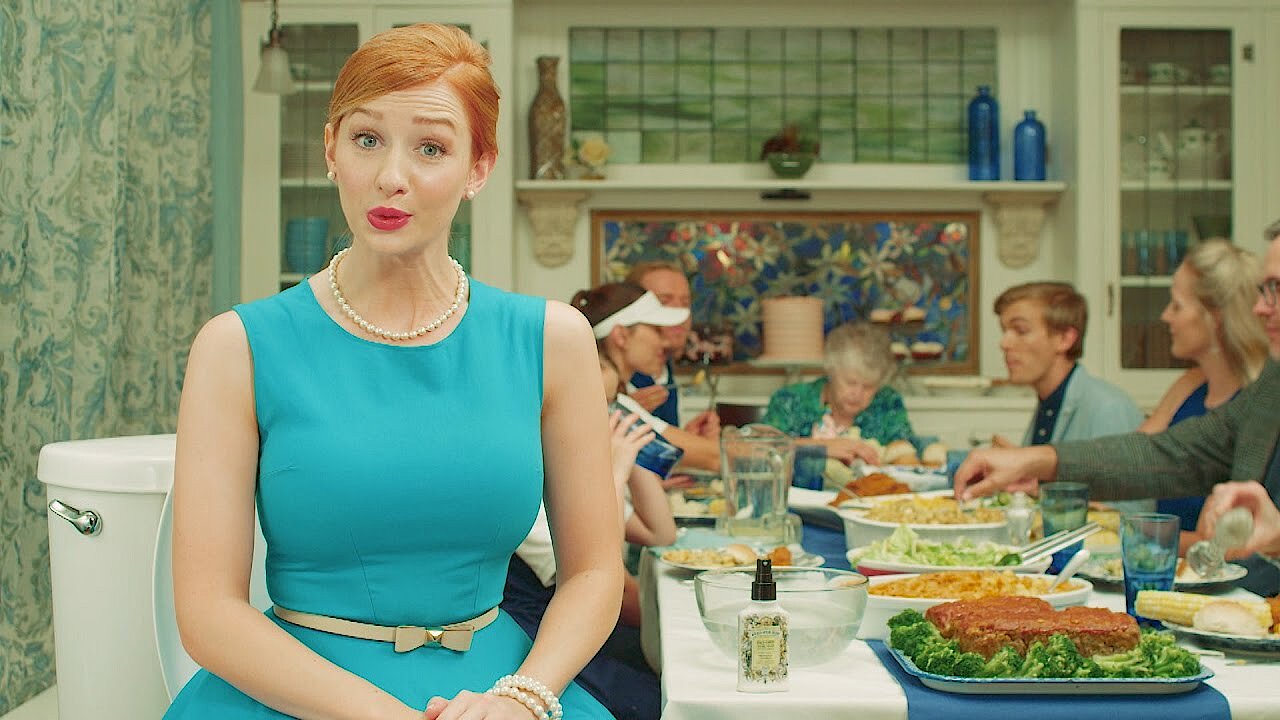 To display this video, third-party cookies are required. You can access and change your cookie settings here.
 The company was quite certain that these videos would hit the right note after the success of 'Girls Don’t Poop' three years earlier.
Patek Philippe: 'Generations'
With the 'Generation' storytelling campaign, Swiss luxury watch manufacturer Patek Philippe wanted to connect owners to the brand in the long-term. The watches manufactured from this company are so exclusive that it is difficult to reach a larger audience with product promotion: The brand is only known to a small amount of interested people since many can’t afford such a luxurious watch. Instead, the company tried to reach this exclusive target group on an emotional level. The solution: The story doesn’t promote the obvious features of a watch, since they are already known to the target group.
 To display this video, third-party cookies are required. You can access and change your cookie settings here.
 Instead, the film focuses on values such as family, tradition, and cosmopolitanism; activating the ideals of the target group and endorsing the company’s claim: 'You never actually own a Patek Philippe. You merely look after it for the next generation.' The claim itself already tells a story which the owners can get on board with. In the film, parents around the world are shown with their children in private and professional settings – always with harmonious gestures. When a father looks out onto the lake with his son, they could be looking into the future where the son takes the father’s place.
The story isn’t about watches, but more about visions, traditions, and heritage. In the clip, the watch becomes a mythical symbol for timelessness: the values of the previous generation continue onto the next generation. The clock ticks symbolically. This awakens strong emotions and engages viewers: the video ends by stating : 'Start your own tradition'.
This allows the advert to stand out from other storytelling examples and connect several stories together. Since each of the short stories in the advertisement is set in a different part of the world, this gives the company worldwide validity. The viewer gets the feeling that traditions can be started anywhere and by anyone. This makes identifying with the advert and its message even easier – despite the exclusivity of the target group.
Red Bull: 'Red Bull Stratos'
There aren’t many stories that are more motivating than world records and athletic performances. People all around the world have their favourite athletes that they support through the highs and lows of their careers. The Austrian beverage manufacturer, Red Bull, wanted to make the most out of this strong emotional compassion that people feel, to benefit their storytelling. With the project 'Red Bull Stratos', the boundaries of storytelling were expanded even more: the audience witnessed an authentic world record that had never been attempted before – a stratospheric parachute jump from an altitude of 24 miles.
 To display this video, third-party cookies are required. You can access and change your cookie settings here.
 The world record jump by Felix Baumgartner in the fall of 2012 attracted a worldwide audience. Reports went around the world and generated tremendous attention. Neither the brand nor the company was the focus of this story, yet the record jump is irrevocably linked to the name Red Bull. The positive and highly emotional stunt means the brand name is firmly etched into our minds: at present, the video has been viewed more than 41,500,000 million times.
The project, 'Red Bull Stratos' was really a genius idea when it comes to storytelling possibilities: there was no need for a story to be written to cause suspense. The idea for the stratosphere jump was enough: wind and weather, as well as Felix Baumgartner’s daring plan, wrote the story. The idea spread like wild fire: media reports and posts on social networks meant that the story quickly spread all over the world, going viral, and provided maximum suspense in the run-up.
What’s more is that the successful jump was all unscripted. The story is more similar to a documentary and therefore its authenticity cannot be surpassed. In addition, the idea of the jump fits perfectly with Red Bull’s slogan: 'Red Bull gives you wings'.