

Making money on YouTube – turning a hobby into a job

The job description of a YouTuber sounds too good to be true: film yourself doing something fun or discussing something interesting and when it’s done, upload the video onto your personal YouTube channel and wait for the money to start rolling in. Of course, in reality it’s not quite this simple - requiring hard work, considerable hours, a good deal of luck, and talent in front of and behind the camera too. Very few YouTubers are able to finance their living expenses through their YouTube channel. However, for those interested in earning additional income, YouTube offers interesting possibilities. Provided you have sound ideas and a well thought-out concept, earning money on YouTube is entirely plausible.
How does YouTube function commercially?
YouTube is the world’s largest video-sharing website. As a result, the platform is especially interesting for companies looking for advertising space. Using popular YouTube channels, firms can theoretically reach numerous potential customers. This is where YouTubers come in: by registering for the YouTube Partner Program, they can connect their account to Google AdSense. This monetises uploaded videos, allowing companies to pay to advertise in the video field.
Should clips contain protected material not produced by the YouTuber, written permission should be sought from the rights holder(s) in order to use the material for commercial purposes. The following content is considered protected material:
- Song titles or excerpts (no shared revenue)
- Music in general (including covers, song lyrics, and background music)
- Photos and other images or graphics
- Film and television images
- Images from video games or other software
- Live recordings (concerts, sporting events, shows, etc.)
The amount of money you can earn on YouTube depends on several factors. Among other things, it is relative to which advertising format you are using. For example, embedding a commercial video is more lucrative than featuring a banner or a classic text advert. To feature commercial video advertising, clips have to achieve high coverage and generate many clicks. The clip owner receives 55% of the AdSense income generated by the commercial, while the remaining 45% goes into the pockets of YouTube. Advertisers don’t have to pay for commercials which are cancelled inside the first thirty seconds, since they are unlikely to gain anything from this.
Cooperation and merchandising
The YouTube Partner Program and Google AdSense aren’t the only options for making money on YouTube. It is also possible to charge a fee to subscribe to your YouTube channel, or add rental and/or purchase offers for particular videos. Users will get a 14-day free trial, after which the charge is made. Users who unsubscribe during this 14-day window are not charged. The more successful a channel is, the more chance it has of attracting paid product placements. Simply put, this means that a third-party supplier will pay a YouTuber to present or speak positively about their particular brand or product in a YouTube video or video description. Additionally, an advertiser may reserve the right to embed a logo or brand trademark into a video, or pay a YouTuber to upload external, promotional content to their channel. Should you enter into a cooperation like this and promote external products on your channel, you mustn’t forget to inform YouTube by selecting the appropriate check box in the particular video’s advanced settings.
When you’ve reached a certain number of subscribers, selling merchandise can prove profitable. A small shop with a selection of T-shirts, sweaters, or hats emblazoned with your channel logo, brand, personal slogan, or catchphrase can be a good source of secondary income. Over time, this merchandise can generate new viewers or followers. For many YouTube stars, sponsoring and merchandising is half their income.
YouTube’s top earners
As we’ve discussed, there are a number of different ways to earn money on YouTube - though all of these are subject to conditions. Commercials only generate money when they are played for at least thirty seconds (usually the advert’s entire duration), deals with third parties can only come to fruition after a certain degree of prior success, and the sale of merchandise or subscription charges assume that users are willing to pay. It’s very difficult to make predictions about YouTube income. However, there’s no denying that, with the right skills and luck, some YouTubers can finance their entire lives through activity on the video platform.
Although it is difficult to clarify the exact amount of money earned by the top YouTube stars, assumptions can be made based on the number of channel subscribers and video views. The website SocialBlade contains statistics about user figures and clicks on all YouTube channels, which it uses to estimate monthly and yearly income. The following infographic shows the average price for a sponsored post from YouTube’s top earners:
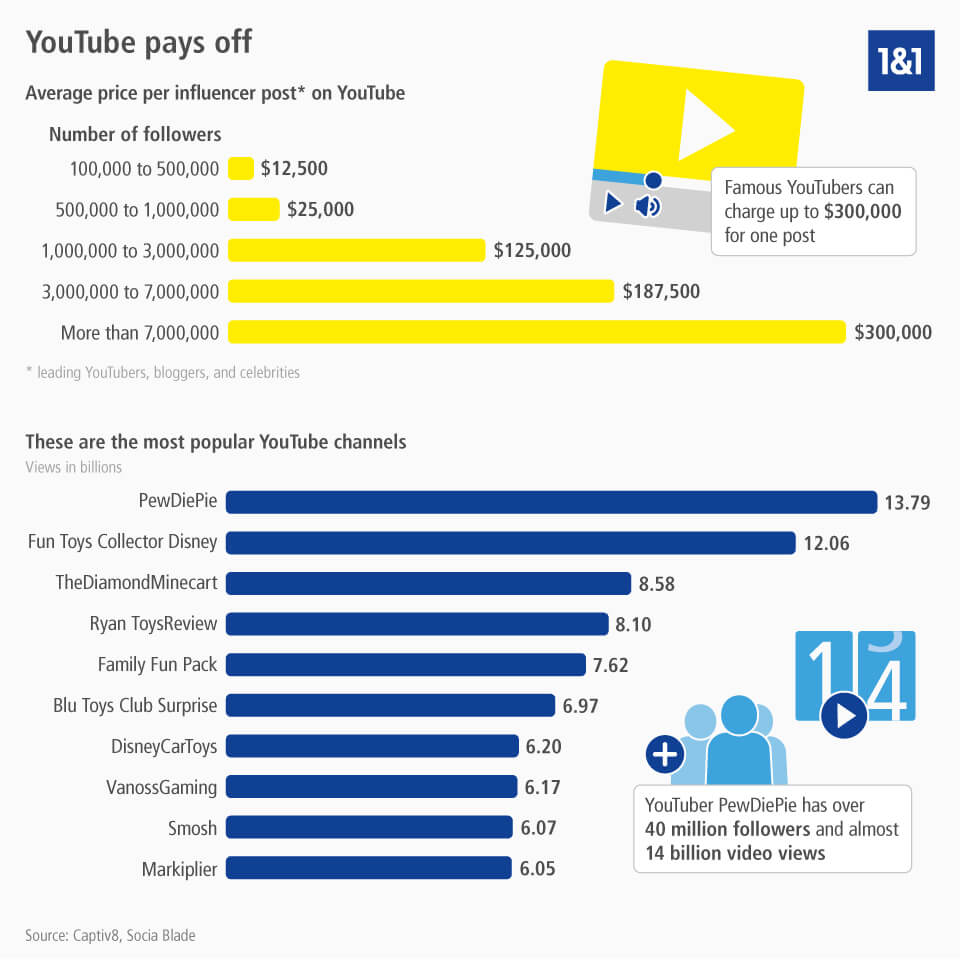
Click here to download the infographic about YouTube.
What you earn for each post depends, of course, on the number of followers and YouTube subscribers. However, if you continuously expand your number of followers, you have a good chance of earning some extra income sooner or later. Five of the world’s most popular YouTube channels:
| Subscribers | Video Views | Start Year | Country | Monthly Earnings | |
| PewDiePie | ~ 44 million | ~ 12 billion | 2010 | Sweden | $ 67,000 – 1.15m |
| HolaSoyGerman. | ~ 27.5 million | ~ 2.5 billion | 2011 | Chile | $ 110,700 – 186,400 |
| Smosh | ~ 22 million | ~ 5.5 billion | 2005 | USA | $ 20,500 – 310,300 |
| RihannaVEVO | ~ 21 million | ~ 9 billion | 2009 | USA | $ 70,300 – 1.05m |
| OneDirectionVEVO | ~ 20 million | ~ 6 billion | 2010 | United Kingdom | $ 36,500 – 490,200 |
Boyband One Direction and singer Rihanna command two of the world’s most popular YouTube channels. They are closely followed by other musicians like Justin Bieber, Eminem, Taylor Swift, and Katy Perry. The comedy duo Smosh started out in 2005 with the synchronization of well-known theme music, and now have a second channel as well as specific cartoon and gaming channels on YouTube. Chilean YouTuber HolaSoyGerman makes light of everyday problems in over 100 video uploads, though the vast majority are not in English. Felix Kjellberg, better known as simply PewDiePie on YouTube, has the most subscribers in the world. He has published thousands of videos since setting up a channel in 2010. Most of these are videos known as Let’s Plays (LP), in which the YouTuber plays and comments on a video game.
How to make money from YouTube videos
The estimated income of these YouTube stars is more than tempting. With the exception of famous people like Rihanna or One Direction who made their name before setting up a channel, the majority of stars in the scene went through a very typical development process. Most would have never believed that they would one day make money from YouTube. Although it’s impossible to plan such success, there are certain tips available to help you dive into the YouTube world and turn your channel into a successful secondary source of income with the YouTube Partner Program and Google AdSense.
A perfect idea
Before you start filming, you should consider the concept of your channel. Be aware that the YouTube world hasn’t been waiting for you; it’s up to you to convince users to watch your videos. The number of YouTubers is growing rapidly, while the percentage who run a profitable channel will continue to sink.
In order to outmaneuver the competition, you will require topics and formats which strike a chord with users and are not already covered by larger channels. The more innovative and sought-after your idea is, the higher the chances of the audience paying attention. When brainstorming ideas, consider things that you enjoy, things you can do well, or fields you are very knowledgeable in. If you are enthusiastic about your videos, it will reflect onto your viewers.
Quality content wins
The quality and editing of your content is just as important as the format and themes. It’s unlikely you’ll be 100% satisfied with the results at first, but this should give you the incentive to make the next clip better. The cut, length, lighting, effects, and links on your channel and videos are important factors which can positively influence the perception of your clips. Using relevant, heavy traffic keywords and an informative description will ensure that your clips will be found by users. In addition to optimising your content, it’s recommended to develop an upload strategy. Having regular clips to publish will increase your reach and help keep users who have already subscribed to your channel. If possible, try to ensure enough material to be able to present a new video on one or two fixed days per week. A good long-term strategy is to start a video blog, which you can use to communicate with followers more directly, by thanking them for subscribing to your channel or responding to their comments.
Join the community
Responding to comments and wishes of users is an important step on the way to a successful channel. YouTube isn’t just a video platform, it’s a social network. Expand your reach by becoming active on other channels as well as your own and try to cooperate with other, influential YouTubers. Leave comments on other videos, or even express your opinions on topics or clips with video responses. These social elements are crucial to earning new subscribers who may not otherwise find your channel.
YouTube channels can also be presented on other social networks: Facebook and Twitter, for example, are great places to make the world aware of your latest clips. Simply link your other social media accounts in your channel description and vice versa. This may even help you find influential partners to support you on the search for new viewers.


Making money on YouTube – conclusion
Turning a YouTube channel into a successful, profitable tool for the Partner Program and the affiliated advertising opportunities is no walk in the park. Growing a following can be a tedious affair that doesn’t happen overnight, while existing subscribers require new content regularly to maintain interest. Needless to say, it takes time to produce content that is continually innovative and exciting but also well filmed and edited.
However, if you start with small goals and possess the right perseverance for the task, YouTube can provide a good source of income via advertising in the long term. It’s important not to focus on the channels of superstars like PewDiePie or Smosh, but rather concentrate on working with a small network. Any YouTube channel that maintains consistent, quality content and understands its target audience will automatically become a relevant advertising partner for companies.