

10 Minecraft alternatives for sandbox fans

Minecraft has been one of the most successful and popular sandbox and survival games for years. If you’re not a fan of Minecraft’s design, there are plenty of other Minecraft alternatives to choose from, such as Roblox, Terraria, or Rust, all of which have a similar principal or are completely unique.
What are sandbox games?
The term ‘sandbox’ is now commonly known since Minecraft became popular. Minecraft’s block worlds have become associated with ‘sandbox’, however, this is just a generic name for the versatile game principle. Like in sandboxes, sandbox players move freely through open game worlds where they can be active and creative thanks to the free interaction between the players and the game world.
Sandbox worlds are made to be explored, developed, worked on, and designed. This can be achieved through agriculture, industry, space travel, or architecture. The crafting is an essential characteristic of sandbox games. Another feature, known as survival mode, involves players being thrown into computer-generated worlds where they must assert themselves and evolve. The third sandbox feature is called adventure/RPG modes, where players can solve quests or choose their own game rules.
Why is Minecraft so popular?
Minecraft was developed by Mojang Studios in Sweden and it is the current sandbox leader. As of 2021, it is the best-selling computer game of all time. The secret to its success lies in its simple graphics, which focus on creating virtual worlds with a childlike building block aesthetic. Stranded in a pixel world like Robinson Crusoe, Minecraft players can design real-time generated landscapes as they wish. Players can also create a game world alone or with friends with their own rules thanks to the dedicated Minecraft server. They can make tools, build houses, chop wood, lay mines, and create cities and landmarks. However, there are plenty of alternatives for those who don’t like Minecraft’s minimalist graphics or who are looking for alternatives with more story.
An overview of 10 Minecraft alternatives
Roblox (free of charge)
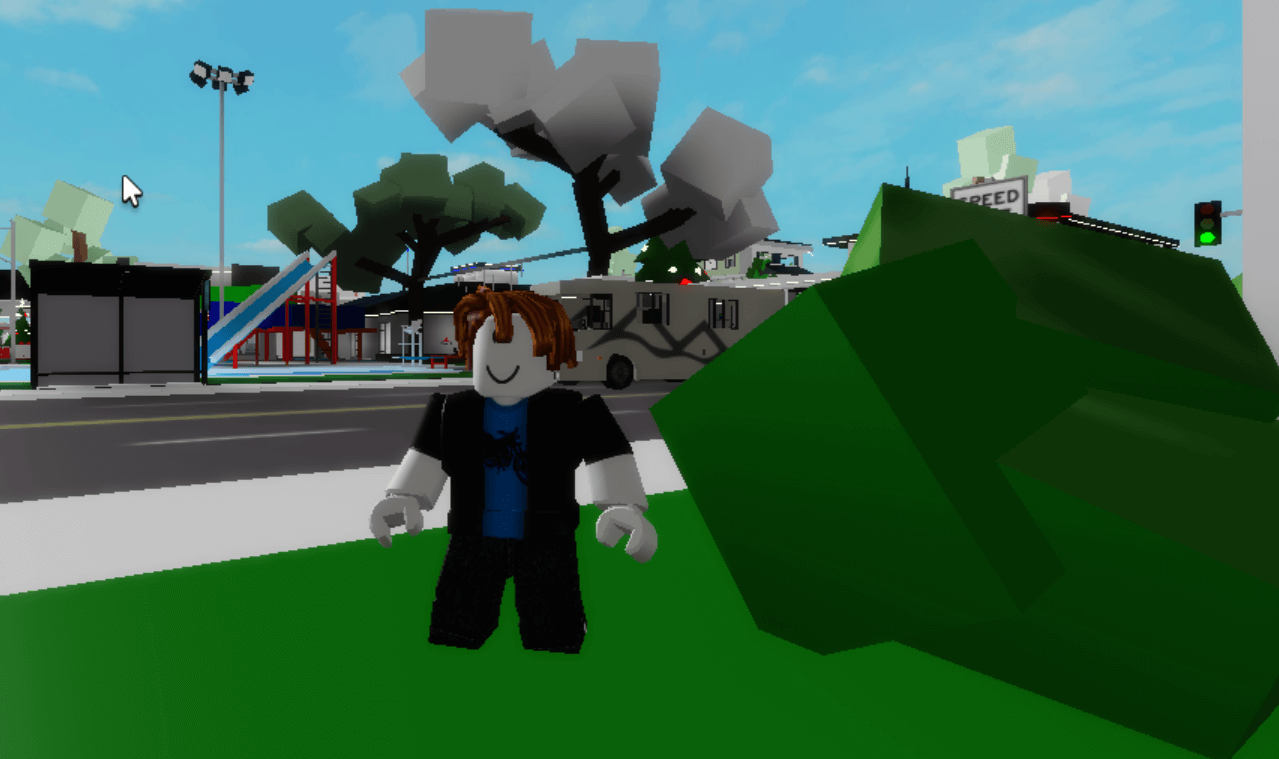
The name ‘Roblox’ is a combination of ‘Robot’ and ‘Blocks’. Like Minecraft, the game features minimalist graphics with textures and characters reminiscent of worlds in Lego. Roblox players choose between two game modes: creating their own mini-games or the user-generated free-to-play games. The possibilities when creating games with the Roblox studio construction kit and the scripting language Lua are diverse, and they range from racing games to simulations. There are over 57 million games currently available. They are available in both single player and multiplayer mode (6 to 30 players).
- Platforms: Windows, macOS, iOS, Xbox One, and Android
- Advantage: Easy to create and program the free-to-play games as they are based on a modular principle
- Disadvantage: Some content and games do not comply with child protection, so parents should check their children’s usage
Stardew Valley (fee required)
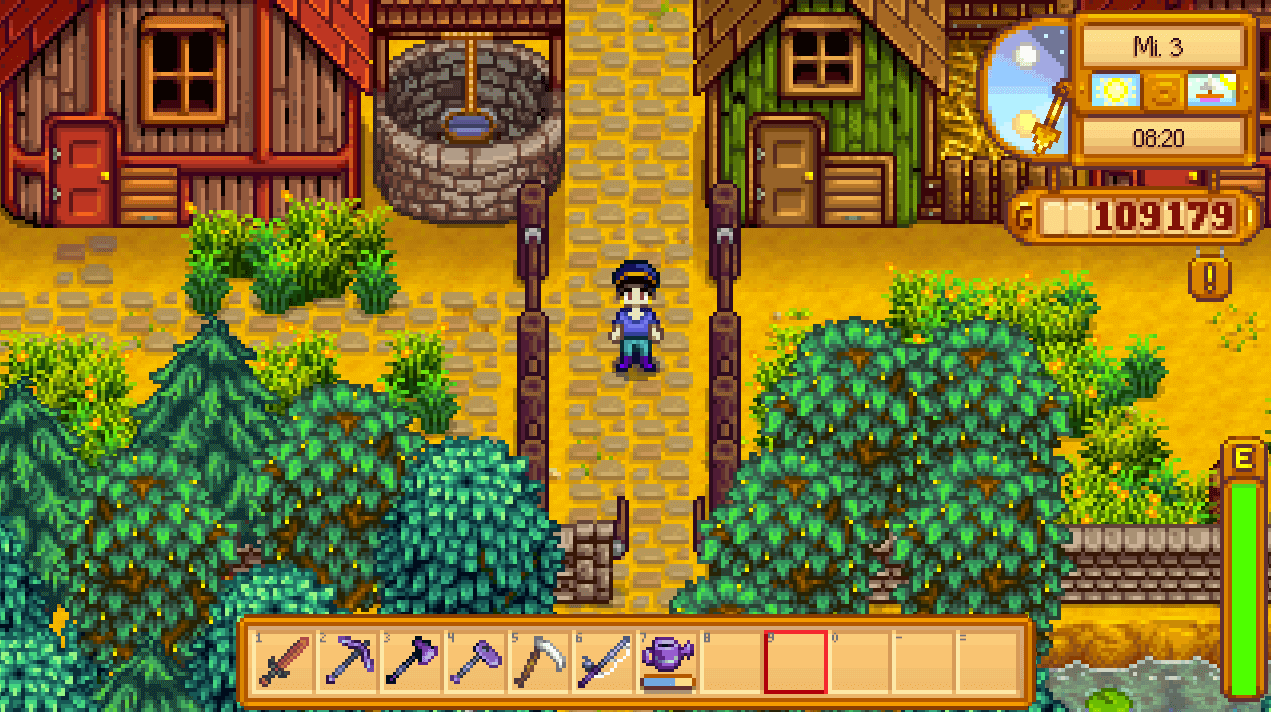
Stardew Valley is one of the best-selling games with over 15 million units sold. Its mix of role-playing, simulation, and retro pixel graphics is reminiscent of farming classics such as Harvest Moon. Players take on the role of the protagonist who inherits a farm. They renovate, farm, and build connections with the residents in Pelican Town. There are also mini games, where players must fight monsters and search for precious mineral resources. The game is open-ended, but it is not open world in the true sense unfortunately, rather it is similar to the classic RPG simulations.
- Platforms: Windows, macOS, iOS, Xbox One, Android, Nintendo Switch, PS 4, and Vita
- Advantage: Relaxing, versatile farming RPG simulation with adventure interludes, creative retro graphics and hours of gameplay fun
- Cons: Not open world and more similar to traditional console games
Terraria (fee required)
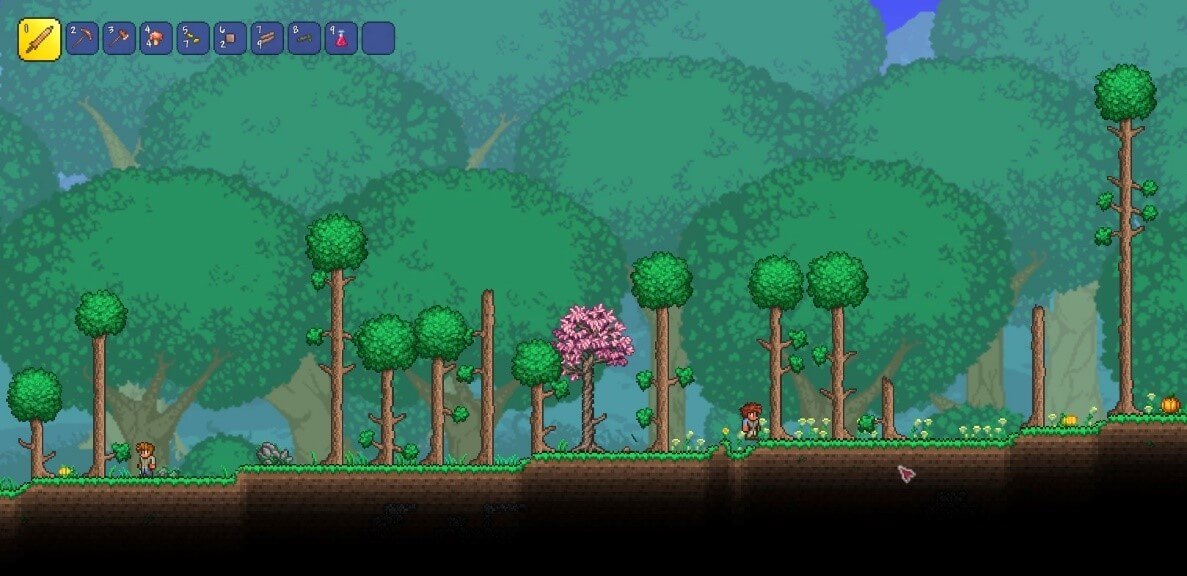
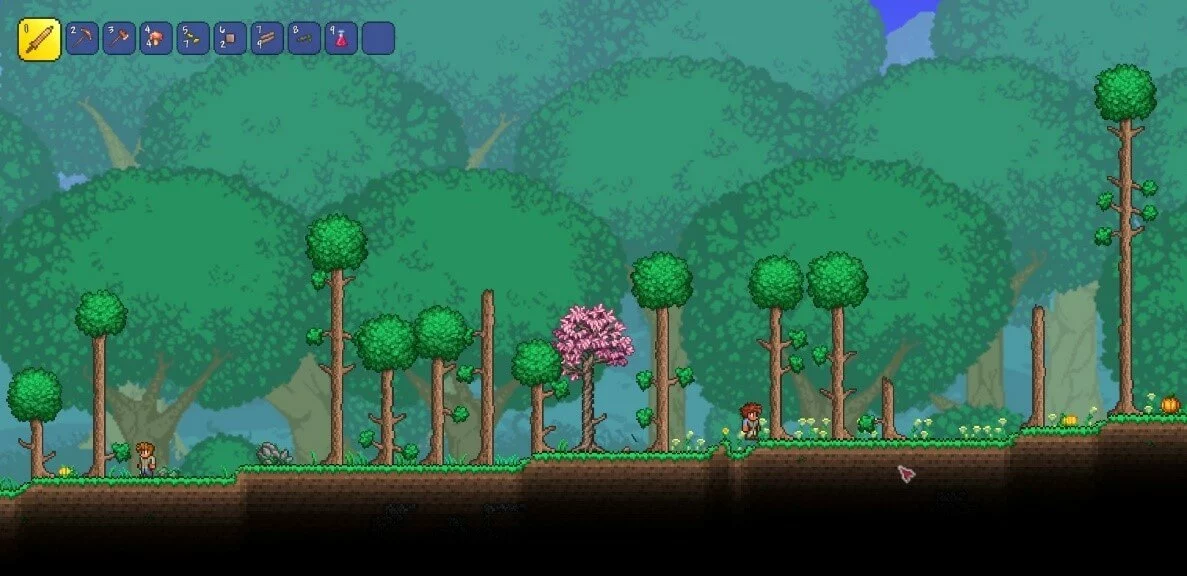
The open-world game Terraria is rightly nicknamed ‘Minecraft 2D’. It is similar to Minecraft in the sense that players interact with a randomly generated game world in real time. This includes logging, mining, and production of tools, among other things. There is also an integrated day-night rhythm (in 24 minutes) which affects daytime and nocturnal enemies. The world consists of 2D block graphics and each element can be edited, mined, and reshaped. Another feature includes trading and creating your own empire from base camps into country estates and castles. There are unlockable game modes which offer new enemies and items. Lastly, players can explore the world as a team via multiplayer with their own Terraria server.
- Platforms: Windows, macOS, iOS, Xbox 360 and One, Android, PS 3 and 4, Windows Phone, Linux, Nintendo Switch, Wii U, Nintendo 3DS
- Advantage: Open-world/sandbox game which focuses on adventure and combines several elements with action/adventure, RPG, and dungeon games
- Disadvantage: The sandbox principle is not as free and unlimited as in Minecraft due to fixed items
Starbound (fee required)
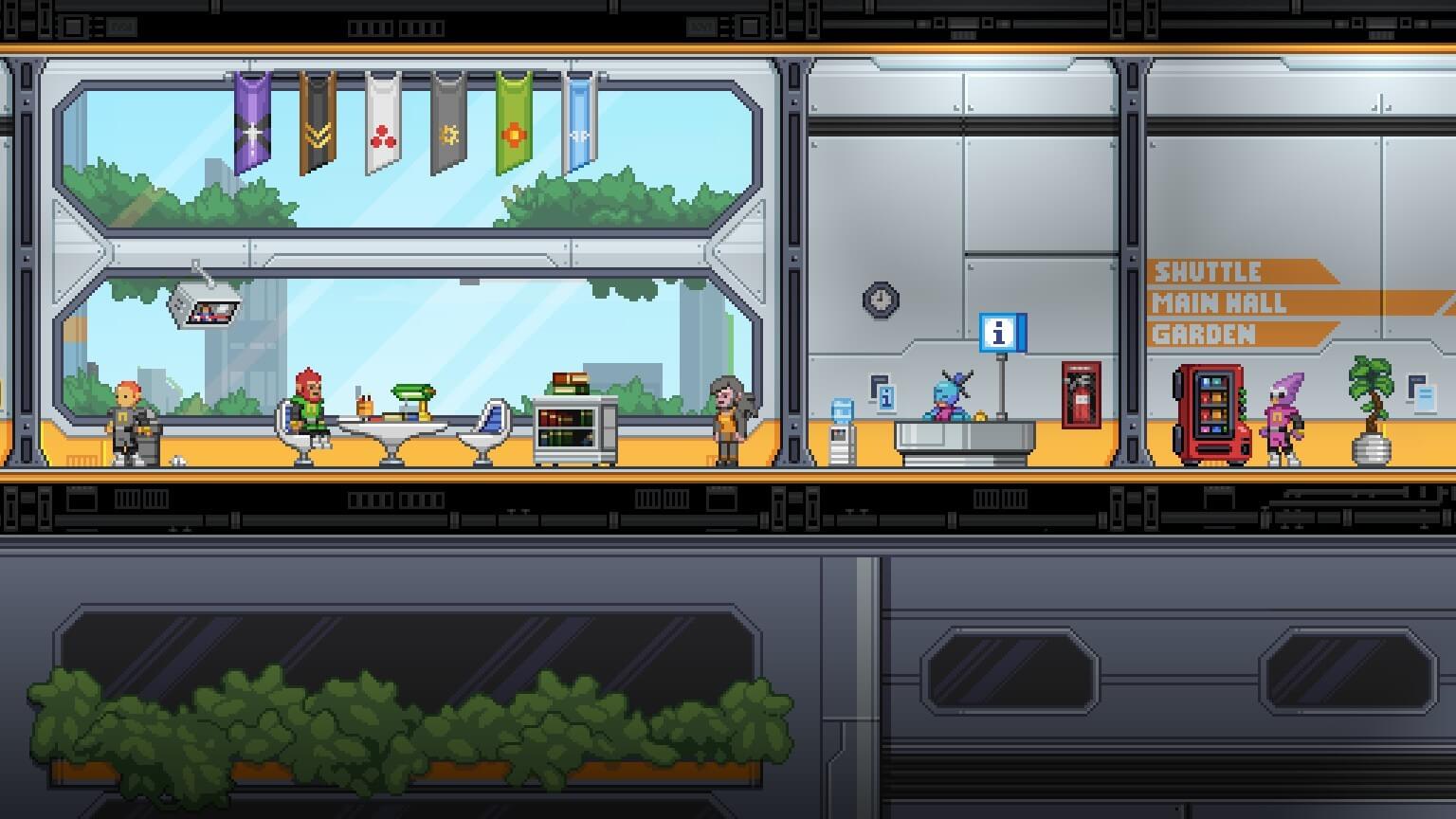
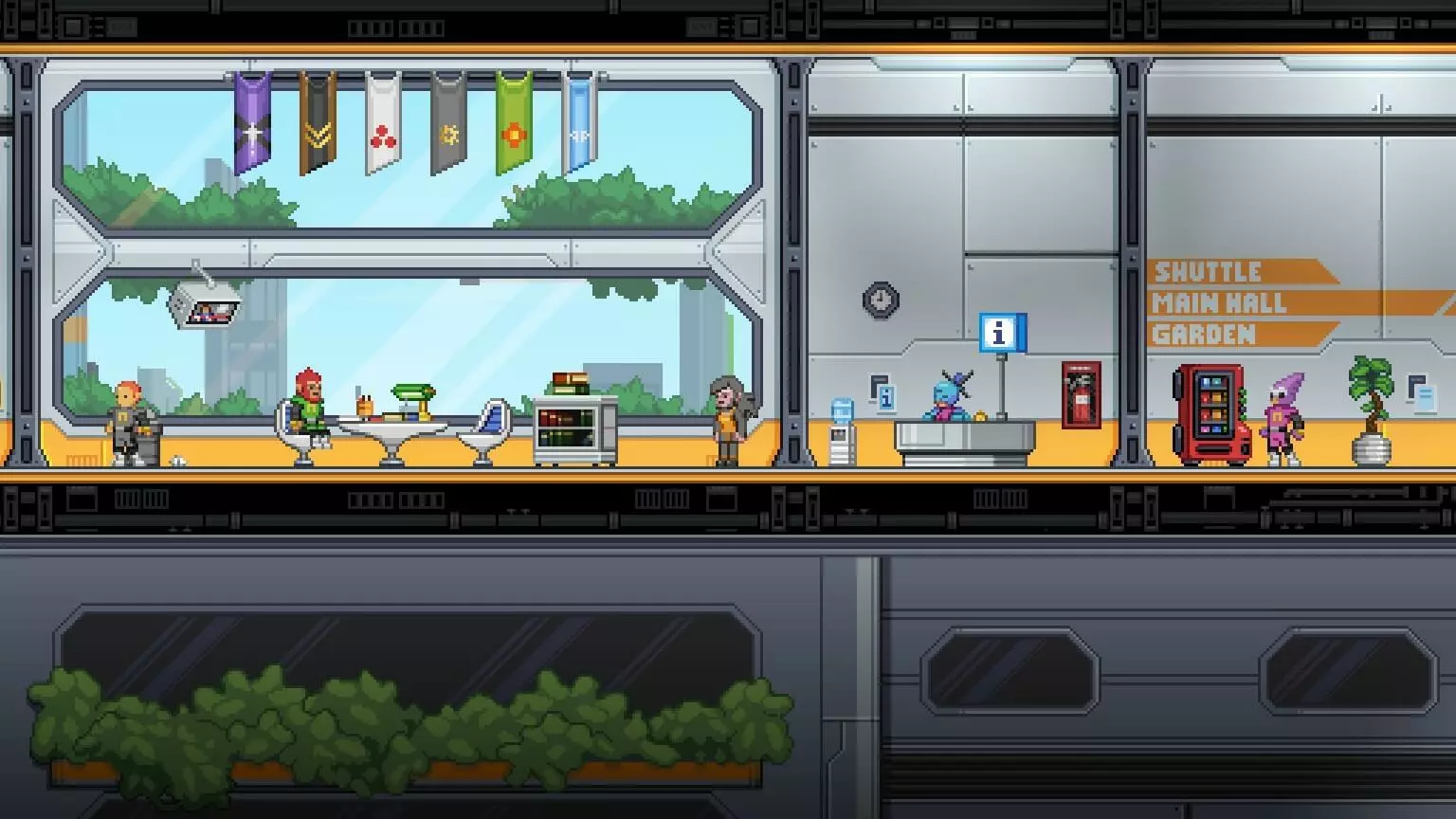
Starbound mixes elements from Minecraft and Terraria, the main difference being that the game world encompasses a universe. In this sense, it is similar to the sandbox/open-world game ‘No Man’s Sky’, but it presents itself in detailed 2D graphics. After the Earth’s destruction, players travel through the cosmos in a spaceship and travel between planets with fixed and computer-generated structures where they must fulfill various quests and trade. Houses can be built on the planets, artifacts found, and enemies defeated. A dedicated Starbound server also offers multiplayer fun.
- Platforms: Windows, macOS, Xbox One, PS 4, and Linux
- Advantage: The sandbox game offers users a good balance between story mode, free exploration, and development of the open world
- Disadvantage: Quest and story mode are not as impressive when compared to other plot-based games
Eco (fee required)
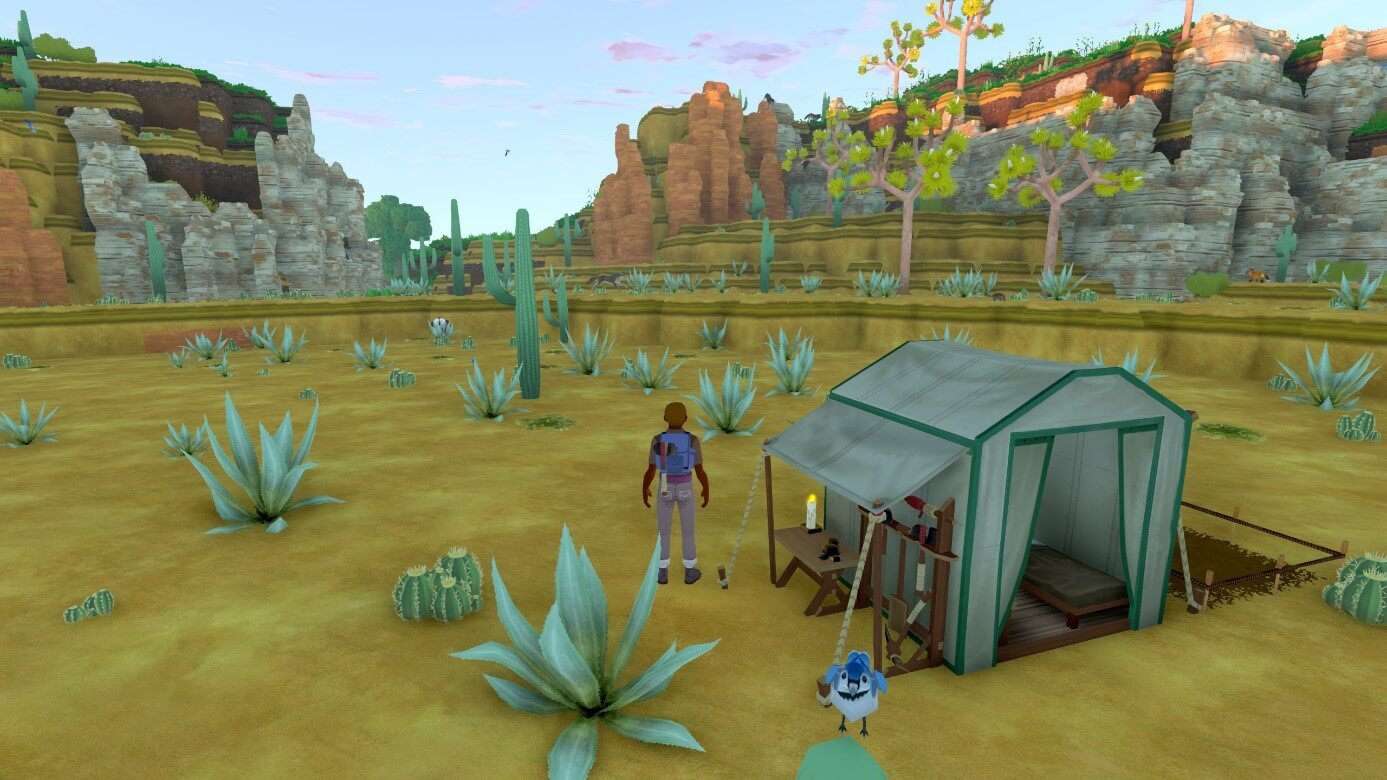
Eco is a multiplayer simulation game where players find themselves on a planet which is being threatened by an asteroid impact. The relatively open gameplay focuses on building a civilization with other players and fending off impact. However, resource extraction must not disturb the ecological balance. Therefore, the principles of farming, mining, and crafting are originally supplemented with an ethical and educational aspect. Players specialise in certain skills and crafts which make teamwork very important. You can create an exciting, realistic team play with in-game agreements, contracts, and community obligations with your own Eco server. Governments can also be formed and the virtual ecological footprint can break down.
- Platforms: Windows, macOS, Linux
- Advantage: Civilization simulation with nice graphics, creative multiplayer principle, and interesting ecological approach
- Disadvantage: Only works in multiplayer mode as single player mode has not been developed
ARK: Survival Evolved (free of charge)
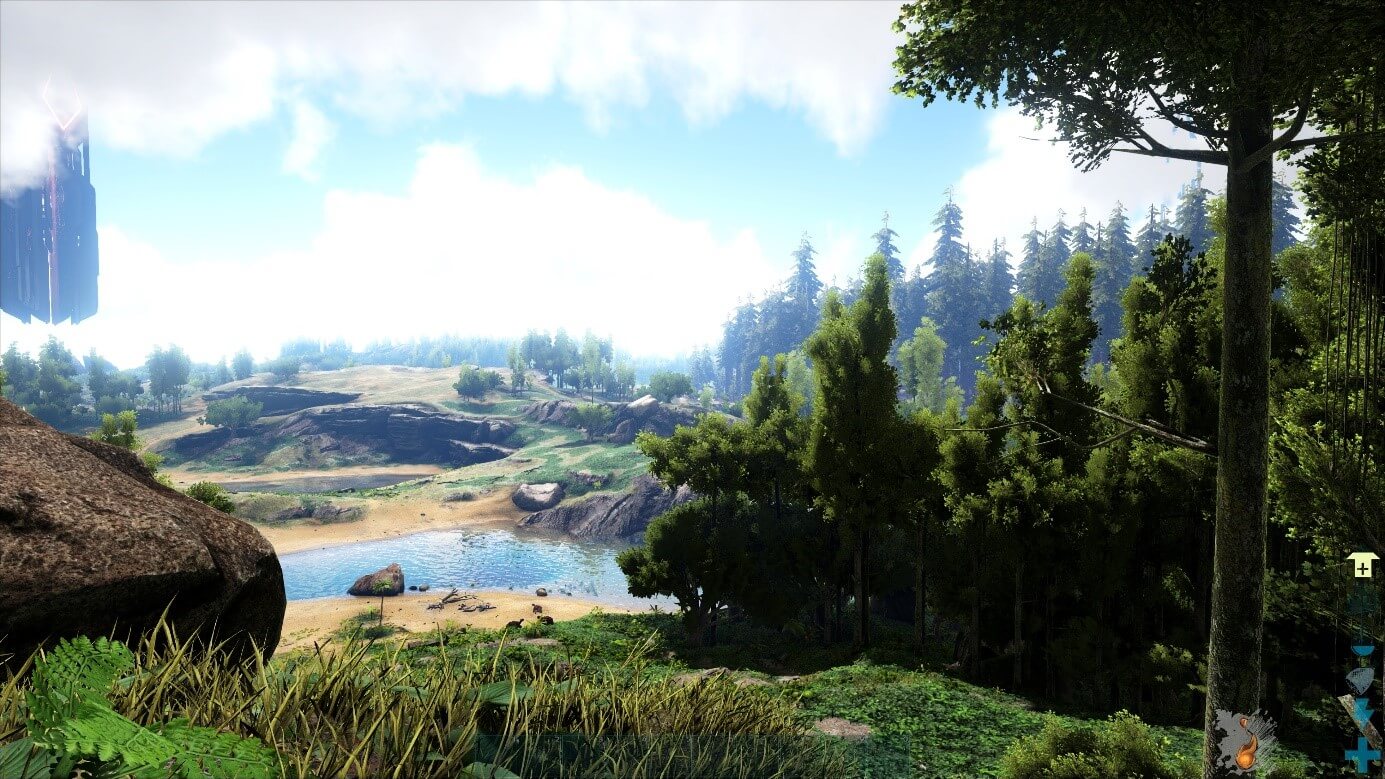
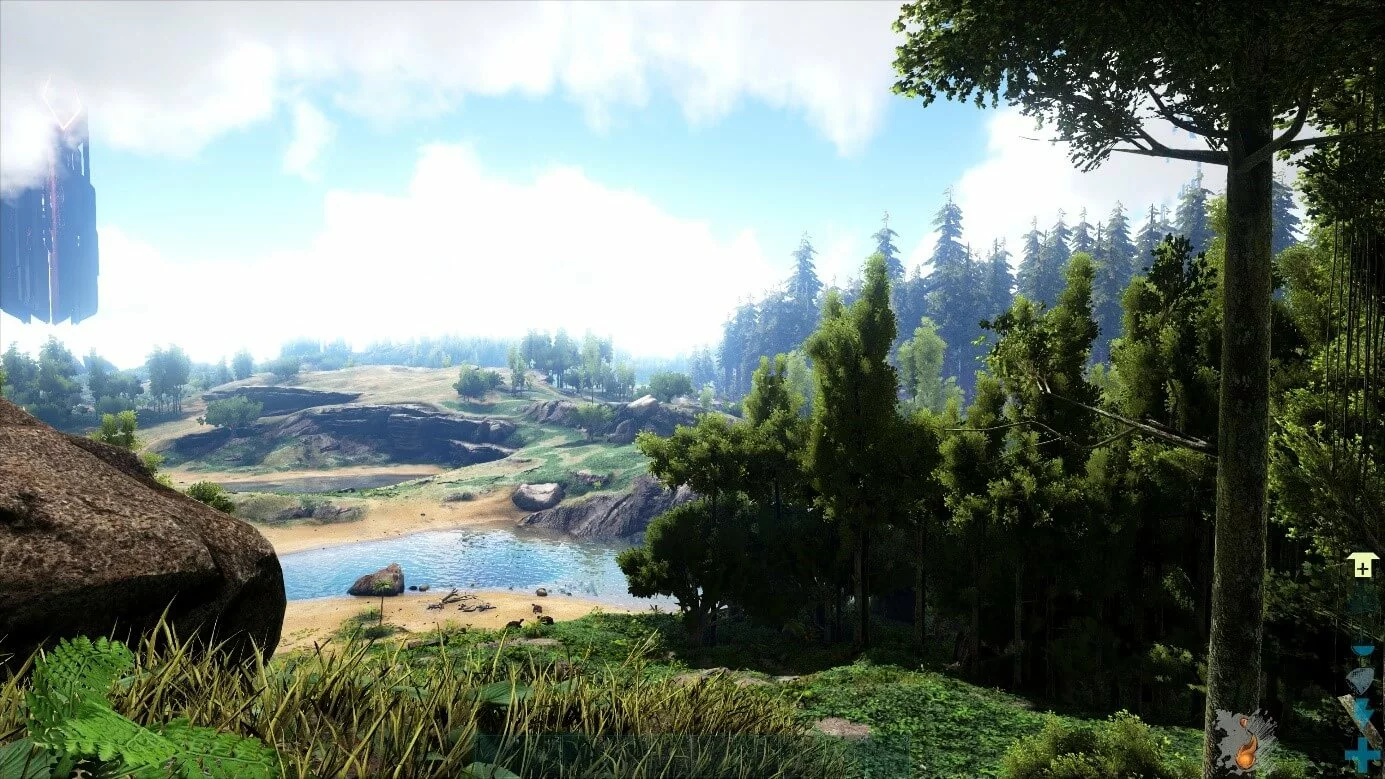
The adventure/survival game ‘ARK: Survival Evolved’ takes fans of survival and sandbox games into the world of dinosaurs. Players start their adventure without any equipment and have to make clothes, houses, tools, and weapons from materials in the game world. At the same time, players must explore the world and its elements, as well as collect points and reach new levels. Dinosaurs can be fought, but they can also be tamed. The game began with a 49m2 map of ‘The Island’, but it has since expanded to other numerous maps. It is recommended to play ARK as multiplayer, as tasks such as dinosaur breeding take up a lot of game time. Users can join up with other players to form a tribe and distribute tasks with a dedicated Ark server.
- Platforms: Windows, macOS, iOS, Xbox One, Android, PS 4, Nintendo Switch, and Linux
- Advantage: Offers a large game world, which can be supplemented with many elements through different mods, such as steampunk or pirate world
- Cons: Still has some bugs and glitches which can be annoying in single-player mode
Vintage Story (fee required)
 To display this video, third-party cookies are required. You can access and change your cookie settings here.
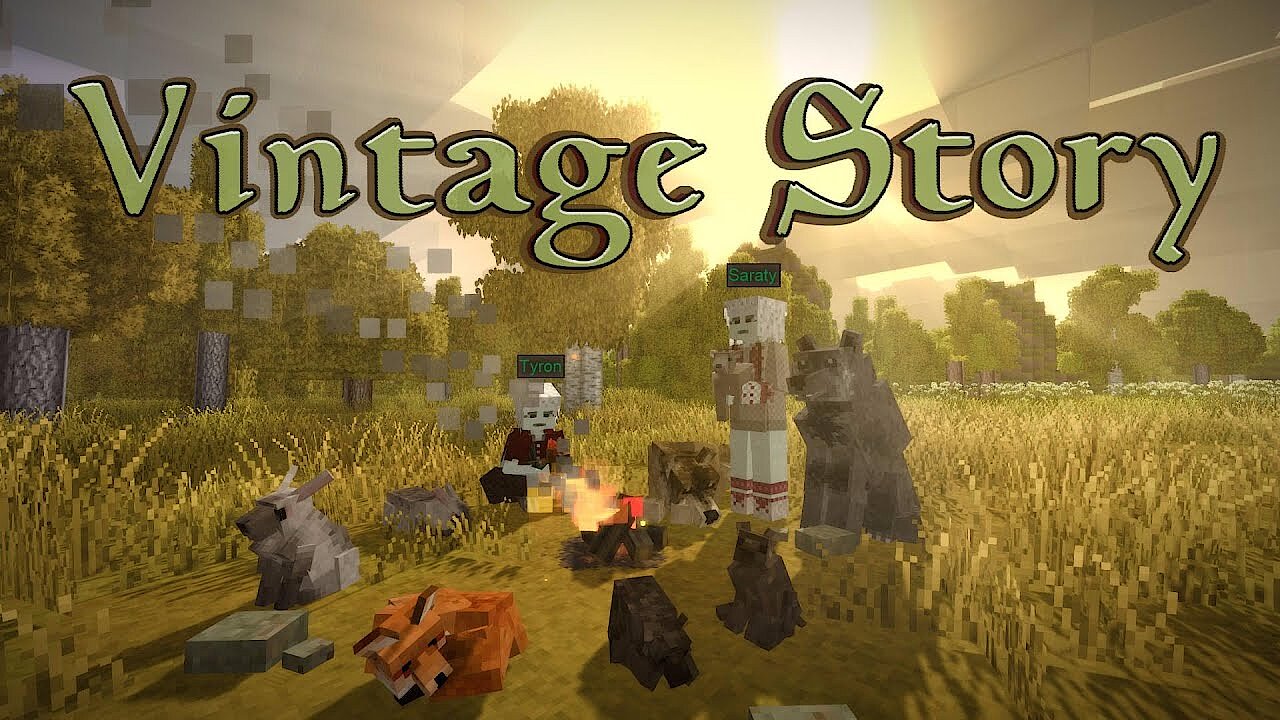
Vintage Story developed from a Minecraft mod, but it has since evolved into an independent sandbox survival game. Although it has the same characteristic pixel-block graphics as Minecraft, it focuses more so on realistic survival elements. Players begin the game as a blue-skinned seraph in a mysterious world, where they must ensure their own survival by building houses, raising animals, farming, and crafting in-game tools, as they must also fight monsters. The world and its background story can then be explored in single or multiplayer.
- Platforms: Windows, Linux
- Advantage: Offers a high degree of realism in terms of crafting, farming, and atmosphere when compared to Minecraft
- Cons: Still in the Early Access phase since its 2016 release
Trove (free of charge)
 To display this video, third-party cookies are required. You can access and change your cookie settings here.
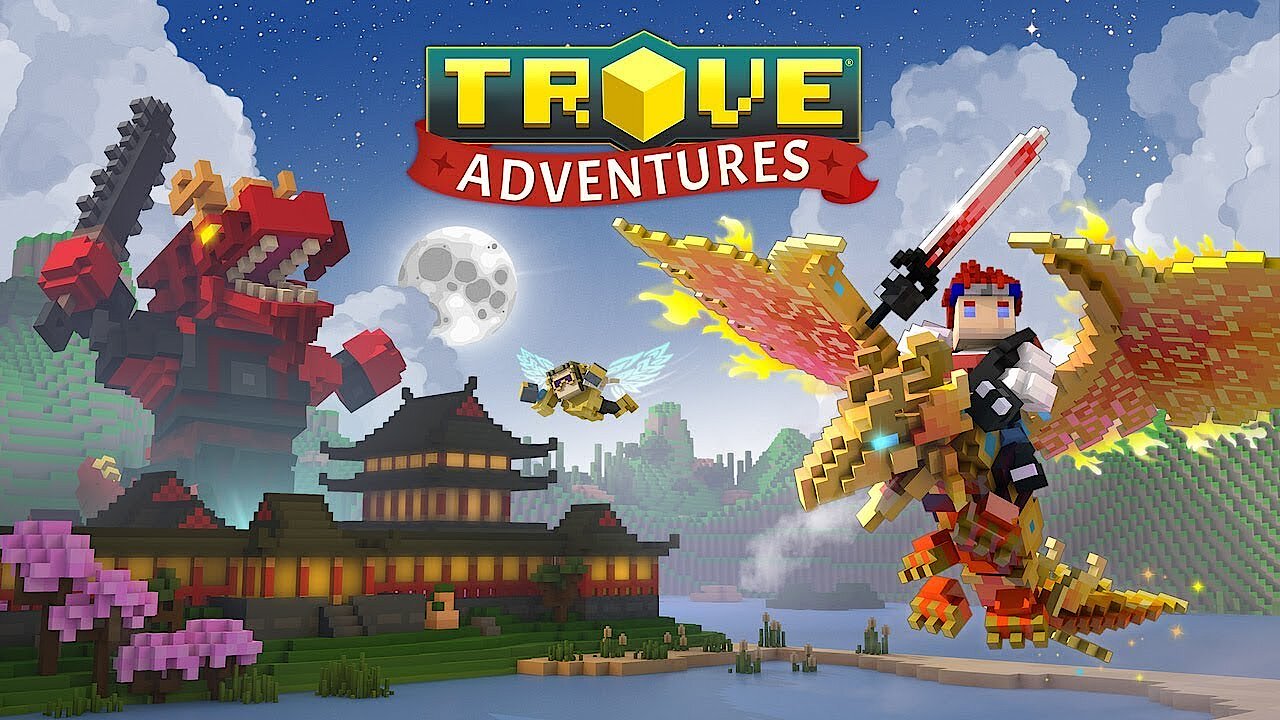
Trove is a voxel-style sandbox game similar to Minecraft, so fans of Minecraft will have no trouble getting used to the cubic characters and designs in Trove. Trove is an MMORPG where players choose characters from a wide class system with their own crafting skills. The specialised skills promote team play as players must work together. Players start in the ‘hub’ and move through portals into different in-game worlds. Access to portals will depend on the player’s level of experience. The game revolves around defeating dungeon bosses, solving quests, finding loots, and mining materials for crafting.
- Platforms: Windows, macOS, iOS, Xbox One, and Android
- Advantage: Players can choose their characters based on their classes and skills and form complementary teams
- Disadvantage: The Trove world does not seem to have a coherent background story, which can make gameplay seem arbitrary and aimless at times
The Forest (fee required)
 To display this video, third-party cookies are required. You can access and change your cookie settings here.
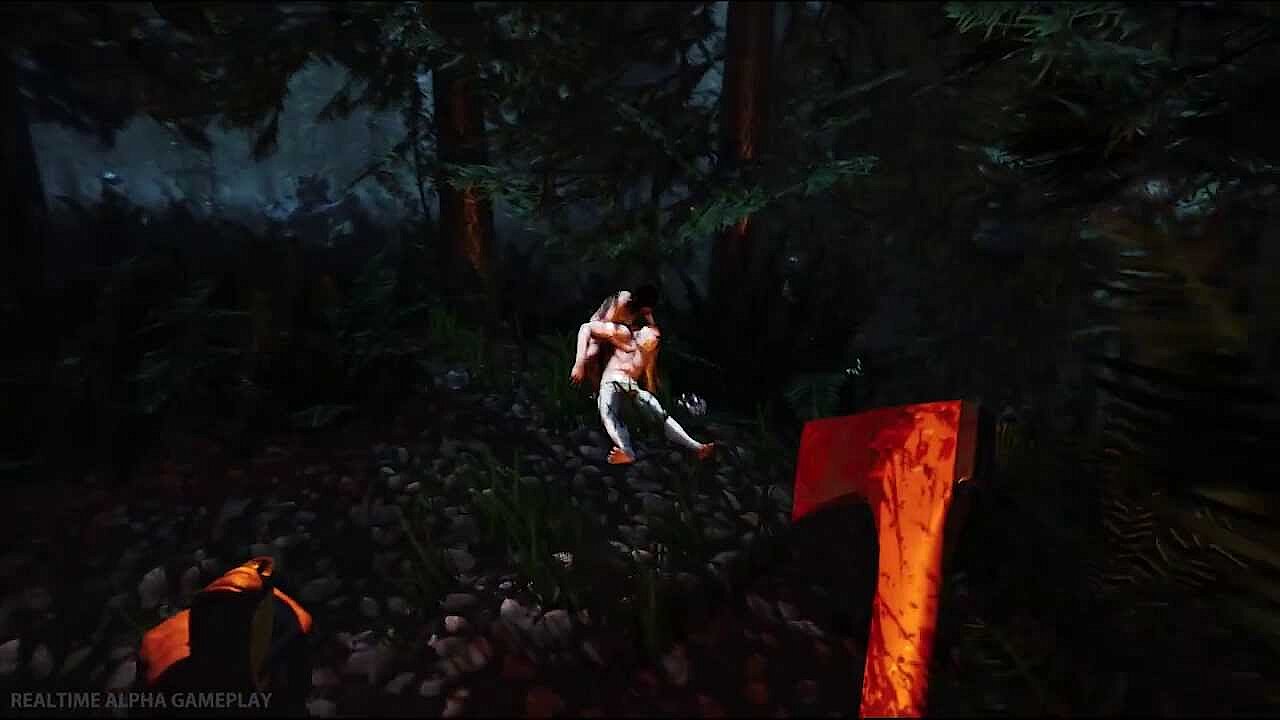
The Forest is an atmospheric survival horror with sandbox elements and it is unsuitable for young players due to its dark elements. The main character is the survivor of a plane crash who has to defend himself against cannibal tribes on a peninsula where he must rescue his kidnapped son. Players can build shelters, weapons, and tools from materials and elements in the game world. The nonlinear game includes third-person and first-person shooter perspectives and can be played in single and multiplayer modes. There is a day-night rhythm, a diverse animal and plant world, and several versatile regions. The strength of The Forest is the deep story which is told in a minimalistic way, revealing the background of the island and its inhabitants.
- Platforms: Windows, PS 4, Android
- Advantage: Deep, atmospheric story which effectively integrates sandbox elements into a non-linear game story
- Disadvantage: Game only suitable for 18 years and older
Rust (fee required)
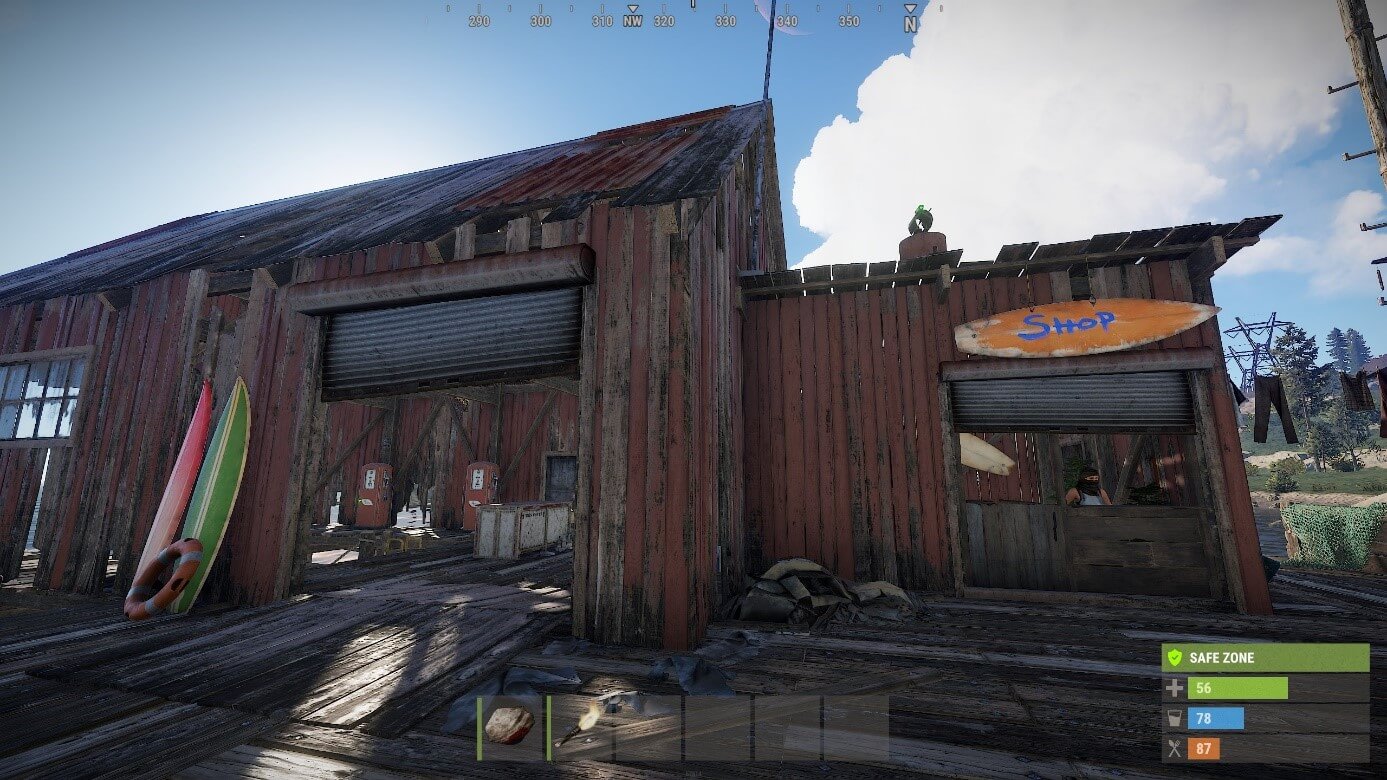
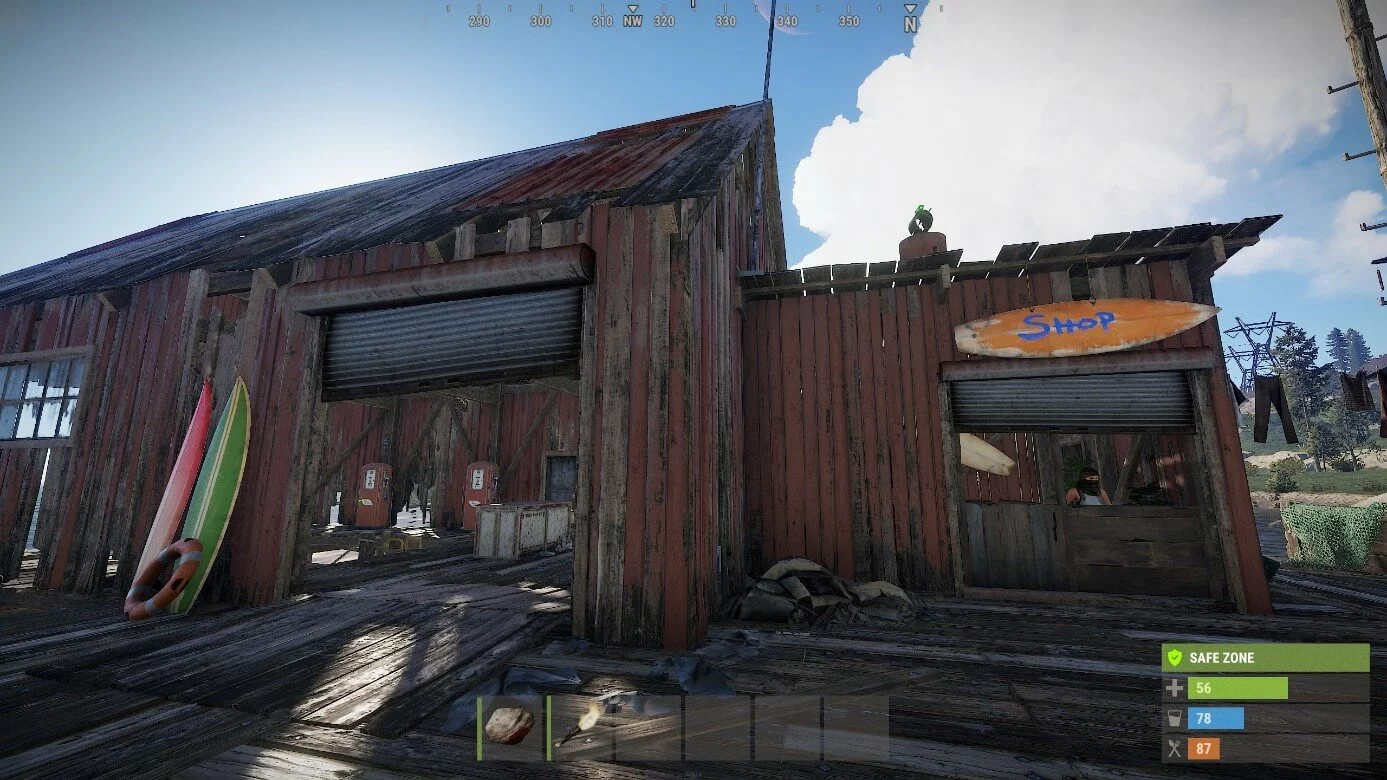
In the survival game Rust, players find themselves naked and without equipment in the dystopian game world. From the beginning, players must ensure their own survival by crafting tools, clothing, and shelter, as well as by hunting and producing food. Enemies include wild animals such as bears and wolves, opposing players, and extreme weather conditions such as cold or radiation exposure. Players have the option to join clans with fellow players and use their own Rust server to get the best performance and fun out of the game. However, the player-vs. player principle with raids and battles is usually the focus on official Rust servers.
- Platforms: Windows, macOS, iOS, Linux, PS 4, Xbox One
- Advantage: The diverse, realistic dangers of the game world (animals, fellow players, climate) provide a realistic survival thrill
- Disadvantage: New players usually have a hard time competing against well-equipped long-time players without dedicated servers and often have to restart without equipment
Reviewer

Christian Heldmaier
Christian Heldmaier is an experienced online marketing and SEO specialist from Karlsruhe. He has been working as an SEO Manager at IONOS since July 2020.