

The best alternatives to Skype: 14 free applications for video calls

For many years, Skype was among the most popular and widely used video call services. However, on 5 May 2025, it was officially discontinued. Today, users can choose from a wide variety of modern alternatives that offer extra features, stable connections, and strong privacy protections. But which Skype alternatives are really worth considering? In this article, we introduce 13 free apps and outline their key strengths and weaknesses.
The 13 best Skype alternatives for video calls
First things first: Many video chat apps raise concerns about privacy. Still, there are several providers that place a stronger focus on protecting communication content. Some services have chosen to specialise in privacy from the start, while others have improved their policies and encryption in response to criticism and user demand.
Beyond the privacy debate, there are plenty of strong Skype alternatives that shine with practical and creative features. The 13 video chat apps presented below are all free to use, and we highlight the strengths and weaknesses of each.
Spike
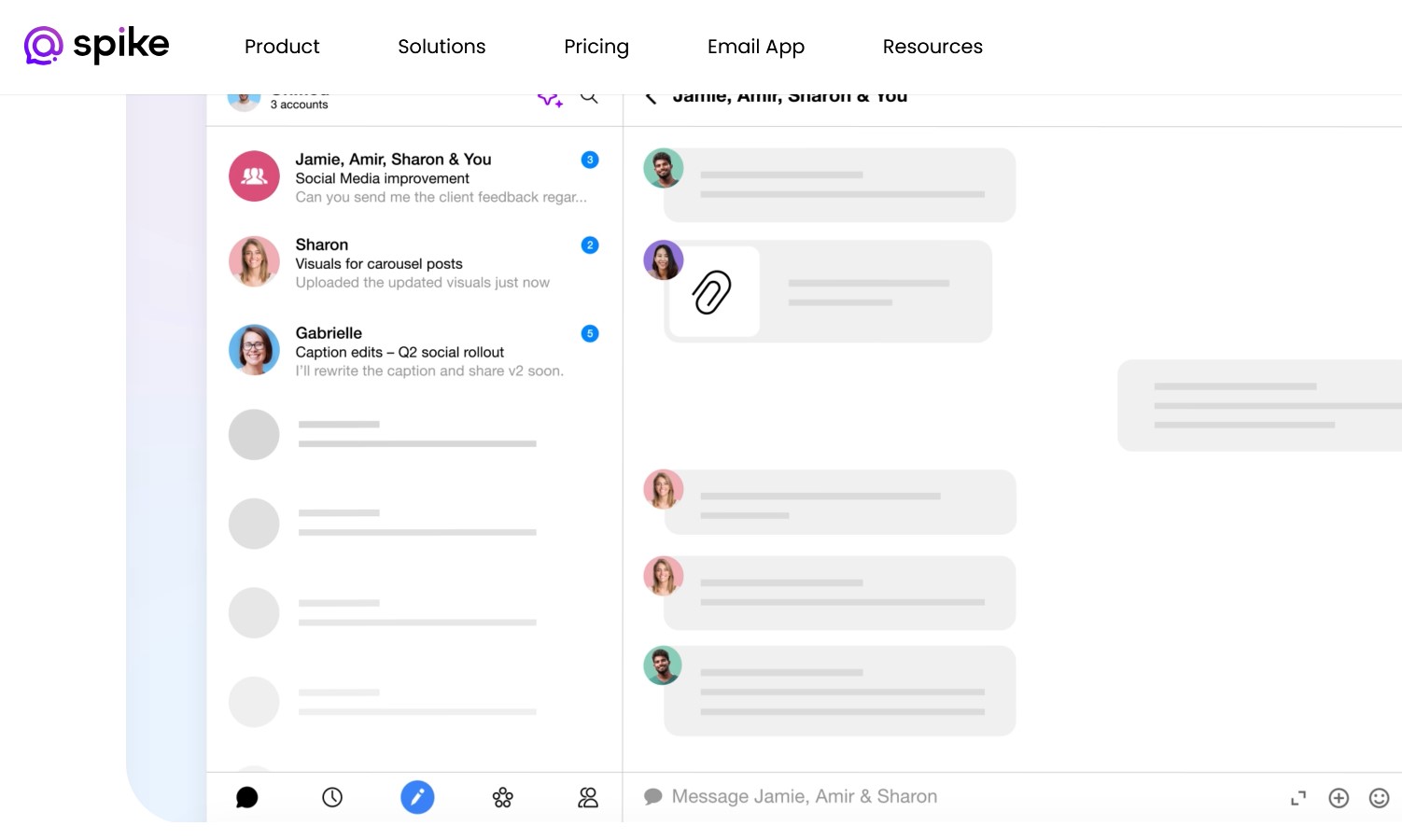
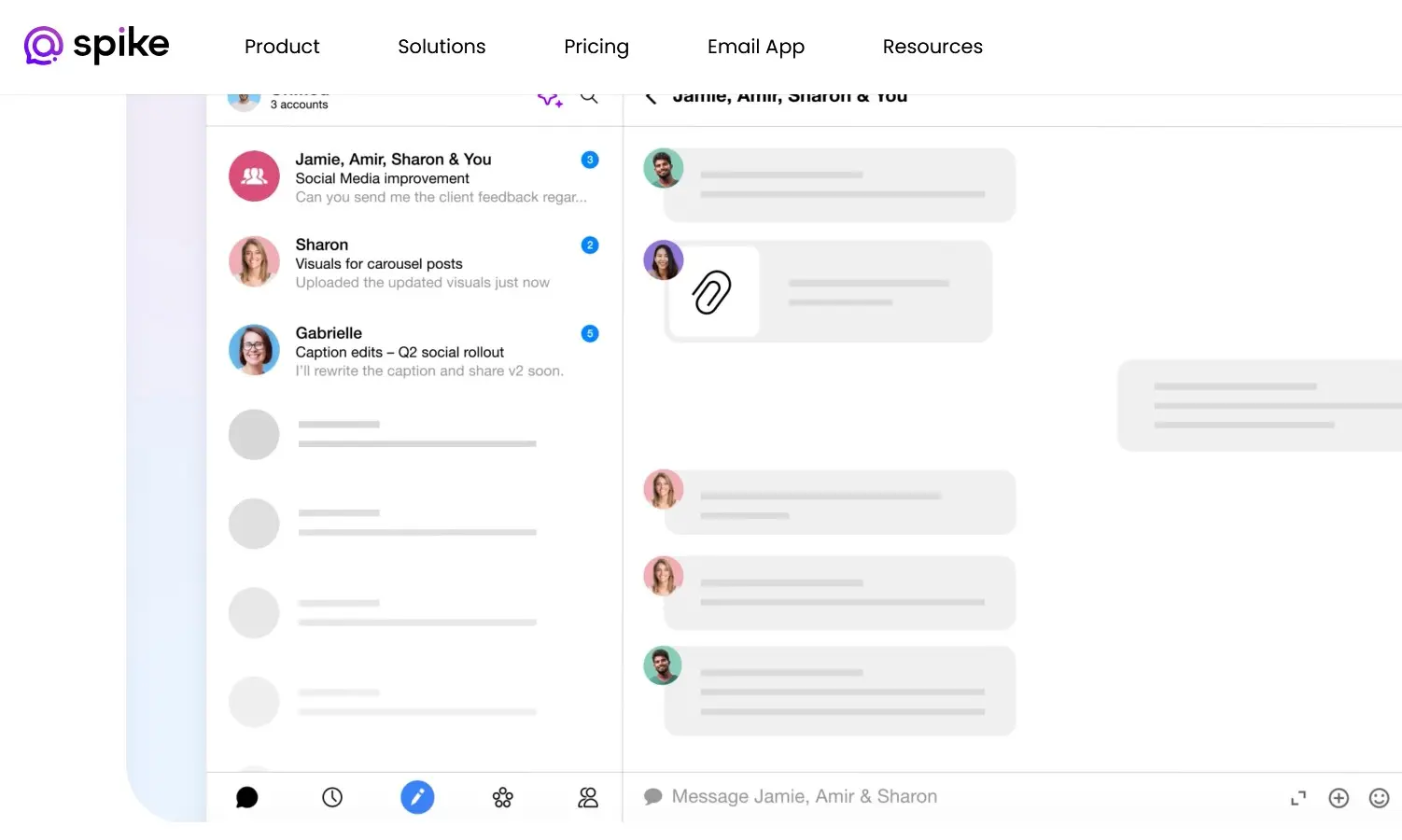
Originally developed as an innovative chat tool, Spike has become especially valuable for professional use thanks to its integrated video call solution. The platform helps teams communicate more efficiently—both internally and with external partners. Its standout feature is the way it reimagines email traffic: incoming and outgoing emails are displayed in a chat-like format, similar to popular messenger apps. Beyond this, the all-in-one communication tool also supports VoIP, making Spike a genuine Skype alternative with built-in voice and video calls. Additional functions include automatic email summaries, smart reply suggestions, and an AI-powered message feed.
For smoother collaboration, converting emails into chat-style messages keeps the focus on the essentials by filtering out unnecessary elements. Spike also enhances team productivity with features like file sharing, integrated encryption, and a built-in calendar.
Spike is available on Windows, Mac, iOS, Android, and as a web app. It’s free for personal use, while professional teams can opt for paid user accounts. A separate login isn’t needed since Spike connects directly with the user’s existing email account. Regarding data protection, Spike processes information on servers in the USA and Israel. Although the provider claims GDPR compliance, a data processing agreement is only available upon request—so companies handling sensitive data should exercise caution.
| Advantages | Disadvantages |
|---|---|
| ✓ Part of a communication platform | ✗ Apparently no encryption of VoIP calls |
| ✓ Also allows sending voice messages and files | |
| ✓ Offers encryption options | |
| ✓ AI features |
Zoom
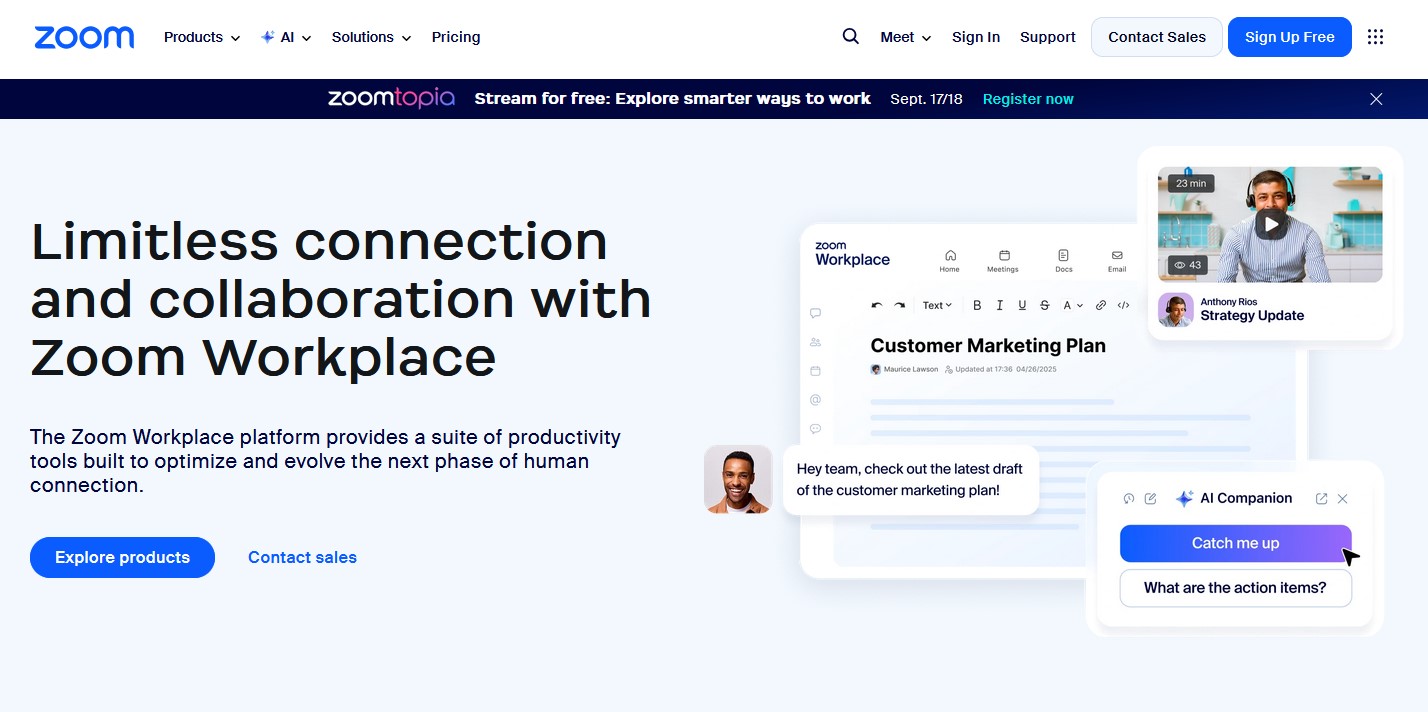
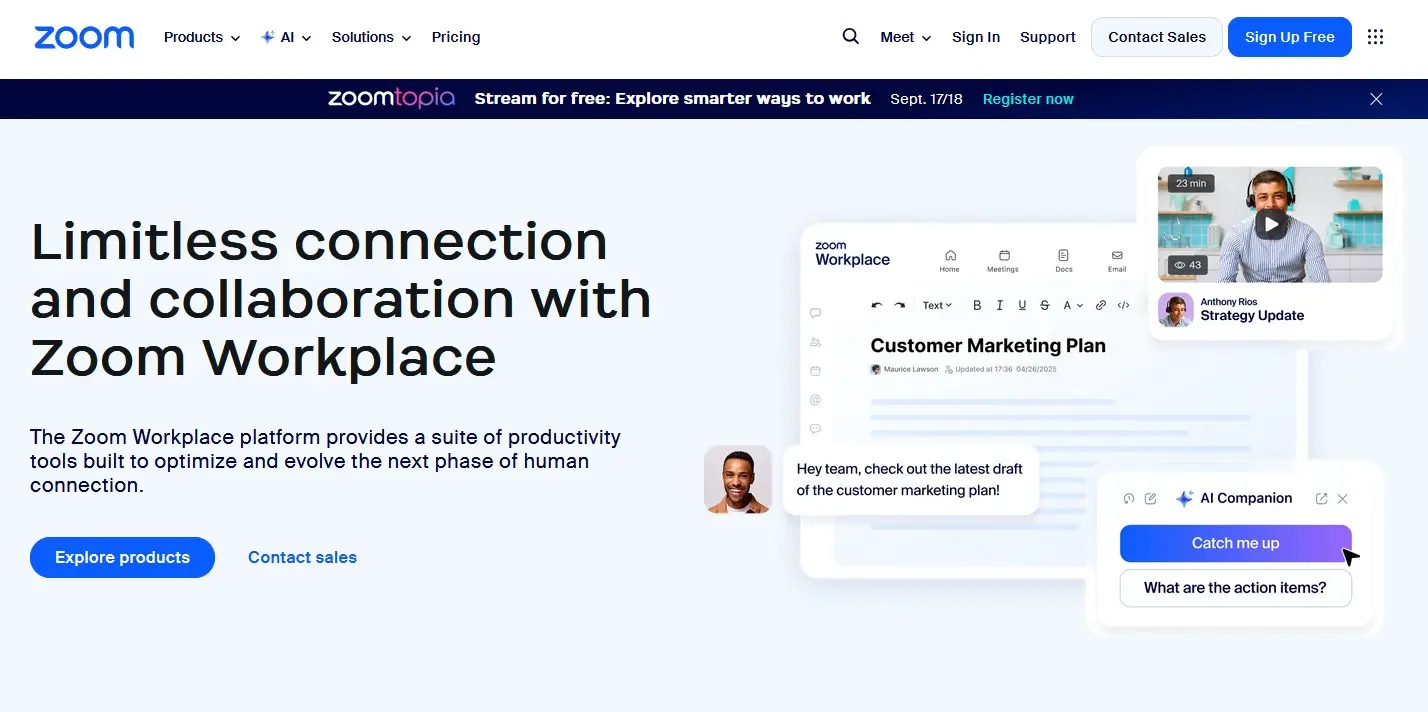
With the rise of remote work during the COVID-19 pandemic, interest in Zoom surged significantly. Today, the platform operates under the name Zoom Workplace.
Users praise Zoom’s cloud-based infrastructure for its stability and performance. Phone calls and video conferences in HD quality generally run smoothly. Security has also improved: end-to-end encryption (E2EE) is now available to all users, though it must be activated manually. When enabled, some features—such as live transcription or recordings—are not available. Despite investments in European data centres and participation in the EU–U.S. Data Privacy Framework, Zoom remains subject to the U.S. CLOUD Act, meaning U.S. authorities can access certain data. Companies handling highly sensitive information should therefore remain cautious.
As a Skype alternative, Zoom stands out with its freemium model, which includes a wide range of features at no cost. One-on-one video calls are unlimited. Group conferences can host up to 100 participants for free, provided they stay under 40 minutes. The user-friendly apps work across all major devices and operating systems, and meetings are easy to organise: only the host needs an account and the app. Participants can simply join via an invitation link.
| Advantages | Disadvantages |
|---|---|
| ✓ Versatile with many free features | ✗ Many security vulnerabilities in the past |
| ✓ Easy to use for tech beginners | ✗ Subject to the US CLOUD Act |
| ✓ Improved data protection measures and EU data centres | ✗ Data protection issues still criticised, partial usage bans in politics and business |
| ✗ 40-minute limit on free plan for group calls |
Jitsi

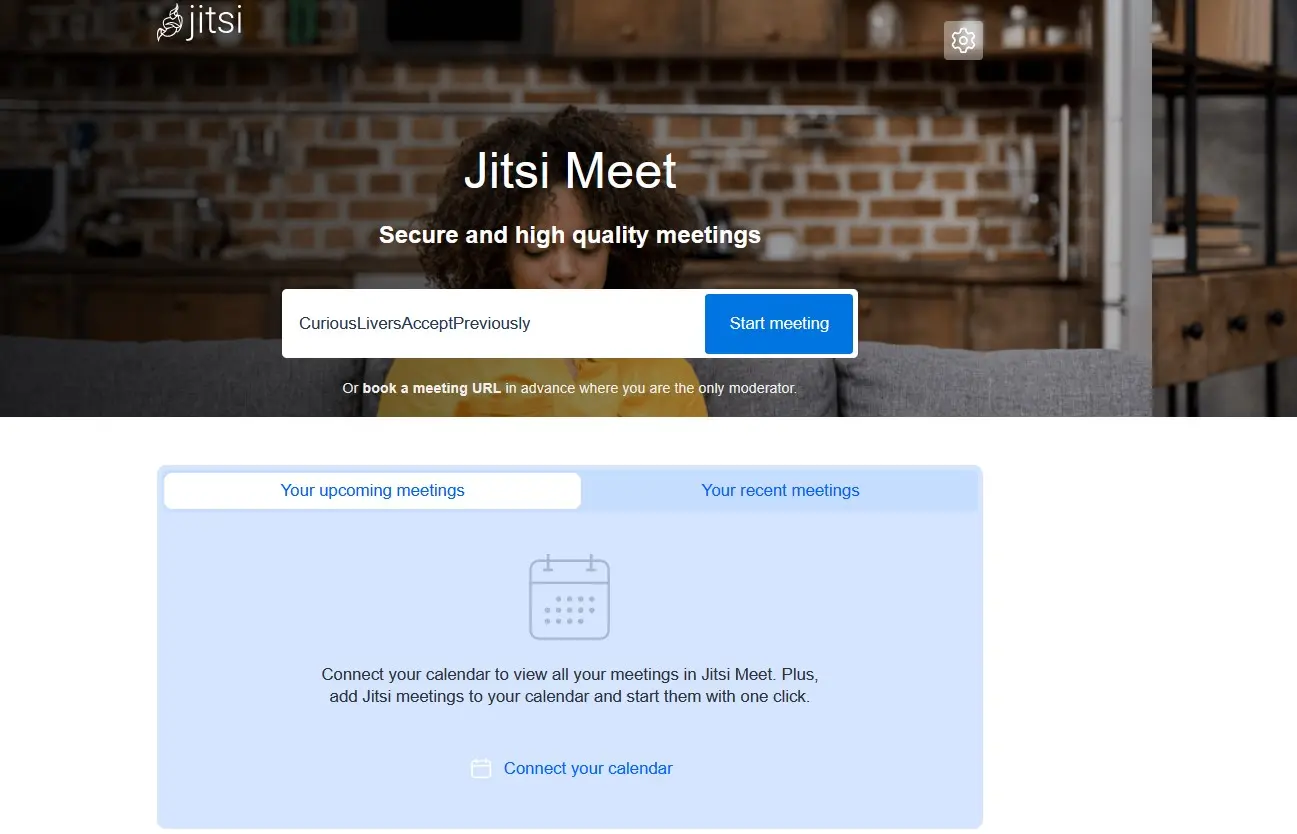
The open-source platform Jitsi is aimed at users who place a high priority on security and data protection in video calls. All conversations—whether with or without video—are encrypted via DTLS-SRTP, and chat content can also be encrypted. For true end-to-end protection, E2EE can be activated in the browser or desktop client. It’s automatic for 1:1 calls and can be enabled manually for group calls.
There’s no hard limit on the number of participants, though in practice a server setup for around 75 people per conference is recommended. Jitsi Meet works across platforms: directly in the browser, as an app for Android and iOS, and as an Electron-based desktop client for Windows, macOS, and Linux. If you host your own instance, Jitsi can be used completely without a user account. On the public server meet.jit.si, registration is only required for moderation—everyone else joins without signing up.
Starting a meeting takes just a few clicks: create a room name, share the link, and you’re ready to go. While its interface is simpler than many commercial solutions, it stands out for its clarity and ease of use. Jitsi can also be installed on Linux servers, with mobile clients available for both Android and iOS.
| Advantages | Disadvantages |
|---|---|
| ✓ Usable across platforms | ✗ Relatively dull user interface |
| ✓ All communication can be encrypted (video calls, IP telephony, messenger chat). | |
| ✓ No general limit on participating accounts during video calls |
Tox
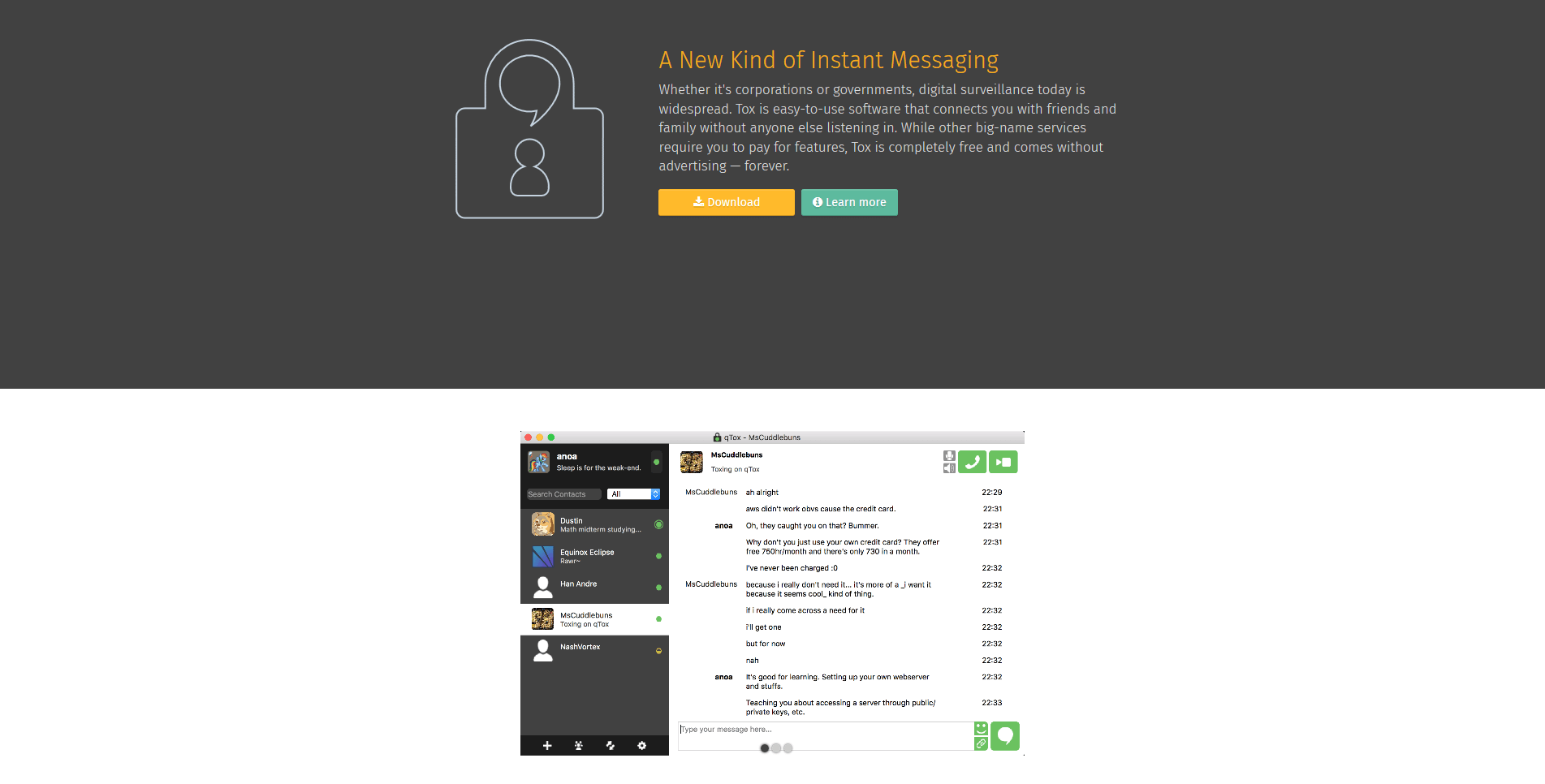
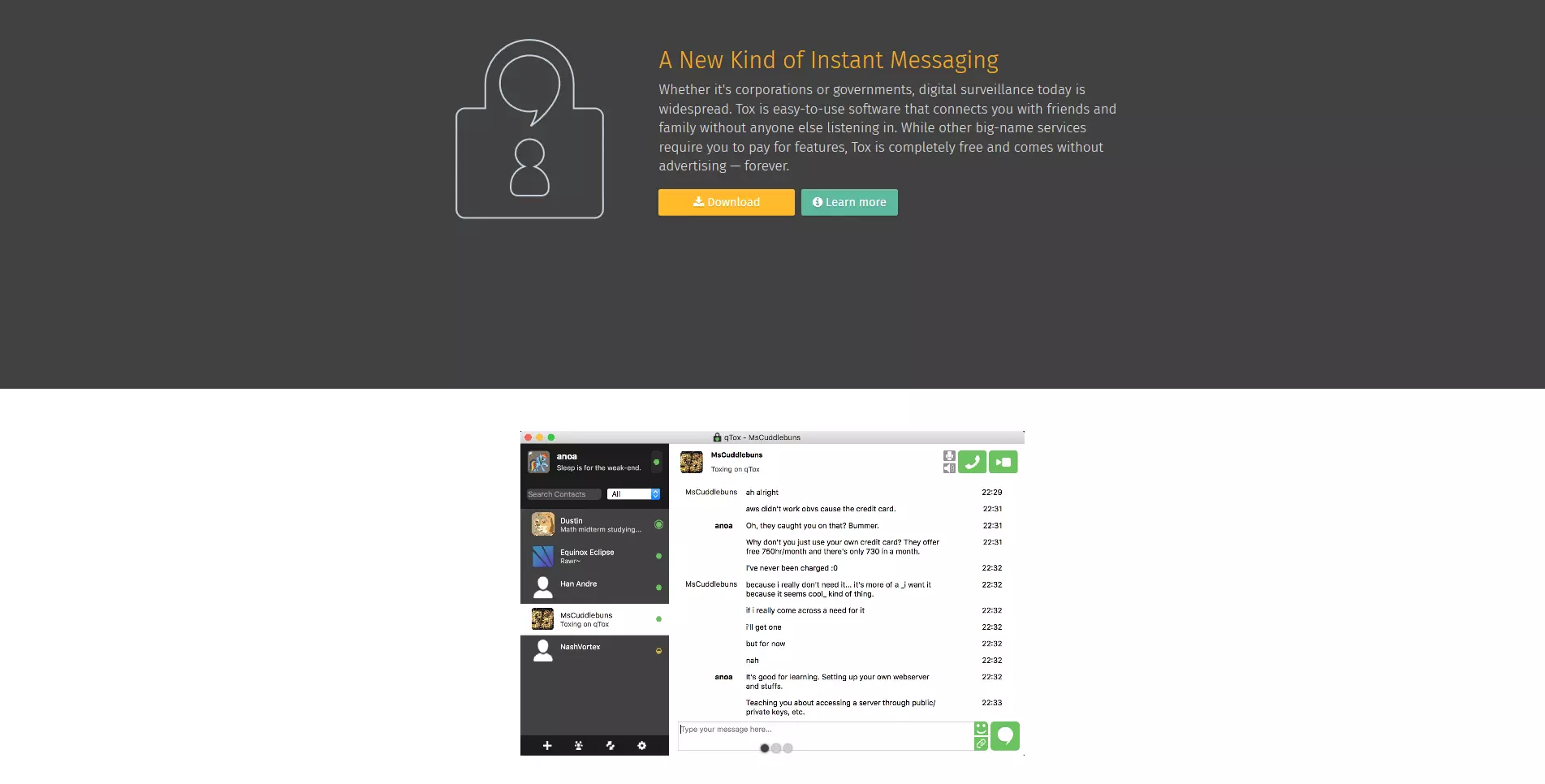
After the NSA surveillance scandal in 2013, an anonymous developer launched the open-source project Tox. Even the padlock logo reflects the platform’s strong focus on privacy. All communication through Tox is protected with end-to-end encryption, ensuring that only conversation participants can access the content. Even your IP address is visible only to your contacts.
A key feature of Tox is its decentralised architecture: data is transmitted exclusively peer-to-peer, directly between devices without a central server. This design helps safeguard information from outside access while reducing the risk of outages and censorship. With this, Tox positions itself as a privacy-first alternative to commercial messenger and video chat services.
In May 2025, version 0.2.21 was released as the first stable version. The underlying c-toxcore protocol is now considered mature. However, most Tox clients are still community-driven, and many have not undergone independent security audits—something to keep in mind when selecting a client.
The once-popular qTox desktop client was archived in February 2025 and is no longer maintained. Still, clients are available for Windows, macOS, Linux, Android, and iOS, including Toxygen (desktop) and Antox (Android). Development remains fragmented, so not all clients support every feature reliably. Tox enables classic instant messaging, as well as video and voice calls, file transfers, and screen sharing. Communication is tied to a unique Tox ID, similar to an email address.
Users do report limitations such as occasional connection drops, missing offline message delivery, or message loss—particularly in group chats or with unstable connections. Still, for those who value maximum data sovereignty and are willing to accept some usability trade-offs, Tox delivers a consistently private communication solution.
| Advantages | Disadvantages |
|---|---|
| ✓ End-to-end encryption of conversation content | ✗ Fragmented client landscape lacking a unified standard |
| ✓ Thanks to peer-to-peer transmission, content is stored exclusively on users’ computers | ✗ Partially unstable connection, especially for group or video calls |
| ✓ Screen sharing with other users possible | ✗ No official security certificates, no standardised UI/UX |
| ✗ Limited offline functionality |
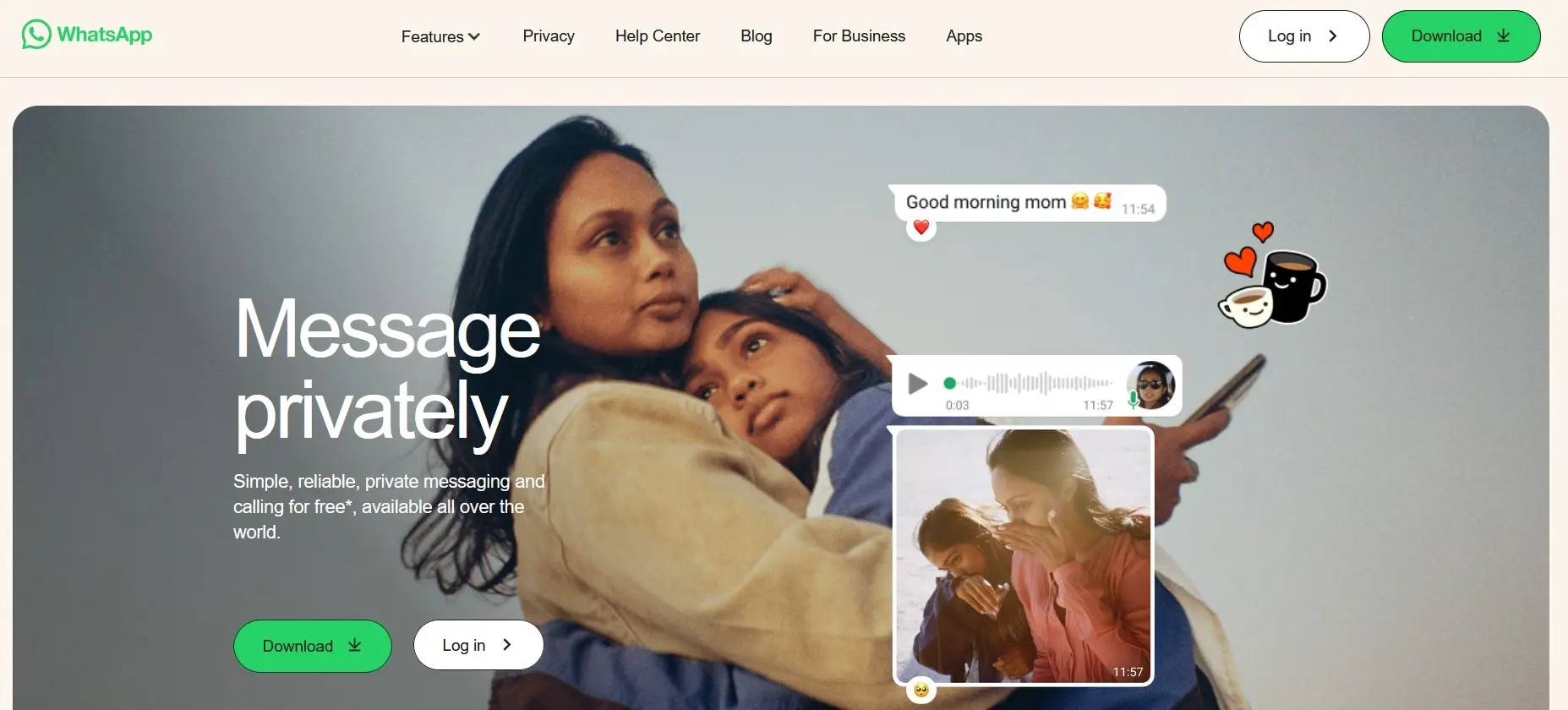
WhatsApp has grown far beyond being just a text messenger. The app from Meta (formerly Facebook) supports voice and video calls, file sharing, voice messages, screen sharing, and group chats with up to 1,024 participants. Since 2023, private video conferences have also supported group calls with up to 32 people.
In addition to mobile apps for Android and iOS, WhatsApp is available as a desktop app for Windows and macOS, as well as WhatsApp Web in browsers. With the multi-device feature, you can now use WhatsApp on multiple devices independently of your main phone.
All messages and calls are secured with end-to-end encryption—including video calls and voice messages. However, privacy remains a concern, since WhatsApp shares data such as contact lists, usage times, and connection details with Meta. Still, thanks to its enormous popularity, WhatsApp remains one of the most convenient solutions for quick communication worldwide—even across borders.
| Advantages | Disadvantages |
|---|---|
| ✓ Many people already use WhatsApp | ✗ Criticism for metadata transfer to Meta |
| ✓ End-to-end encryption for chats and calls | ✗ Not all features are available in WhatsApp Web |
| ✓ Group calls with up to 32 people, group chats with up to 1,024 people | ✗ No end-to-end encryption on cloud backups (optional but default) |
| ✓ Multi-device use without smartphone connection |
FaceTime
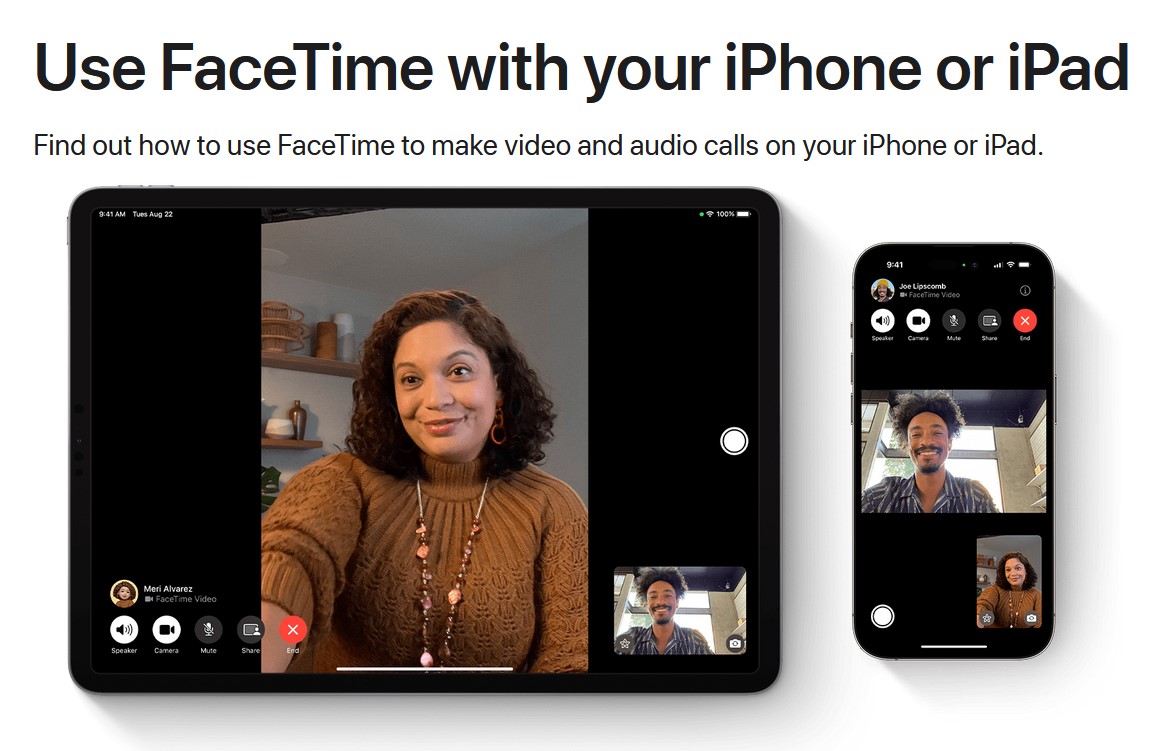
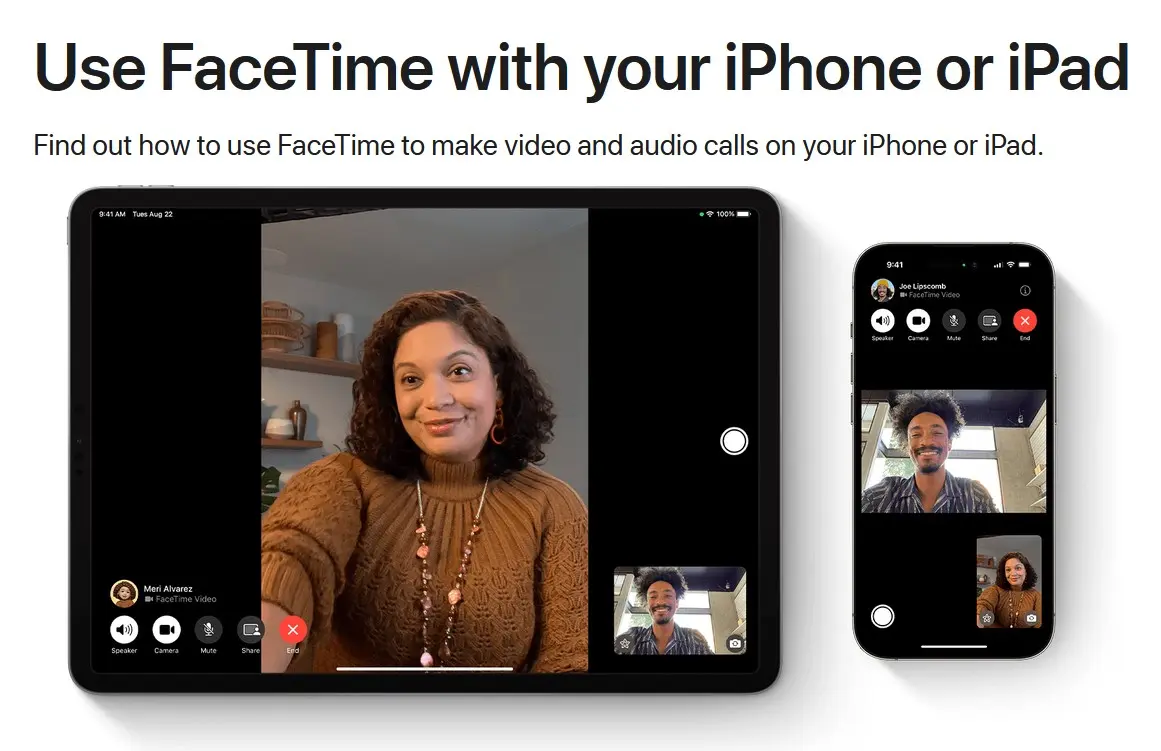
FaceTime is Apple’s video calling app and is primarily aimed at iPhone, iPad, and Mac users. FaceTime comes pre-installed on most Apple devices and makes voice and video calls simple. Group conversations with up to 32 participants are supported.
Since iOS 15 and macOS Monterey, even people without an Apple device can join FaceTime calls via a link. This means the service now works for mixed groups of iOS, Android, and Windows users. Additional features include screen sharing (SharePlay) and spatial audio (3D Audio). All calls are end-to-end encrypted, and Apple states that it cannot access the content.
FaceTime deliberately excludes messenger functions like text chat or file sharing. For users who want straightforward, secure communication, it delivers a reliable and easy-to-use solution—as long as the call is started from an Apple device.
| Advantages | Disadvantages |
|---|---|
| ✓ Typically no additional registration needed, often pre-installed | ✗ Lacks any additional features like instant messaging or the ability to send files. |
| ✓ End-to-end encryption | ✗ Only Apple users can initiate calls |
| ✓ Participation via link is also possible for Android and Windows |
Google Meet
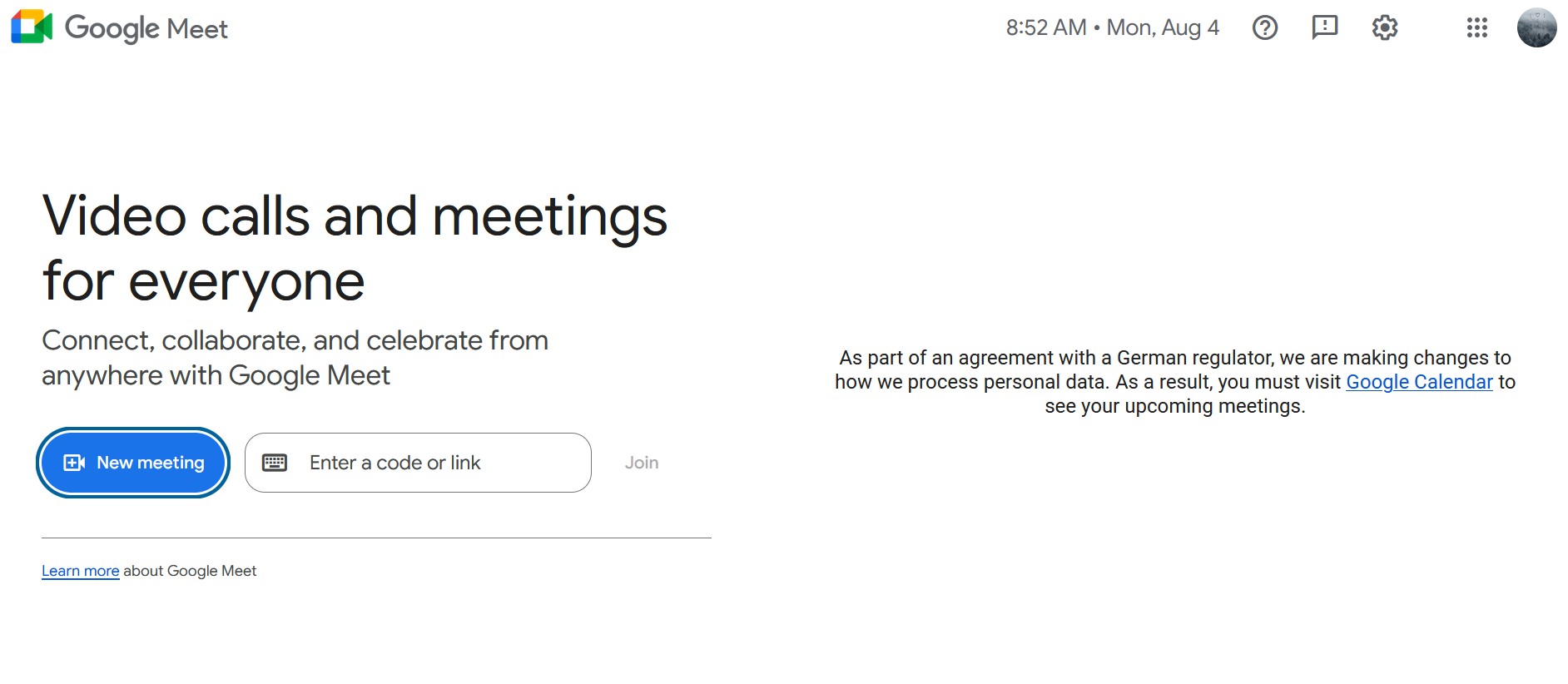
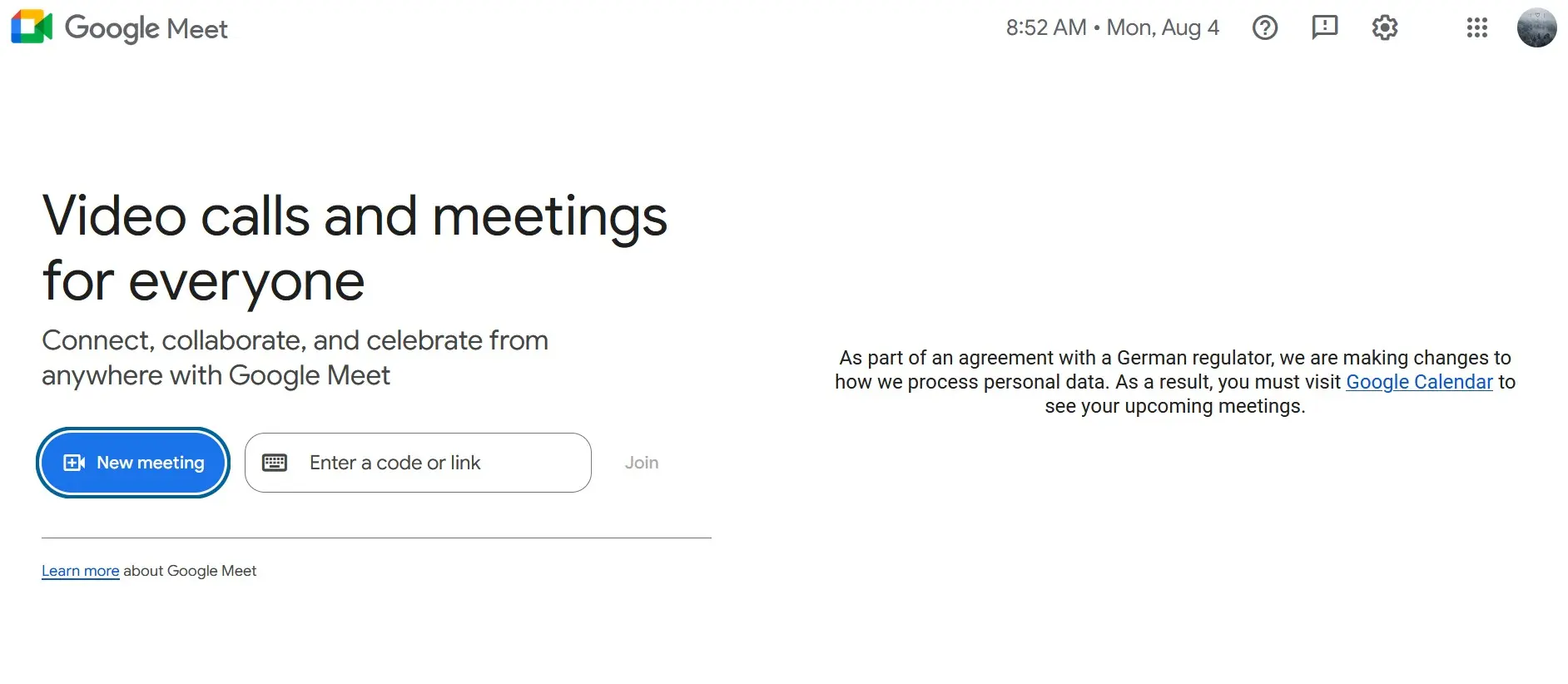
Google Meet is Google’s primary video chat service and has fully replaced Google Duo. Originally designed for private video calls, the platform now combines features for both personal and business use—including video calls, group meetings, screen sharing, background blur, live captions, and calendar integration. Meetings can be joined directly in the browser, via the Android or iOS app, or through Google Workspace. Even users without a Google account can participate via an invitation link.
The free version allows group calls with up to 100 participants, limited to 60 minutes per session. For larger groups or longer meetings, Google provides paid options through Google Workspace. Calls are encrypted during transmission, but unlike some competitors, they are not end-to-end encrypted.
Tight integration with Gmail, Calendar, and Drive makes Google Meet easy to embed into existing workflows. As a result, it has become especially popular in professional settings.
| Advantages | Disadvantages |
|---|---|
| ✓ Platform-independent and usable directly in the browser | ✗ No true end-to-end encryption |
| ✓ No account creation required for participants | ✗ Some features only available in the Workspace version |
| ✓ Integration with Gmail, Google Calendar, and other Google services |
- Familiar Google tools all in one place
- Using Gmail with your domain from IONOS
- Configure business Gmail for your domain
Wire
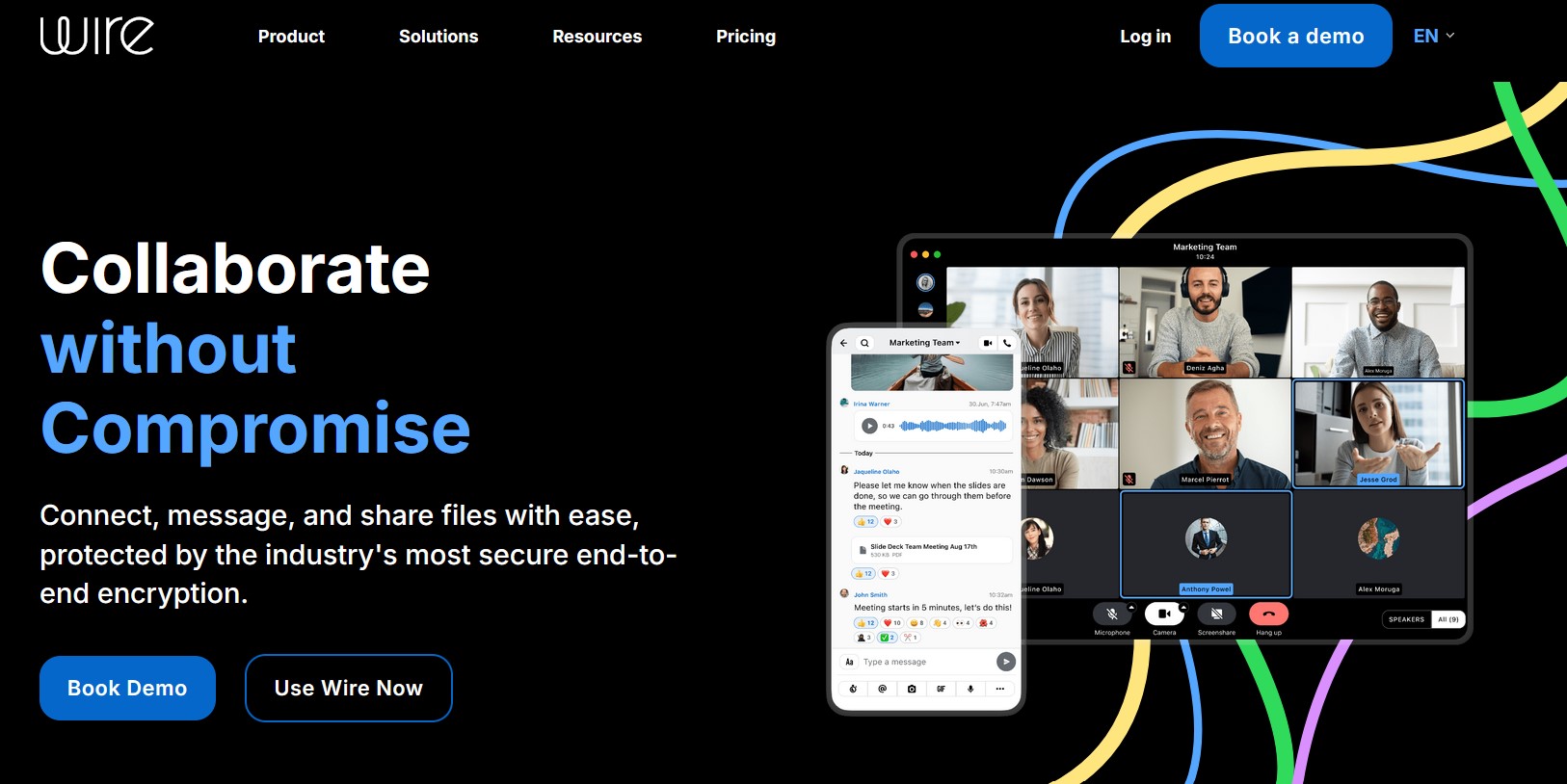
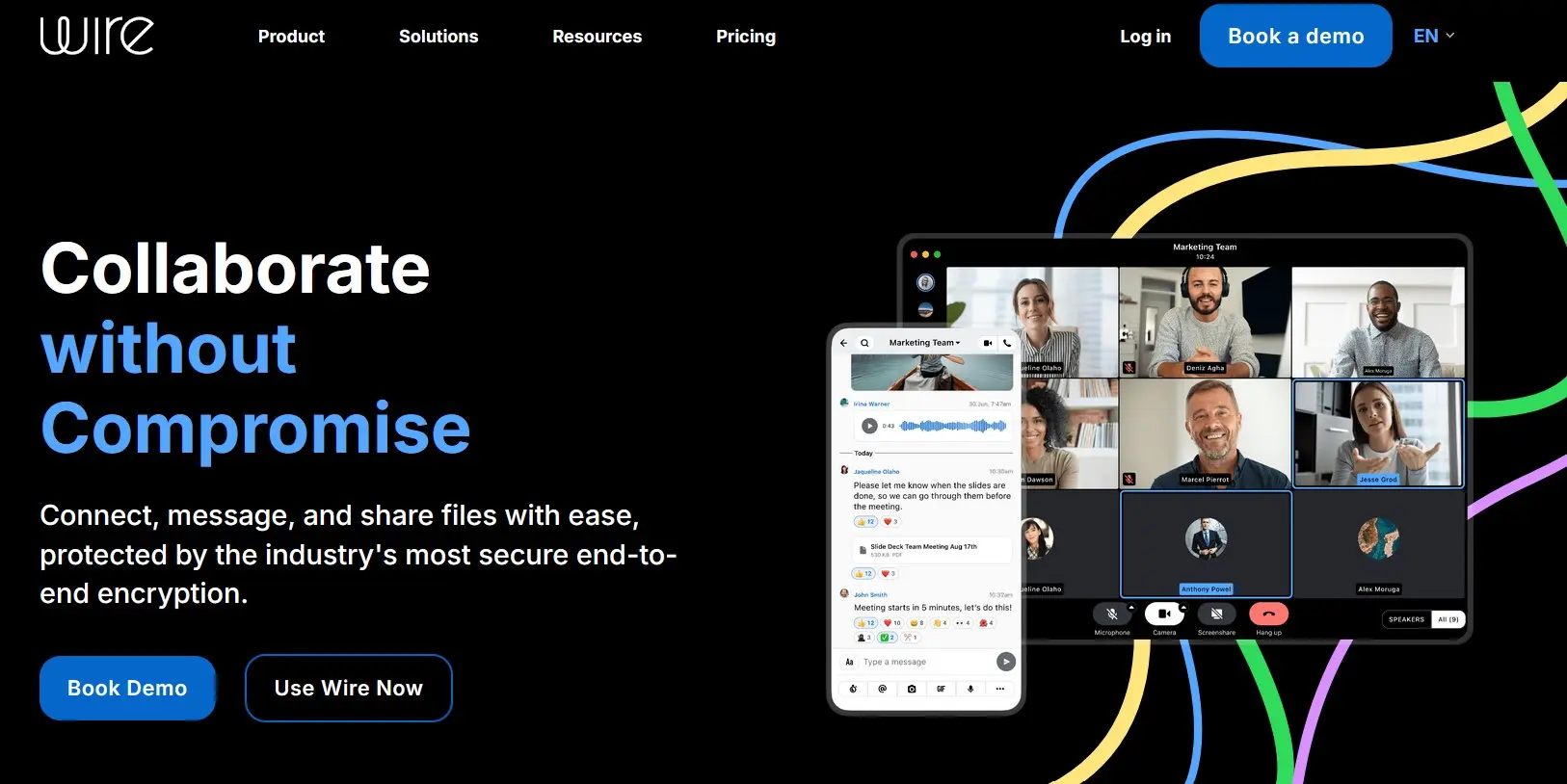
Wire is a security-focused messenger with end-to-end encryption for all messages, audio, and video calls. Wire is available for Windows, macOS, Linux, Android, and iOS, and can also be accessed directly in the browser. Alongside 1:1 chats, it supports group conversations, file sharing, voice messages, and screen sharing.
The platform enables group audio calls with up to 25 participants and video calls with up to 12 people. A former feature for sharing media content (such as YouTube or Spotify) has been discontinued and is no longer part of the service.
Wire is operated by Wire Swiss GmbH, headquartered in Berlin, Germany with technical development located in the EU. All data is stored exclusively on European servers in full compliance with GDPR. Its open-source code is publicly available and regularly audited by independent experts.
While Wire is suitable for private users, it is especially popular in business environments. Beyond the free version, the company offers several enterprise solutions, including Wire Enterprise for secure team communication and Wire Red, a crisis communication service designed for organisations with the highest security requirements.
| Advantages | Disadvantages |
|---|---|
| ✓ End-to-end encryption | ✗ Less widespread compared to mainstream messengers |
| ✓ User data is stored on European servers | ✗ No integration with common tools like Google Workspace or Microsoft 365 |
| ✓ Can be used in a browser via a web app |
Whereby
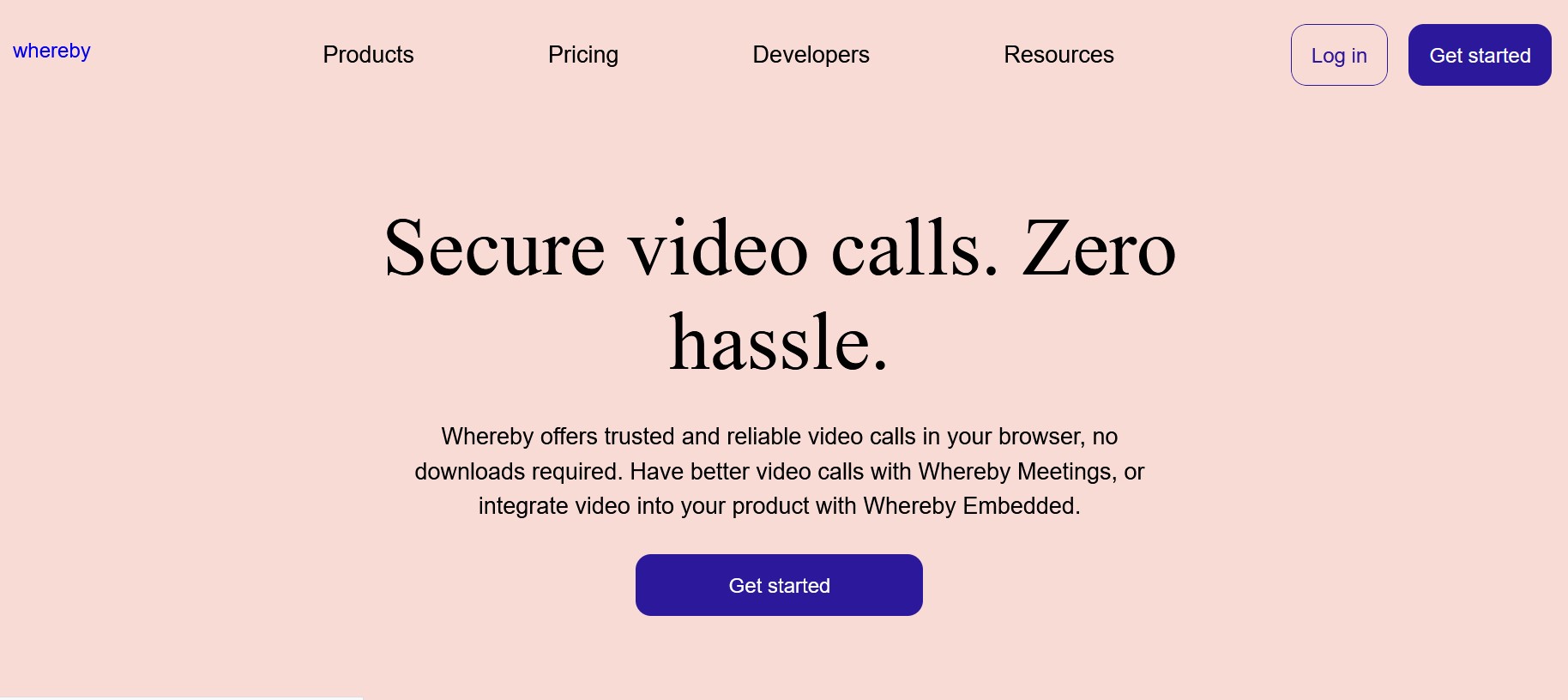
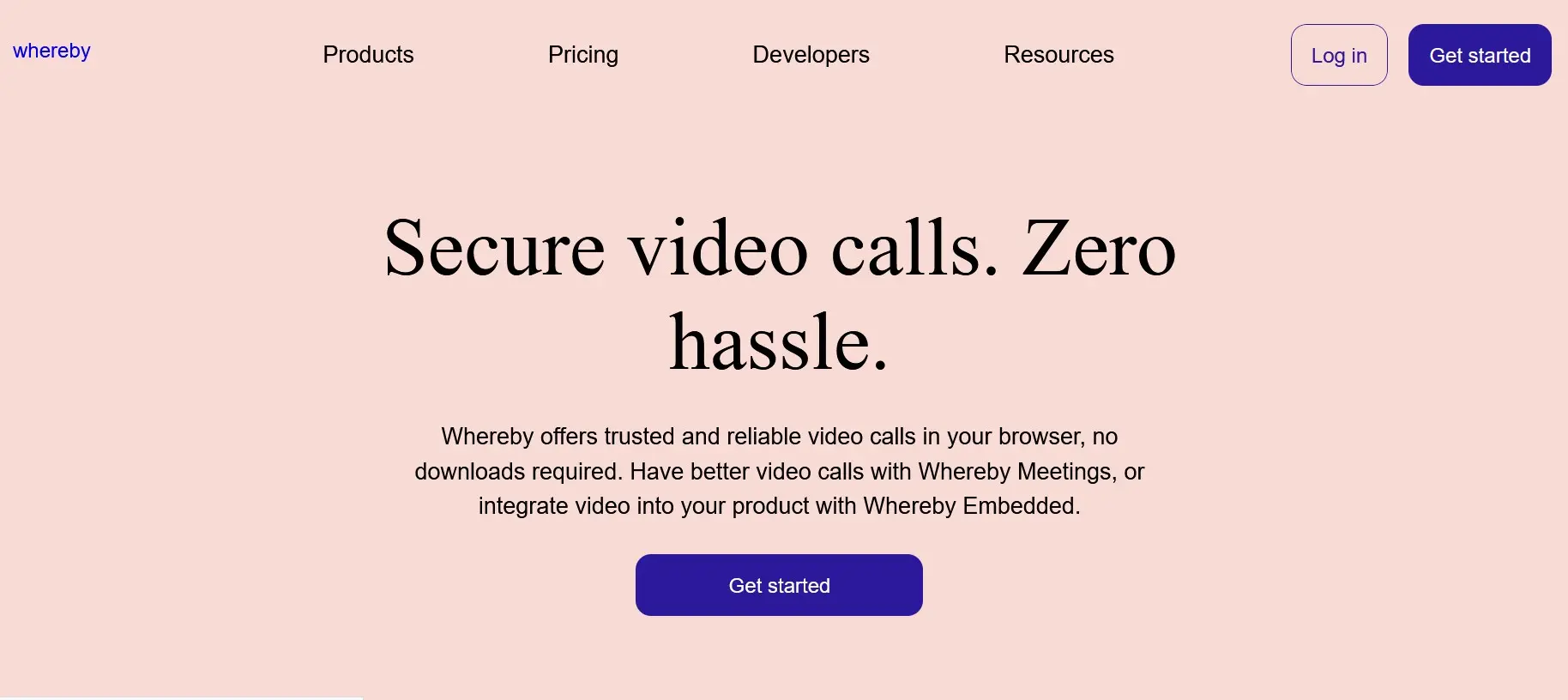
Whereby is a particularly user-friendly Skype alternative that works entirely in the browser. The Norwegian provider emphasises data protection and European compliance: servers are located in Europe, and all usage is GDPR-compliant.
In the free version, registered users can create a personal meeting room and invite up to 100 participants via link. However, free meetings are limited to 45 minutes, and only one room can be used at a time. Longer sessions and multiple rooms require a paid upgrade.
Key features include screen sharing, group video calls, a chat function, and the option to watch YouTube videos together during a call. The paid version expands functionality with integrations for Google Calendar, Miro, Trello, YouTube, and more.
Whereby runs smoothly on all major browsers (best with Chrome or Firefox) and is ideal for anyone seeking a straightforward, privacy-friendly solution without additional software installation.
| Advantages | Disadvantages |
|---|---|
| ✓ No software installation needed, runs entirely in the browser | ✗ In the free version, only one room and a 45-minute meeting duration |
| ✓ No registration required for guests | |
| ✓ Server location in Europe, GDPR compliant | |
| ✓ Intuitive interface and easy to use |
Element
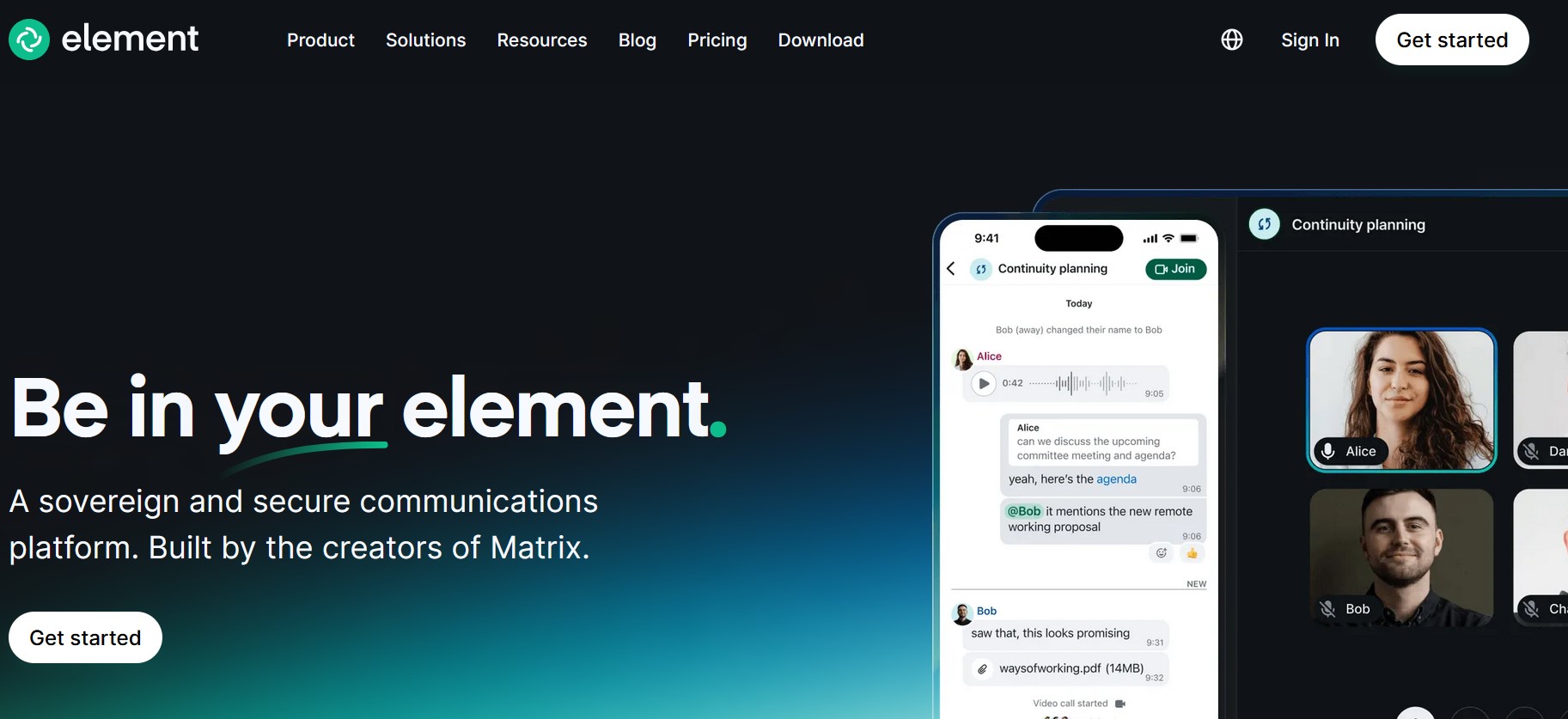
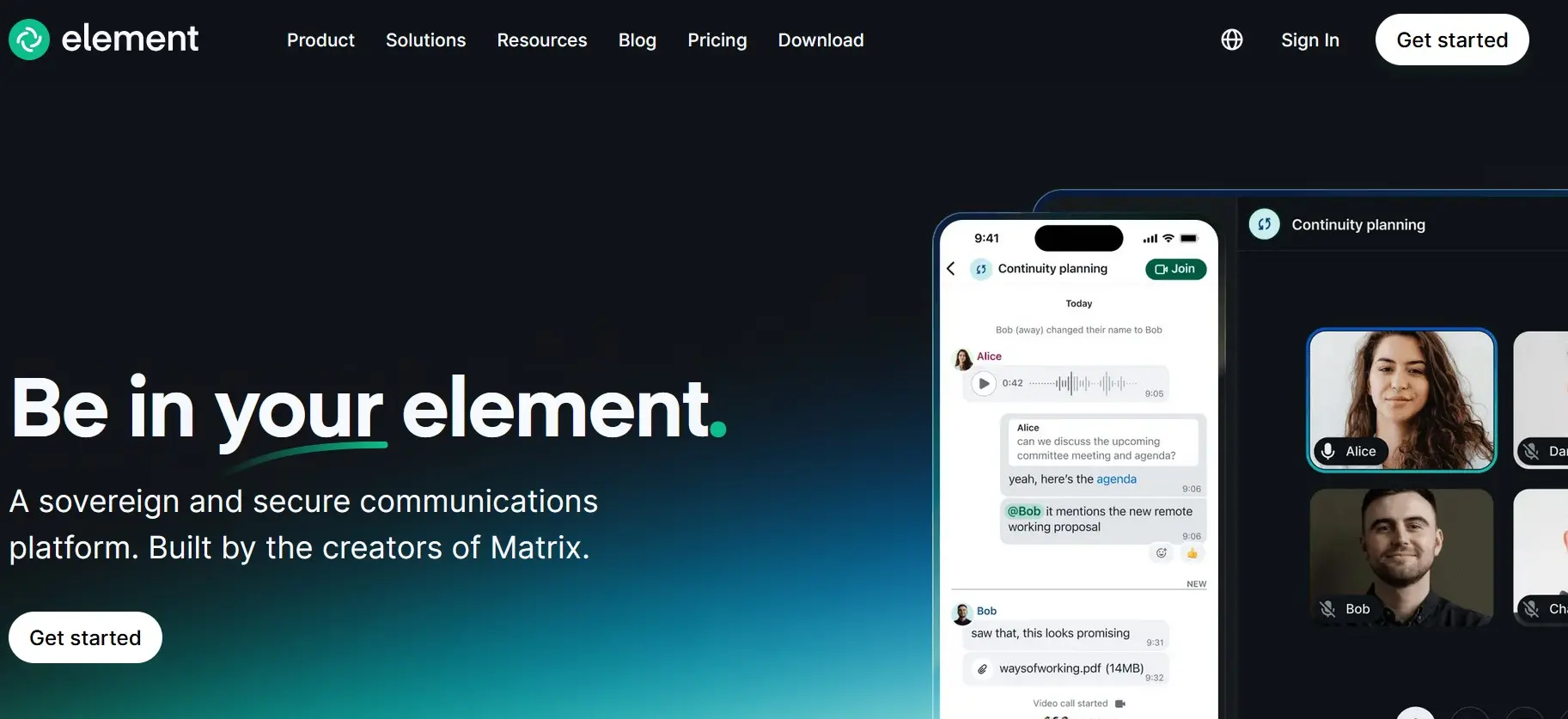
Element is an open-source messenger based on the decentralised Matrix protocol. Unlike centralised platforms such as Zoom or WhatsApp, Element routes messages and connections through a network of federated servers. This allows users to run their own servers and retain full control over their data.
The app includes end-to-end encrypted messaging, voice and video calls, file sharing, and integrations with external tools. For group video calls, Element relies on Jitsi in the background, ensuring stable performance while maintaining privacy.
Element is widely adopted by organisations and public institutions that prioritise data sovereignty. It is available for Windows, macOS, Linux, Android, iOS, and can also be used directly in the browser. Private users can access Element for free, while professional teams can choose paid enterprise packages with features like SSO, user management, and hosting support.
| Advantages | Disadvantages |
|---|---|
| ✓ Decentralised structure, federated network | ✗ Setup and interface are somewhat more complex than mainstream tools |
| ✓ End-to-end encryption | ✗ Group video calls use Jitsi as a third-party application |
| ✓ Own servers can be installed, full data control possible | |
| ✓ Open source, transparent, and free | |
| ✓ Usable across platforms (app, desktop, browser) |
Signal
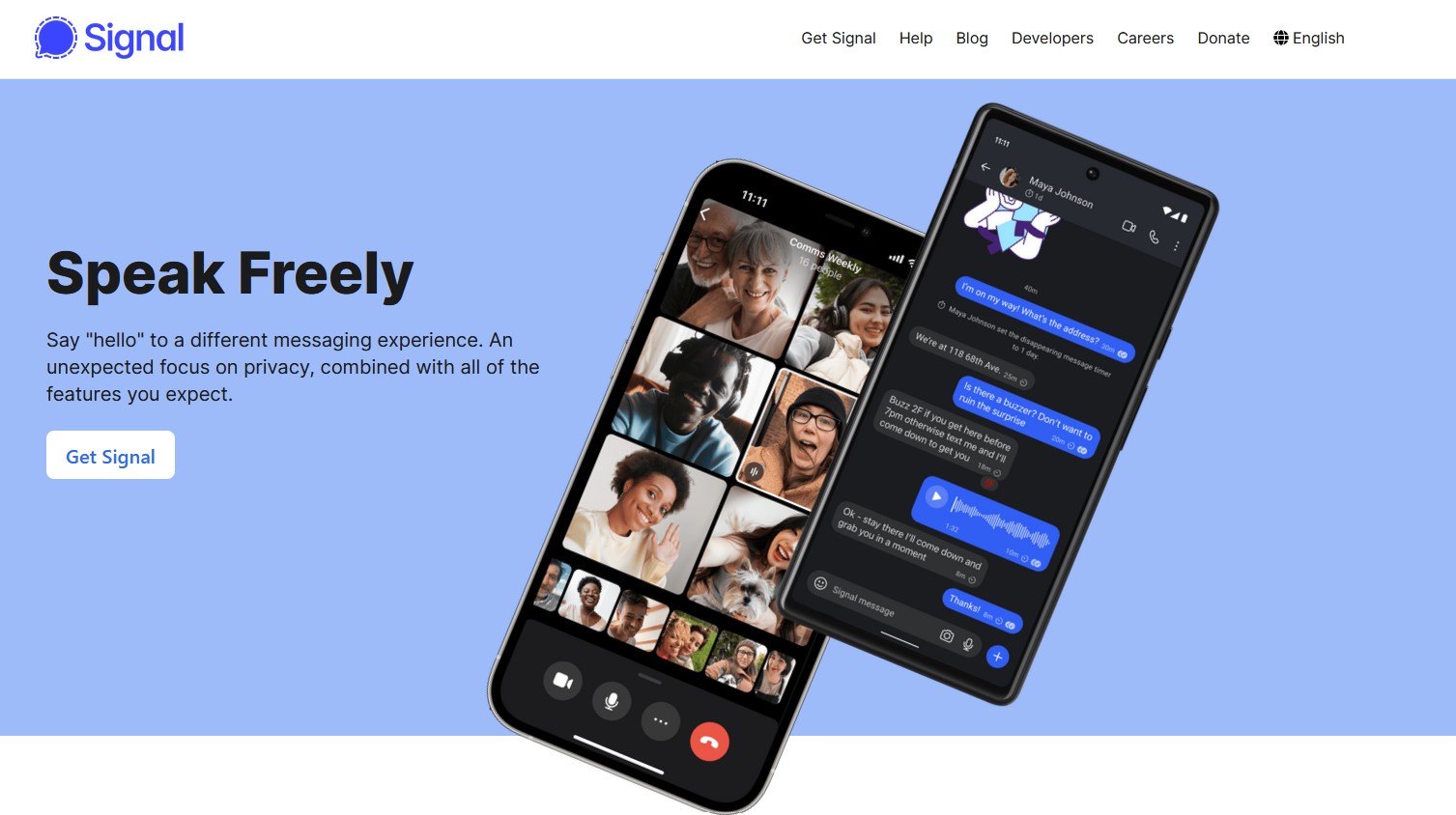
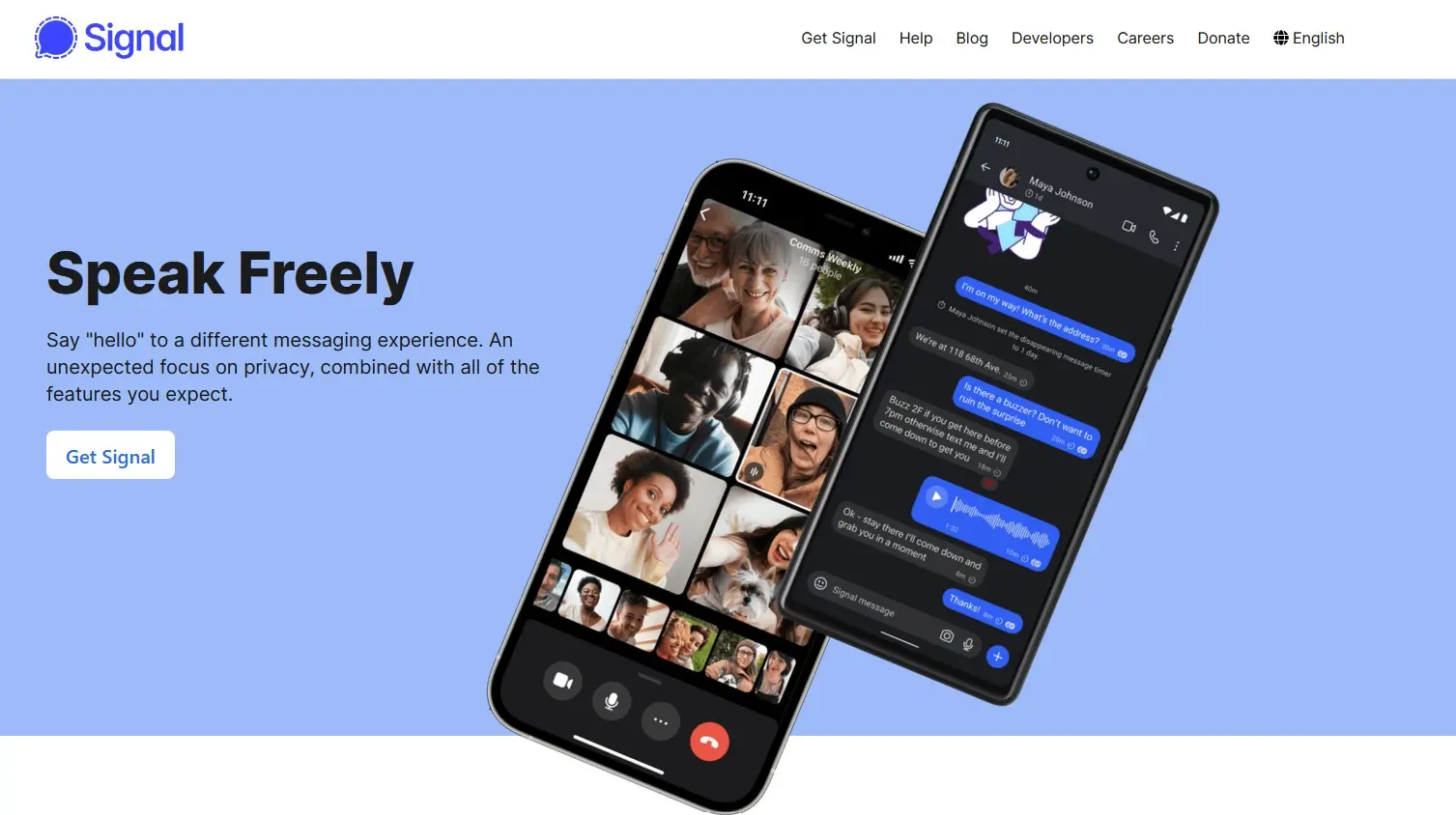
Signal is a particularly privacy-friendly messenger known for its consistent end-to-end encryption. Initially designed for secure text messaging and voice calls, Signal now also supports group video calls with up to 40 participants. These calls follow the same strict security standards as individual conversations, using advanced encryption methods based on the Signal protocol—the same standard implemented in WhatsApp.
The app is fully open source and operated by the nonprofit Signal Foundation, funded entirely through donations. There are no ads, no trackers, and no commercial exploitation of user data. Even metadata such as contacts or connection times is kept to an absolute minimum, setting Signal apart from other major messengers.
Signal is free to use on Android, iOS, Windows, macOS, and Linux. Registration requires a phone number, though it is not publicly visible. Desktop users must pair the app with their mobile device. For those seeking a highly confidential Skype alternative and willing to forgo extras like screen sharing or third-party integrations, Signal is a secure and dependable choice.
| Advantages | Disadvantages |
|---|---|
| ✓ Highest privacy standards, no data collection | ✗ Registration only possible via cell phone number |
| ✓ Open source, ad-free, and non-profit | ✗ No screen sharing or conferencing features like Zoom or Google Meet |
| ✓ End-to-end encryption for all content | ✗ Only usable on desktop via paired mobile app |
| ✓ Group video calls with up to 40 participants |
Discord


Discord was originally developed for gamers but has since evolved into one of the most versatile communication platforms for communities, businesses, and educational institutions. In addition to voice and video calls, Discord offers text chats, screen sharing, livestreaming, customisable server structures with roles and permissions, and integrations with third-party tools like YouTube, Spotify, or Trello.
Video calls are available both in direct messages and in voice channels. Group calls support up to 25 participants on video, while voice calls can host far more. A particularly useful feature is the ability to use screen sharing and chat at the same time, making Discord a versatile option for remote meetings, online coaching, or virtual classrooms.
Discord is available on Windows, macOS, Linux, iOS, Android, and directly in the browser. The basic version is free, while paid Nitro subscriptions add benefits like larger upload sizes, HD streaming, and server boosts. Although Discord has faced criticism in the past for its U.S.-based server infrastructure, the platform now provides more options for privacy controls and moderation.
| Advantages | Disadvantages |
|---|---|
| ✓ Many features in the free version | ✗ Data privacy in the US sometimes controversial |
| ✓ Ideal for groups, communities, and digital collaboration | ✗ A bit overwhelming for purely private use or 1:1 calls |
| ✓ Video chat, screen sharing, and chat can be used simultaneously | |
| ✓ Available for desktop, mobile devices, and in the browser |
An overview of all video calling applications
The following table provides a comprehensive overview of the most important free alternatives to Skype and their features:
| Tool | Platforms | Maximum participants | End-to-end encryption |
|---|---|---|---|
| Spike | Web, Windows, macOS, iOS, Android | 3 | Partial |
| Zoom | Web, Windows, macOS, iOS, Android | 100 (40 min Limit) | Partial |
| Jitsi | Web, Windows, macOS, iOS, Android | No fixed limit | Yes |
| Tox | Windows, macOS, Linux, iOS, Android | No fixed limit | Yes |
| Web, Windows, macOS, iOS, Android | 32 | Yes | |
| FaceTime | iOS, macOS | 32 | Yes |
| Google Meet | Web, iOS, Android | 100 (60 min Limit) | No |
| Wire | Web, Windows, macOS, iOS, Android | 12 (Video) / 25 (Audio) | Yes |
| Whereby | Web | 100 (45 min Limit) | No |
| Element | Web, Windows, macOS, iOS, Android | Depending on Server (Jitsi) | Yes |
| Signal | Windows, macOS, iOS, Android | 40 | Yes |
| Discord | Web, Windows, macOS, iOS, Android | 25 | No |
Which Skype alternative suits your needs?
Whether for personal or professional use, there are now numerous free apps for video calls and online meetings. Many of these tools go far beyond the features of earlier services, focusing on privacy, ease of use, and cross-platform compatibility.
Depending on your priorities, different solutions may be the best fit:
- Privacy & security: If protecting your data is most important, apps like Signal, Element, Wire, or IONOS Video Chat are ideal. They offer end-to-end encryption and GDPR-compliant data processing.
- Teamwork & productivity: For collaboration in teams, Zoom, Spike, Google Meet, or Whereby work especially well. They provide features such as screen sharing, calendar integration, and breakout rooms.
- Ease of use & popularity: For quick, everyday video calls, WhatsApp and FaceTime are reliable, simple options with wide adoption.
Tip: Not all tools are equally suited for large groups or sensitive data. Always check in advance which features and security standards best match your needs.