
What is IaaS (Infrastructure-as-a-Service)

Cloud computing is one of the basic building blocks of modern companies, as renting and using virtualised resources in the cloud not only provides a high degree of flexibility, but also saves in-house IT departments a lot of effort. If you opt for services such as software as a service (SaaS), platform as a service (PaaS), or infrastructure as a service (IaaS), you benefit not only from practical scaling and billing models, but also skip unpleasant tasks like installing and maintaining the individual software and hardware components, since this becomes the provider’s responsibility. The advantages of cloud computing are quickly obvious with the IaaS model especially, where you rent a complete IT infrastructure.
- Cost-effective vCPUs and powerful dedicated cores
- Flexibility with no minimum contract
- 24/7 expert support included
What is IaaS (infrastructure as a service)?
Infrastructure as a service, or IaaS for short, is a service where a provider rents out its own IT infrastructure and makes it available to use online. To do this, the cloud provider usually operates its own data centres where the corresponding hardware is stored, administered, and maintained. By doing this, IaaS providers can offer access to computing power (processor, memory, hard drive space) and complete network structures (including firewalls, routers, and security/back-up systems), the scope of which you, as a customer, can freely dispose of. You can choose which infrastructure you want to use, how many servers, routers, firewalls you want to use, and what performance data (CPU, RAM, etc.) the various network elements should have.
The rented IaaS resources can be scaled up or down at any time if you want to integrate an additional server or reduce the computing power. With most providers, however, you only pay for the components that you actually use. This high flexibility results from the fact that infrastructure as a service offers are generally not bound to dedicated hardware, which allows the provider to distribute its data centre resources among its customers as optimally as possible. To ensure reliability and security of its service in the long run, the provider also takes care of the maintenance and modernisation of data centre hardware and the installation of relevant security systems and devices. Of course, this also includes replacing defective parts.
IaaS (infrastructure as a service) is a cloud service that gives customers access to an immediately usable, highly scalable IT infrastructure over the internet. Storing, running, and maintaining the hardware is the provider’s responsibility. The typical cost accounting model for IaaS is the pay-per-use method, in which customers only pay for what they have used.
How does IaaS work, and how are the responsibilities divided?
Infrastructure as a service works according to the shared responsibility principle. Providers as well as customers need to take on different areas of responsibility in order to get the most of the cloud resources. The IaaS provider is responsible for the structure, operation, and security of the hardware. This is also referred to as the physical environment, which the provider must make available to users at all times. IaaS operators have to contend with the following tasks:
- Establish, maintain and keep data centre infrastructure up-to-date
- Protect the data centre against external influences
- Provide computing power (CPU, working memory) and storage space
- Provide server and network structures as well as databases
- Create a virtualisation environment that customers can use to access the IaaS resources provided
- Provide software that enables customers to control and administer the virtualised IT infrastructure
Based on these hardware and software structures, customers can then assemble and manage their own small data centre. However, this includes not only organising and using the logical environment, but also taking security measures to protect the virtualised IaaS resources used. The tasks that the customers need to carry out can be summarised as follows:
- Choose and structure the desired virtual infrastructure
- Install, configure, and regularly update operating systems and any application software required for your own purposes
- Run the IaaS network and configure the firewall
- Protect the operating systems and any other installed software (also applies to own applications, of course) using security software
- Encrypt data and data connections
- Set up authentication mechanisms, identity controls, and access controls
Many IaaS providers provide their customers with various tools that facilitate management of the rented infrastructure and enable data encryption to be implemented faster, for example.
Find out more about the rapid development of the German cloud market and the performance of key market players in the ISG Provider Lens report. Download now for free!
What are the different types of infrastructure as a service?
Depending on the way the service is provided, there are basically three different types of IaaS solutions:
- Public IaaS
- Private IaaS
- Hybrid IaaS
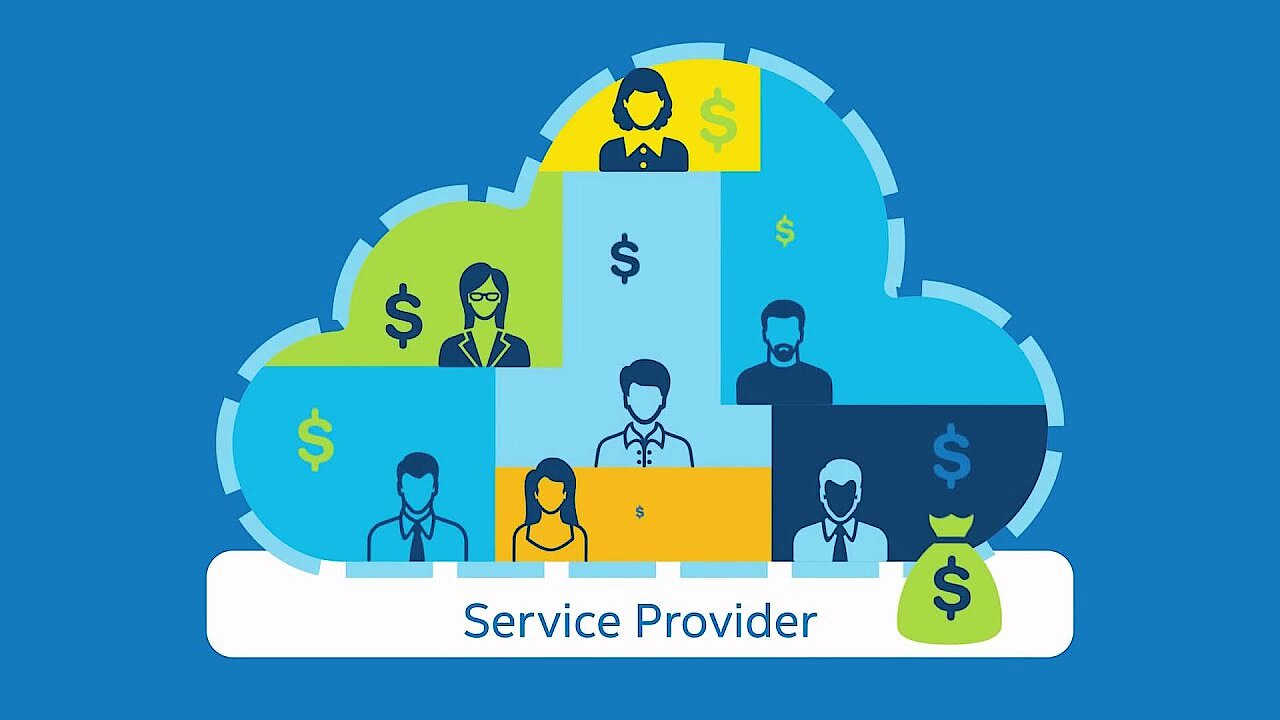
Public IaaS is the basic version of the practical cloud service. The term “public” is derived from the fact that the resources offered are generally shared by all the provider’s customers and accessed via the internet. However, sharing hardware leads to conflicts, as all resources are virtualised and detached from a specific computer.
The concept of private IaaS differs from the actual idea of infrastructure as a service in that it is not an external service provider, but an in-house IT department that provides the supplies and leases the resources. This way, the company benefits from the possibilities of IaaS technology without losing control over data and security. However, this means that the scalability is no longer flexible. In addition, the company itself is responsible for the physical environment.
Hybrid IaaS is a solution that combines public and private IaaS. With this solution, the resources are obtained both from an internal service provider and from an external provider. This makes it possible to manage sensitive company data on your own while the scalable external resources are used for other purposes.
 To display this video, third-party cookies are required. You can access and change your cookie settings here.
 Popular IaaS business scenarios at a glance
Infrastructure as a service isn’t suitable for every company or every purpose. For example, if you are just looking for some storage space, an online storage service is more likely to offer lower prices than an IaaS provider. The same applies to selecting a suitable provider for hosting simple company websites – classic web hosts usually have much cheaper offers available.
The following table shows in which business scenarios infrastructure as a service is more than just a simple alternative to classic hosting scenarios or your own local infrastructure:
| Program development and testing | Software companies can benefit greatly from the flexibility of an IaaS solution. Development and testing environments can be set up, scaled, and then terminated again with little effort. |
| Hosting demanding web projects | While infrastructure as a service is hardly worthwhile for simple websites, it can form the optimal basis for complex web projects (especially for projects with highly fluctuating traffic such as online shops). |
| Setting up complex storage and backup solutions | Setting up a central file storage and backup option for numerous users is a very complex task that can be completed in just a few steps using IaaS. |
| Providing web apps | A virtualised IT infrastructure delivers everything you need to deploy web applications – whether it’s computing power, storage space, web servers, or application servers. Thanks to its excellent scalability, you can also react quickly and easily to current visitor numbers. |
| High performance computing | Solving complex tasks with several million variables or calculations usually requires the use of super computers or clusters. Thanks to its practically unlimited scalability, IaaS is a good alternative. |
| Analysing big data | Collecting huge amounts of user data is one of the most important components of modern marketing. Even more important than collecting this information is the processing, which can be demanding on the hardware. An optimally coordinated IaaS setup can make light work of this task. |
- Enterprise-grade architecture managed by experts
- Flexible solutions tailored to your requirements
- Hosted in the UK under strict data protection legislation
What are the advantages and disadvantages of IaaS?
Infrastructure as a service solutions are packed with many advantages: First and foremost, outsourcing the required IT resources saves the purchasing, installation, and managing of expensive hardware (with the exception of private IaaS). In addition, you always have an eye on running costs thanks to the industry-typical billing according to what you use and can therefore economise efficiently with the available budget. Added to this is the flexible scaling of resources in both directions, which makes it possible to adapt the IaaS environment to current business conditions.
While transferring responsibility on a physical level saves a lot of costs and effort, it also has a decisive disadvantage when it comes to infrastructure as a service: As a user, you have no influence whatsoever on the availability of the service or on the functionality of the individual components. When it comes to security and data protection, you aren’t in charge here either. Another disadvantage of IaaS is that although changing the provider is possible at any time, it’s quite tedious to do due to missing standards and inconsistent interfaces.
The most important advantages and disadvantages of infrastructure as a service at a glance:
| Advantages of IaaS | Disadvantages of IaaS |
| ✓ No hardware costs, easily controllable running costs | ✗ Dependency on the provider, whose sole responsibility is to make sure the service is available and secure |
| ✓ Quick to implement and provide new projects | ✗ Internet access is essential (problems with the internet connection also cause problems with the IaaS environment) |
| ✓ High flexibility thanks to simple scalability of the required resources | ✗ Changing providers is very complicated |
| ✓ No need to set up, maintain, or update the hardware | ✗ Possible privacy issues due to the provider’s server locations |
| ✓ Easy to connect several company locations to the rented IaaS environment |