

What is omnichannel marketing?

Omnichannel marketing aims to create a comprehensive customer experience across all of a company’s advertising and sales platforms. For many experts, it’s a better type of multi-channel marketing as there are many different ways for customers to make their purchase decisions, anywhere and anytime. What counts as a good omnichannel strategy, depends on the product and the customer profile. Therefore, a comprehensive data analysis is required beforehand. Take the plunge and optimise the return on your marketing budget through omnichannel interaction with your customers.
Omnichannel marketing is a strategy that uses digital, analogue, and physical channels to interact with customers. In contrast to multichannel marketing, the various areas are seamlessly linked together. Information relevant to customers is available via all channels. The customer journey runs consistently on all platforms and is tailored to the respective person.
Omnichannel marketing: Reaching customers anytime, anywhere
The market and customer requirements are constantly evolving. Omnichannel marketing has its forerunners. A marketing channel is a way to reach customers. The manufacturers of a product look for the best possible sales contacts, which are then used as intermediaries to organise sales to customers or distribution to other sales outlets. The partners in this sales chain optimise production, sales, and marketing. Single channel marketing is mainly found in the B2B sector. If we use bread as an example: the chain runs from the harvesting of the raw material (wheat, spelt, etc.) to processing it into flour, and later into bread. It is then delivered to the wholesalers and finally to the shops where customers can buy it.
Precursors: Cross-channel and multichannel marketing
Multichannel marketing uses more than one channel to bring the product to customers. The sales route can be analogical via catalogues, brochures, and advertising boards: a local shop also counts as an analogue channel. In addition, multichannel marketing makes use of all digital possibilities in order to establish contact with customers. Online catalogues, blogs, and apps are available for PC, laptop, tablet, and smartphone. SEO and SEA campaigns are also included. With this approach, the different channels represent different ways of contacting customers. In some cases, however, these channels compete with each other instead of working together. Cross-channel marketing enables customers to use more than one channel in the same transaction. The channels used should be coordinated to ensure that sales function smoothly. One example of this is the click and collect model where customers order an item online and then pick it up at the shop.
Omnichannel marketing – optimised multichannel marketing
The omnichannel strategy incorporates these precursor concepts. It uses all available channels and connects them. In this way, customers have the opportunity to find out more about a product online and then use the appropriate app to find the nearest shop in which they can get personal advice from employees and can actually touch and test the product. At the same time, the app provides more detailed information or suggestions about similar products available in the store. Read more about customer journey mapping to better anticipate your customers’ paths and make them more user-friendly. The omnichannel approach works with a central database that collects as much current customer data as possible. The various channels are coordinated and interact with each other during the sales process. Favourite products and search settings accompany customers from their home PC to the shop or to wherever they take their smartphone. Whether your customers are price comparers or spontaneous buyers, with the right strategy, you can speak directly to them to make them feel at ease so they’re more likely to buy. You should also offer an integrated service for returns and payments as well as technical support.
‘Multi’ is derived from the Latin ‘multus’ (many, numerous) and ‘omni’ comes from ‘omnis’ (all, everyone, whole). ‘Omnichannel’, therefore, means that all channels can be integrated and linked together.
Omnichannel marketing: good and bad examples
Omnichannel concepts require a lot of planning, analysis, and extensive process restructuring. Some people shy away from costs and effort because they feel that profit growth from omnichannel customers will fall short of expectations. 73% of the 46,000 respondents in a Harvard Business Review reported that they use multiple channels for purchasing but spend only 4% more in the shop, so this may not be a big incentive. Instead, the study concluded that the more channels they use, the more they spend. In addition, customers are becoming increasingly accustomed to mobile shopping experiences and assume that they will be supported on all channels. Whoever doesn’t implement omnichannel marketing or doesn’t tailor it to the target group will lose customers to the competition sooner or later.
Starbucks and its omnichannel marketing
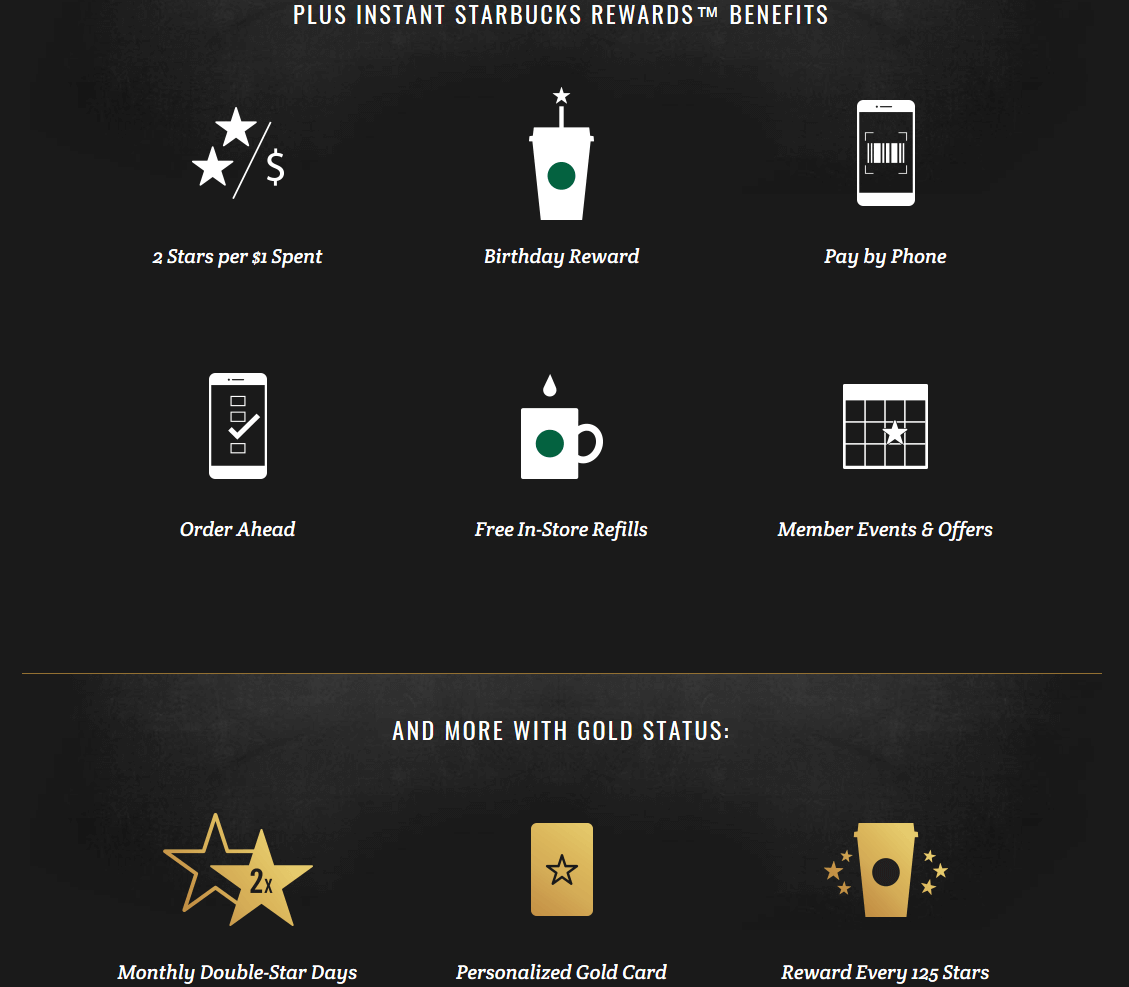
The American coffee chain, Starbucks, is a good example of a world-famous company using multiple channels to become even more successful and make their service easier for customers to use across all channels. The app is particularly user-friendly and enables users to check and top up their Starbucks card balance. It’s also possible to do this in shop or on the website. The changes happen straightaway and any earned rewards are added without the customer having to lift a finger. According to Zembula, 90% of brands are on multiple social media channels so it makes sense to reach out to customers on as many of these as possible. Each year, Starbucks brings back its red cups and each year the design is different. Coffee lovers weigh in on the new design and post photos on various social media channels such as Twitter, Instagram, Facebook, Snapchat. One post on Facebook simply consisted of the three sizes of the red cup and ended up being shared over 5,6000 times, received 3,300 comments and had over 98,000 reactions, giving proof of how important is it to be on several channels to broaden your company’s reach.
 Nomad PixelShutterstock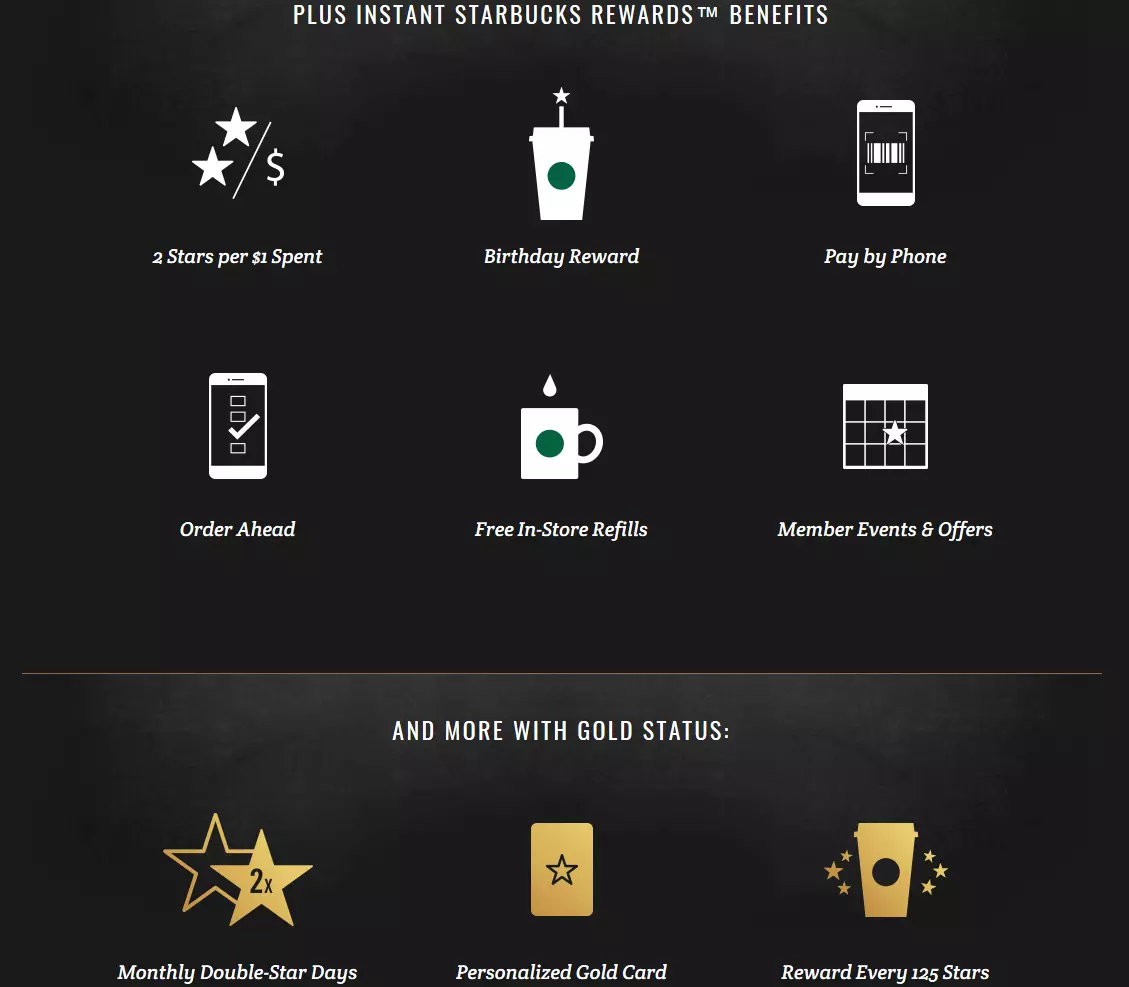
This page shows the various benefits the coffee giant offers its customers. A birthday reward gives members a free beverage on their special day, plus 15% off in the Starbucks coffee shop. Order ahead can be used once you’ve downloaded the app. Turn on your location on your smartphone, click on what you want to order at the chain nearest to you, then simply wait at the pick-up point in the shop. The gold status is what you receive once you have earned 300 stars in 12 months. This entitles you to monthly double-star days as well as a special reward every time you reach 125 stars.
Disney offers entertainment everywhere
With another global player, Disney, you can see how media offers, holiday planning, shopping, events, and gaming are aesthetically combined. A glance at the website reveals the visually powerful yet clearly organised structure of the world of Disney. Each of the tiles on the homepage gives fans the option to purchase in just a few clicks. It’s possible to buy tickets for blockbusters or to see trailers and exclusive content such as interviews or online games with augmented reality. Merchandise can be purchased in the online shop and childhood icons await you in the world’s most popular parks. Disney also helps you to plan your stay in the park. With the ‘My Disney Experience’ tool, customers can link all their tickets together in one account. This means you get the Fastpass, shorter waiting times, reservations in restaurants, as well as receive reminders. In the park, customers can use the integrated app on their smartphone. The MagicBand is used by many visitors in the Walt Disney World Resort. It opens doors, links images to your account, and unlocks Fastpass options. It also works like a credit card that charges payments back to your hotel room. The omnichannel strategy is paying off: Disney is making it easier and easier to spend money.
Omnichannel marketing fails
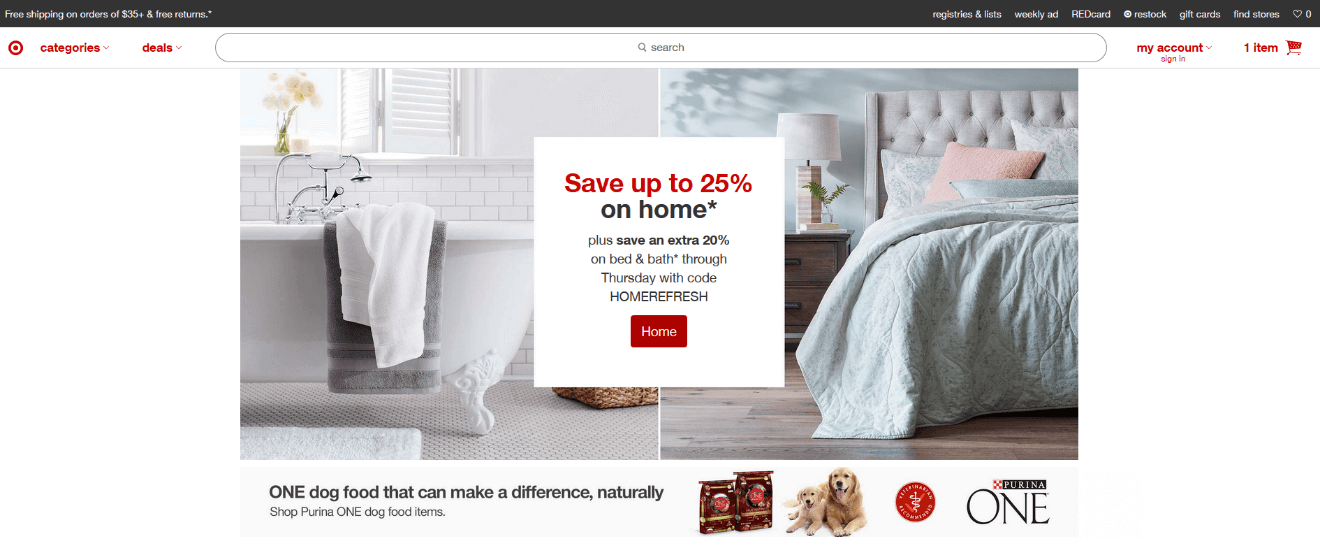
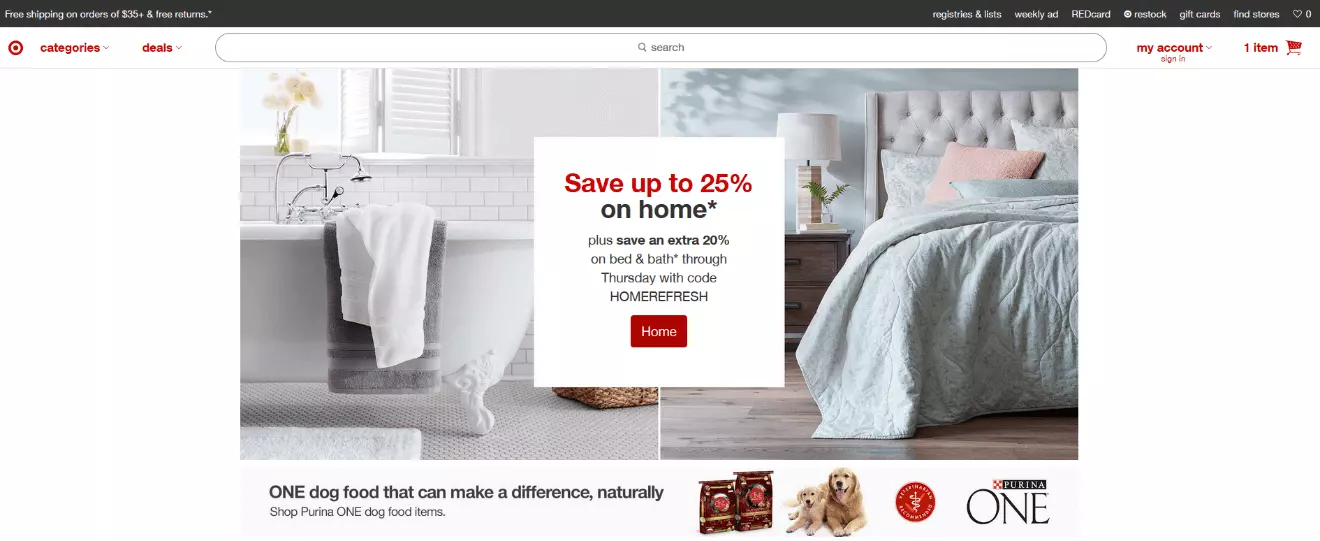
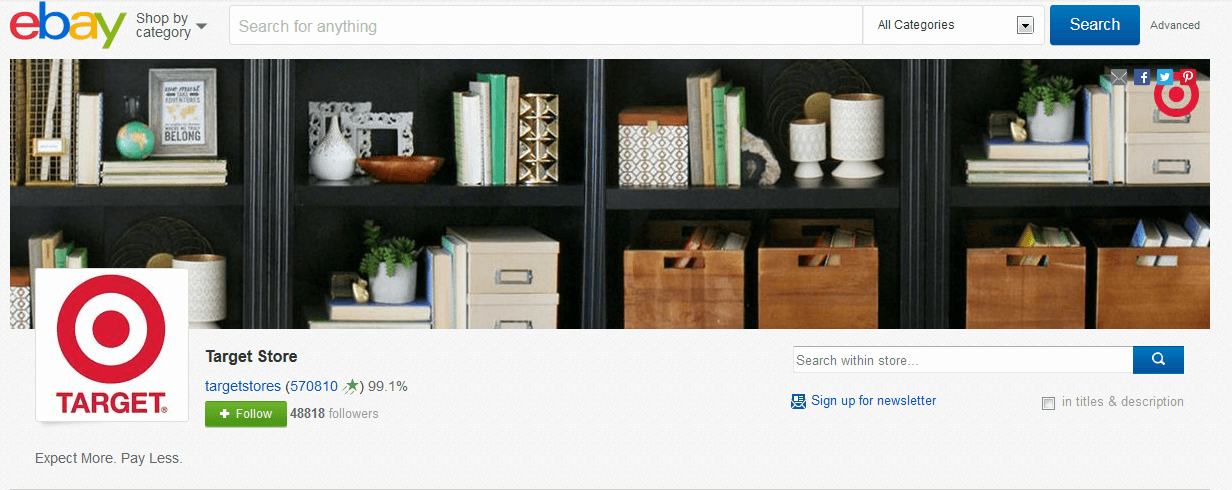
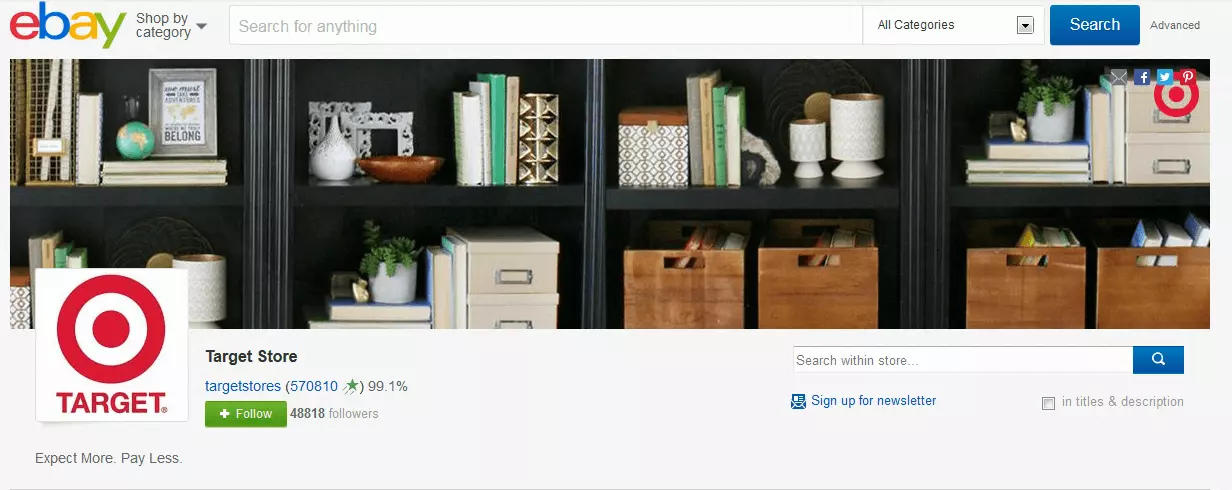
Many companies are jumping on the omnichannel bandwagon. But it’s not enough to offer products on different channels without them somehow being connected to one another. This is a recipe for confusion among customers and a surefire way to put them off using your services or buying your products in the future. Here is an example of omnichannel marketing done wrong: The second largest discount store retailer in the US, Target, came under fire from a customer that wanted to buy a treadmill from the company. The customer used Target’s eBay shop to order the exact model he wanted as it happened to be $1,000 (£720) less than on Target’s main site. The customer presumed that both websites were supported by Target but found that not to be the case as he encountered problems with the delivery. He contacted Target customer service, located in Minneapolis, but when they realised he’d ordered from Target’s eBay shop, they said there was nothing they could do. After contacting the Target eBay shop and having to go over the whole palaver again, the customer was told the item was no longer for sale. It was, however, still on sale on Target’s website for double the price, but Target wouldn’t allow the customer to buy it for the original price he’d paid even, although it was their fault they’d messed up the delivery in the first place. In the end, the treadmill WAS delivered at the lower price AND the customer even received an additional $100 (£72) off. So even though multiple channels should have helped the retailer, they actually ended up hindering it as they didn’t work in unison and print catalogues. If a company has bad customer service, it can really damage loyalty and cause customers to shop elsewhere. Especially in the day and age of social media, one bad post about the shop can be catastrophic.
First steps: What to keep in mind with your omnichannel strategy
Before you create your own omnichannel concept, analyse your customers as well as you can. To do this, you need as much information as possible on their purchasing behaviour. The goal is to find out what your customers want and how to give it to them. You can use the AIDA model as a guide. Focus on the most important information that connects your product and your customers. Create customer personas and cases for different scenarios and devices. Include other channels that might influence customer relations: service, product team, sales, etc.
A case includes possible scenarios that occur when a participant (i.e. customer) in a system (i.e. your app) pursues a certain goal (i.e. redeeming a voucher code and paying in this way).
A customer journey can start on various platforms and lead through very different channels, all of which should be able to interact with each other, up until the purchase and hopefully customer retention. It’s important that both internal and external testers check the individual channels and their compatibility. These different channels could be:
- Ordering process
- Social media
- Newsletter
- Service (chat, telephone, e-mail)
- Print advertising
- SEO and SEA
- Support
- Information and advice in business
- Online and print catalogs
- Apps and QR codes
- Outgoing and incoming goods
You achieve initial interest and customer loyalty when you produce concrete content that addresses customers directly and responds to their behaviour. Newsletters, blog content, and customised push messages all help contribute to this. Learn more about dialogue marketing and its benefits. Synchronise all channels if possible. With the principle of Listen and Respond, you can record your customers’ search queries and paths, store data centrally, and can respond to other channels as soon as the customer uses them. If you are optimising a ‘bricks and clicks’ company (one that operates both online and offline) according to the omnichannel definition, don’t forget about incoming and outgoing goods. Link the data records for warehouse stock and stock in-store. If customers can check online whether the desired product is available in the shop, this increases the probability that they will either pick it up in person or order it online by express. Customers can access the inventory in a number of different ways.
‘Bricks and clicks’ (also known as ‘Womble Store Method’, ‘click and mortar’ or ‘WAMBAM’) refers to companies that operate both with stationary shops AND a web presence. In this way, they offer their customers personal advice in-store and online.
If you set up your merchandise management system, as well as POS systems and ERP, the so-called single source of stock increases the efficiency of the sales chain. Depending on the product range and variety, Smart Shelves might well be a good idea for your company. If customers often pick up items to take a closer look and end up not buying them, you can work out what needs to be changed. Maybe the presentation is at fault, or maybe the product should be removed from the range. In addition, the Smart Shelf constantly records the inventory and provides feedback.
Omnichannel marketing is by definition the optimisation of multi-channel marketing. It goes one step further, linking all possible channels of contact with customers so that they have a seamless shopping experience. If you follow the most important rules, you will be rewarded with customer loyalty.
Reviewer

Melissa Senn
Melissa Senn has been with IONOS since 2016 and focuses on website, e-commerce, social media, and AI in the Digital Guide. As a digital strategist, she uses her extensive SEO and GEO experience to transform complex technological trends into practical content.