

SoundCloud alternatives for musicians and producers

Millions of users publish their music on the internet platform SoundCloud. The spectrum for SoundCloud users is broad – ranging from established musicians and music producers to small, undiscovered bands and solo artists. This has helped develop SoundCloud into the most-used service of its kind, but there are plenty of alternatives. Bandcamp, Mixcloud, hearthis.at, and many more online music streaming websites are similar to SoundCloud, giving amateur and professional musicians alike a platform to upload their own songs and market them. So which is the best platform and how do these services differ?
SoundCloud: an overview
SoundCloud is the market leader in online music services that allow you to upload songs as you please. The platform is suitable for presenting music of all genres – and is even used by globally-recognised artists like Kanye West and major music labels like Universal. There are really only two small requirements for uploading an audio file: You have to have the right to use the published material, and you can’t violate any copyright laws. Over time, the range of functions offered by this upload service has expanded significantly. At first, the service was just as focused on the listener as it was the music producer, but this has since expanded in recent years as SoundCloud has aimed to change the way that its users discover and listen to music.
Background
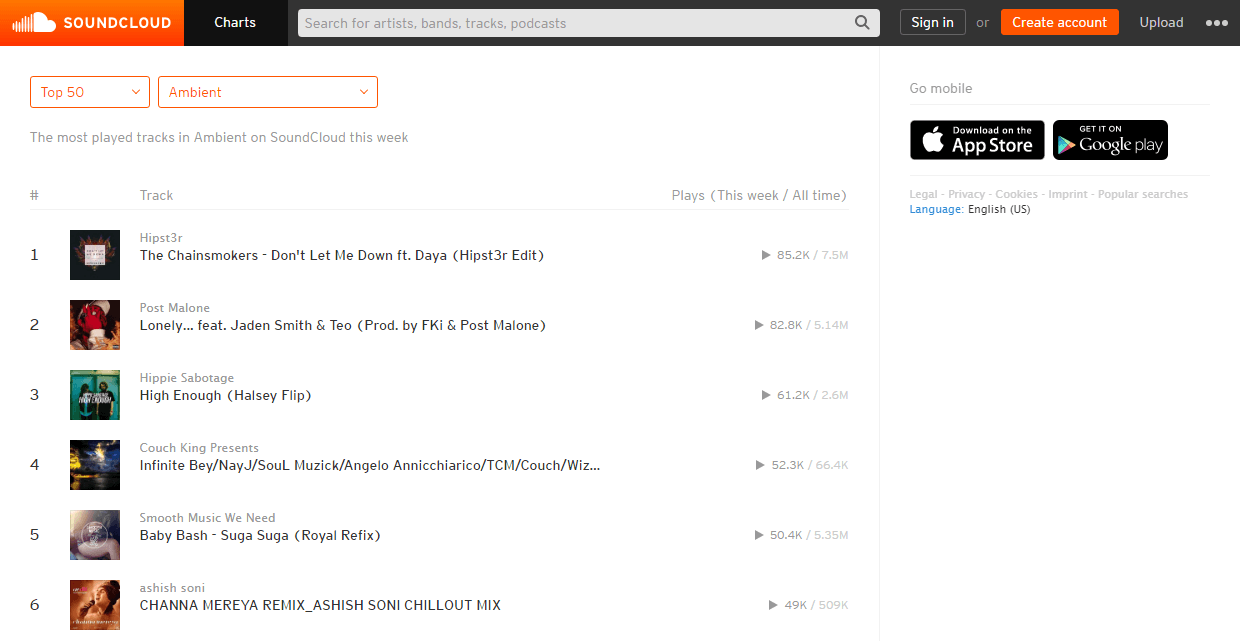
SoundCloud was founded in Stockholm 2007 and has its central office headquarters in Berlin. The original idea for the website was just to provide a platform for musicians and producers to swap recordings with one another. But the service quickly developed to allow everyone access to the songs uploaded by artists – with users able to stream songs directly from the website without registration.
This has led to SoundCloud becoming a sort of YouTube for playing songs. As a result, SoundCloud had been mostly used by musicians that have no involvement with major music labels until recently: most of the artist profiles on SoundCloud belong to musicians who work more or less independently, perhaps with the backing of a small, independent record label.
2016 marked a significant change for SoundCloud: The release of SoundCloud Go. In the years running up to this, the music streaming service negotiated with major music labels to gain rights to a huge back catalogue of songs, allowing them to increase the range of music on offer and compete with established streaming sites like Spotify, Apple Music, and the new but influential Tidal. These major artists are now available to listen to on SoundCloud, but only for users who subscribe to SoundCloud Go - a new, fee-based package. But songs uploaded directly to SoundCloud - be it from unsigned artists, worldwide superstars, or music labels – remain free to stream for all users.
Users
It doesn’t matter whether the genre is 70s rock, hip hop, classical music, or techno: Artists use the SoundCloud service to publish their music and reach an audience. Due to the ease of publication, the SoundCloud site has also developed into the most popular platform for uploading mixtapes, remixes, and even whole DJ sets. According to SoundCloud’s official figures, the service has over 175 million users and is a platform beloved by both producers and consumers of music: artists and labels use the website for distribution and marketing, while music lovers can listen to the latest releases and discover new artists. And, strictly speaking, SoundCloud isn’t solely a music platform. There are plenty of other audio files uploaded to the site, the most common one after music being podcasts.
The fee-based subscription package SoundCloud Go is designed to change the website forever. With the huge new music catalogue available to them, SoundCloud intends to do battle with Apple, Spotify, and Co. in the subscription-based music streaming service industry. By increasing the amount of music they can offer users, SoundCloud is also expecting to see a greater number of new users crossing over from the other streaming platforms. This could be to the advantage of unknown artists who publish their music on SoundCloud: the more users on the platform listening to music, the wider the reach meaning that there’ll be more potential listeners for undiscovered artists to tap into.
One of the main benefits of SoundCloud for unsigned acts compared to its alternatives is the ‘Similar Tracks’ feature. This is orchestrated by an algorithm that searches SoundCloud for similar music based on genres and tagging. So if your music is similar to that of Skepta, and you’ve tagged your music properly so that SoundCloud’s music recognition software can find and categorise it properly, you have a chance of being listed under the Similar Tracks heading on the right-hand side of Skepta’s SoundCloud artist page. Once a listener has played through all of the songs on the Skepta page, the Similar Tracks will start playing automatically – giving undiscovered artists an amazing opportunity to reach their target audience.
Another useful tool is the ‘Suggested Tracks’ feature. This is conducted by another algorithm that assesses the listening habits of all SoundCloud users as well as their likes and shares. Through doing this it can decipher the user’s music taste and then recommend a mixture of popular artists and undiscovered acts tailored to the individual user’s listening habits.
Price models and functions
There are a number of options available to you if you want to use SoundCloud to publish your music. The free account allows you to upload up to a total of 3 hours of audio material. A Pro account is still very affordable, but offers you 6 hours of upload material instead. It also offers certain other features like listening stats. The Pro Unlimited account meanwhile is just under double the price of the Pro account but comes with unlimited audio file uploads and detailed information on locations of user plays and types of web pages and apps that your listeners use most often. Full pricing and other information about the options available to artists is available on the SoundCloud Pro packages page. There are also a number of different models when it comes to listening to SoundCloud too. Streaming of all audio files uploaded to SoundCloud by users (so not ones covered by SoundCloud Go) works completely free of charge and without registration. But a free registration also lets you download many songs for free too. The songs you can and can’t download are decided by the musicians themselves on a track by track basis. SoundCloud Go offers you a music database of over 135 million tracks including releases by some of the most famous artists worldwide, but it comes at a monthly subscription price. Pro Unlimited SoundCloud users can add SoundCloud Go to their account for a very small extra monthly fee. SoundCloud Go also offers subscribers the chance to make certain songs and playlists available for offline playback, and – unlike the free package – it’s completely free of adverts. SoundCloud doesn’t just offer music, it also functions as a social network. Registered users can follow the profiles of other users as well as liking and sharing tracks. One of the trademarks of the SoundCloud service is that the duration of every song is depicted in wave form. This makes it possible for users who are logged in to leave comments on different bars of a given song’s wave form. Other functions like the Suggested Tracks feature that we mentioned earlier, are available to everyone who has a registered account. These features are offered with all account types too, including the free one. Lastly, it’s also possible to link up your SoundCloud account with Facebook, Twitter, Google+, and Tumblr, in order to market content from SoundCloud.
Pros and cons
Perhaps the biggest plus point for SoundCloud is the fact that the web service is an authentic, respected, and lively part of the current music scene. The brand is extremely well-known and used by music makers and enthusiasts the world over. Many musicians and music producers consider it a matter of course to operate a SoundCloud page. This is because it’s quick to set up, easy to manage, and can become the perfect digital business card for an artist if properly marketed and maintained. It’s also possible to manage your account from your fingertips by using the SoundCloud app (available for iOS and Android). The downside for musicians is that it’s not possible to sell your music directly via the platform – meaning that songs can only be either downloaded for free or not at all. Online sales are possible from external sites with embedded SoundCloud links, however. This is one advantage that other providers (like Bandcamp) offer – the ability to sell music directly from within the streaming platform. This is more practical and lucrative for artists, while also simplifying and shortening the customer journey from artist discovery to sale transaction.
| Advantages | Disadvantages |
|---|---|
| Basic functions and many features including the Android and iOS apps are free of charge | Paid account is necessary if you want to upload more than 3 hours of audio material |
| Enormous reach and a straightforward upload and download method | No direct sales option via the platform |
| Many functions similar to those found on social networks (likes and shares) which can be used for marketing purposes |
Alternatives to SoundCloud
For those who don’t want to use SoundCloud there are plenty of alternative ways to promote music online. Some of these services focus on providing their users with as much music as possible, while others focus more on selling the music that is uploaded by artists. We’ll take a look at some of the best-known providers and assess their pros and cons. AS with SoundCloud, all of the examples below are aimed at music makers as well as everyday music fans.
Bandcamp
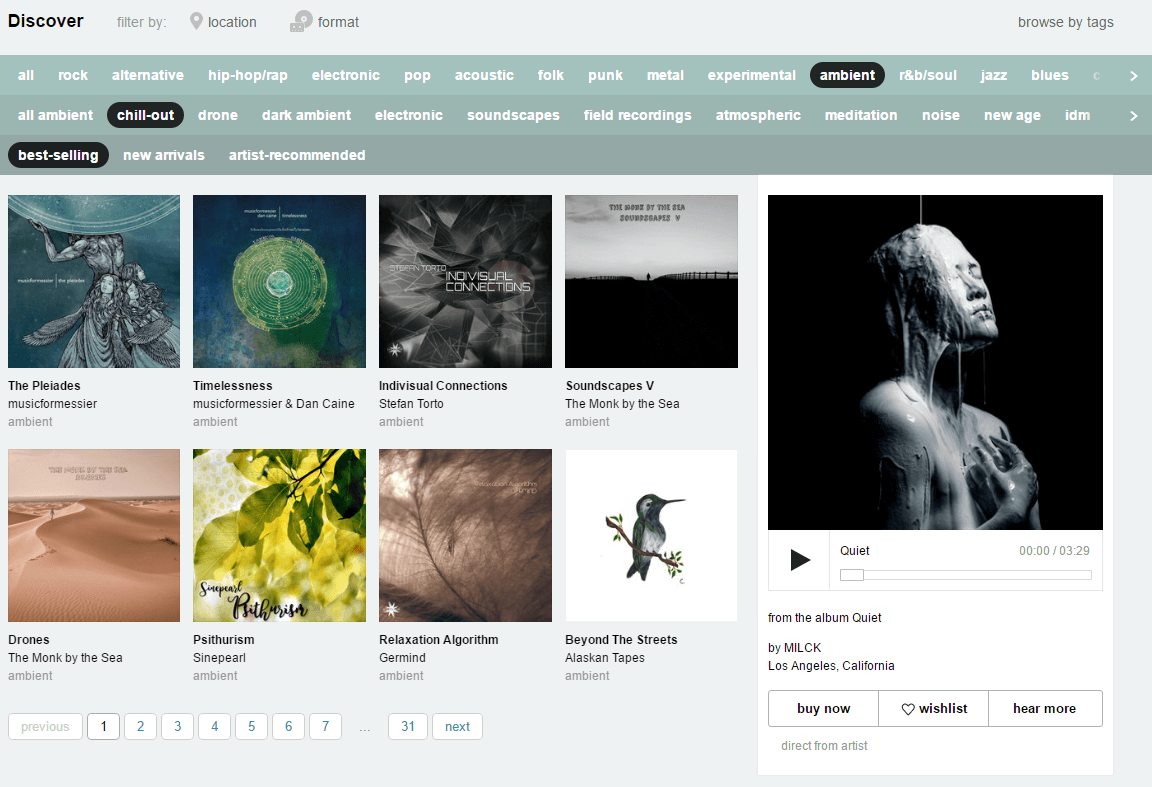
Also founded in the year 2007, Bandcamp is considered one of the most famous SoundCloud alternatives. The vast majority of musicians and bands found on Bandcamp are unsigned or on independent labels. And some of the unsigned acts offer their entire back catalogue on the website. When it comes to genres, Bandcamp is best known for being the site of choice for rock and indie bands. In 2014, the site introduced a new feature called ‘Bandcamp for Labels’. This was gradually used by various well-known independent labels including Sub Pop, Epitaph, Ipecac, Ninja Tune, and Fat Wreck Chords. Registration for Bandcamp is free of charge for artists. But labels have to pay a moderate monthly fee if they use the site to promote up to 15 acts, or they can choose to pay a more substantial monthly fee to promote unlimited bands. The Bandcamp for Labels homepage offers a full list of pricing and information for labels packages. Bandcamp also enables you to sell your own music directly. As long as you have an account (be it an artist account or a label account), you can make the decision to offer your music free of charge or at a price for download. The number of free downloads is limited but can be increased through a small payment. One benefit of selling your music on Bandcamp is that their sales cut is relatively low: 15% of every sale goes to the platform, with the artist or label keeping the rest. And if an album receives more than 50,000 paid downloads, Bandcamp’s cut drops even lower, to just 10%. Should you also decide to sell physical copies of your music via CDs or vinyl records, or merchandise like t-shirts or posters, you can do so easily from your Bandcamp page – with the host site taking 10% of the sales. Bandcamp unfortunately offers very little in the way of social network functions. It’s possible to follow users, share their content, and embed it in a website, but you can’t leave public comments or send musicians private messages via Bandcamp. There are options to include links to other websites or social media accounts on your artist page though.
| Advantages | Disadvantages |
|---|---|
| Free to use with a relatively big reach | Very few social media features |
| Easy and profitable way to sell your music to fans |
hearthis.at
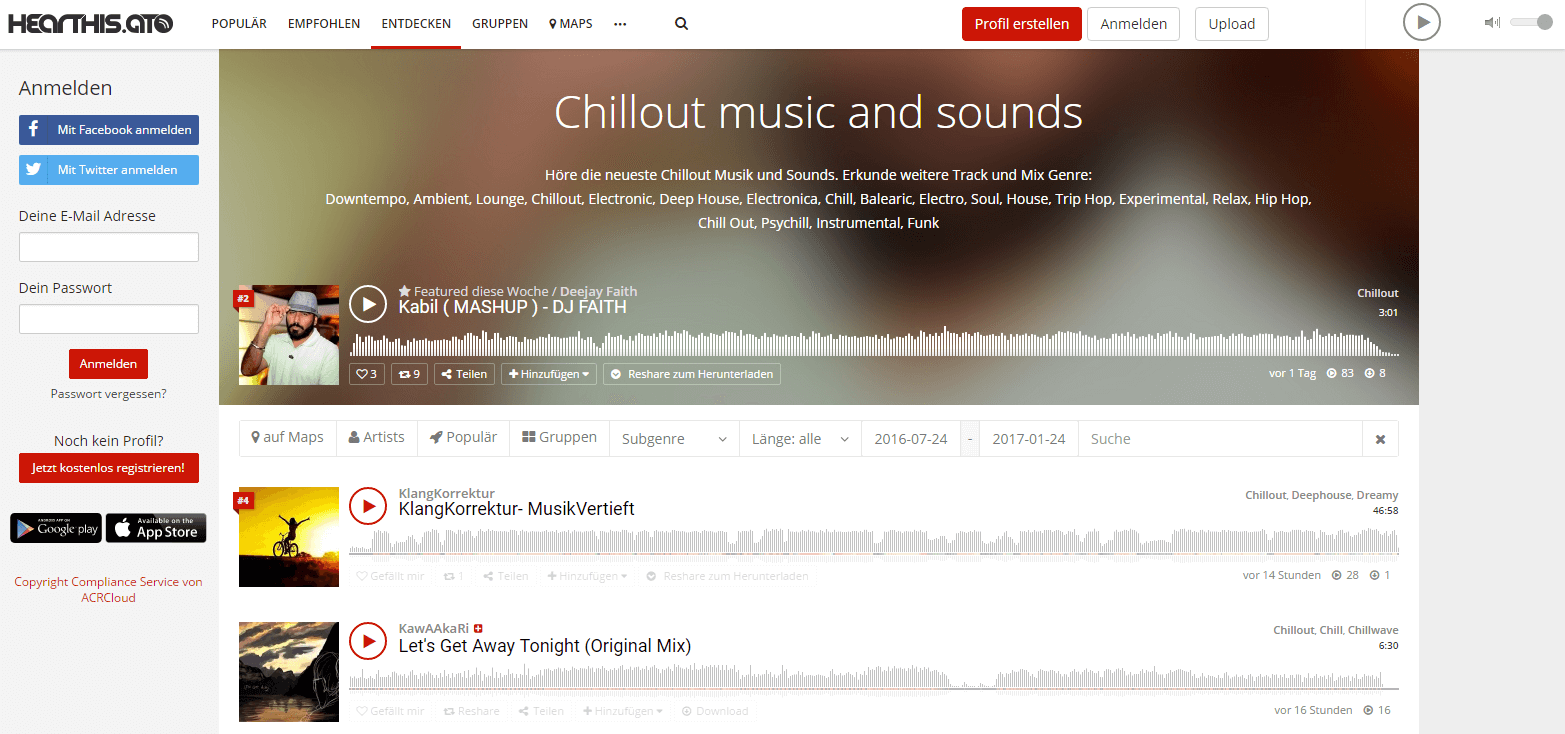
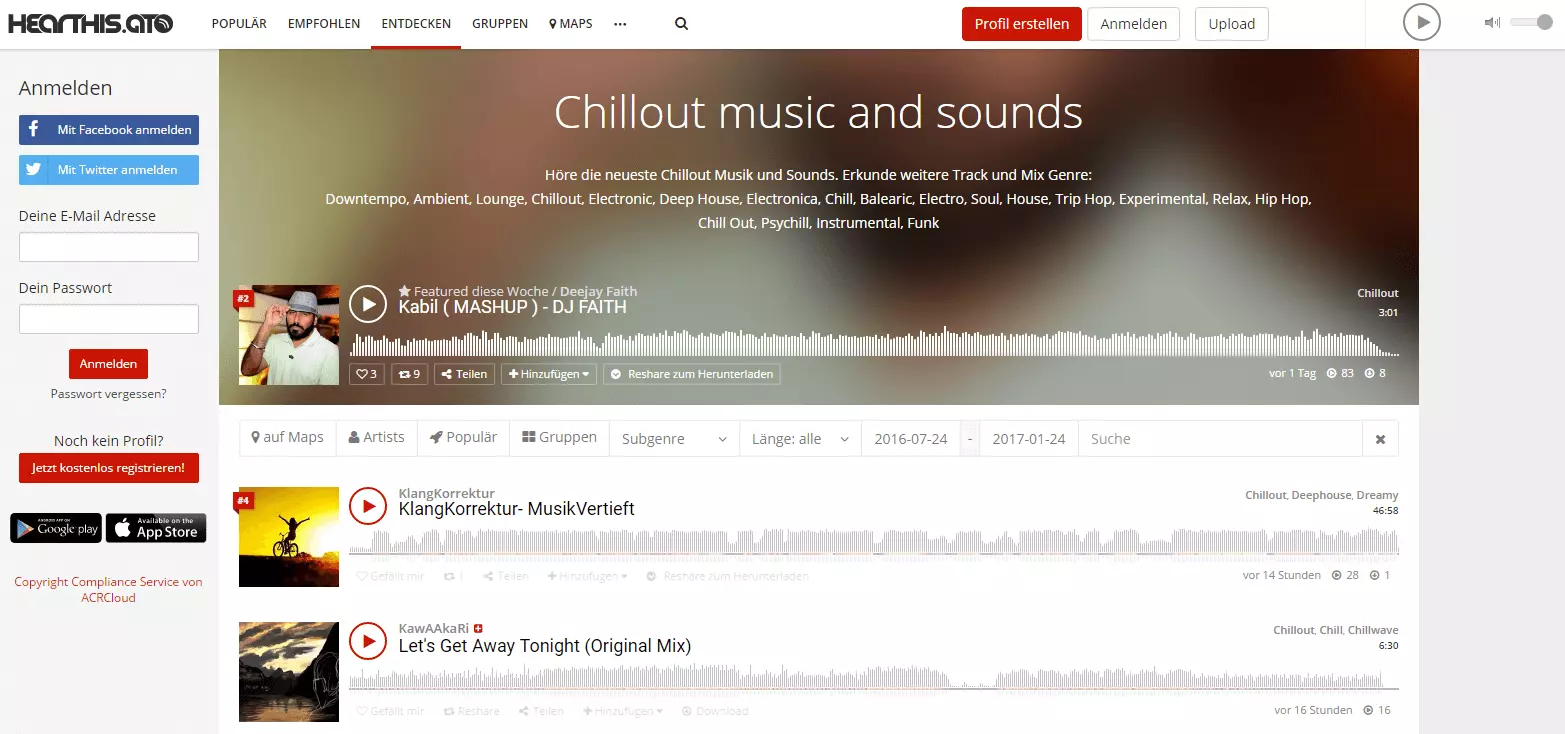
The German company hearthis.at is another alternative to SoundCloud. Not only are the pair both based in Germany, but the appearance and features offered by hearthis.at are remarkably similar to the market leader. The hearthis.at website also features the traditional wave form image for the duration of a song, has comment, like, and share features, and is available via an Android or iOS app too. But when it comes to making money from your own music, hearthis.at outdoes its competitor and role model considerably: anyone can sell their songs easily on the website – even with a free membership package. As a commission, the provider keeps the full value of every tenth good sold via the website. The free version of hearthis.at allows you to upload up to 1,500 MB of audio material in MP3 format. But for users who require more, it’s possible to pay a very small monthly or annual subscription to upload unlimited files in a variety of additional formats, including FLAC, WAV, AIF, M4A, AAC, OGG, and WMA. All this makes it sound like hearthis.at is indeed the perfect SoundCloud alternative – but unfortunately there are two snags. For one, the website does have a very bland feel to it, as if everything that’s legally possible to copy from SoundCloud has been copied. This lack of creativity and branding makes hearthis.at feel less exciting and attractive for both artists and listeners. In fact, the only distinguishable independent feature is the world map, which allows you to explore the music tastes and tagging tendencies of hearthis.at listeners in different parts of the world. And one look at the results on this world map highlights the second problem with hearthis.at: the limited reach. At present, the lack of users means hearthis.at can’t really compete with SoundCloud for the spot of number 1 music streaming platform.
| Advantages | Disadvantages |
|---|---|
| Offers almost all necessary functions in the free version | Far, far fewer users than the market leader |
| Selling music files is straightforward and fair | Lack of creativity: almost all features and designs are copies of SoundCloud |
| The app offers plenty of social media functions |
Mixcloud
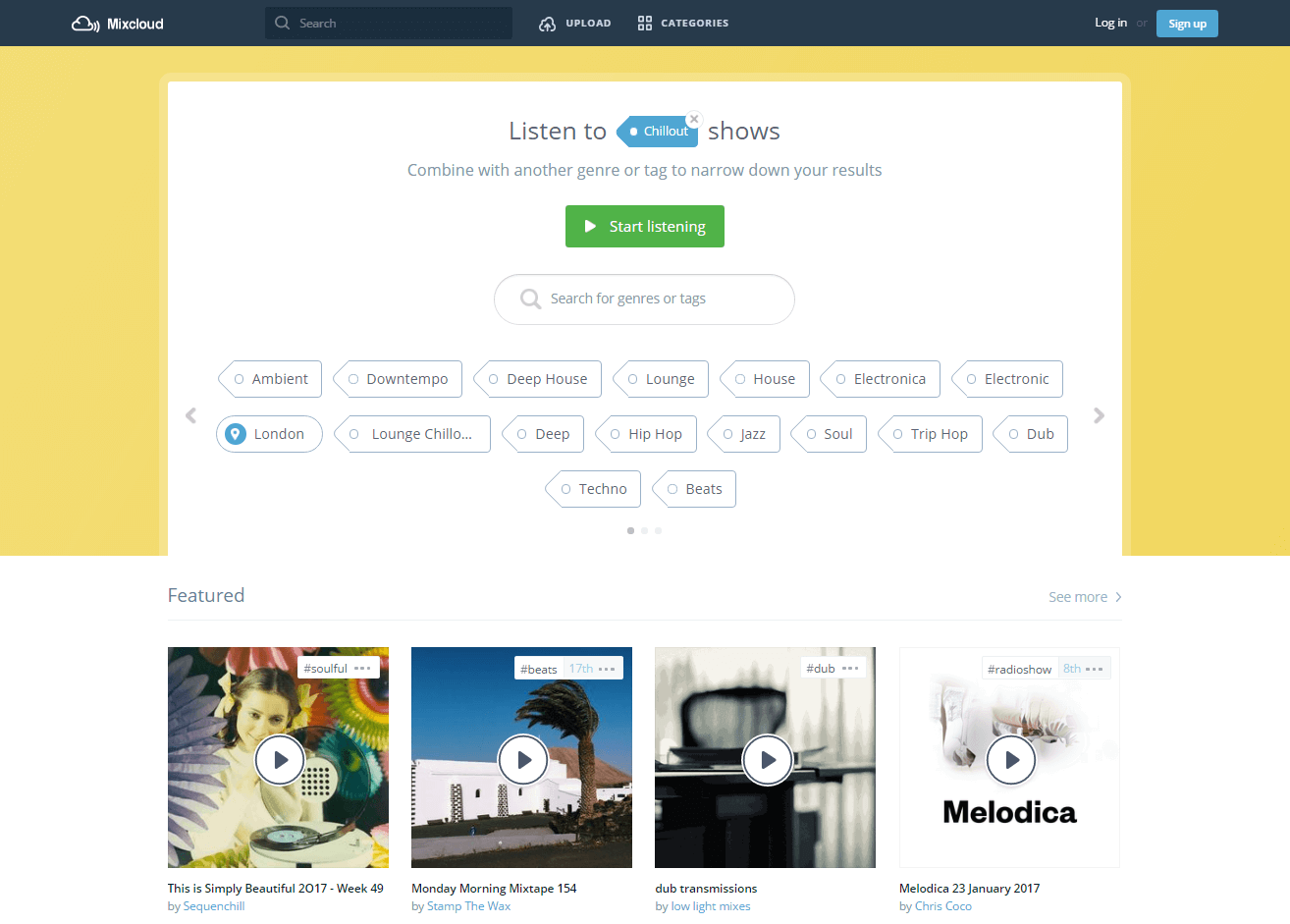
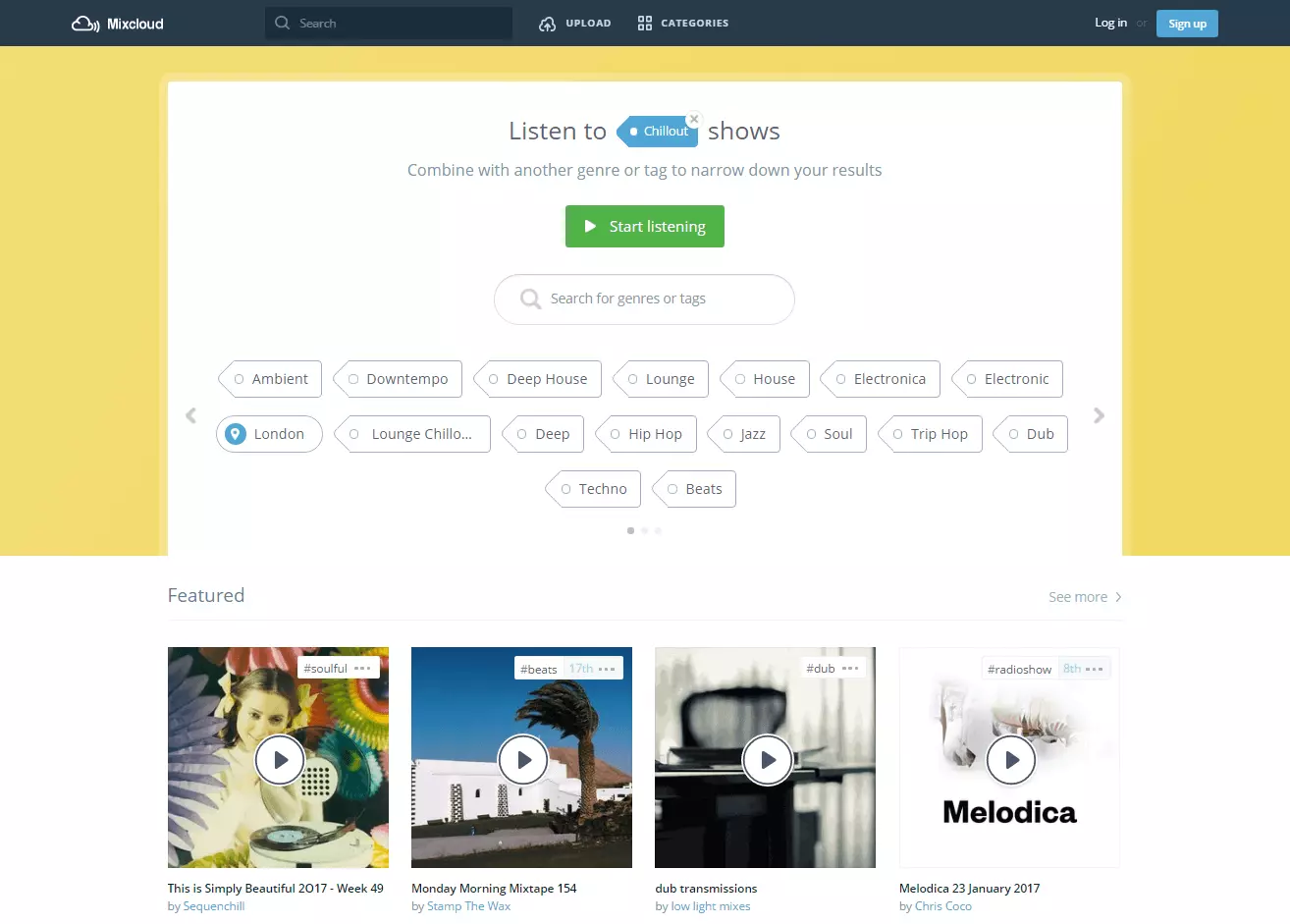
Despite its similar sounding name, Mixcloud is different from SoundCloud in a number of ways. Firstly, the musical direction of the site, as you may have guessed from the first part of the name, is predominantly focused on publishing DJ mixes. Although many DJ mixes are also available on SoundCloud, the limited upload time and mainstream appeal of the market leader means that it’s not tailored specifically to this type of audio file: the vast majority of songs on SoundCloud are between 3 and 6 minutes long. Beyond its primary focus of DJ mixes, Mixcloud also operates as a popular online platform for podcasts and radio shows (even those without musical segments). Prominent users of Mixcloud include Barack Obama, Ted Talks, and the technology website Wired. This unique focus on audio content makes the service stand out from the other music streaming website providers. As the above names suggest, Mixcloud also has a relatively large, international following to fall back on. A Basic account with Mixcloud is free of charge and comes with access to the entire database of Mixcloud uploads, plus unlimited uploads of your own material – the catch being that you’ll have to deal with adverts interrupting you regularly. Listeners can upgrade to a Premium account to get rid of all ads for a small monthly fee, while music producers can upgrade to a Pro account to receive access to a range of statistics and extra functions (including automatic and dated upload of files and a personalised Mixcloud page with shows). The one big drawback of Mixcloud is that it lacks a download option: Mixcloud is purely a streaming website.
| Advantages | Disadvantages |
|---|---|
| Targeted at a niche audience: if you want to speak directly to your target audience, Mixcloud offers a better built-in genre following than any of the competition | Targeted at a niche audience: if you don’t offer DJ mixes or audio shows, your material will likely go unnoticed here |
| No limit on upload file size or duration, and a relatively large reach | Streaming only – no option to download files |
The Future FM
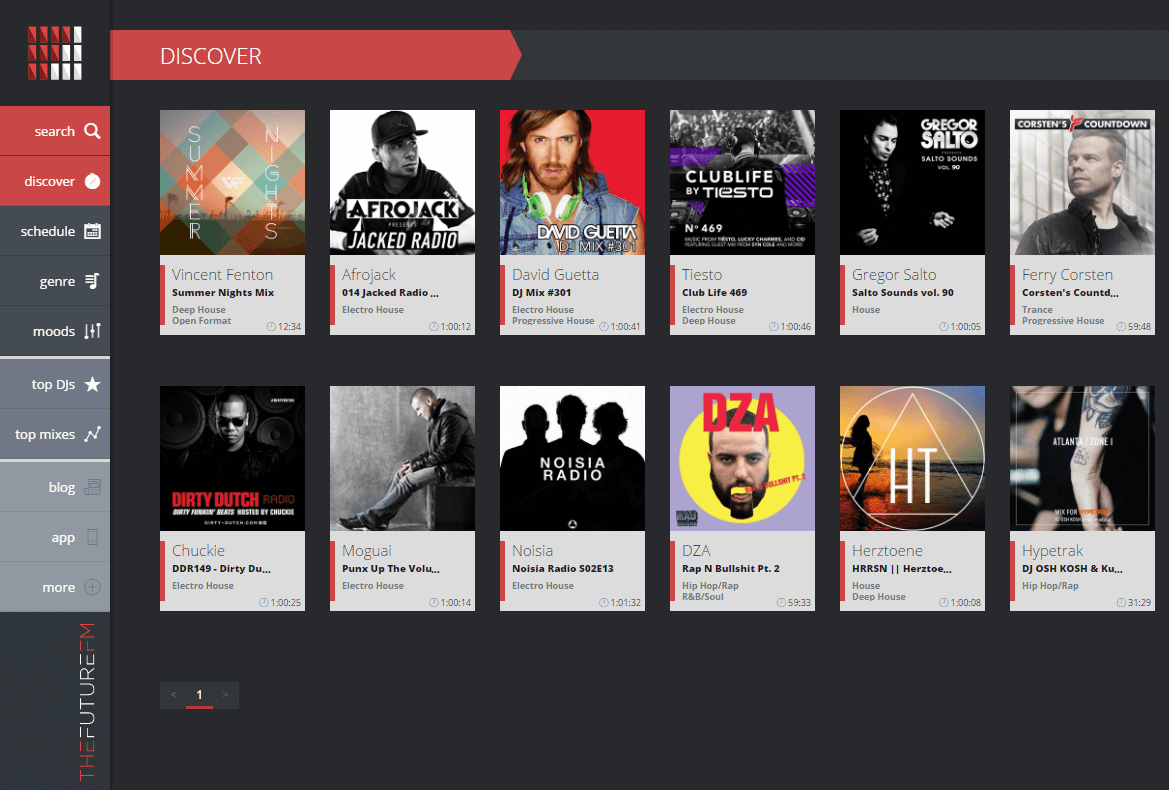
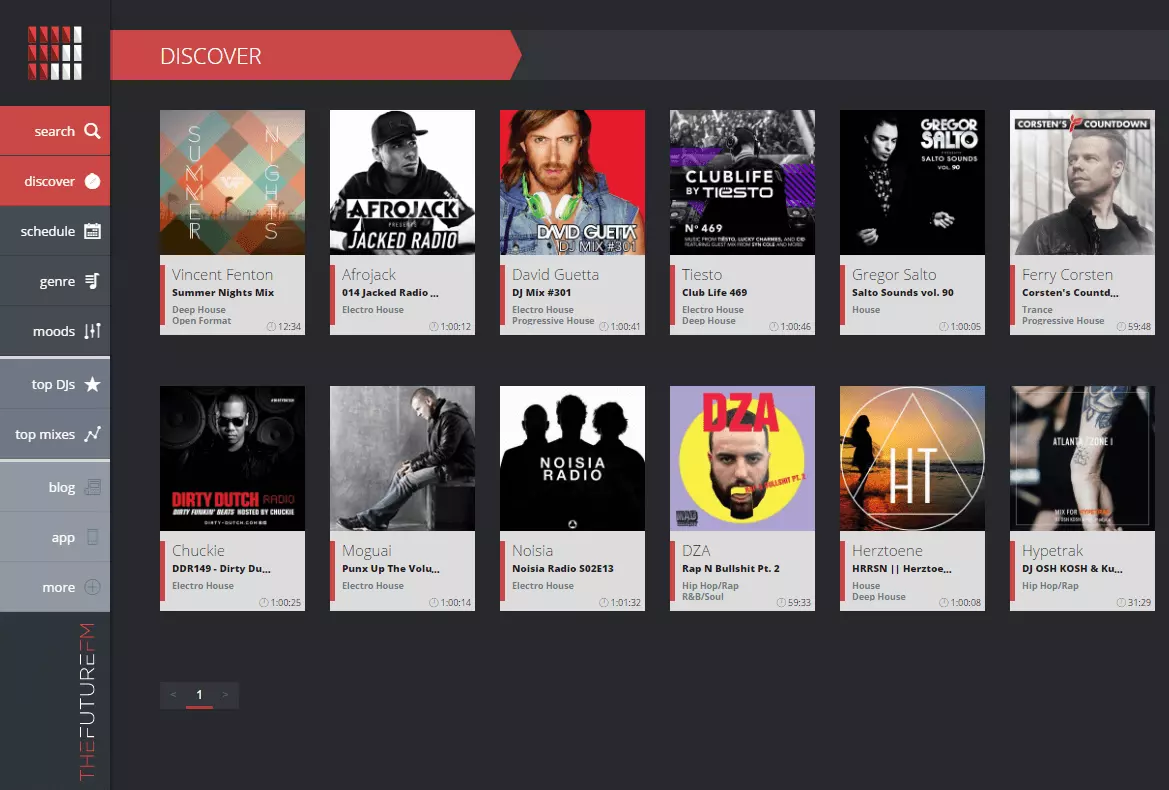
The Future FM is another unconventional music streaming project that could be considered a SoundCloud alternative. Like most of the other streaming services we’ve discussed already, The Future FM has chosen a niche to make it stand out from the crowd: it focuses on DJ mixes, but particularly ones that have a total running time of 15 minutes or less. This separates this streaming service, based in New York, from Mixcloud, and makes it a great platform for DJs looking to showcase their material. Listeners can search through a big database and filter their mixes by different music genres or by moods (like happy, romantic, relaxed, etc.). But despite this, the quantity of music on offer is still fairly manageable – even though The Future FM does have some huge names like Tiësto, David Guetta, and other famous music producers recognised worldwide. The web service is completely free of charge and even allows users to upload unlimited audio files. But if you want to enjoy The Future FM without interruptions from adverts, this comes at small monthly subscription charge of 7 USD.
| Advantages | Disadvantages |
|---|---|
| Targeted at a niche market: ideal for DJs | Targeted at a niche market: no use for any musicians or listeners disinterested in DJ mixes |
| Unlimited upload | Comparatively smaller reach |
SoundCloud is useful, but there are alternative music streaming services
SoundCloud has many advantages. It’s easy to use, works smoothly, and offers a huge user reach - so there’s not much surprise that it’s the most popular platform around for the free upload and publication of music. You can also set up an account quickly and easily, and even the free account can turn an amateur musician into a very professional sounding artist. So as a music maker, it makes a lot of sense to use this popular portal to reach the biggest audience possible and market your releases.
But there are also a number of alternatives to SoundCloud when it comes to music marketing. This is especially the case for users who want to sell their music online as SoundCloud has no option for this. It can be a daunting task to organise payment transactions and receipts yourself, so Bandcamp and hearthis.at are great options for musicians looking to make money. Both these services already have the infrastructure to cope with sales, and they also offer more than reasonable commission rates for products sold on their platforms. So if you want to sell your music on a streaming service, it makes sense to use one of these two.
But even if you’re not looking to sell music online and just want to find attractive, reliable streaming sites like SoundCloud, there are still plenty of worthwhile options. Certain platforms are targeted to particular musical genres and niches: Bandcamp is the platform of choice for many rock and indie bands, while The Future FM (and to an extent also Mixcloud) is focused more on DJ mixes. So if you fit one of these genres, then you can take advantage of the built-in target market these sites offer and also benefit from the relatively fewer artists to compete with compared to SoundCloud.
The truth is, when it comes to marketing your music and promoting yourself as an artist online, the approach should be the same as with any other online marketing campaign: A thorough, properly targeted marketing plan is the key to success. It stands to reason that using a combination of several streaming services is the best way to reach the biggest possible audience and give yourself the best chance of succeeding in music.