

Altcoin: What are the alternatives to Bitcoin?

Whilst Bitcoin has not yet broken into mainstream society, there are already alternatives to the popular cryptocurrency. Bitcoin has been around for almost 10 years, and its’ value continues to rise. The digital currency made a particularly significant leap in value during 2017 and is now worth over $10,000 per Bitcoin. Bitcoin alternatives are, of course, trying to capitalise on this success. Motivation for developing these so-called altcoins is often almost always ideological: anyone who develops a Bitcoin alternative believes their own system will work better.
- Free website protection with SSL Wildcard included
- Free private registration for greater privacy
- Free Domain Connect for easy DNS setup
The success of Bitcoin can be explained by the fact that it was the first cryptocurrency of its kind. Altcoins, on the other hand, sometimes offer faster transactions, allow for larger total amounts of coin, or have different mining methods. What are these alternatives to Bitcoin and what are their advantages and disadvantages?
If you have never heard of terms like “blockchain” and “mining and seed,” it makes sense to read our article on Bitcoins Bitcoin first. There, we explain how cryptocurrencies like Bitcoin work, and what you can do with them.
The best alternatives to Bitcoin
Bitcoin and most other altcoins originate from the very active open source community. Since the beginning of developments around cryptocurrencies, users have attached great importance to the fact that the source code is available to anyone, everyone can contribute to it, and can also develop competing products. What could be annoying for speculators is extremely important and productive from a developer’s perspective, since alternatives to Bitcoin contribute to the overall further development of cryptocurrencies. By now, you can invest in over 1000 currencies that work just like Bitcoin. However, as with most stock market gambles, there is always a chance of losing your money.
One risk that comes with unknown currencies is that the entire system could collapse. New, relatively unknown altcoins also conjure a risk of fraud: the term “pump and dump” (based on the illegal approach to equities), for example, involves someone creating their own currency, fabricating demand and then selling all their shares as soon as the value is high enough. This eventually leads to the market collapsing after the perpetrator has cashed their profits.
However, altcoins’ features in this article are relatively safe and already have a fairly high market capitalisation. This means that the calculated sum of all shares is high, however, the value is not equal to the price of the currency. This means there are altcoins which have a very low price, but can still achieve high market capitalisation once the coins begin to circulate en masse.
Ethereum


The decentralised system called Ethereum has been in use since 2015, and its currency has become the number two cryptocurrency worldwide. The cryptocurrency fundamentally resembles its big brother, Bitcoin: Ethereum is also a decentralised peer-to-peer network based on blockchain. This is hardly surprising, since the original founder Vitalik Buterin also worked on Bitcoin before creating this new one. He called the new system Ethereum and used the same name for the currency itself, trading under the abbreviation ETH. This Bitcoin alternative is interesting, not just because of how valuable the currency has become, but also because the system offers more options than just anonymously and securely transferring cryptocurrency.
The Ethereum platform allows for the creation of smart contracts: scripts that automatically execute the actions specified in the contract once the conditions are met. This can work well in crowdfunding for example: funds (in the form of ethers) are only forwarded to the borrower when enough investors have joined together. The advantage this has over classic crowdfunding is that the middleman is eliminated. The possibilities offered by Ethereum have the potential to structurally change the world of finance. So far, all this is still a vision of the future, however, Ethereum is already being traded thanks to the advantages it holds over Bitcoin.
One criticism of Bitcoin that has been frequently voiced in the past are the bottlenecks that occur when transferring money. Instead of the alleged 10 minutes of processing, a transaction can sometimes take several hours – albeit, still much faster than a traditional bank transfer. Ethereum, on the other hand, uses a different protocol, enabling transactions to be made within seconds.
CryptoKitties can now be bought with Ethereum: these collectibles are also based on the blockchain. They can be mated with each other and inherit their genes. These “cats” are currently traded for the equivalent of €100,000, but it is expected that this level of demand will not last long.
However, Ethereum is not immune from criticism either, thanks to a recent major scandal: a company was founded using Ethereum and ran the largest crowdfunding campaign in the world thus far ($160 million in Bitcoin in just three weeks). The DAO is the Decentralized Autonomous Organization, and all business partners decide democratically how their capital will be invested in other companies, primarily startups. If an investor opposes the democratic decision, he is free to withdraw his money from the fund and transfer it into a subaccount. An unknown user took advantage of this process and utilised it many times, pulling multiples of his money from the fund: the system had not noticed that the funds were already transferred. The unknown attacker amassed shares amounting to $53 million. Initially, this was only a problem for the investors, but the DAO is probably the largest participant in the blockchain at 17%. This meant that there was a reaction from the entire community, who decided to do a hard fork and split off from the actual system, resulting in a currency reform. By updating the software, Ethereum is now exchanged through a newly created system.
However, the original blockchain is still continuing because not all members of the community agree with the fork, and now there is another system known as Ethereum Classic which is touted as a successor to the original Ethereum.
| Advantages | Disadvantages |
|---|---|
| ✓ More than just a currency, it also offers additional features | Community is split due to the hard fork |
| ✓ Smart contracts | |
| ✓ Fast transactions | |
| ✓ High market capitalisation |
Bitcoin Cash
Bitcoin itself has also had to accept a big fork in their system: Bitcoin Cash. Before it was released in the summer of 2017, the spin off cryptocurrency was preceded by years of discussion. One point of contention within the community was the block size limit, that the primary developer Satoshi Nakamoto (probably a pseudonym) for the computer expert Craig Steven Wright, who many believe to be him) established. This size limit was too small for many in the Bitcoin community, which is why they decided to develop an alternative. The problem with the small blocks is that they only allow a low transaction rate: the limit of 1 MB allows about seven transactions per second. At the beginning of Bitcoin this was totally sufficient because the limit was rarely reached.
However, Bitcoin’s success has pushed the system to its limits on a regular basis, leading to bottlenecks, which means it can take several hours to transfer funds. This resulted in a group within the community deciding to establish a competing product that allows for a much higher limit. There are two main reasons why the entire strategy did not go exactly according to plan – despite the obvious improvement of the new currency – and now there are two coexisting currencies. The first reason was that Nakamoto wanted to guarantee the safety of Bitcoins by limiting them to just one size. The system prevents huge spam blocks which miners could insert into the blockchain.
In addition, there are also people who benefit from bottlenecks. Miners who ensure that transactions can be made are now charging users to prioritise their transactions. Less bottlenecks also result in lower revenues.
The fork, however, did not hurt Bitcoin or Bitcoin Cash. While Bitcoin’s share price continues to grow, Bitcoin Cash (traded under the symbol BCH) jumped right up and is currently in third place in terms of market capitalisation, behind Bitcoin and Ethereum. To ensure that speedy transactions (which are a key element of this Bitcoin alternative) will continue, two updates are already planned to increase the maximum block size again. Their eventual goal is to reach the same speeds as Visa or Paypal, however, the project is still in its infancy. There are also some problems with sudden inflation, as mining is not yet consistent and instead causes irregular jumps.
| Advantages | Disadvantages |
|---|---|
| ✓ High transaction speed | Highly controversial in the community (reasons include the controversial fork) |
| ✓ High market capitalisation |
In addition to Bitcoin Cash, Bitcoin Gold has been created through another fork. This version tries to prevent mining via ASICs.
IOTA

The Bitcoin alternative IOTA has been specially developed for the Internet of Things (IoT). It is more or less an anonymous digital currency, but instead of relying on blockchain, the system uses a mathematical system called Tangle. The idea behind IOTA is that you avoid the cryptocurrency transaction fees that result from the blockchain principle. Bitcoin and similar alternatives are based on the idea of mining. To perform transactions, it is necessary to provide computing power within the peer-to-peer network and to do this, professional miners sometimes accept high electricity costs. For this to pay off, there needs to be an incentive in the form of fees.
Tangle allows users to avoid this issue: the technology is based on a Direct Acyclic Graph (DAG). The big difference is that it requires the validation of two foreign transactions. Conversely, this means that the system does not require mining: every user who wants to make a transaction is required to validate other transactions. It also means that transaction spends increase with more users (or more transactions). The scaling debate that has been taking place in the Bitcoin environment for years and eventually led to Bitcoin Cash is not necessary with IOTA. In principle, users can perform an infinite number of transactions per second.
This is particularly interesting if you revisit the original idea behind IOTA: their goal is to be a cryptocurrency and network for the Internet of Things. To ensure that every Internet user and every electronic object is a participant in the network and carries out transactions, unlimited scalability is essential. This could explain why large companies like Bosch and Microsoft are investing in IOTA and are driving the project’s development forward. The involvement of these large companies has resulted in IOTA carving out a significant position in the crypto market.
Critics of IOTA claim that that the total elimination of transaction fees comes from an idealistic, unlikely foundation: after all, validating transactions still requires computing power, depending on the individual’s computing volume. This can cause problems, especially with mobile devices. It isn’t unrealistic to then speculate that providers could take over that validation process for a fee. Another criticism is security: To start an attack in the blockchain, the attacker must provide more than half of the computing power of the entire network. Since IOTA does not have to confirm a transfer with all participants, this increases the probability of a successful attack.
| Advantages | Disadvantages |
|---|---|
| ✓ Freely scalable | Even after two years of development, it has not nearly reached all its goals (especially regarding the IoT) |
| ✓ Designed for the Internet of Things | Concept is still controversial |
| ✓ Works in combination with different programming languages | |
| ✓ High market capitalisation |
Ripple
 FreedomzShutterstock
The Bitcoin alternative Ripple is not just a cryptocurrency like Ethereum. Ripple sees itself more as a platform for exchanging money – either crypto or traditional currency. Therefore, Ripple is sometimes referred to as blockchain for banks. This is the biggest difference between Ripple and other Bitcoin alternatives: where the other systems follow the ideology of making banks and financial institutions obsolete, Ripple wants to integrate middlemen into the network. Banks should be able to handle even international transfers within seconds.
Ripple’s network (which is another difference between them and other alternatives) is not decentralised: the system’s pillars are publicly accessible databases. It records every single transaction, and the register is located on several globally-distributed servers, constantly being compared to one another by a consensus algorithm. Ripple is less about money than debentures. So-called gateways – usually banks – then make exchanges in the usual currencies.
However, Ripple also has its own cryptocurrency: XRP, or Ripples. The price of Ripples is very low compared to other Bitcoin alternatives and its value is less than half a dollar. This is mainly because Ripple has the most coins in circulation of any altcoin (including Bitcoin). The developers originally generated 100 billion XRP, and according to protocol, this number should not change. However, not all these ripples are still in circulation. Spectators are trading with XRP as well as other cryptocurrencies, but Ripples have two roles within their network.
On the one hand, the currency is the only trade item within the network that does not require confidence. To understand this, you need to keep the basic principle in mind: debts (or IOUs) are exchanged between the gateways using Ripple. For example, if a user wants to send money to another person, he or she pays it to a gateway. The gateway however, does not send the amount but instead instructs the receiving users’ gateway to pay the money. This means that one gateway is then in debt to the other.
This requires trust between the negotiating parties. If this cannot be achieved, additional gateways can be interposed, which then trust each other. However, this chain of trust increases transaction costs. In a situation like this, you can switch to XRP to convert the actual amount and transfer values directly, within seconds.
The other benefit of Ripples is security: transactions that are not carried out by parties using XRP are chargeable. Currently, a transaction costs 10 drops, which is equivalent to 0.00001 XRP which equals a tiny fraction of a dollar. The special thing about this fee is that nobody can claim it – the corresponding Ripples are simply destroyed. Since developers are no longer feeding new coins into the network, the value of XRP increases over time. Presumably, however, the transaction fee will be adjusted. The purpose behind the costs is to provide protection against spam or flooding.
Theoretically, it is possible for criminals to overload the network with incorrect transactions. The fee then makes these attacks uneconomical. It is also necessary that each Ripple account has at least 20 XRP reserves in its wallet. This guarantees that every user can pay transaction fees.
Ripple has caused quite a stir in the financial world, mainly because of its focus on banks. As a result, some financial institutions have already entered into a partnership with, or expressed an interest in the system. Despite this, Ripple is only really used by a few service providers. The system is criticised because of how the Ripples are distributed: of the initial 100 billion XRP, developers have retained 30% for themselves and turned the rest over to Ripple. The profit-oriented company is developing the protocol and will distribute the received ripples to the network.
Ripple’s opponents criticise the company for wanting to distribute just 55 billion of the 80 billion XRP into the network, and keeping the remaining 25 billion for themselves. Should the value of XRP increase in the future, the company’s value will rise too. The community also irritates users with the fact that only a fraction of the promised 55 billion has been distributed in the network so far. To refute this criticism, there is now an algorithm to ensure the guaranteed distribution.
| Advantages | Disadvantages |
|---|---|
| ✓ High market capitalisation | Headed by a profit-oriented company |
| ✓ Fast worldwide transactions | |
| ✓ Low transaction costs | |
| ✓ System can be used with all currencies |
Litecoin
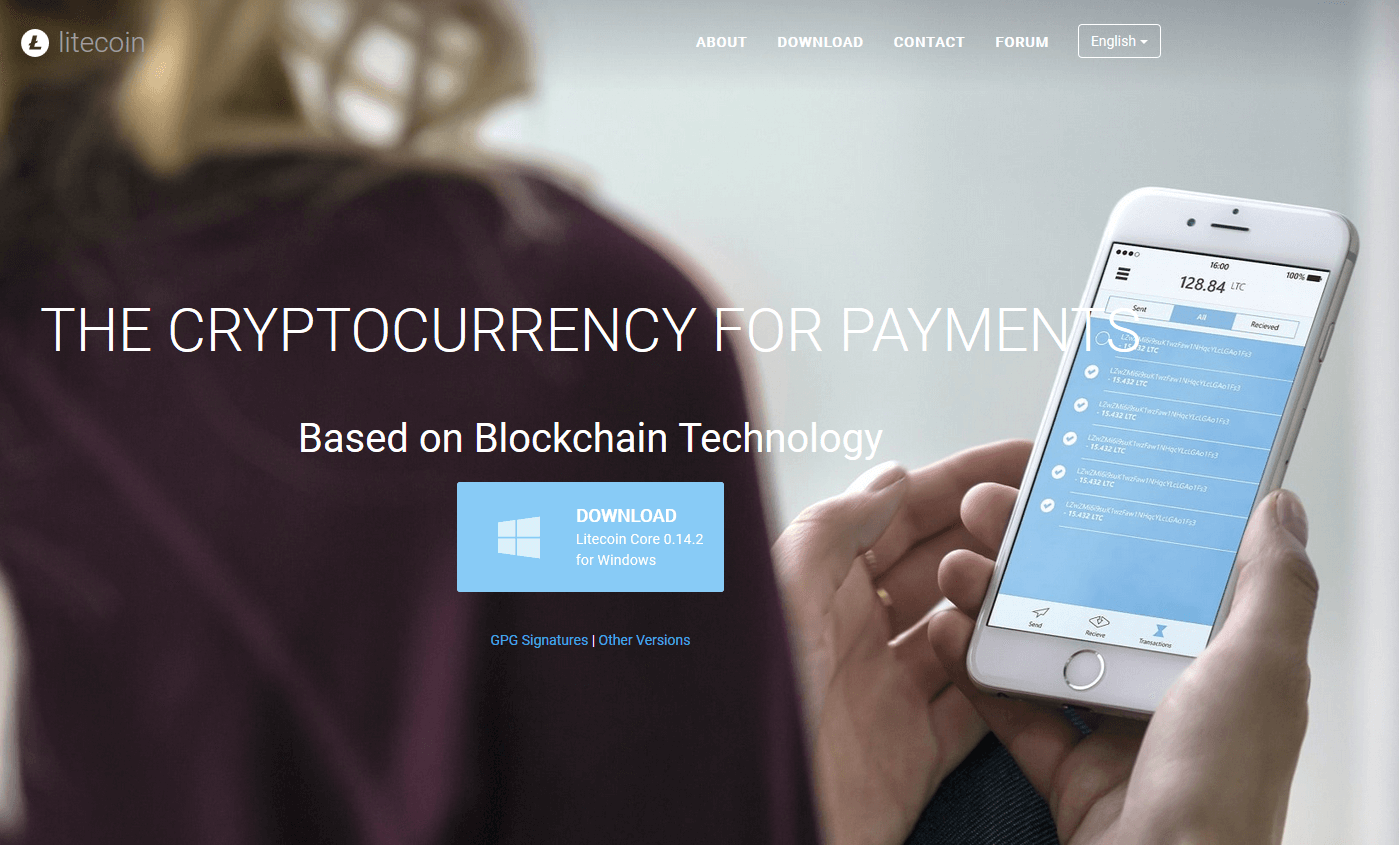
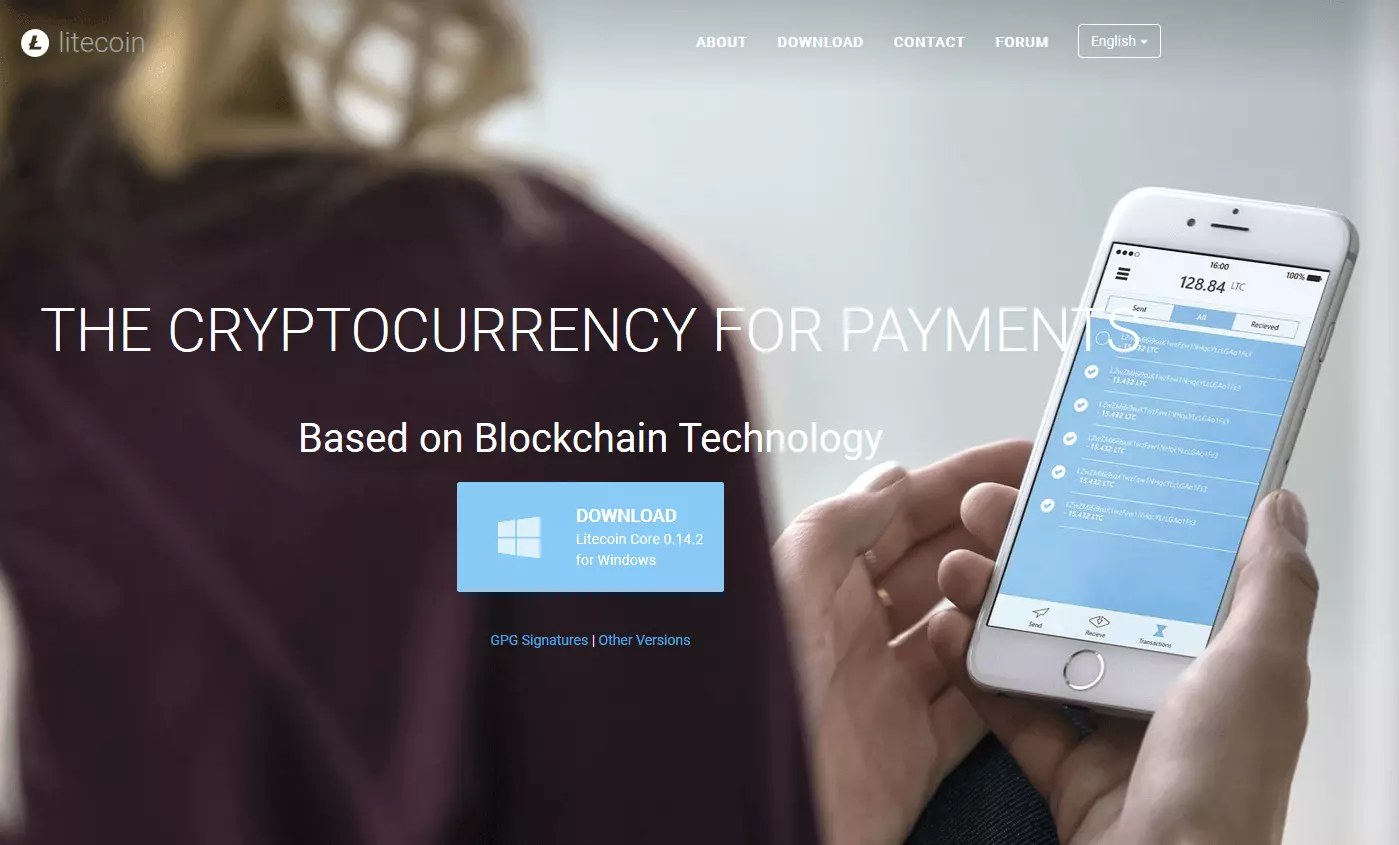
Litecoin has been developed as a fast alternative to Bitcoin. The altcoin, which has been around since 2011, is almost identical to Bitcoin from a technical perspective. However, there are two differences which justify its development and have made Litecoin one of the most successful cryptocurrencies: The first difference is that building blocks is much faster than with Bitcoin. Instead of 10 minutes for Bitcoin, Litecoin only needs 2 and a half minutes to generate a new block. This ensures that the system can confirm transactions faster, which then also reduces the transaction fees charged by miners.
The second distinguishing feature concerns the miners themselves: Bitcoin sets the encryption with the hash function SHA-256, while Litecoin uses Scrypt instead. This encryption technique used by Litecoin requires much more storage capacity and is therefore not easily accessible through ASICs. The aim behind it was that the mine could be organised in a more decentralised way, and that mining would not be taken over by a few individuals who can invest in large hardware solutions, which happens with Bitcoin. Instead, each user can mine using a standard PC. This plan was not entirely successful, as ASICs have been developed that handle Scrypt effectively.
An ASIC is a circuit that the manufacturer produces for a specific purpose. These are chips that are not designed to facilitate many functions (like in a PC), but instead are aimed towards very limited, specific tasks and can work much more effectively in one area. This makes them extremely popular for mining: cryptographic calculations can be done faster and with greater profit than off the shelf PCs. However, these chips tend to incur very high initial costs.
Miners are also rewarded with more Litecoins: Apart from transactions fees, which can be set in principal by any miner, you receive 25 Litecoins per block. This amount should be halved every four years. In the end, this will result in a fixed total like with other cryptocurrencies, and the system will be continually coming closer and closer to this total. A total of 84 million Litecoins will be created over the course of mining, which is exactly four times more than Bitcoin (who have 21 million coins).
| Advantages | Disadvantages |
|---|---|
| ✓ High transaction speed | Despite having been around for quite a while, there is relatively little interest in the currency |
| ✓ High market capitalisation |
Dash


Another Bitcoin alternative is Dash. Dash is also based on a peer-to-peer network, but unlike Bitcoin, it introduces some new features. The network is organised quite differently: the two-tier network is not just based on miners, but also on master nodes. These nodes, which are also organised decentrally, take over the network management and the fast, private transfer known as InstantSend and PrivateSend. When it comes to immediate value referral, it is important to understand it does not happen with Bitcoin and other alternatives.
The transfer itself is not the time-consuming element. What takes so long are the confirmations that it is a valid transfer, and not the so-called double-spending. To make these validations faster, Dash uses Masternodes, which requires users to pay a fee if they want to use InstaSend. PrivateSend also works on the second level of the network. Although it is emphasized time and time again that cryptocurrencies should be an anonymous form of payment, it is rarely the reality.
Double-spending is the process of transferring money that you have already spent. The general problem with electronic payment methods with no physical items being exchanged is that traditional systems are circumvented by checking transactions in a central location. Most cryptocurrencies organise this review remotely using blockchain.
The principle of blockchain is that the path taken by a digital coin is saved in the blocks of the chain. This means that everyone can see and understand the different payment channels. At Dash, Masternodes ensure that coins are randomly interchangeable, breaking the chains. Apart from these features, the Masternodes system is responsible for the development of the entire network. To guarantee Dash’s further development, there is a systemic account for subsidies – called Treasury. Equivalents to locations where miners are rewarded when creating a block on Bitcoin and its alternatives are Dash Miner (45%), Masternodes (45%), and Treasury (10%).
This means that the entire community bears the costs for further development. With other cryptocurrencies, developers rely on external donations, which can lead to decision makers becoming corrupt. The Masternodes also determine what should happen to the saved coins. Server owners need to own at least 1000 Dash to be able to trust the Masternodes. The aim of this is for the community to ensure that the respective decision makers always have the best in mind for Dash, as they too would be severely affected if the system collapses. If they have the necessary prerequisites, every participant in the Dash network can put a masternode on themselves.
| Advantages | Disadvantages |
|---|---|
| ✓ Decentralised organization | Low market capitalisation |
| ✓ InstantSpend | |
| ✓ PrivateSpend |
Monero
The focus of the Bitcoin alternative Monero (the Esperanto word for coin) is user anonymity. To achieve this, Monero uses a completely different protocol to Bitcoin and other cryptocurrencies: similarly to Litecoin using Scrypt, Monero tries to prevent the memory-intensive CryptoNight algorithm mining done by ASICs. Instead, regular PCs are used for mining. This, however, also has a disadvantage: there are also website scripts that use web surfing devices (PC, smartphones, or tablets) for mining. These devices provide computing power, usually without the users consent. Some site-runners use this method to fund their website, rather than using advertisements.
In principle, a new block should be generated every two minutes. The so-called mining difficulty is constantly being adjusted: the system continually regulates the difficulty of block building so that mining does not take place too quickly. The difficulty level can also decrease if there is too little computing power available on the network. Continually increasing the difficulty level also results in the reward increasing steadily. On the other hand, Bitcoin gradually changes the reward: it is halved every four years. Another difference with Monero, is that unlike Bitcoin and other alternatives, there is no plan to eventually cap the amount of Monero coins. Instead, the tail emission will begin at around 18.4 million coins. The network generates 0.3 Monero per minute.
This means that there is an incentive to keep mining. It also makes it possible to balance out destroyed coins: lost or forgotten passwords can make Bitcoins and other cryptocurrencies effectively unusable. The same goes for hardware errors that also cause coins to get lost without being backed up. The other big difference between Monero and Bitcoin is the high value that they place on anonymity. For maximum anonymity, Monero has three mechanisms built into the blockchain:
- Ring signatures: When making a transfer, the whole group signs the transaction, not just the corresponding sender. This means that it is less obvious to see who exactly was behind the transaction.
- Ring Confidential Transactions: RingCT helps prevent third parties from seeing the value of a transaction. The only thing users can see is that the transfer is correct.
- Stealth addresses: To ensure that the transaction recipient remains invisible, Monero uses so-called stealth addresses. Instead of an actual user address, you transfer to a unique address. The wallet then searches the system using a view key for any new transactions that are intended for the corresponding user.
However, the privacy Monero offers comes at a price. The additional information within the blockchain creates a large amount of data. This can result in download issues, especially if you want to use Monero with a mobile device. To ensure anonymity, it is also only possible to load a portion of the blockchain being offered by Bitcoin.
| Advantages | Disadvatages |
|---|---|
| ✓ Anonymity | ✗ Large amount of data |
| ✓ Better mining distribution | ✗ Misuse of web mining |
An overview of the best Bitcoin alternatives
Providers and developers of different altcoins try to capitalise off the success of Bitcoin. Each alternative system offers different functions and mechanisms to carve out their niche in the market.
| Cryptocurrency | Abbreviation | Publishing year | Algorithm | Maximum coins | Mining | Decentral | Special Aspect |
|---|---|---|---|---|---|---|---|
| Ethereum | ETH | 2013 | Ethash | ca. 100 million | ✓ | ✓ | Blockchain is used for more than just currency |
| Bitcoin Cash | BCH | 2017 | SHA-256 | 21 million | ✓ | ✓ | Higher transaction speeds than the original |
| IOTA | MIOTA | 2016 | Tangle | ca. 2.78 billion | ✗ | ✓ | Optimised for the Internet of Things |
| Ripple | XRP | 2012 | RPCA | 100 billion | ✗ | ✗ | Transaction network for banking sector |
| Litecoin | LTC | 2011 | scrypt | 84 million | ✓ | ✓ | Better distribution of mining |
| Dash | DASH | 2014 | X11 | 18.9 million | ✓ | ✓ | Two-Tier-Netzwerk / Dezentrale OrganisationTwo tier network/decentrally organised |
| Monero | XMR | 2014 | CryptoNight | ✗ | ✓ | ✓ | Promises a high level of anonymity |
Altcoins with other purposes
In addition to these successful Bitcoin alternatives, other cryptocurrencies that originated from a different, sometimes bizarre idea are also very popular in the market:
- Einsteinium: The Einstinium Foundation uses blockchain to invest in education. A foundation fund and crowdfunding support for research projects.
- Mannabase: Manna’s goal is to create an unconditional basic income over blockchain. The non-profit association behind this altcoin wants to use the currency to fight corruption and the global prosperity gap, as well as find a solution to unemployment through automation.
- TrumpCoin: A cryptocurrency designed to benefit the 45th president. The digital coin had a short break at the beginning of his term, but soon returned to zero value.
- PutinCoin: If the US president has one, then of course his Russian counterpoint needs one too. This one, at least, has had slightly better results.
- PotCoin: There are also internet currencies designed only to be used on a very limited scale. PotCoin users only use the currencies to buy marijuana.
- PepeCash: A Bitcoin alternative based on a meme. The currency is about as serious as the little frog’s face.
Neither Bitcoin nor its’ numerous alternatives have yet managed to establish themselves as a currency suitable for everyday use. However, that is not necessarily a bad sign – especially since no cryptocurrency has ever served that purpose. Their current value, as well as that of the original, is a result of daring speculation: some investors have already managed to make a large profit with Bitcoin. However, their fear is that Bitcoin’s value is just a bubble that can burst at any time.
However, even without the financial incentive, the applied techniques and procedures of the numerous cryptocurrencies are interesting for future developments. Blockchain can already be used in a wide range of applications, and the idea of smart contracts will definitely find additional uses in the future. At least from a technical perspective, developing alternatives to Bitcoin proves to be a meaningful endeavor.