

Marketing basics: what is display marketing?

From banner ads to pop ups: display advertising is unavoidable, and every internet user, whether using a desktop or mobile device, encounters it on a daily basis. As the original means for online advertising, display ads have undergone a drastic transformation in recent years. Thanks to real-time auctioning, retargeting strategies, and the arrival of other new techniques, this traditional form of advertising is still an integral part of a robust marketing mix. Find out more about the basics of display marketing, the latest trends that are driving the industry, and the growing resistance against ad blockers.
Display marketing: definition
The term display advertising encompasses all marketing techniques that involve graphic elements within the advertisements. These include video and animation as well as more traditional media, like banners and images.
The most important players in display marketing are advertisers and publishers. Advertisers seek to promote their companies, products, or services, while publishers offer up their resources (ad space) in exchange for money. Different advertising forms are booked via a display network on third-party websites. These ads are then displayed according to the terms and conditions that were agreed upon by both buyer and seller prior to the purchase. But before this step can be carried out, a thorough target group analysis needs to be done in order to make sure that the ads are displayed in the proper environment.
Goals of display marketing
The goal of most advertisers is to provoke a reaction from their viewers. Online, users most often end up reaching the advertiser’s site or a specific landing page by first clicking on some sort of advertising material. Additionally, a well-positioned ad can help influence a company’s overall reputation. This is where we really see striking differences between display advertising and SEA and SEO strategies. While search engine marketing mostly revolves around texts, display marketing deals primarily with images. The visual character of ads both individualise and strengthen the image of companies and their brands.
Forms of display marketing
There’s much more to display advertising than just your good-old-fashioned banner ad. In addition to methods like banners and buttons, graphical elements, like text, image, or video content can also be used. There’s a difference between display ads and mobile ads, with the latter format being used for mobile devices. Here’s an overview of some typical advertising forms used in display marketing:
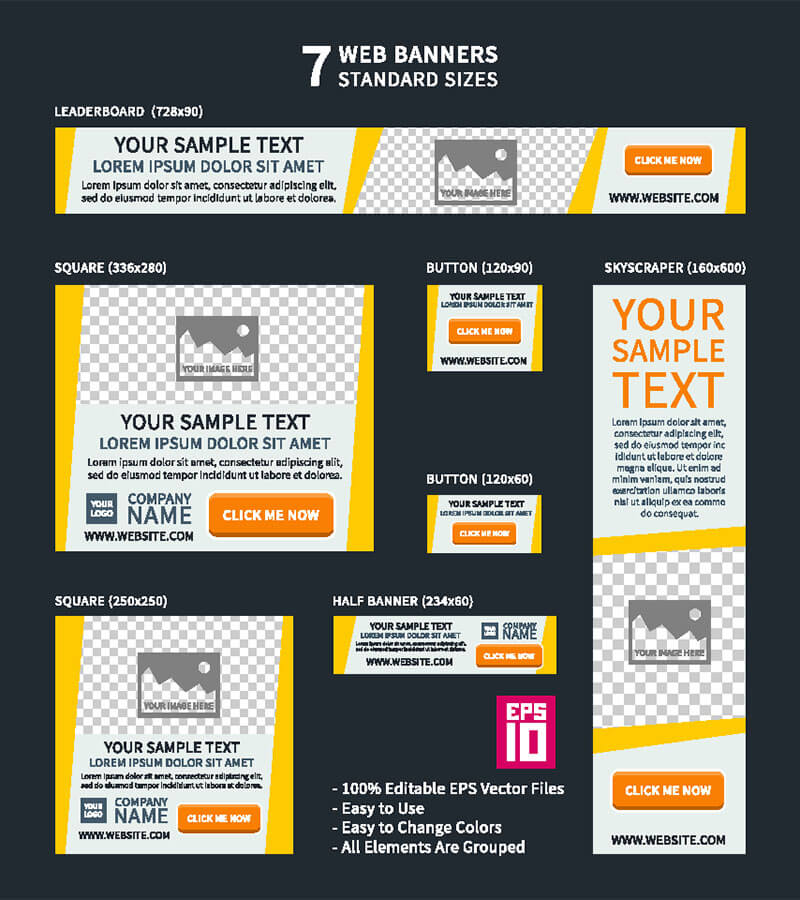
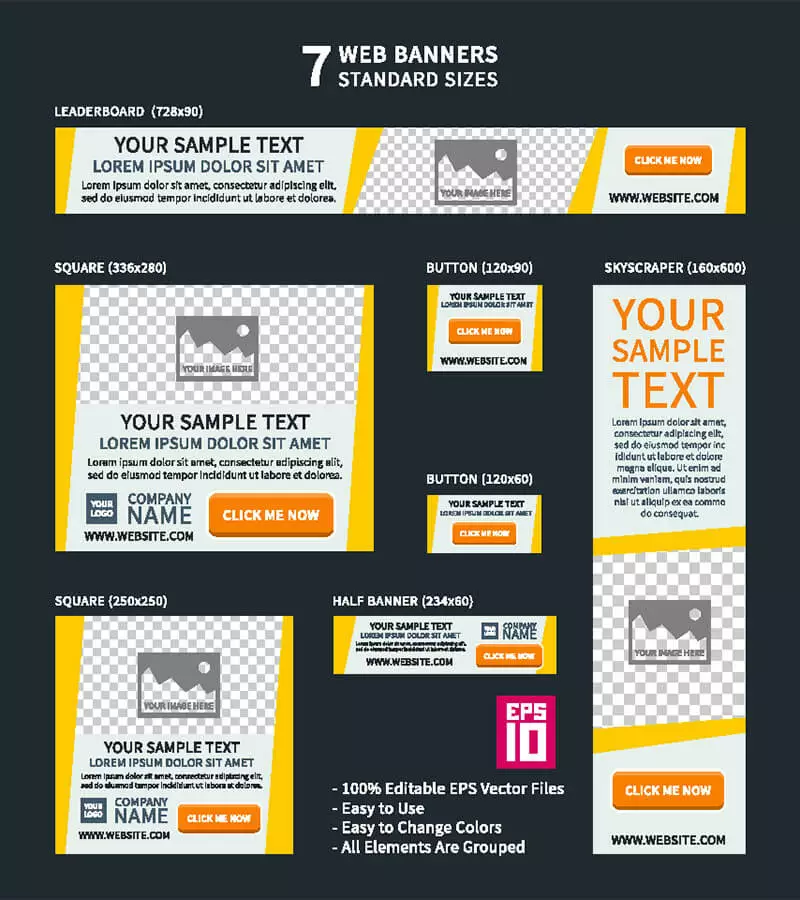
- Banner: the sizes of banner ads can vary, and they can feature static, animated, or interactive designs. An overview of different types of banner ads can be found here.
- Pop-up: advertising screens that ‘pop up’ when a user carries out a specific action, like scrolling over a certain word. This method relies on JavaScript.
- Pop under: works the same way pop up ads do, but appears after a website has been closed.
- Layer ads: unlike pop ups, which open a separate window, layer ads cover a site’s entire content.
- Content ads: these are banner ads that are embedded directly into the content of a page.
But this is only a small sample of the different types of display ads, as display marketing offers an extensive arsenal of different formats that vary from one another in more ways than just an ad’s form, size, and position. Depending on which advertising strategies a company pursues, interactive advertising, storytelling marketing, or cross-media marketing can also play significant roles.
Billing models for display advertising
The principles behind display marketing function in a similar way to those of the print advertising sector: advertisers book advertising space and the publisher then runs an ad there. The billing process used for display advertising is more exact; here, different parameters are involved. If calculated according to the performance marketing model, then the CPM (cost per mile) is used. In theory, the advertiser pays in units of 100 individuals who’ve been exposed to their ads. Recently, success-based billing models have become more common; these only require advertisers to pay when users click on an ad or finalise a purchase or contract (CPS).
Typical billing models for display advertising are:
- CPM = cost per mile
- CPC = cost per click
- CPL = cost per lead
- CPS = cost per sale
Challenges of display marketing
Launched over 20 years ago, the first banner ads had CTRs (click through rates) of 44%. No doubt many advertisers long for these golden days, as today’s average CTR is only a measly 0.1%–meaning that out of 1,000 users, only one person will end up clicking the display ad. The main reason for this is that users have become desensitised. Some marketers refer to this phenomenon as banner blindness. Advertisements, especially poorly designed ones, are immediately negatively perceived by viewers, and this is especially true for pop-ups.
The rise of ad blockers has put a further dent into the visibility of run-of-the-mill banner ads, which has made display marketing an increasingly difficult practice. But instead of prophesising an end to display advertising, experts are beginning to observe a change in the quality and efficiency of advertising.
Native advertising and video ads
One particularly important fad that’s trending nowadays is native advertising. Embedded in editorial content, the current direction of online advertising is one that increasingly seeks to appear credible while still remaining discrete to viewers. Mobile advertising in particular has been quick to adopt this strategy. This is due to the constraints that the smaller smartphone screens put on the visibility of traditional banner advertisements. User behaviour for mobile devices also doesn’t lend itself as well to banner ads as traditional desktop search patterns. This is where native advertising can be a viable solution.
A further shimmer of hope for display marketing is the use of videos as marketing instruments. The boom in video advertising seems to be maintaining its course, and in-stream video ads have proven to be particularly promising. The latter feature functions by running ads before or after the desired content is played.
In terms of quantity, automated advertising markets seem to be especially lucrative sources of growth. A recent flood of ads, and hence an increase in supply, has driven down prices and resulted in more and more websites being bombarded with ads. Programmatic advertising and real-time advertising are key to more efficient campaigns. Higher advertising costs are compensated for through better quality, less scatter loss, and increased visibility.