

How to create a “About me” page (with Examples)

Freelancers, solo entrepreneurs, and creative people often have a hard time writing the ‘About me’ section for their website. But it’s worth investing some time in creating an ‘About me’ page that works - with the right words you can win the sympathies of your readers and even gain customers. But don’t despair! Creating an ‘About me’ page for your website isn’t rocket science. Keep reading to find out how to structure your text and take a look at some ‘About me’ page examples.
- Free website protection with SSL Wildcard included
- Free private registration for greater privacy
- Free Domain Connect for easy DNS setup
Strengthening your website with an ‘About me’ page
Despite its name, your ‘About me’ page is not the place to go into your CV and qualifications. In fact, the page isn’t so much about you as it is about your customers.
Build trust
Who we buy from and do business with - these decisions are never made based on facts alone. Emotions always play a part. That’s why ‘About me’ texts are so important. They give visitors a chance to get an impression of you as a person:
- What is your professional background?
- Why did you decide to start your own business?
- What are your values?
Offer a mix of facts and personal perspective, so that visitors to your website have the chance to find out what you have in common and develop positive feelings towards you and your business. Some users will naturally have chemistry with you, others might be put off. And that’s how it should be! That way you can filter out potentially difficult customers without having directly invested any time in them.
Convey competence
Show who you are as a person on the ‘About me’ page on your website, but also make sure that you devote enough space to your qualifications, distinctions, and references. Many solo freelancers shy away from advertising their achievements. But this isn’t the place for modesty.
It may be true that people who constantly emphasise their successes can come across as arrogant and less likeable to those around them. But an ‘About me’ page gives your customers orientation: You help them to recognise what sets you apart from the competition and what kind of quality they can expect from you.
A successful ‘About me’ page lowers the barrier for visitors to contact you. In the best case, your text will be that extra little push that a customer needs to hire you or buy from you. Usually the effect is indirect: A customer won’t make a purchase right away, but will subscribe to your newsletter, sign up for a free consultation, or follow you on social media.
‘About me’ page examples
So how do you construct a text that conveys your competence and builds trust? There is no one-size-fits-all formula. If you take a look around at other freelancers’ websites, you’ll see texts of different lengths, tones, and structures. Let your individual personality shine! And luckily, you don’t need to reinvent the wheel. Let’s take a look at three successful ‘About me’ examples.
If you’re looking for tips on creating an ‘About us’ page for a company with several employees or for a larger team, take a look at our guide for ‘About us’ pages.
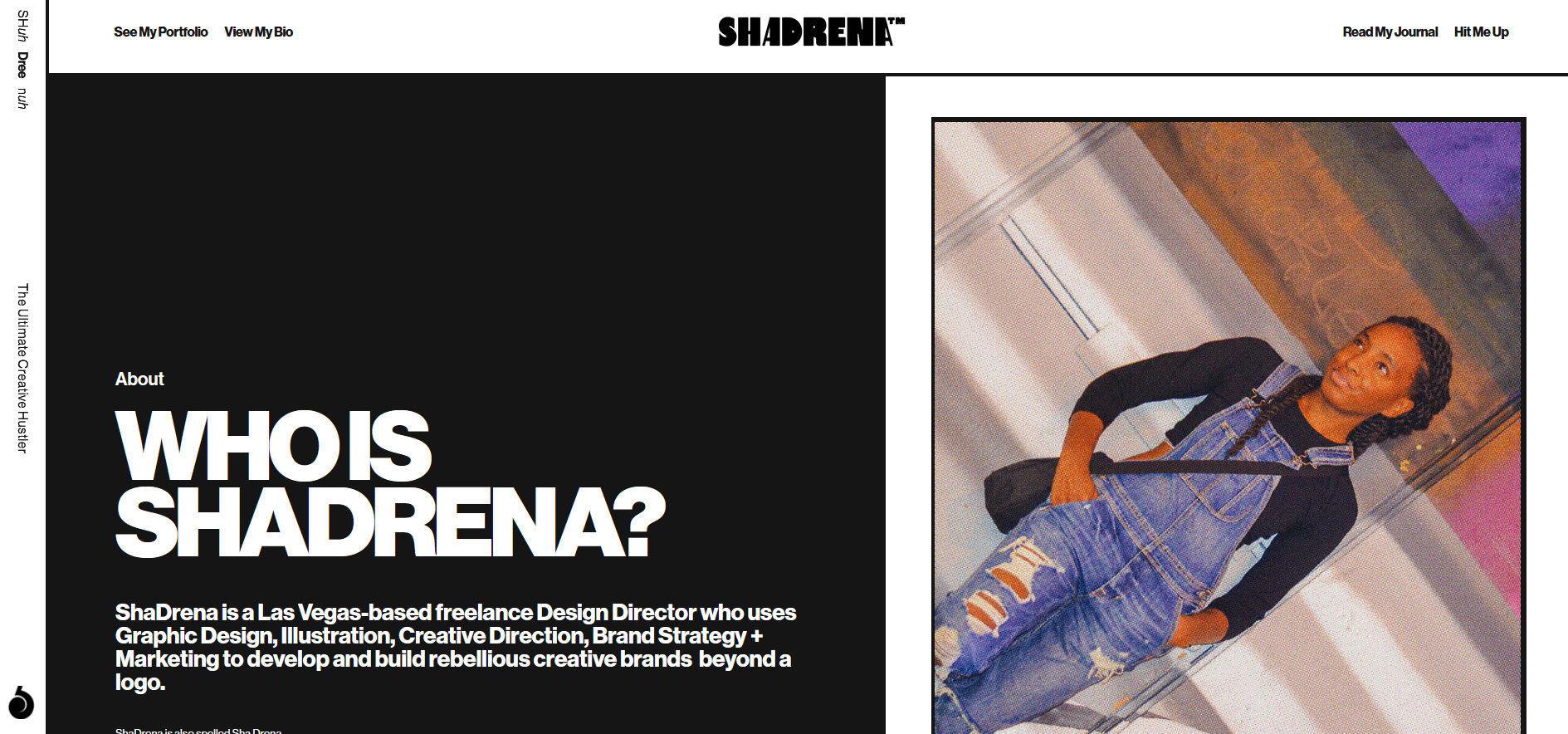
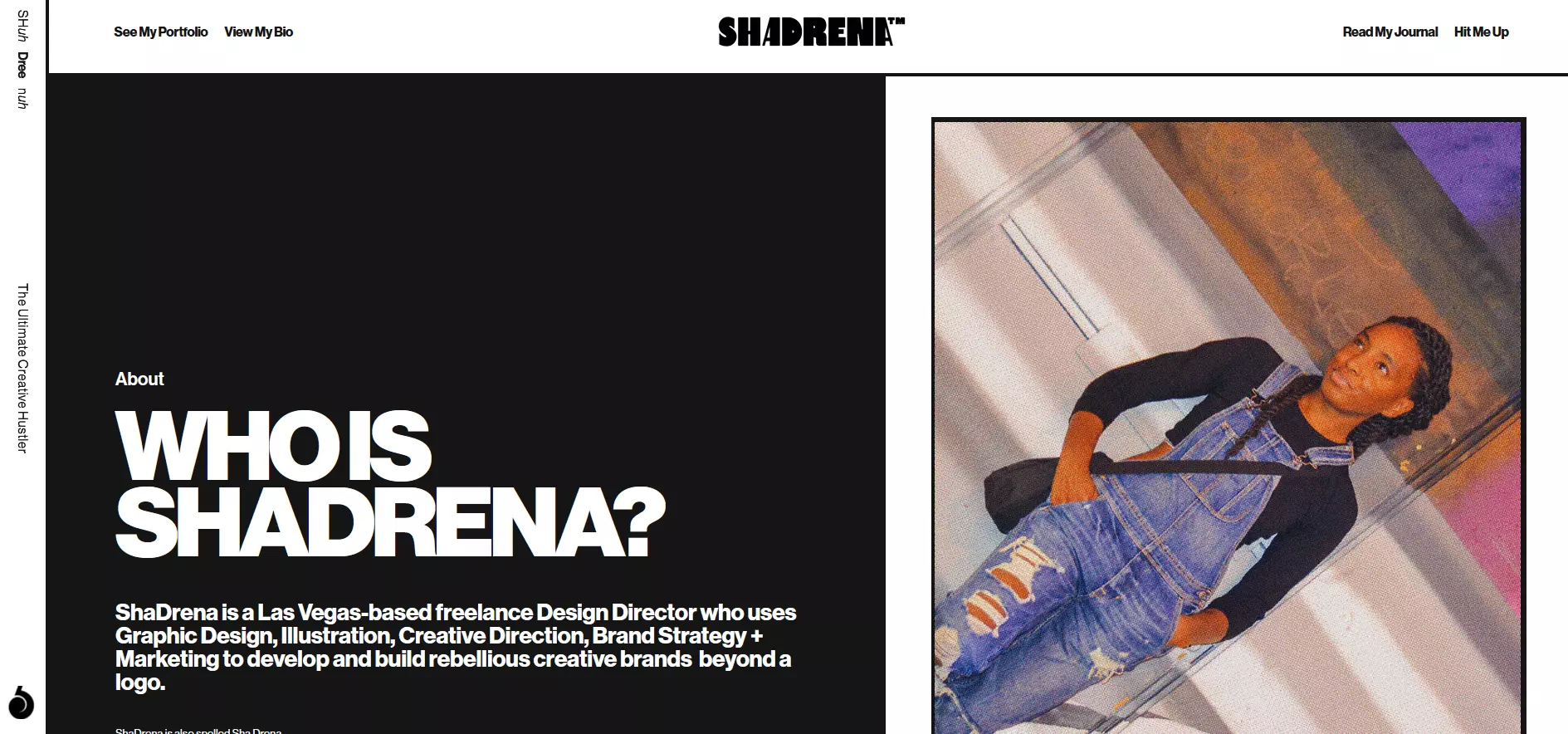
‘About me’ example 1: ShaDrena Simon, designer
In her ‘About me’ page, ShaDrena Simon not only describes who she is and what she does but also mentions her current projects and the new skills she’s working on. She creatively weaves in personal and professional elements in a ‘Random Facts’ section at the bottom of the page.
‘About me’ example 2: Kelsey O’Halloran, copywriter
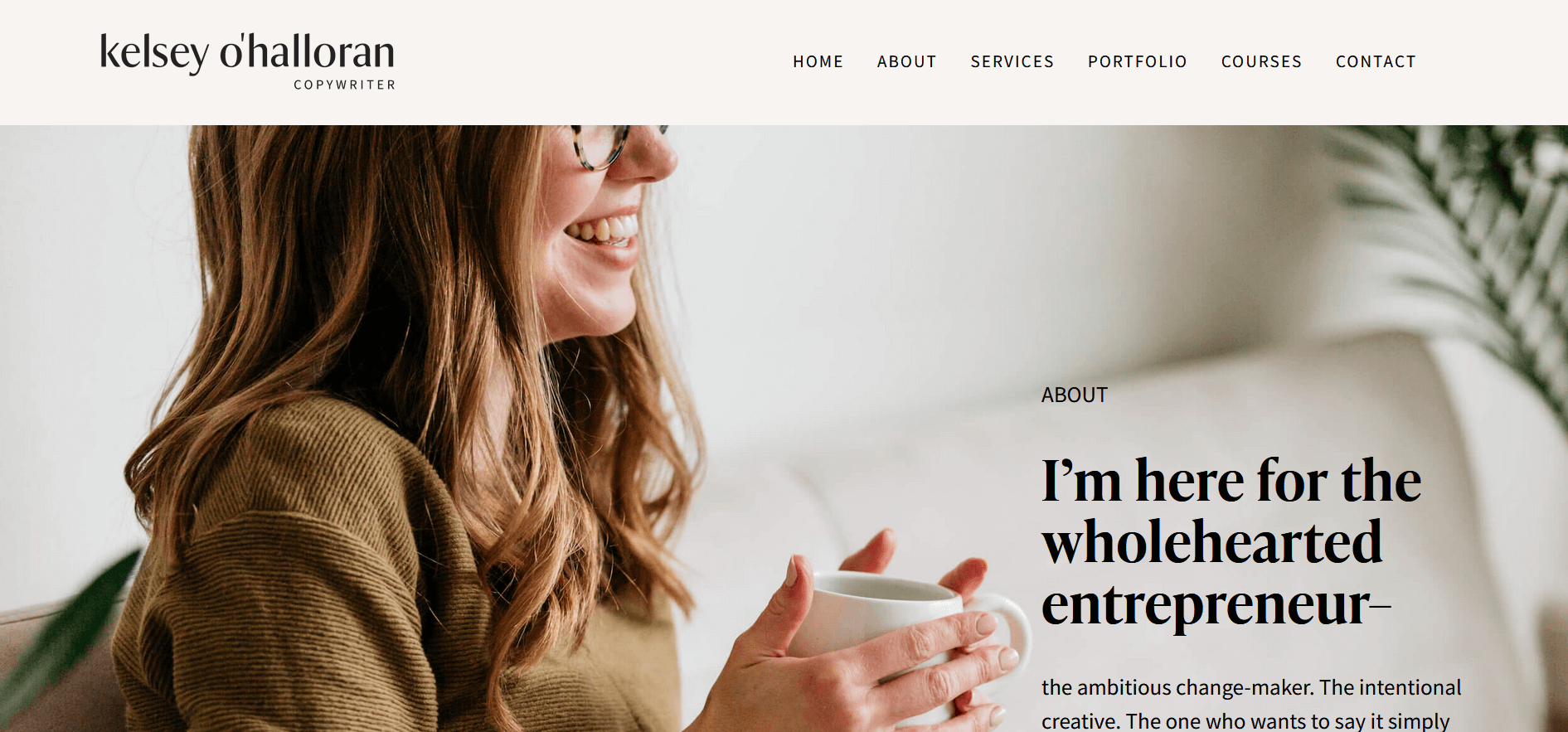
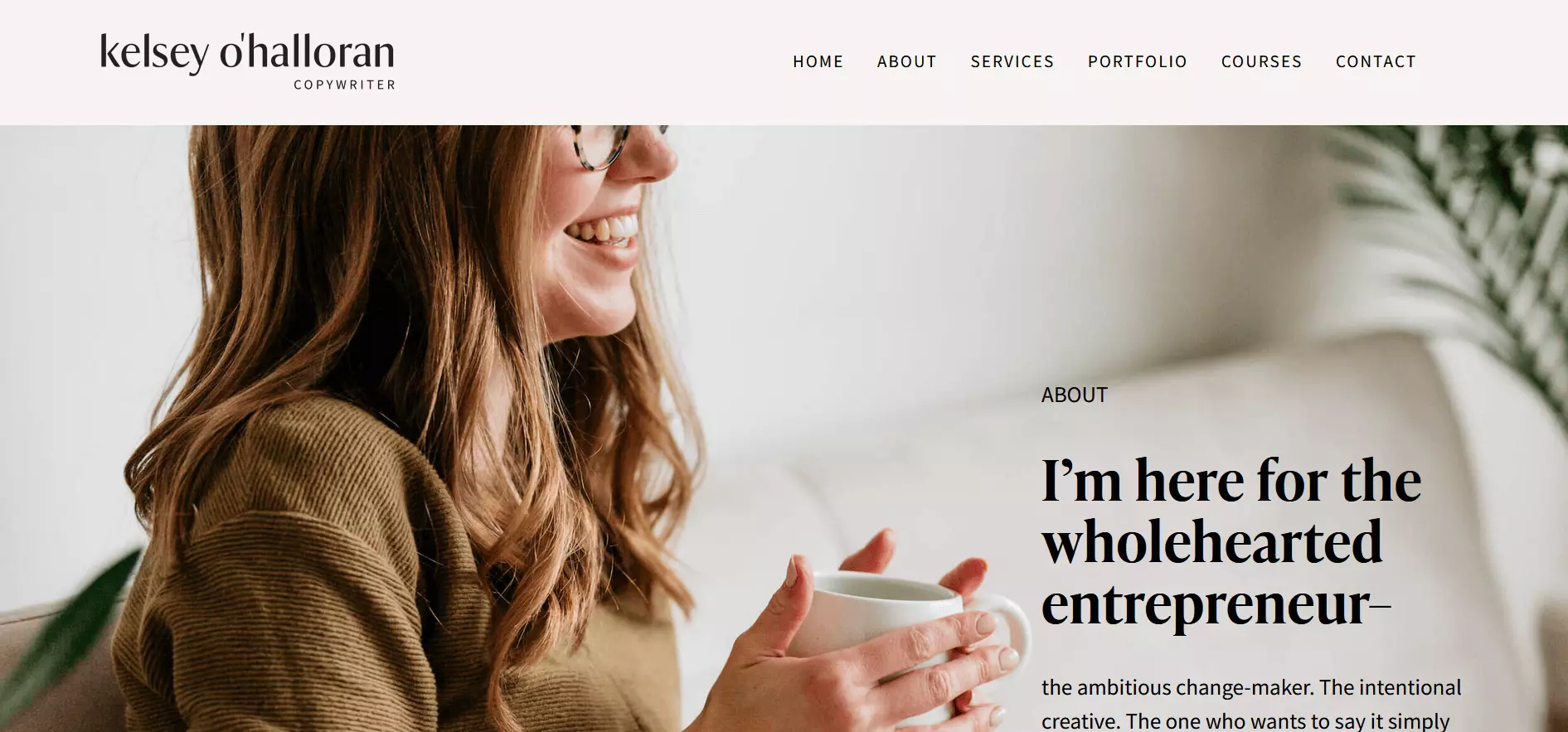
Kelsey O’Halloran starts her ‘“About me’” page by putting the customer at the centreer, defining her target group, and saying ‘“I’m here for you’.” She then goes on to introduce herself with a personal touch and show her customers why they want her service. Note that she includes buttons to other parts of her website, so that potential clients have the chance to jump straight from the ‘“About me’” page to her services or to book a consultation.
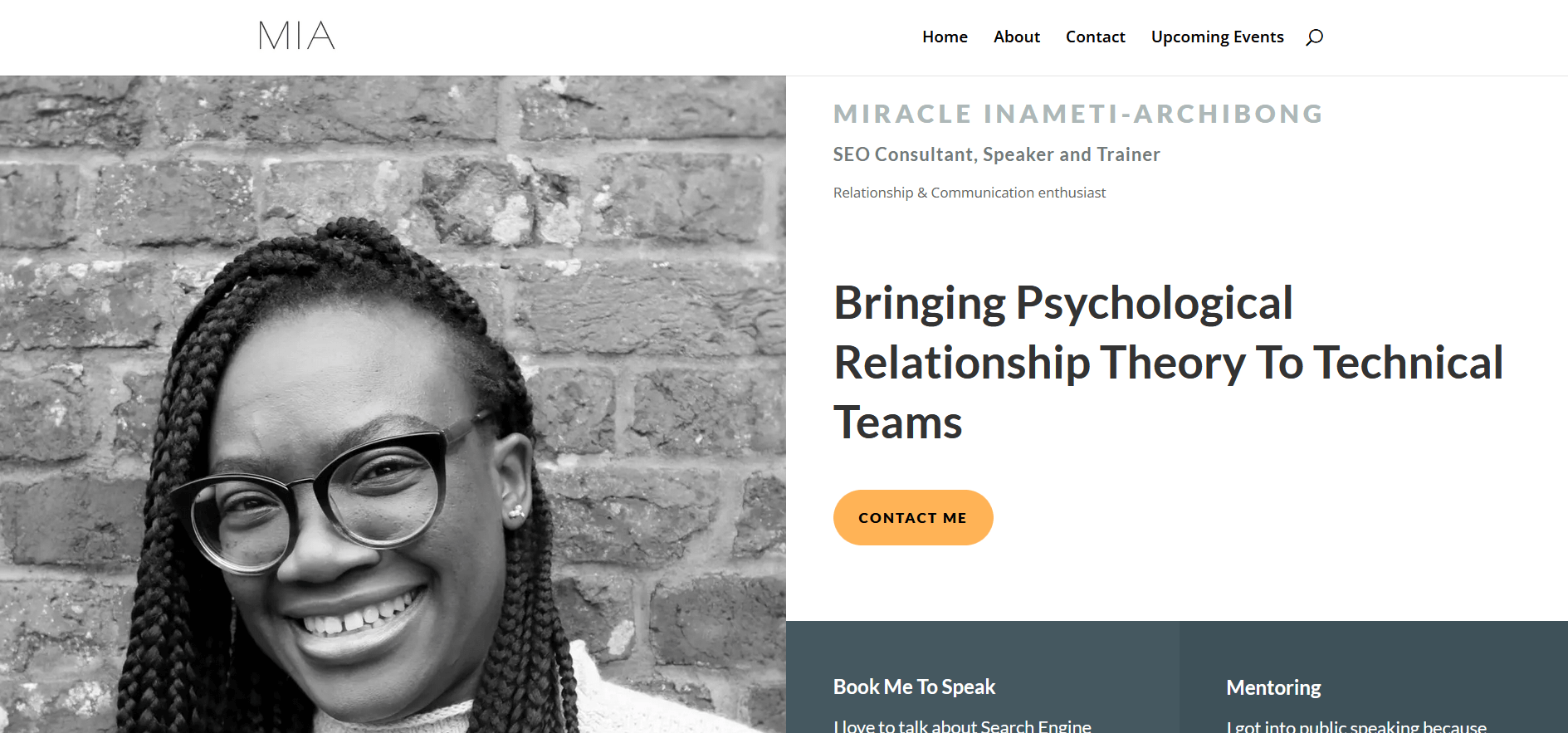
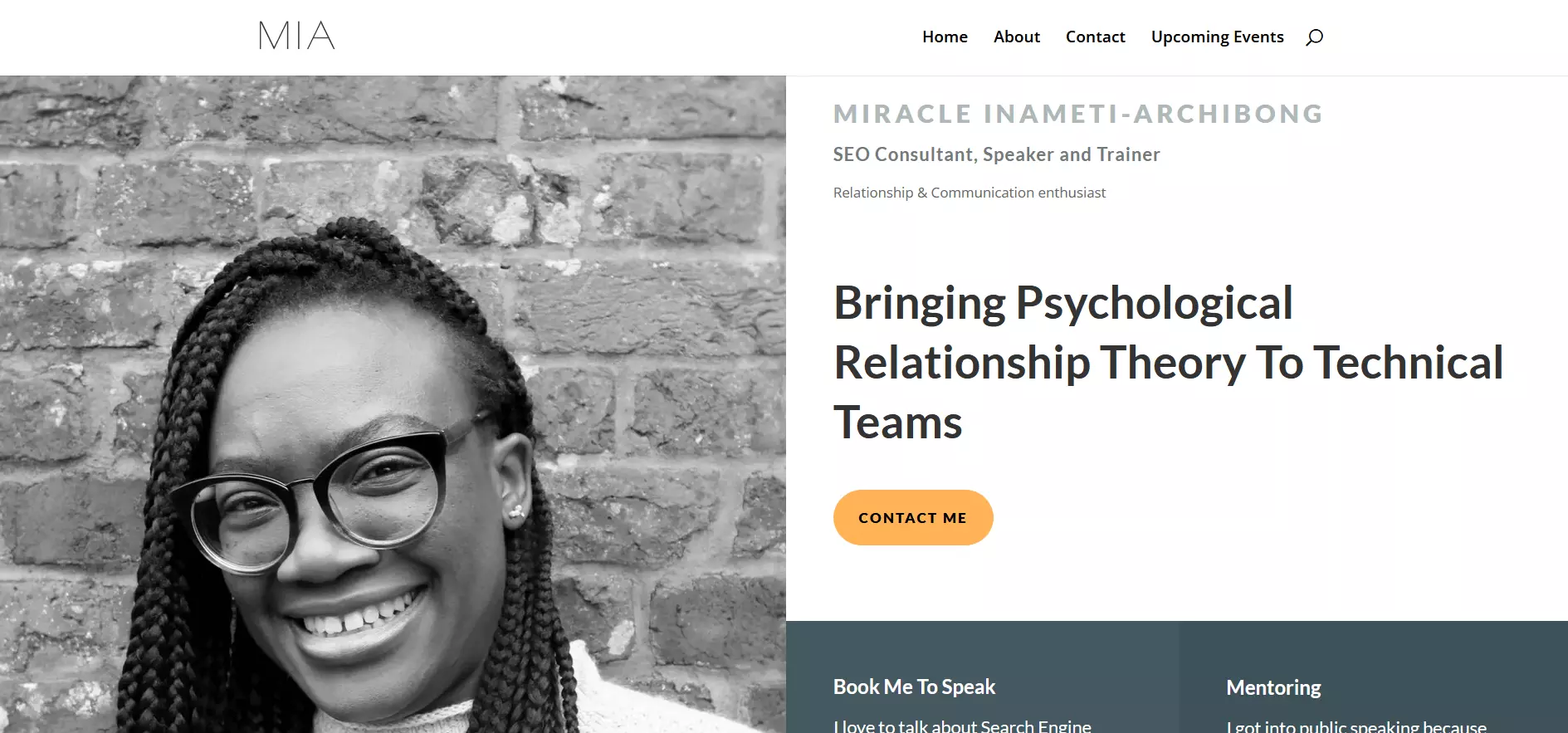
‘About me’ example 3: Miracle Inameti-Archibong, SEO consultant, speaker, and trainer
Miracle Inameti-Archibong provides a great example of an ‘“About me’” page on a one-page website. Opposite her bio, she includes testimonials from past clients to build trust with readers.
Type your keywords into a search engine to find ‘About me’ page examples from your branch. (For example, if you’re a designer based in New York, type in ‘designer New York’.) You’ll quickly get a feel for where you want to take inspiration from your competitors and what you want to do differently.
You’re looking for some support in creating your website? Look no further than the IONOS website builder. Choose a template, adjust the design, upload your content, and in just a few minutes you’re ready to go.
Creating an ‘About me’ page: The most important elements
Imagine this: You’ve set up your website with WordPress, formulated the page with your services, and dotted your Is and crossed your Ts with a privacy policy. All that’s left is your ‘About me’ page. If you’re having trouble getting started, take a look at our four key questions and ‘About me’ examples. If you answer them one-by-one, your ‘About me’ page will basically write itself.
Question 1: Who am I and what can I do for my customers?
If someone’s found their way to your website, it’s safe to assume they’re looking for a solution or have a need. Potential customers aren’t interested in your life story, unless it shows them how you’re just the right person to solve their problem or satisfy their need.
Start your ‘About me’ page with a sentence that summarises who you are and what problem you solve.
I am a (job title) and help (target group for your services) with (your services), so that you (goal of your customer).
‘About me’ example:
‘I’m an accountant and help creative solo entrepreneurs get their taxes done in a fraction of the time it normally takes, so that they have more time for their own projects and have more fun working independently’.
Then go on to explain your offer in more detail. How do you bring about the result you describe? For the ‘About me’ example case above, you could briefly describe how your tax services works. Just be sure not to go into too much detail here - it’s better to keep it short and include a link to your ‘Services’ page.
It’s important that you explain what you offer in clear and easily understandable language. Flowery phrasings and lengthy anecdotes are counterproductive. You can save these stylistic devices for later, but first give visitors to your site the chance to figure out if they’re in the right place.
Get the user curious about your services in just a few sentences by putting your solution and its advantages for the customer at the centre of what you’re saying.
Question 2: What sets my services apart?
At this point, you’ve clearly formulated what services you offer but it’s still not clear what distinguishes you from your competition.
Use the next paragraph to describe what makes your services unique. What is special about your service? What specialisations can you offer? You can also discuss your values and your way of working as unique selling points.
‘About me’ example:
‘The lengthy response times that you’re used to with other accountants don’t have any place with me. I’m always just a phone call or email away. I answer all emails within 24 hours.’
At this point, you can also weave in your business vision. Talk about how you want to contribute to a wider society with your business or project:
‘About me’ example:
‘With my accounting service, I want to help make sure that creatives aren’t scared of taxes and bureaucracy and that even more people have the courage to implement their business ideas.’
Question 3: Why can customers trust that you can help them?
In the best case, your reader will now be curious about what you have to offer. They’ve gotten a first glimpse of you as a person and of what’s unique about your service. Now they want to know if they can believe all your promises or if you’re making promises you can’t keep.
In this paragraph of your ‘About me’ page, your competence will come into the foreground. Talk about your training and experience and emphasise your authority and credibility.
Examples of trust builders for your ‘About me’ page:
- Certificates from training programs
- Awards
- Seals of membership in professional associations
- Widgets for review platforms
- Press coverage
- Statistics about your work
- Quotes from your customers/testimonials
- Project references
That being said, don’t overload your ‘About me’ page with examples of your success - opt instead for a few strong selections. Quotes from customers are especially effective as social proof. Ask satisfied customers for a short statement about how they have benefited from working with you and what they liked the most. Testimonials from customers provide visitors with more psychological security than a diploma alone would.
Question 4: Why do I do what I do? What is my story?
Now your customers have an overview of what you offer and have built initial trust that you’ll deliver on your promises. Some customers are already ready to make a purchase or get in contact with you. Others still need more background information. Fulfil this need by telling a bit from your personal story.
What drives you? Why do you care about your job? How did you end up starting your current business/project? You can go all the way back to your training or education. Just be sure not to relay your entire CV; mention only the steps along the way that are relevant for what you currently do.
Bring out your personality here, even more so than in the other paragraphs. Write in your style, in your words, and use storytelling to draw visitors into your story.
What do customers have to do next if they want to use your service?
Even the best storytelling is in vain if your reader is moved but doesn’t initiate contact with you. That’s why you should finish up your ‘About me’ page with a call to action. Tell the user to contact you and make it easy for them to do so.
Limit yourself to one single call to action. If you offer too many options, you risk that the user won’t pursue any of them.
Important: Don’t just include this call to action at the end of the page; place it between each of the sections of your ‘About me’ page. Not every visitor will read the entire page and some will want to book an appointment after reading just a paragraph or two. It’s thus a good idea to include an opt-in formula or ‘Contact’ button in the text.
What else to watch out for
Make sure that you separate your text into different paragraphs, even within a section. More and more users read websites on their smartphones. More than four or five sentences at once will turn into a sea of text on a smartphone, and you’ll lose users to the tides.
Mark important parts of the text in bold, so that anyone just skimming your site can still get the most important information.
Integrate at least one current, professional photo of yourself. Depending on the length of your ‘About me’ text, you can add additional photos to the page. Consider whether you want to embed a video on the page, in which you summarise its contents. That way you can make an even more personal impression using voice and gestures.
The ‘About me’ page should be linked to in the main menu. Choose a clear title for the page, such as ‘About me’, ‘About’ or your name. Under no circumstances should you hide the page in the fine print or in the footer.
Summary: The customer is king even on your ‘About me’ page
Every freelancer and solo entrepreneur has what it takes to create an ‘About me’ page that motivates readers to get in contact. All you have to do is make a connection between your story and services and the interests of your customers.
If it’s proving difficult to start with a blank page, you can take a look at ‘About me’ page examples from other businesses. Alternatively, the four questions listed in this article provide step-by-step guidance:
- Who am I and what can I do for my customers?
- What makes my services special?
- Why can customers trust that I can help them?
- Why do I do what I do? What is my story?
If you write the ‘About me’ text for your website with these questions in mind, you’ll convey all the most important information and show enough of your personality. That way, visitors can easily make a decision about whether they want to work with you. If all goes well, that means more inquiries and more sales.
And if you don’t see an increase in contact from customers, you can always adapt your text.
Do you want to start a company but don't know what to name it? Get inspiration from the free IONOS Business Name Generator and find ideas for your concept in just a few clicks.