

Attribution models

Well thought-through multichannel marketing is often the basis for success in online business. Online shops must find the ideal mix in order to have a chance against the competition in e-commerce. Each channel has its own power. During the customer journey, there are often many different contact points where advertisements are displayed so the customer can become more familiar with the product or brand. A marketing strategy that is based on a tailor-made attribution model should therefore be particularly promising.
Attribution models are an online marketing instrument that makes it possible to derive both forecasts and recommendations for future marketing measures from previous results. The principle of attribution follows the approach of assigning conversions or sales to certain channels of the entire conversion/sales process in order to determine their concrete value for marketing.
The right attribution model should help to allocate marketing budgets as best as possible as well as increase the Return on Investment (ROI). How this works exactly and how the different models differ from each other is explained in this article.
What is an attribution model?
Most companies rely on a colourful marketing mix of email marketing, SEA (search engine advertising), SEO (search engine optimisation), affiliate links, and social media. The focus is on the target group and the budget is divided accordingly. It is clear that, as a marketer, you want to get as much out of every channel as possible - attribution modelling aims to make this easier. In addition to the customer journey as an overall picture, attribution models can also be used to record and analyse the various contact points (“touchpoints”) where the customer meets the brand. In the best-case scenario, the attribution models can provide information about which touchpoints were decisive for the purchase decision and what share of the turnover the individual measures had.
The touchpoints of a customer journey differ from brand to brand, and from campaign to campaign. The following example shows a customer journey with social media marketing, retargeting display advertising and SEO/AdWords (SEA) contact points:
A user ...
- is made aware of a product by a sponsored post on a social network,
- then gets shown an ad due to retargeting,
- then searches Google for information on the manufacturer and product,
- is then taken to the shop after clicking on an organic hit or an advertisement, where they finally buy a product and become a customer. (Conversion).
What types of attribution models are there?
Different values are assigned to different contact points depending on the attribution model. The models help to determine which channels are the most important and therefore which need to be prioritised.
A monetary value is assigned to each channel depending on its share in results. The weighting then determines how the marketing budget should be distributed. Below are some attribution models from common marketing practice:
First-click attribution
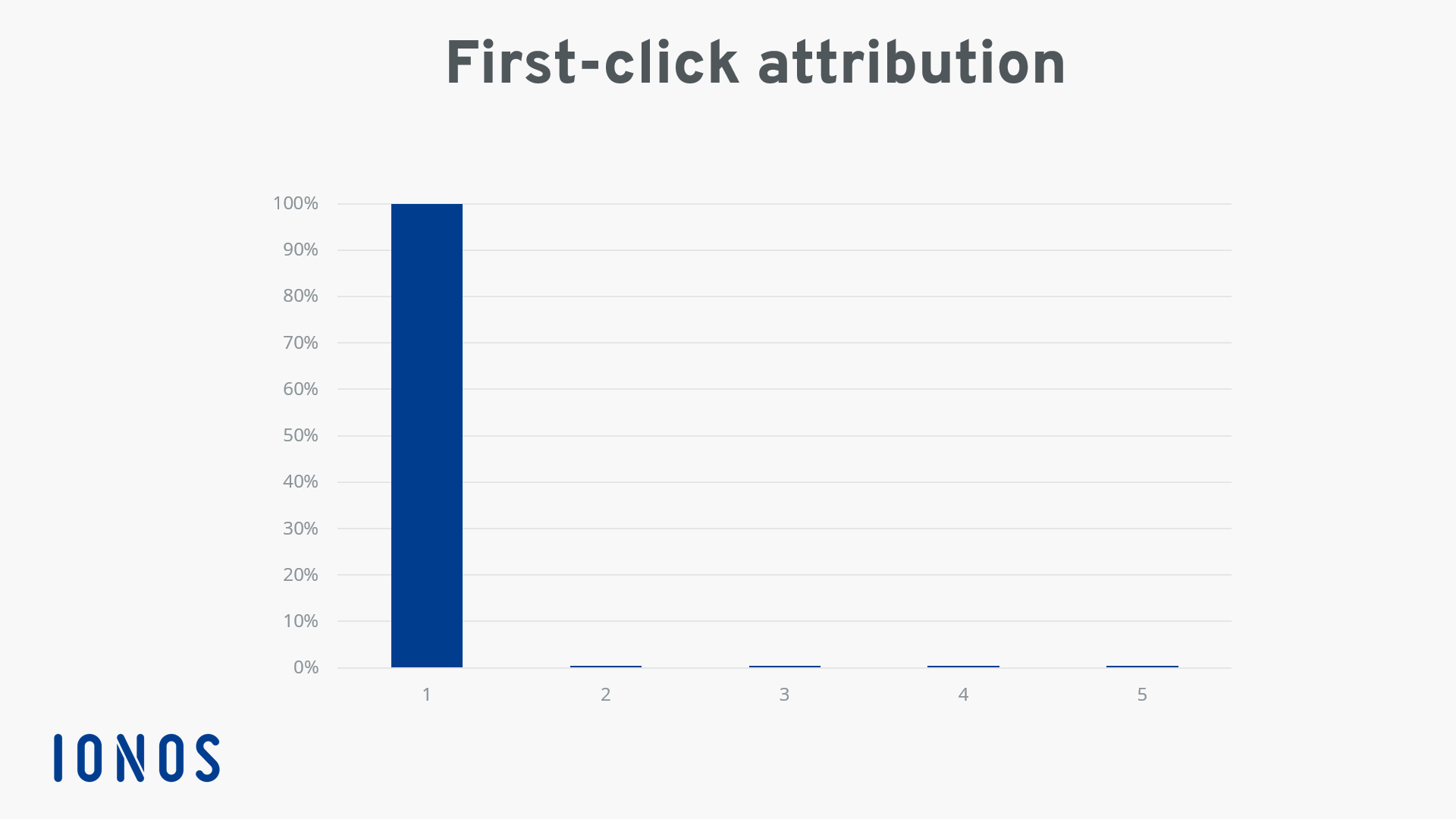
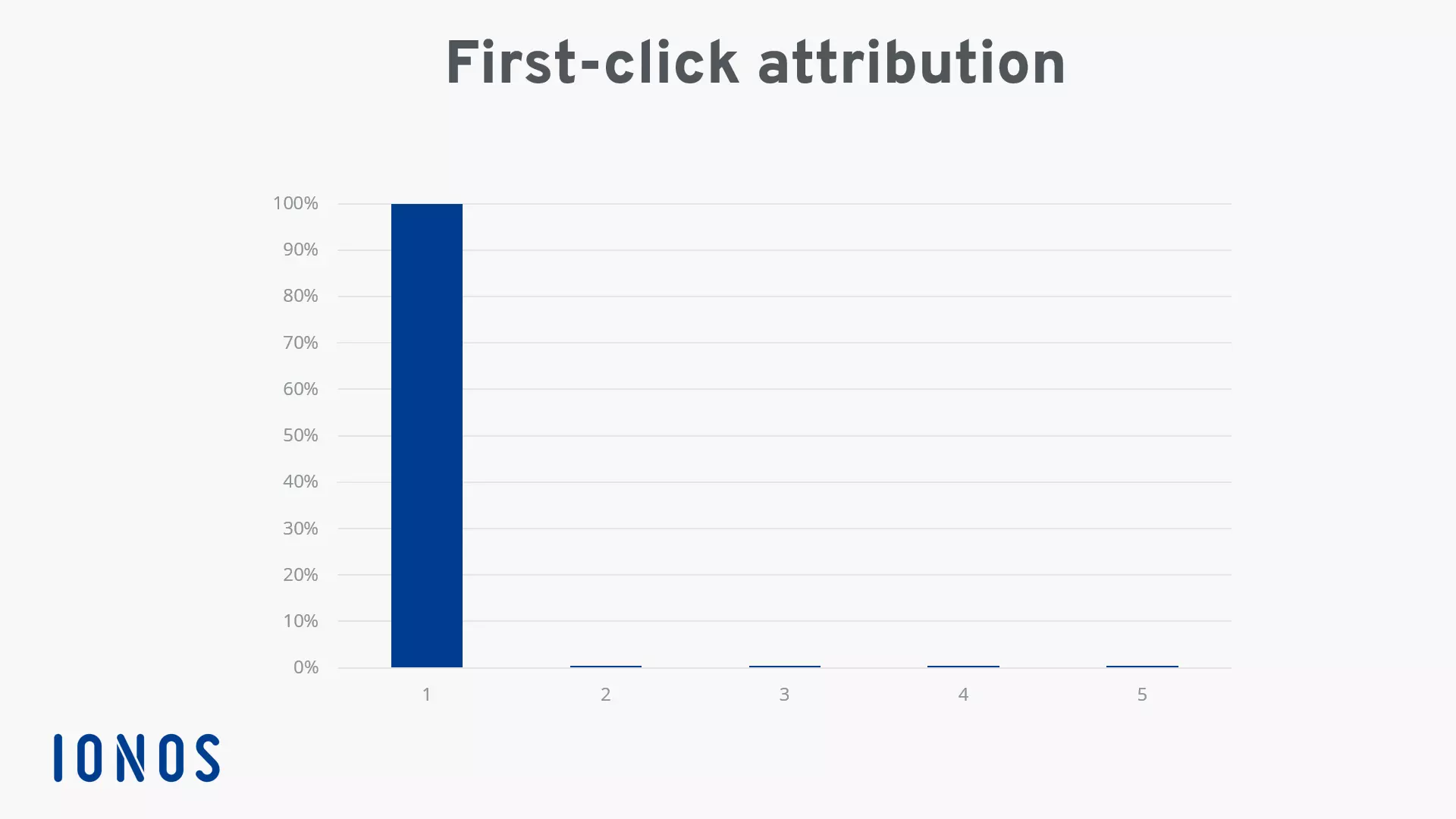
With this classic attribution model, 100 percent of the conversion value is assigned to the first click or channel that the customer has interacted with.
Pro: Best suited for campaigns that aim to increase the popularity of a brand or product
Contra: Offers little scope for optimisation and little insight into the impact on conversions and revenue; disregards all other channels and advertising means
Last-click attribution
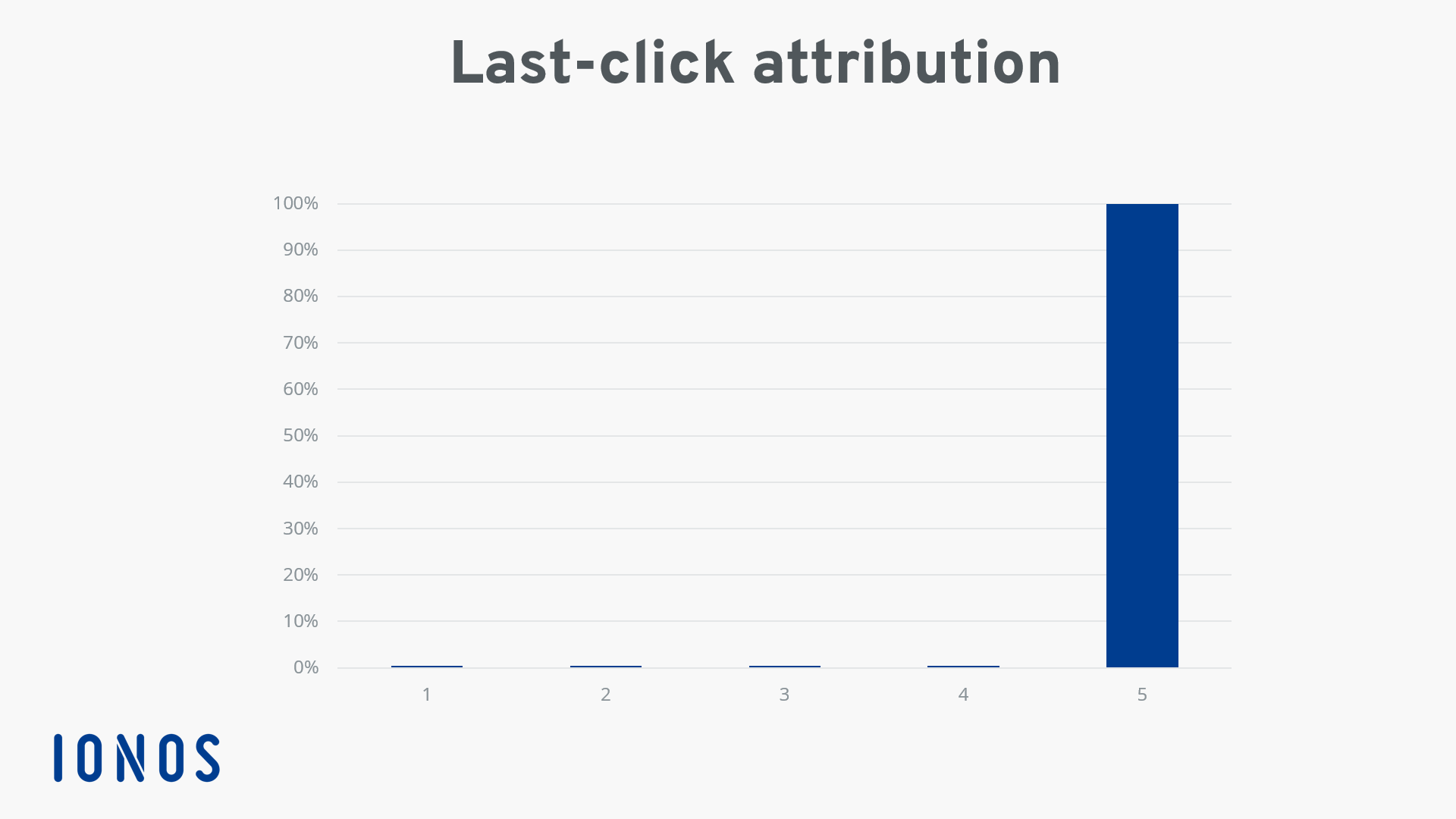
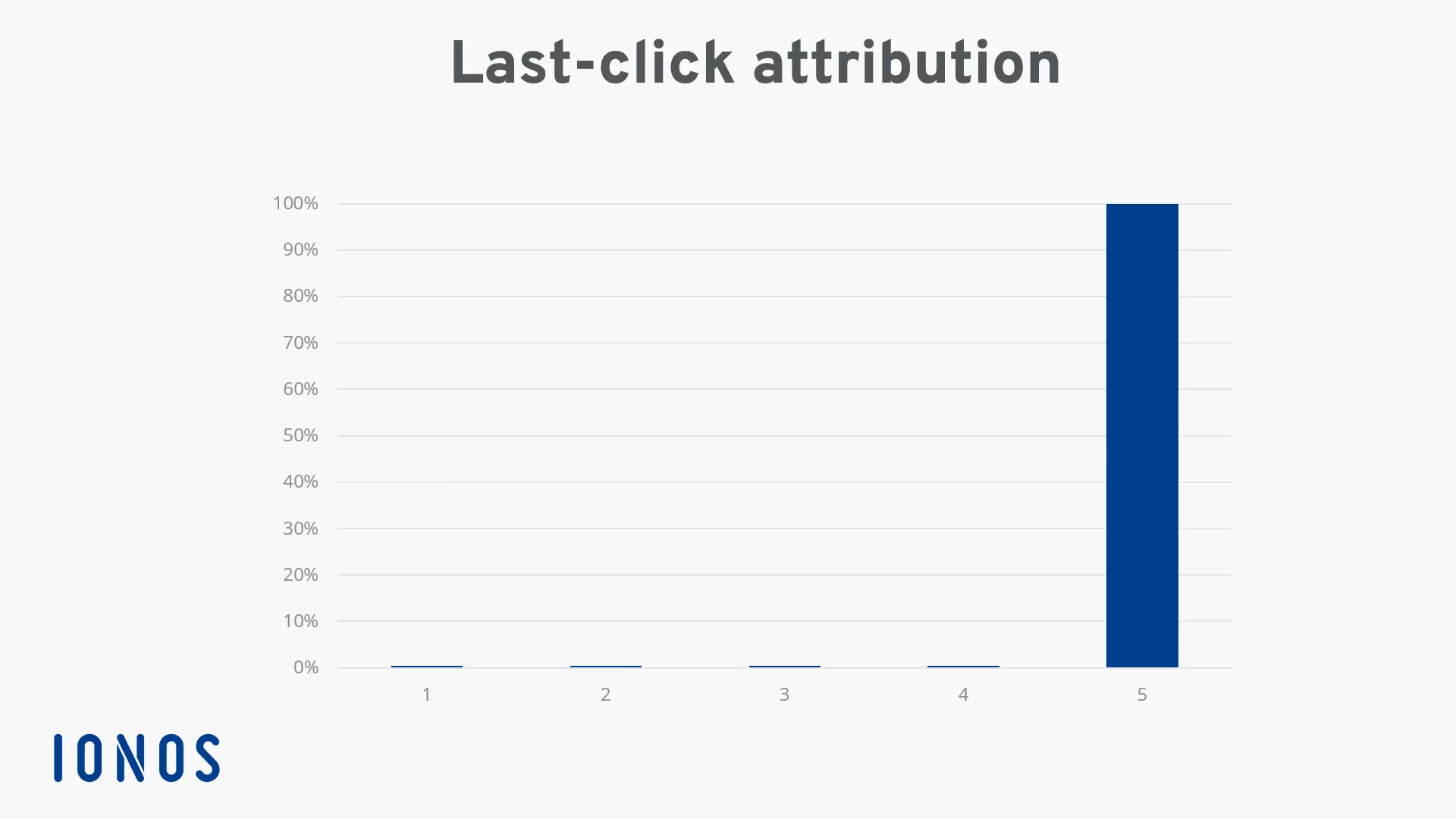
The last click or channel is the most important contact point and is assigned 100 percent of the total conversion value.
- Pro: Useful tool for marketers who are only interested in conversions and therefore do not need to take non-converting actions into account
- Contra: Doesn’t consider whether other channels and advertising means have played a role in the customer journey before the conversion
Linear attribution
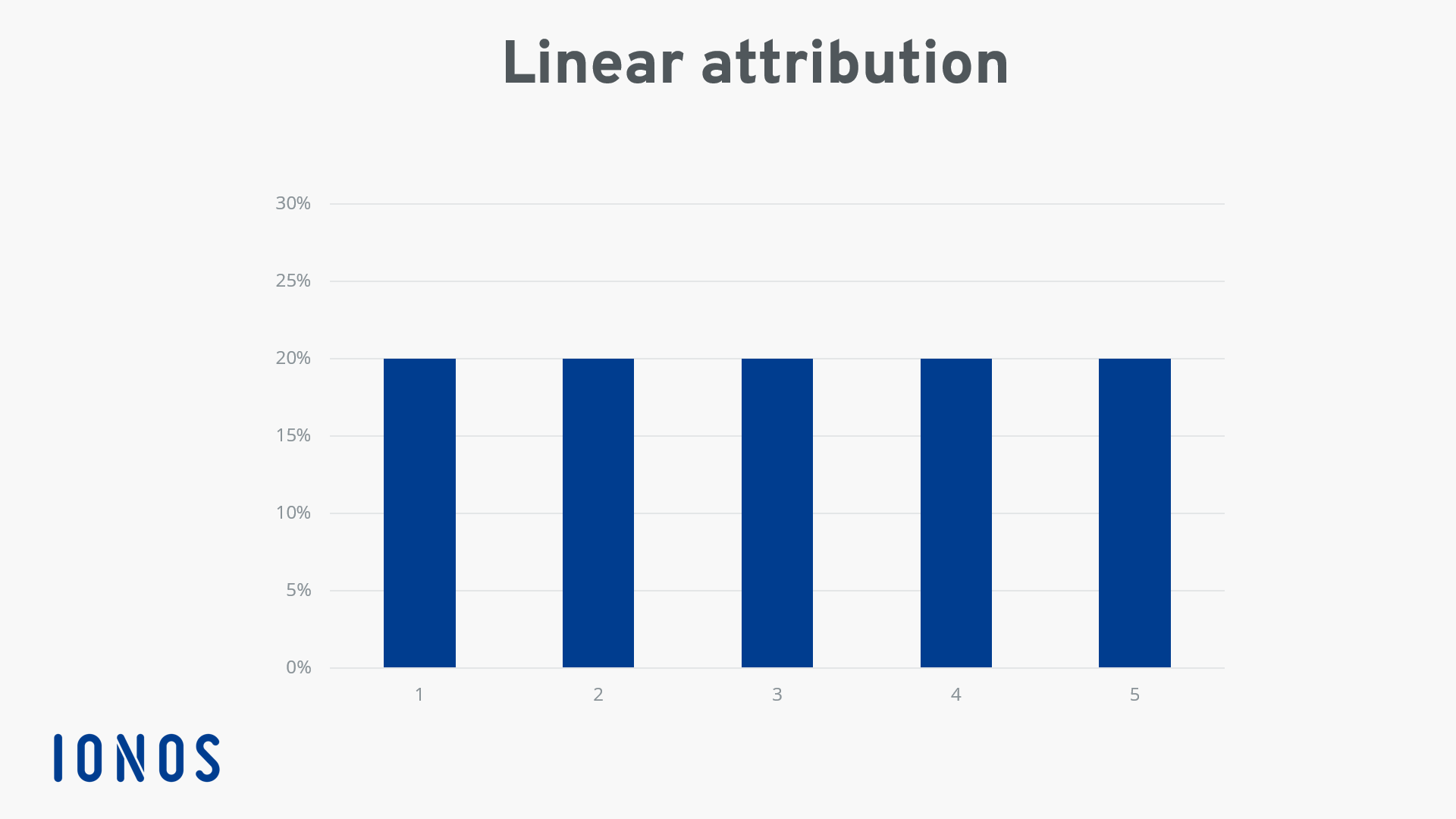
With the linear attribution model, the proportion of conversion and turnover is assigned equally to all channels of the customer journey.
- Pro: The easiest way to analyse marketing campaigns with a multichannel approach; ideal for optimising the entire customer journey
- Contra: All touchpoints are assigned the same value, even if their share in the conversion varies greatly. There is hardly any opportunity to optimise specific areas in a targeted manner
Time decay attribution
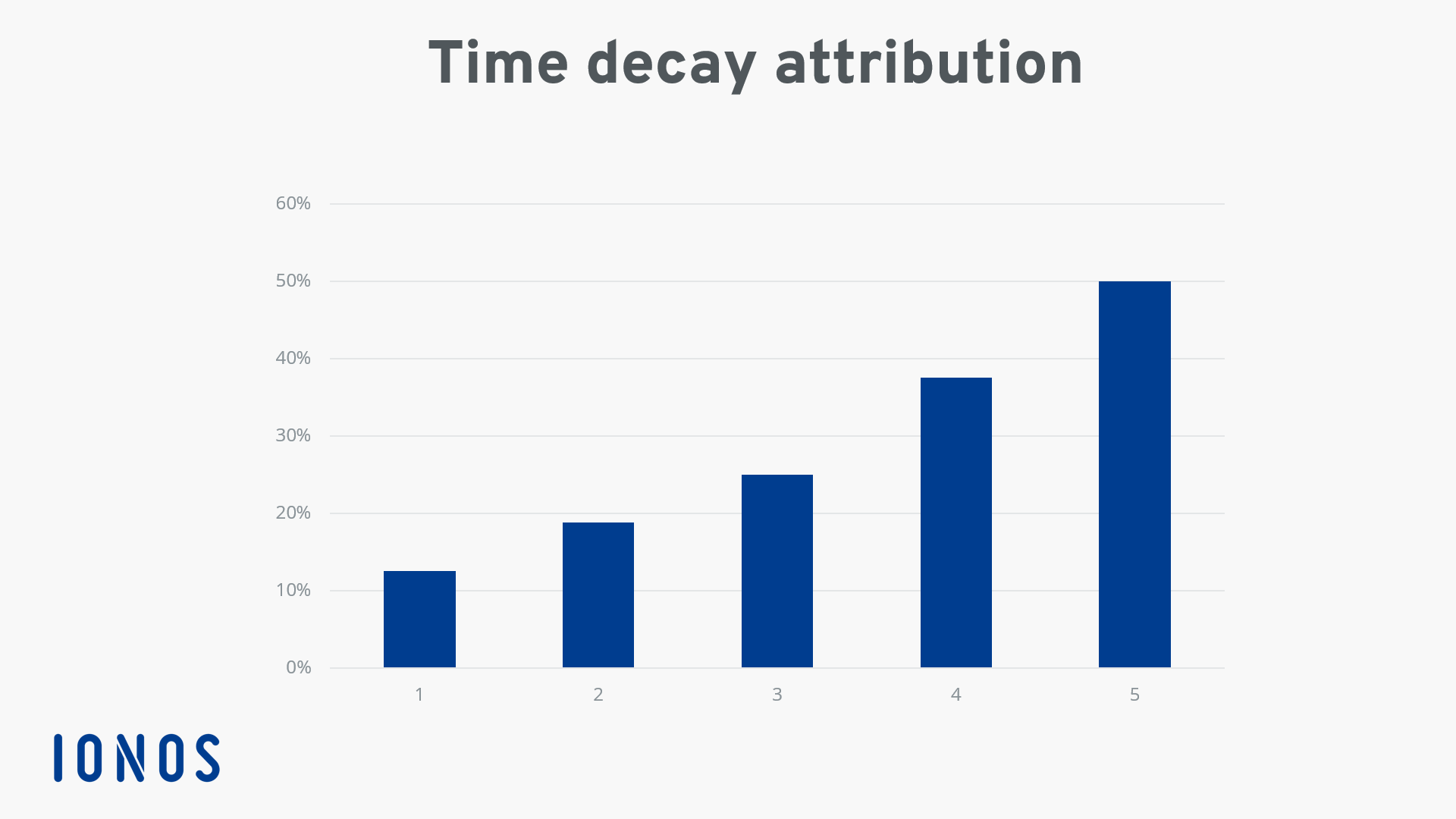
In the time decay model, which is based on the concept of exponential growth, the time determines the value of the channel. The closer a channel or a contact point is to the time of conversion, the higher its monetary share is. The half-life typically measures seven days - a touchpoint seven days before the conversion therefore receives half the value that a touchpoint receives on the day of the conversion itself.
- Pro: Captures the importance of each interaction on the customer journey, but gives greater weight to the touchpoints that actually contributed to the conversion
- Contra: Too strongly tailored to conversion optimisation; influential touchpoints at the beginning of the customer journey receive very little attention if the sales cycle includes a long decision phase
Position-based attribution
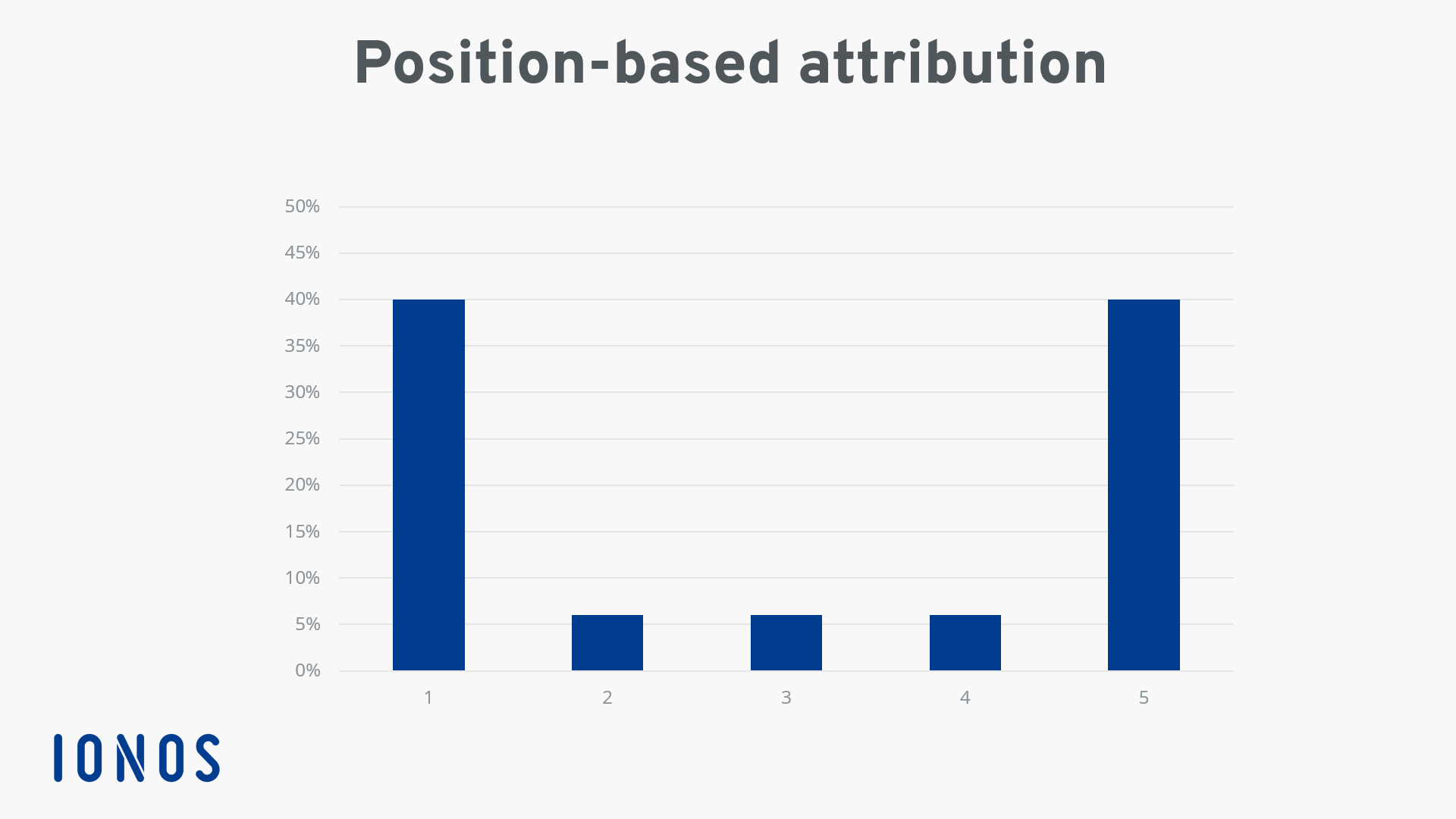
This attribution model is a mixture of first and last-click attribution and is often referred to as the bathtub model or u-shaped model. Here, the first and last contact points are rated higher than the others. Both the beginning and the end of the purchase process are attributed fixed monetary shares (40 percent each by default). The stages in between share the rest of the conversion value.
- Pro: Ensures that all touchpoints are taken into account, but focuses on optimising the first and last interaction; weighting can be individually adjusted
- Contra: There is a risk that two very low-value touch points could be rated too highly
Data-driven attribution
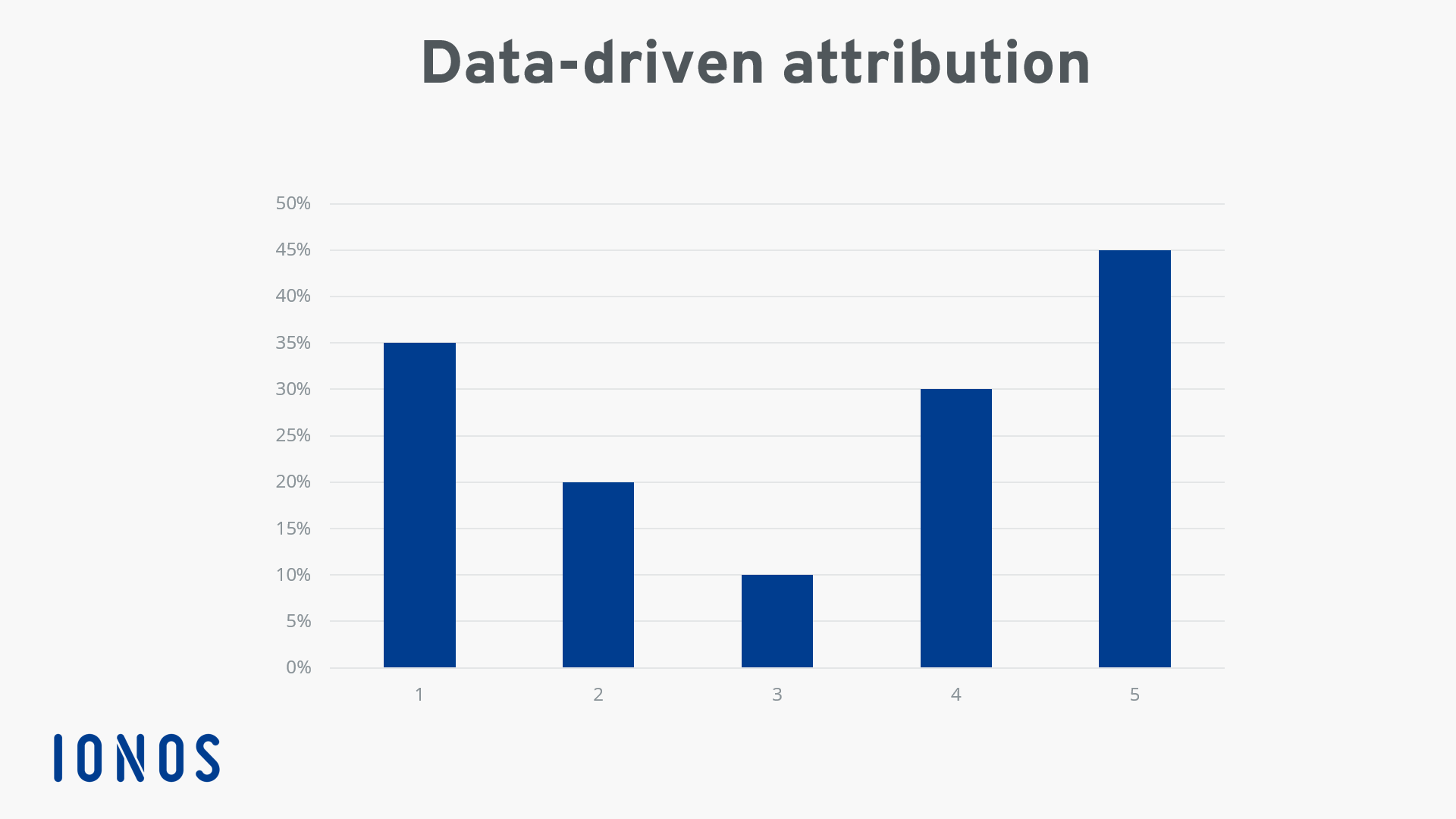
Data-driven attribution models should map the customers’ behaviour as accurately and in as much detail as possible. Intelligent algorithms process the collected customer data in real-time in order to determine the value of the individual touchpoints and to adjust them regularly.
- Pro: Very dynamic model that incorporates all developments in the customer journey and regularly adjusts the weightings of individual interactions
- Contra: requires a very large database; no real control over the hierarchy of touchpoints
It’s also possible to define your own model for your company, which is specially adapted to your company or campaign objectives and is not controlled by an algorithm. With this custom attribution, you define the weighting of the individual channels individually - according to various factors such as position, time dependency, or existing traffic. You can also define different attribution models for different customer groups (new customers vs. existing customers) or product groups.
Attribution modelling: Example of the models in use
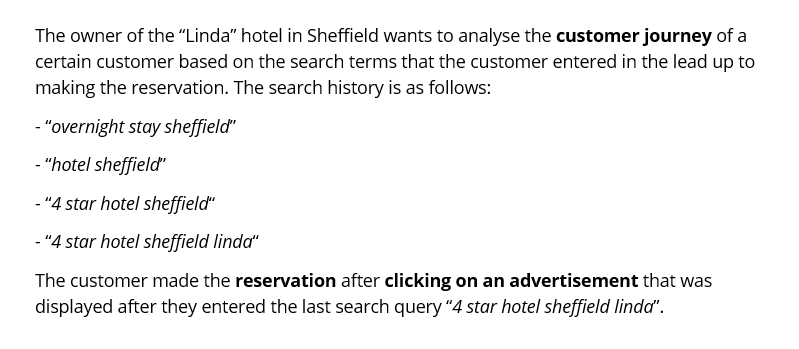
The preceding sections have explained what attribution modelling is and what types of models exist. But how are they used in practice to optimise marketing and campaigns? To answer this question, the attribution models presented above are applied to the following example scenario. The search terms entered by the user represent the recorded touchpoints:
For the individual attribution models, the respective weighting of the four keywords is as follows:
- First-click attribution: The first interaction is the decisive criterion, which is why the conversion is attributed 100 percent to the first keyword “overnight stay sheffield”.
- Last-click attribution: The last interaction is the decisive criterion, which is why the last keyword “4 star hotel sheffield linda” gets 100 percent of the conversion value.
- Linear attribution: All four keywords have exactly the same share - i.e. 25 percent - of the conversion.
- Time decay attribution: The weighting of the four keywords increases in order of their input. While “overnight stay sheffield” has hardly any part in the conversion, the time decay model attributes the main part to the last search phrase “4 star hotel sheffield linda”.
- Position-based attribution: If you select the standard rate for the position-based model, 40 percent of the conversion goes back to “overnight stay sheffield” and “4 star hotel sheffield linda” respectively. “hotel sheffield” and “4 star hotel sheffield”, on the other hand, each have a 10 percent share in the conversion.
- Data-driven attribution: Since the distributions in this attribution model are individually created and can change continuously, no concrete or relevant values can be named here.
Attribution modelling based on keywords (like the example here shows) is offered by Google Ads by default: So if you advertise with Google’s ad service, you don't need any additional tools to apply these models to your campaigns. The exception is interactions with display network ads for which attribution models can’t be used.
What advantages do attribution models offer?
Many marketers concentrate on the last click or customer interaction when analysing their own campaigns. The channels used before this point and the actions carried out during the customer journey and their influence on the conversions are therefore often not sufficiently acknowledged during the analysis. Attribution modelling offers a smart way out of this one-dimensionality and has the following advantages, among others:
- Attribution modelling provides deeper insights into the individual checkpoints of the customer journey than many traditional forms of analysis are able to.
- Attribution models enable the optimisation of the entire customer journey from the first to the last interaction.
- Attribution models cover the entire range of possibilities between manually specified and highly automated campaign monitoring and optimisation.
- Attribution helps in the long run to distribute the available budget optimally or to invest primarily in the most powerful marketing channels.
The models enable a higher data accuracy and, thanks to multichannel tracking, interfering factors are minimised such as cookie stuffing (when a user receives a third-party cookie from a website unrelated to that that they just visited).