

How do the top 10 RAG frameworks compare to one another?

RAG frameworks give you the tools to find, prepare and use information in retrieval-augmented generation (RAG) systems. They differ mainly in their focus, ease of use, features and overall architecture.
How do RAG frameworks compare to one another?
| Framework | Key feature | Cost |
|---|---|---|
| LangChain | Modular architecture with chains and numerous components | Free / Plans: ++ |
| LlamaIndex | Specialised in indexing and routing to relevant data sources | Free / Plans: ++ |
| Haystack | Complete toolkit for building AI applications | Free |
| RAGFlow | User-friendly, low-code interface | Free |
| DSPy | Declarative approach to building pipelines | Free |
| Verba | Native integration with Weaviate | Free |
| RAGatouille | Connects RAG with late-interaction retrieval models | Free |
| LLMWare | Strong emphasis on security and data protection | Free / Enterprise versions available |
| Cohere Coral | Built for enterprise use | Free; Enterprise version |
| Unstructured.io | Processes unstructured data | Plans: +++ |
Pricing scale: + low, ++ medium, +++ high
- Get online faster with AI tools
- Fast-track growth with AI marketing
- Save time, maximise results
Why are RAG frameworks needed?
RAG-frameworks connect large language models with up-to-date, domain-specific information. This lets you build AI systems that pull information from external data sources to deliver more accurate, contextualised responses. A further development is the hybrid RAG approach, which combines different retrieval methods or uses multiple data sources in parallel.
Common use cases include chatbots, knowledge assistants and document search systems that draw on internal knowledge bases like manuals, guidelines and research papers. RAG frameworks work particularly well when information needs frequent updates. Instead of retraining a language model, you can simply add new documents to the knowledge base. This creates systems that handle dynamic data while delivering consistent, traceable answers. Overall, RAG frameworks help developers build applications that not only retrieve information but also process and present it clearly.
What are the ten leading RAG frameworks?
Several RAG frameworks are widely used in both practice and research. Each one has its own approach to efficiently integrating, retrieving and making knowledge usable for language models.
LangChain
LangChain is one of the most well-known and widely used frameworks for retrieval-augmented generation and large language models. It is designed to let you build complex AI workflows by connecting individual building blocks called chains. These components can include document loaders, embedding models, retrievers or generators and you can combine them however you need. This lets developers create custom pipelines tailored to their specific data and use cases.
A notable feature is the extensive number of integrations: LangChain supports a wide range of language models, data sources and external tools, including databases, cloud services and vector storage. The framework is designed for production use and offers features for monitoring, scaling and error handling. Thanks to its active open-source community, the ecosystem continues to grow with regular new extensions.
| Advantages ** | ** Disadvantages** |
|---|---|
| ✓ Modular architecture with extensive tools | ✗ Can become complex with large pipelines and many components |
| ✓ Production-ready with robust features | ✗ Steep learning curve for complex chains |
| ✓ Strong ecosystem and community | ✗ Requires significant management effort with very large data volumes |
LlamaIndex
LlamaIndex is a high-performance RAG framework focused on data management, structuring and indexing. Unlike many other frameworks, it doesn’t focus primarily on running entire pipelines. Instead, it specialises in efficiently connecting external data sources with language models. LlamaIndex lets you prepare data in various formats, such as text, tables, or JSON structures.
A key idea in LlamaIndex is the use of different index structures, such as tree, keyword or vector indices. These allow you to search large and mixed datasets efficiently. The framework also offers smart routing mechanisms that automatically send requests to the most relevant data sources. This makes LlamaIndex particularly suitable for applications that work with multiple data levels or pull from various information sources.
You can use LlamaIndex either on its own or as part of larger RAG systems. Its clear architecture and smooth integration with other tools make this easy. With ongoing development and a growing developer community, it’s becoming a go-to tool for data-intensive, knowledge-based AI applications.
| Advantages | Disadvantages |
|---|---|
| ✓ Flexible handling of different data types | ✗ More complex setup process |
| ✓ Powerful indexing and routing mechanisms | ✗ Fine-tuning indices requires experience |
| ✓ Integrates well with LangChain and vector databases |
Haystack
Haystack is an open-source framework by deepset that specialises in modular RAG pipelines. It offers a structured architecture with components like Retriever, Reader and Generator, which you can adapt to different use cases. This setup gives developers precise control over how information is pulled from documents, processed and turned into responses.
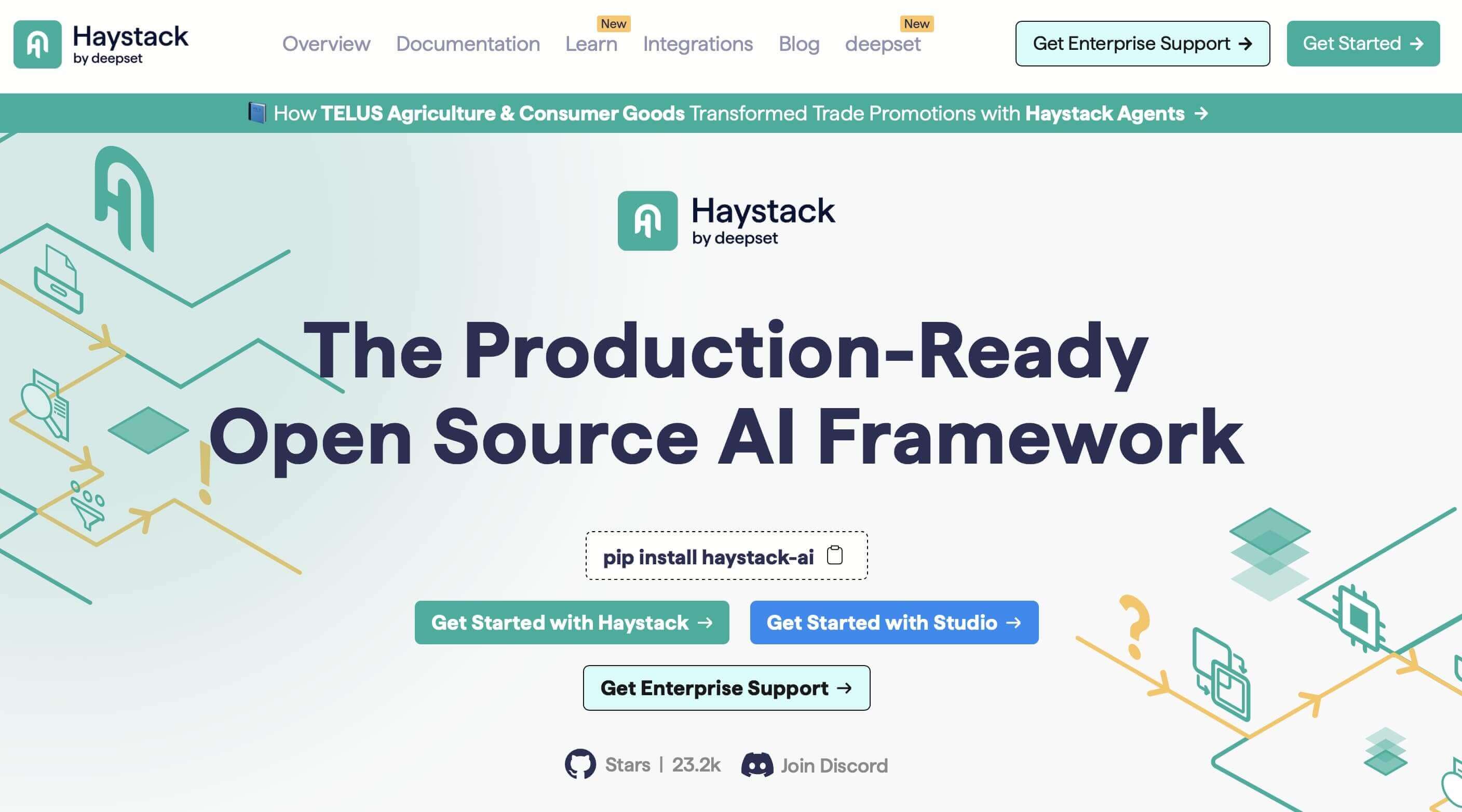
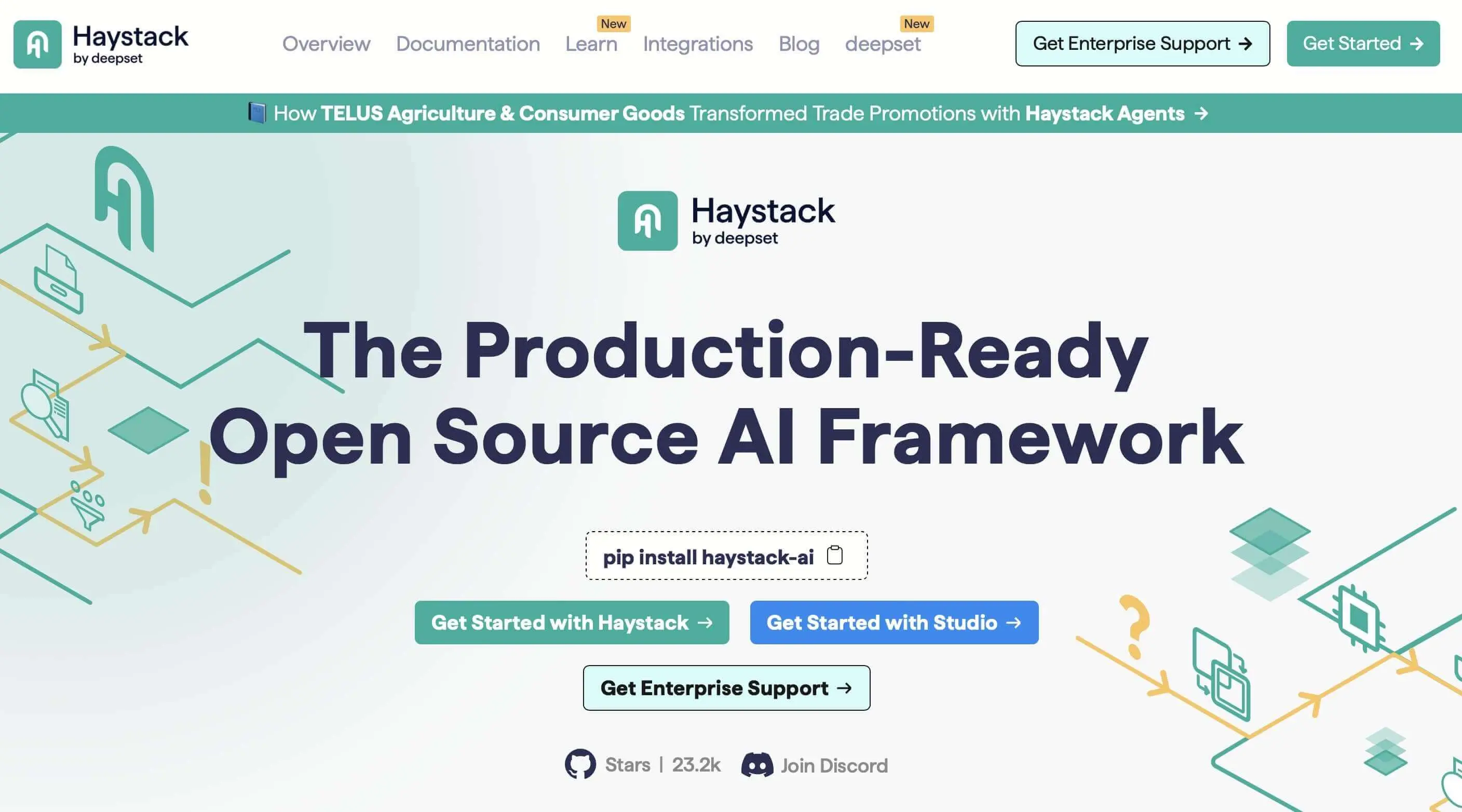
Haystack supports both dense and sparse retrieval methods and is compatible with a range of vector databases, language models and search technologies. It offers advanced features for evaluation, scaling and deployment, especially for production environments. With deepset Studio, building custom AI applications becomes even more convenient.
| Advantages | Disadvantages |
|---|---|
| ✓ Powerful, modular architecture | ✗ Requires significant configuration effort |
| ✓ Supports many databases and retrieval methods | ✗ Operation and scaling require technical expertise |
| ✓ Works for multilingual applications |
RAGFlow
RAGFlow is known for its visual low-code interface, which lets you create pipelines via a visual editor. This makes it easier for developers to design workflows without delving deep into code. A key focus is on document chunking and visual control of parse results, ensuring data quality and consistency.
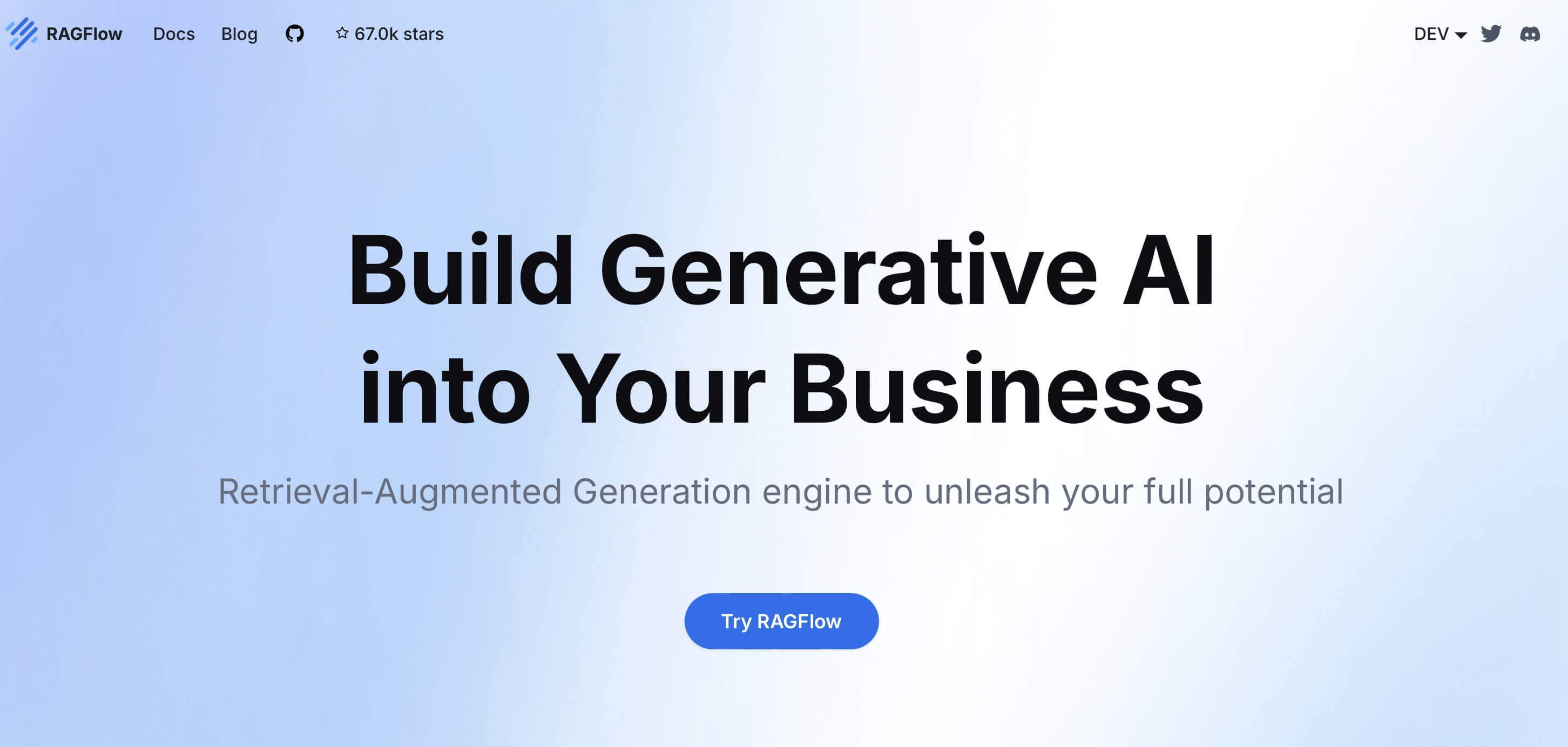
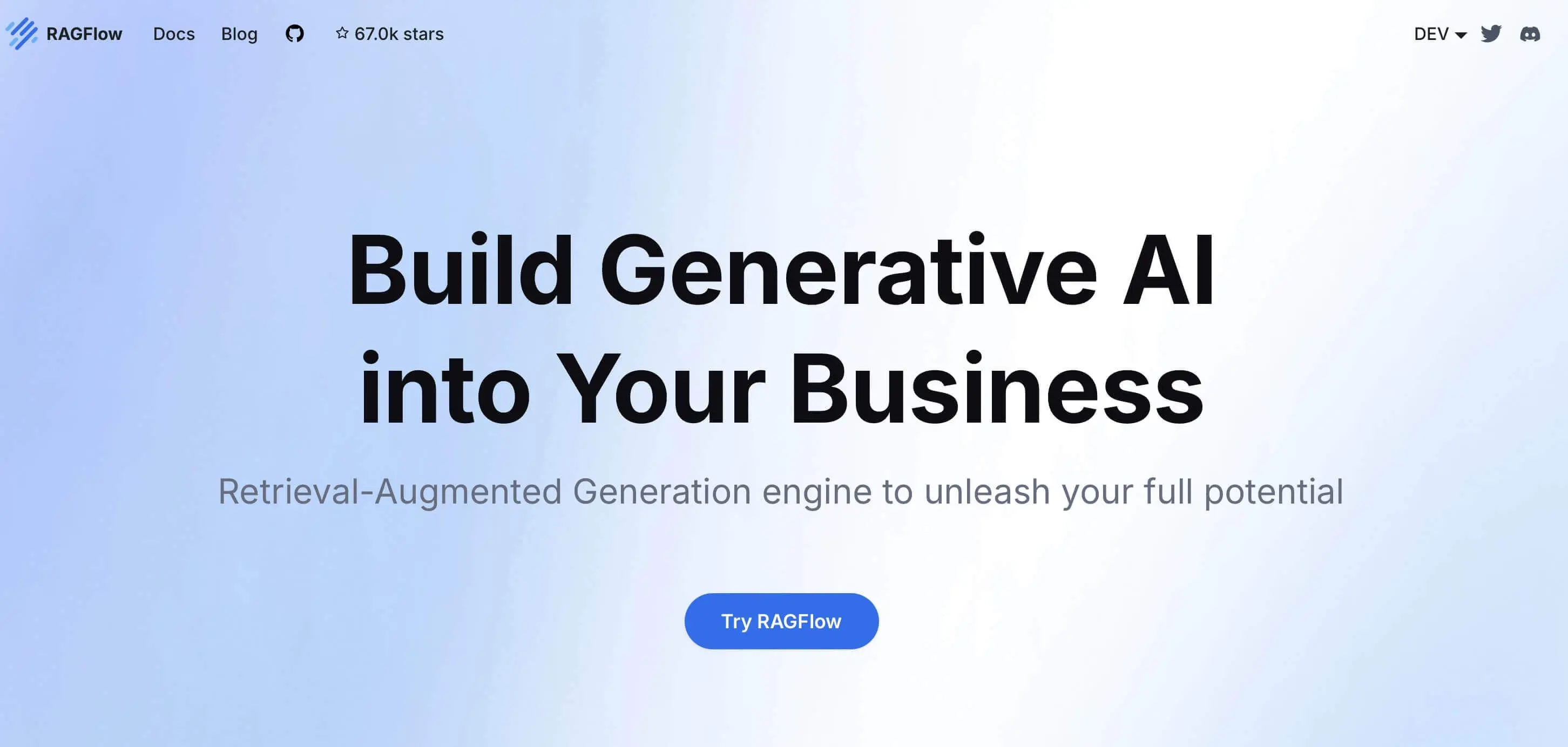
RAGFlow’s low-code interface makes it suitable for teams that need to quickly build prototypes or want to monitor their workflows visually. Its automated workflows handle repetitive tasks, which saves time and helps avoid errors. You can also connect RAGFlow to your existing pipelines, making it faster to develop chatbots, question answering systems or document search tools.
RAGFlow is ideal for projects where user-friendliness and rapid iteration are key priorities. However, it’s less suitable for projects with highly specific requirements or very large datasets.
| Advantages | Disadvantages |
|---|---|
| ✓ Well-suited for teams without deep technical knowledge (low-code) | ✗ Limited flexibility for custom requirements |
| ✓ Enables rapid prototyping | ✗ Limitations with highly specialised applications |
| ✓ Automated workflows for data processing |
DSPy
DSPy uses a declarative approach: you describe what your pipeline should do and an integrated optimiser creates and improves the prompts for you. This cuts down on manual prompt engineering and makes the inputs to your language models steadily more precise and task-specific.
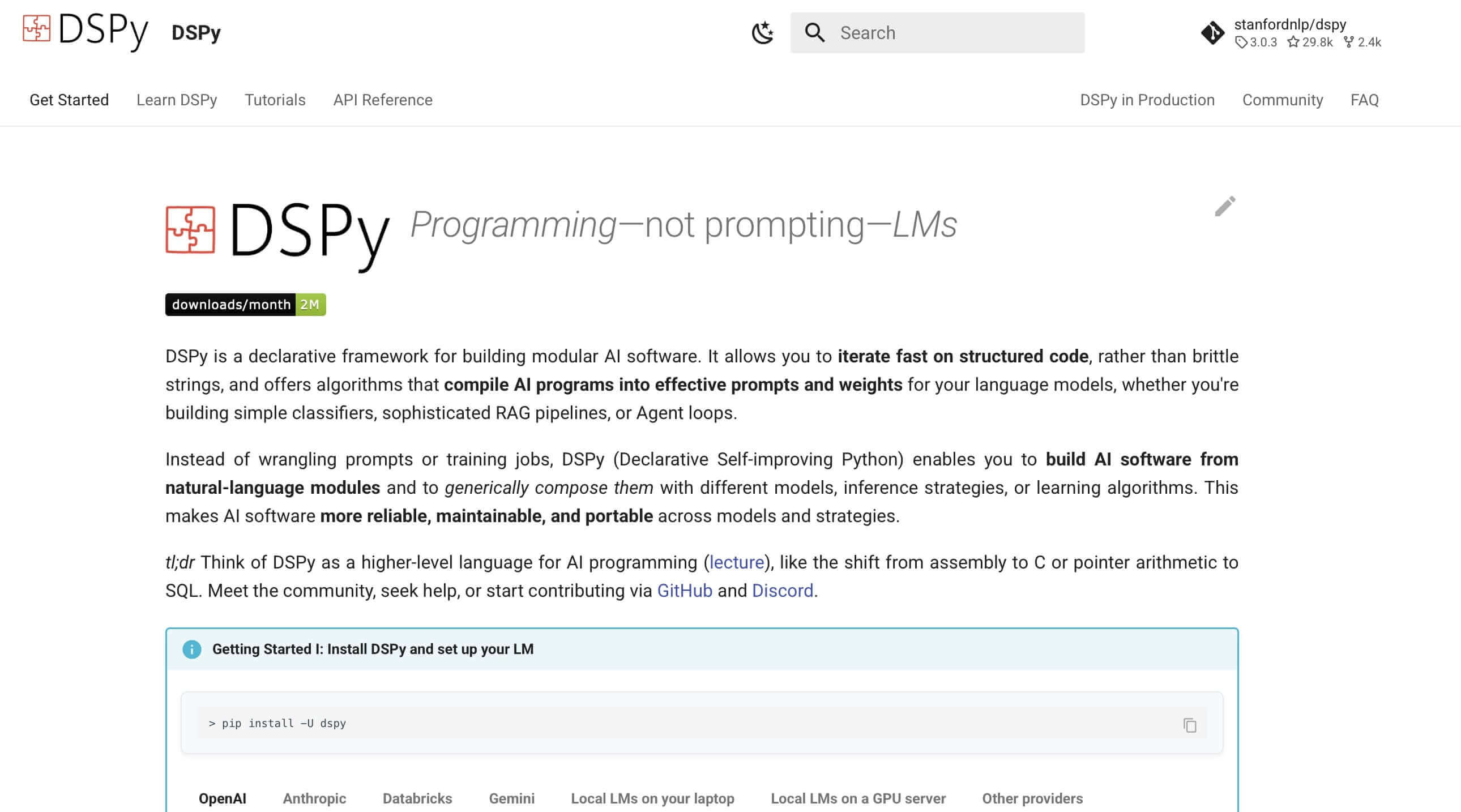
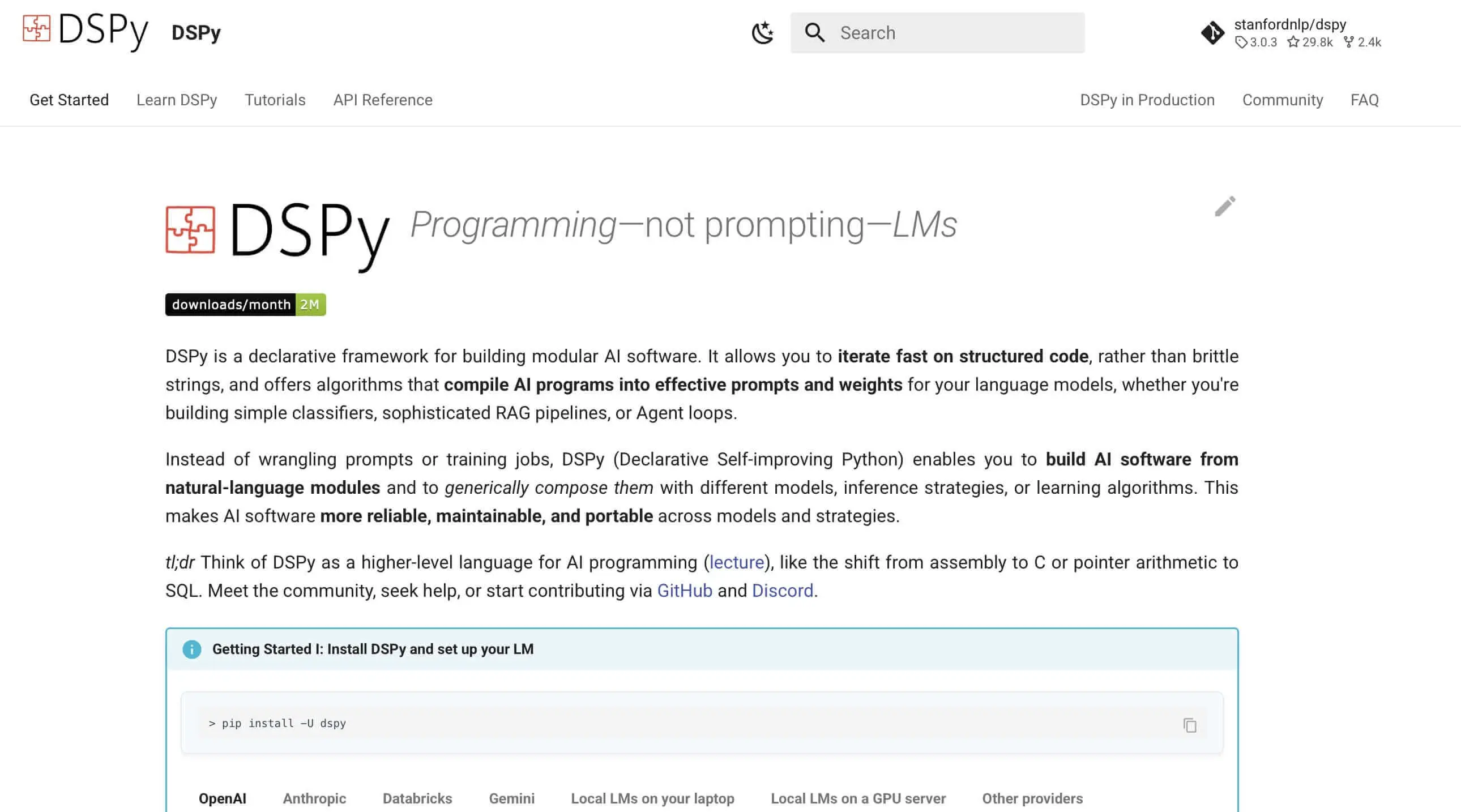
With DSPy, you can design RAG workflows in a structured way and get consistent results across datasets and applications. You can adapt even complex pipelines to different tasks and data sources. However, you’ll need an understanding of declarative modelling, and more advanced setups require careful planning. The built-in prompt optimisation can also increase computing costs, especially for very large pipelines or big data workloads.
| Advantages | Disadvantages |
|---|---|
| ✓ Automation and optimisation of prompts reduces manual effort | ✗ Requires familiarity with declarative modelling |
| ✓ Good reproducibility | ✗ Success depends on correct modelling |
| ✓ Adapts well to various tasks | ✗ Optimisation can increase computing costs |
Verba
Verba is a specialised RAG framework that focuses on chatbots and conversational applications. It’s known for its close integration with the vector database Weaviate, which lets you efficiently retrieve documents and embed them directly into dialogues. This means you can build chatbots that not only generate responses but also pull from external knowledge sources.
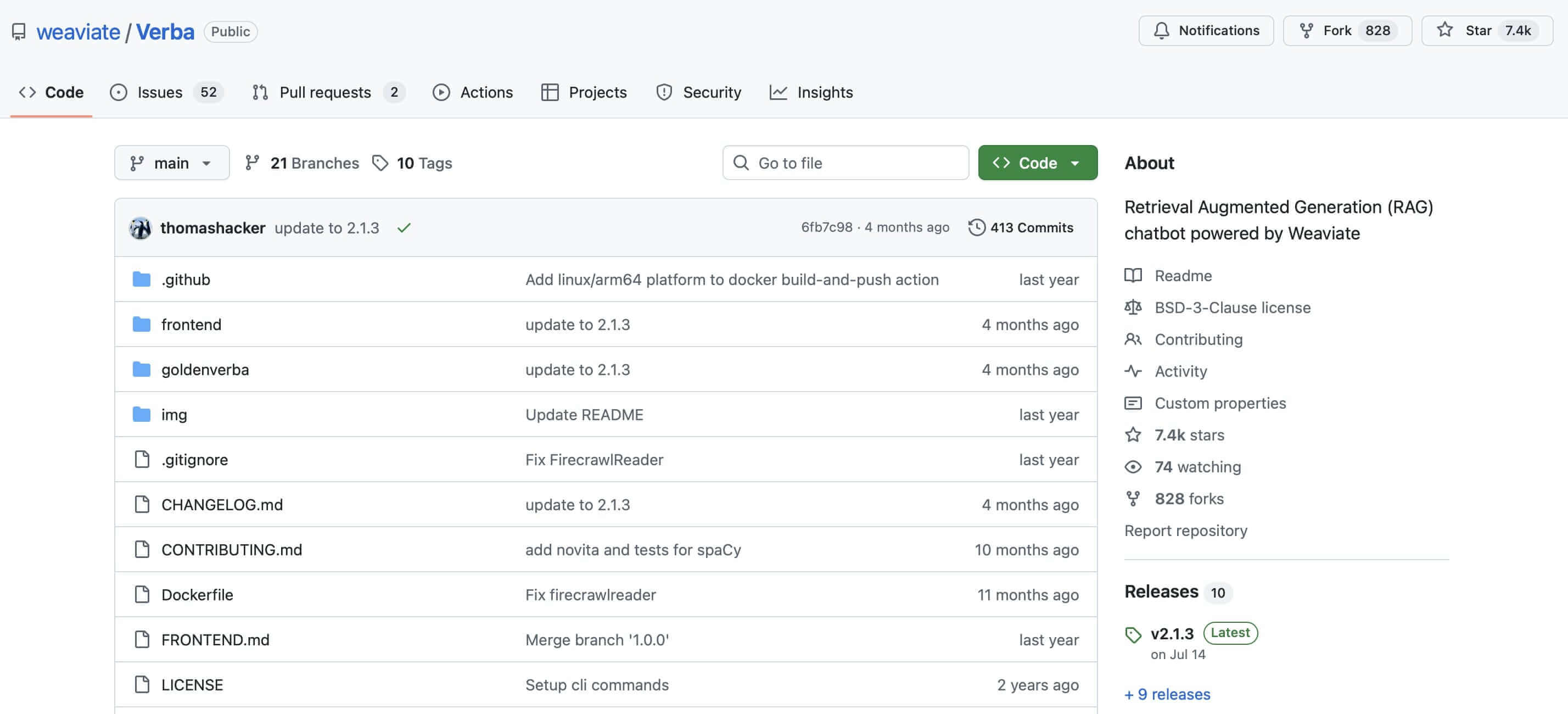
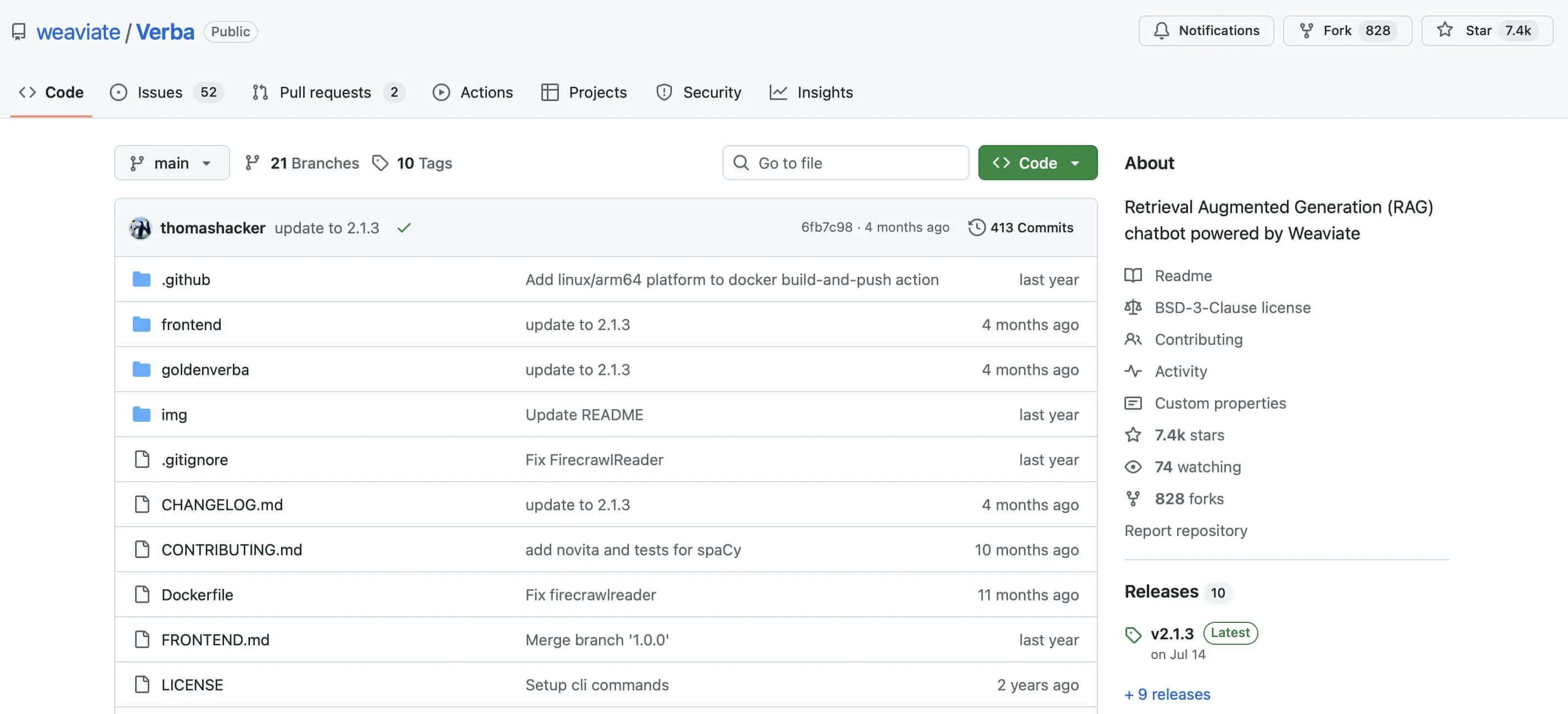
Its straightforward setup lets you quickly get started and build functional RAG chatbots without extensive development work. Verba targets teams and developers who want to rapidly create production-ready, dialogue-based applications. The platform integrates cleanly with vector search and lets you pull information from different sources directly into conversations.
| Advantages | Disadvantages |
|---|---|
| ✓ Tight integration with Weaviate for efficient vector search | ✗ Dependency on the chosen vector database |
| ✓ Easy to use for chatbots and conversational applications | ✗ Limited customisation options |
| ✓ Quick start with minimal setup |
RAGatouille
RAGatouille makes the ColBERT retrieval model easier to use. It targets applications that need to search very large document collections and return highly precise results. You can train and deploy ColBERT models with it, giving you full control over indexing and retrieval.
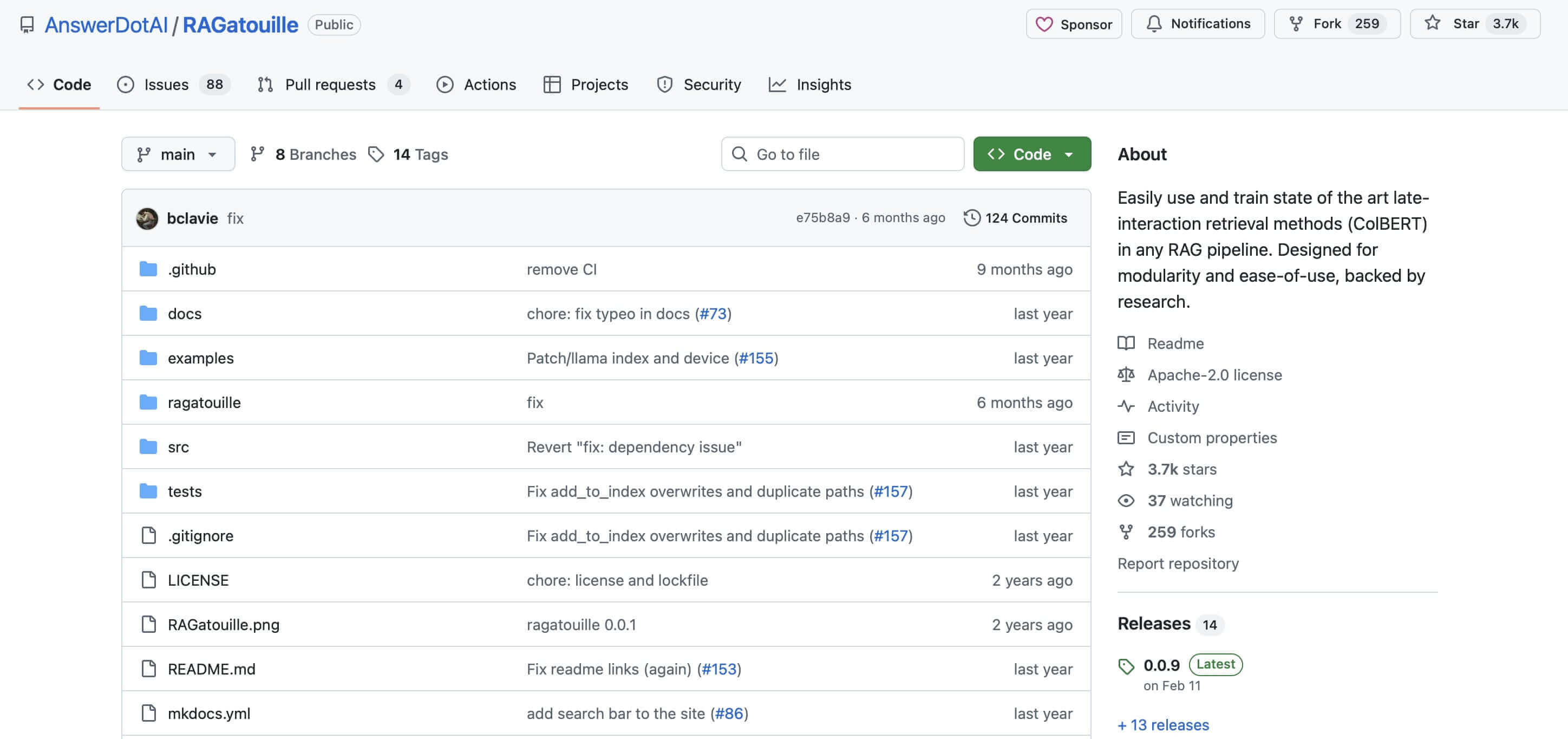
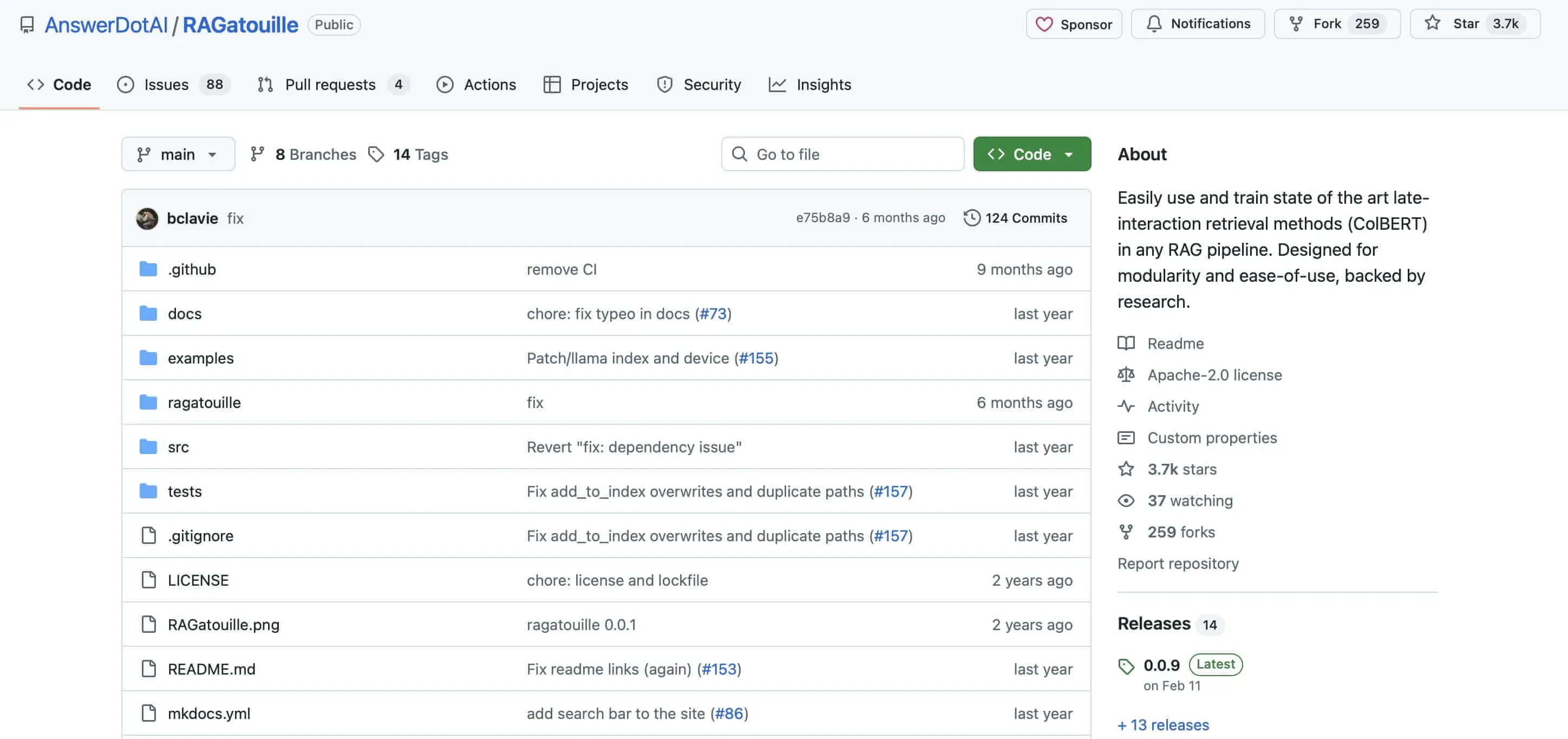
Because it uses late-interaction models, RAGatouille delivers highly accurate results for complex queries and scales well, even with large datasets. This makes it a strong option for data-intensive applications, where retrieval quality really matters. Developers can also customise the models and index structures to match their specific use cases.
| Advantages | Disadvantages |
|---|---|
| ✓ Excellent retrieval performance through late-interaction models | ✗ Complex training process |
| ✓ Highly scalable for large data collections | ✗ Higher resource requirements |
| ✓ Delivers precise results | ✗ Fine-tuning requires significant learning |
LLMWare
LLMWare specialises in private and secure applications, making it particularly appealing to companies that handle sensitive data. It lets you host pipelines locally and supports various large language models and vector databases. This means you can run RAG pipelines on internal data stores without sending information to external services.
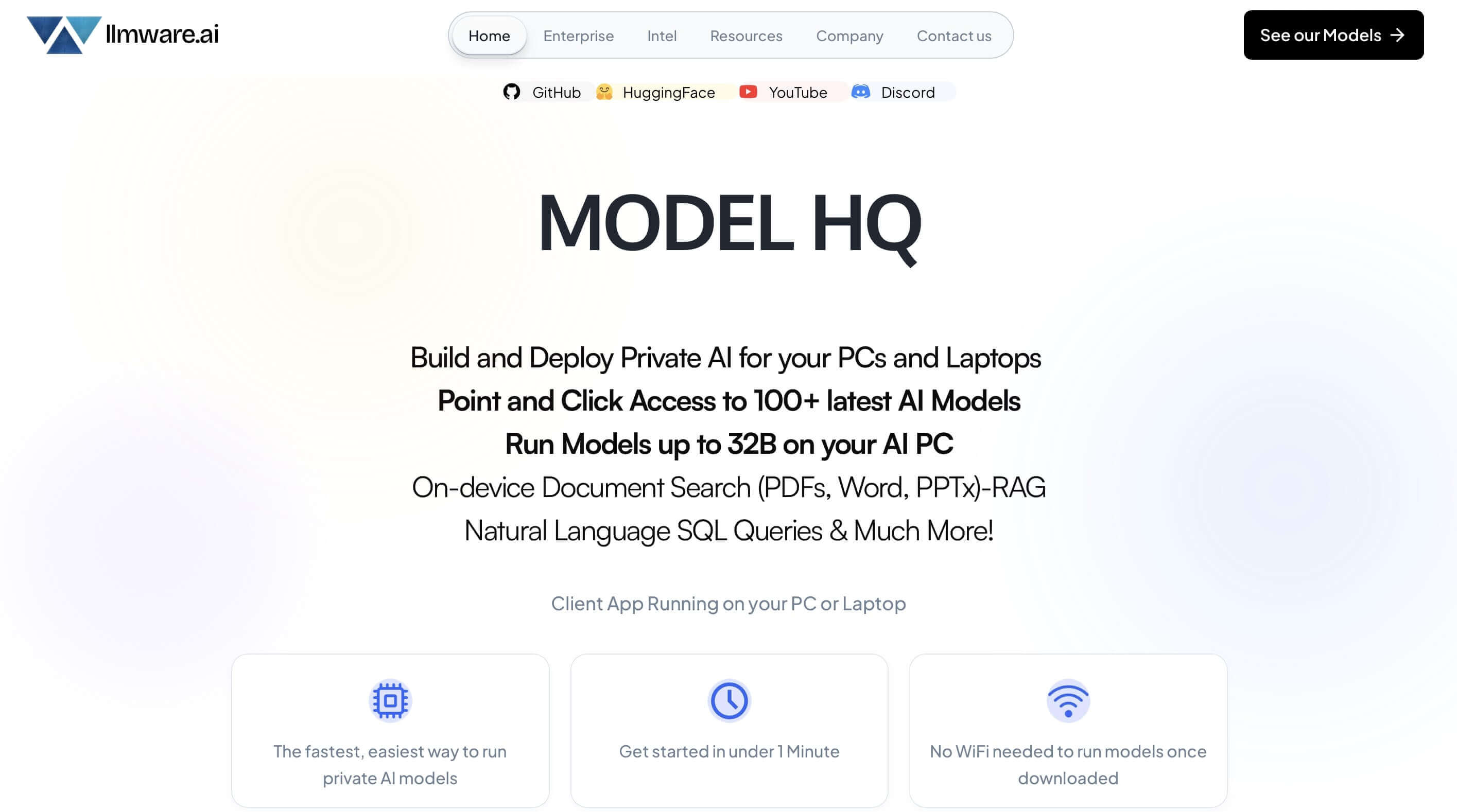
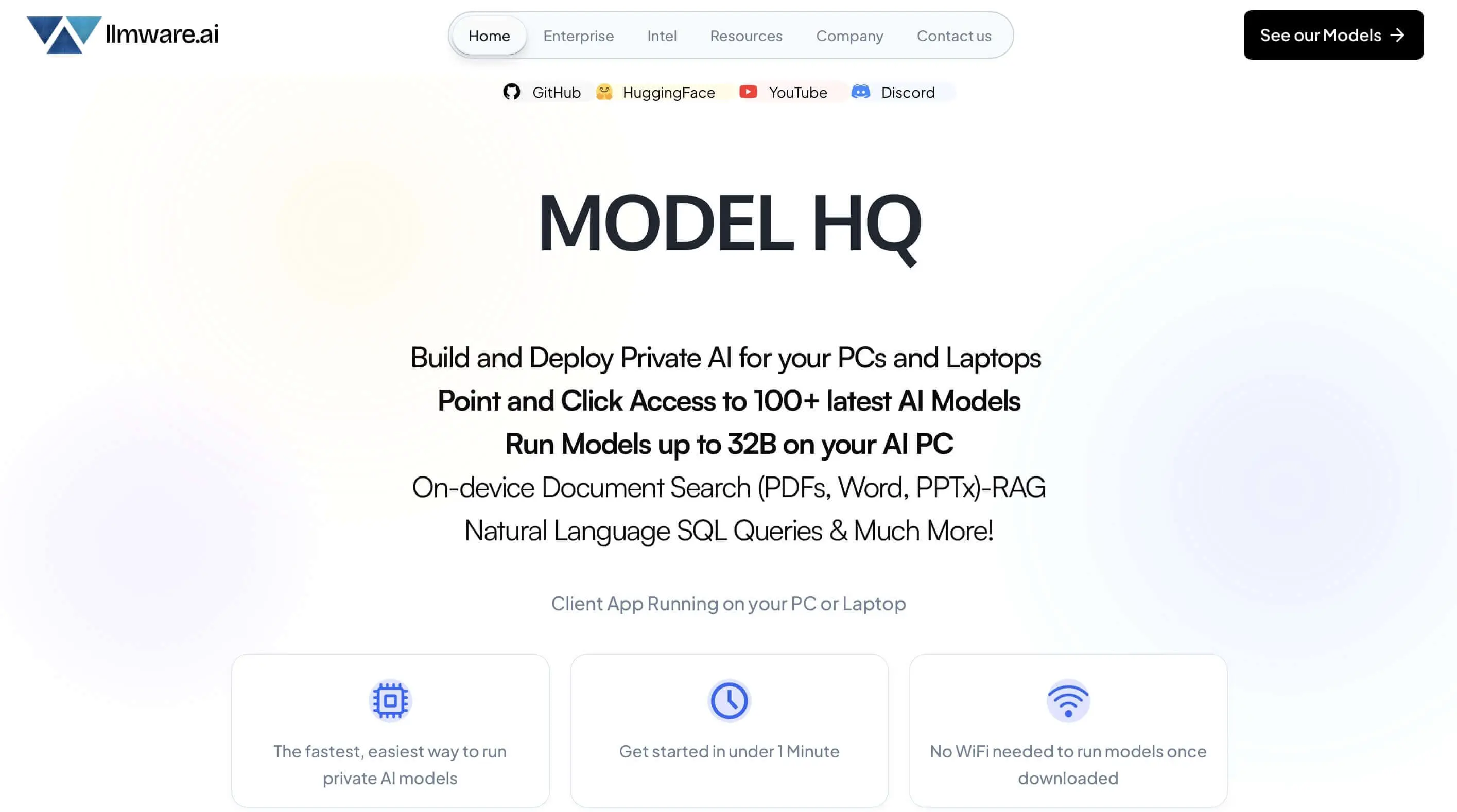
LLMWare gives you flexible options for combining models, indexing strategies and retrieval methods. This makes it easier to build solutions tailored to your requirements, security policies and compliance rules. LLMWare is particularly useful for GDPR-compliant knowledge systems, in areas such as finance, research and healthcare.
| Advantages | Disadvantages |
|---|---|
| ✓ Private and secure use on internal data | ✗ Local hosting requires infrastructure investment |
| ✓ Highly flexible configuration | ✗ Setup and maintenance are complex |
| ✓ Suitable for data protection-compliant applications | ✗ Fine-tuning requires significant learning |


Cohere Coral
Cohere Coral is a RAG framework specifically built for enterprise applications, with a strong emphasis on security, data protection and source attribution. It lets companies connect language models with external knowledge while keeping all retrieved information traceable and verifiable. This framework supports integration of various data sources, so you can build context-aware, reliable knowledge systems.
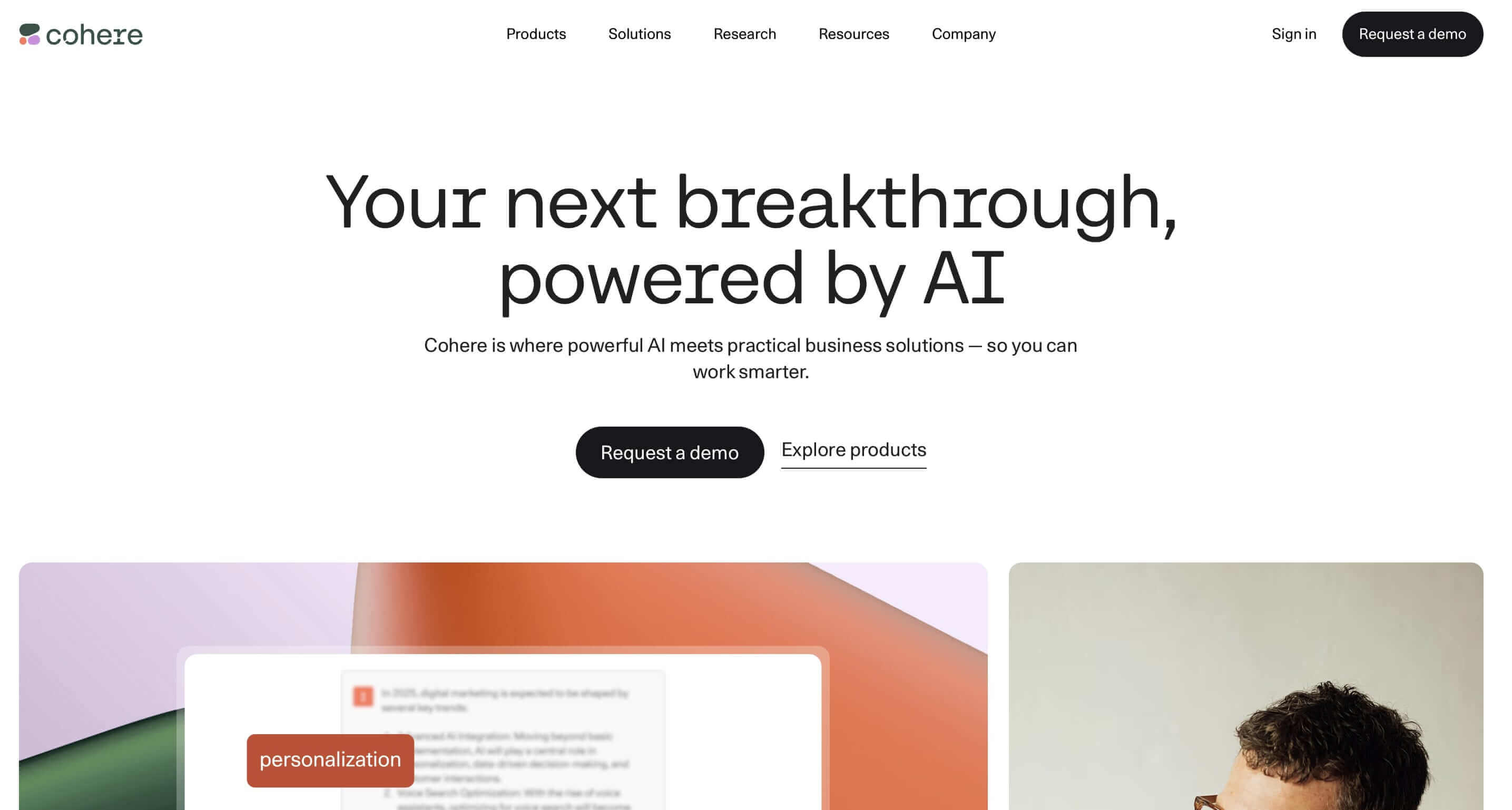
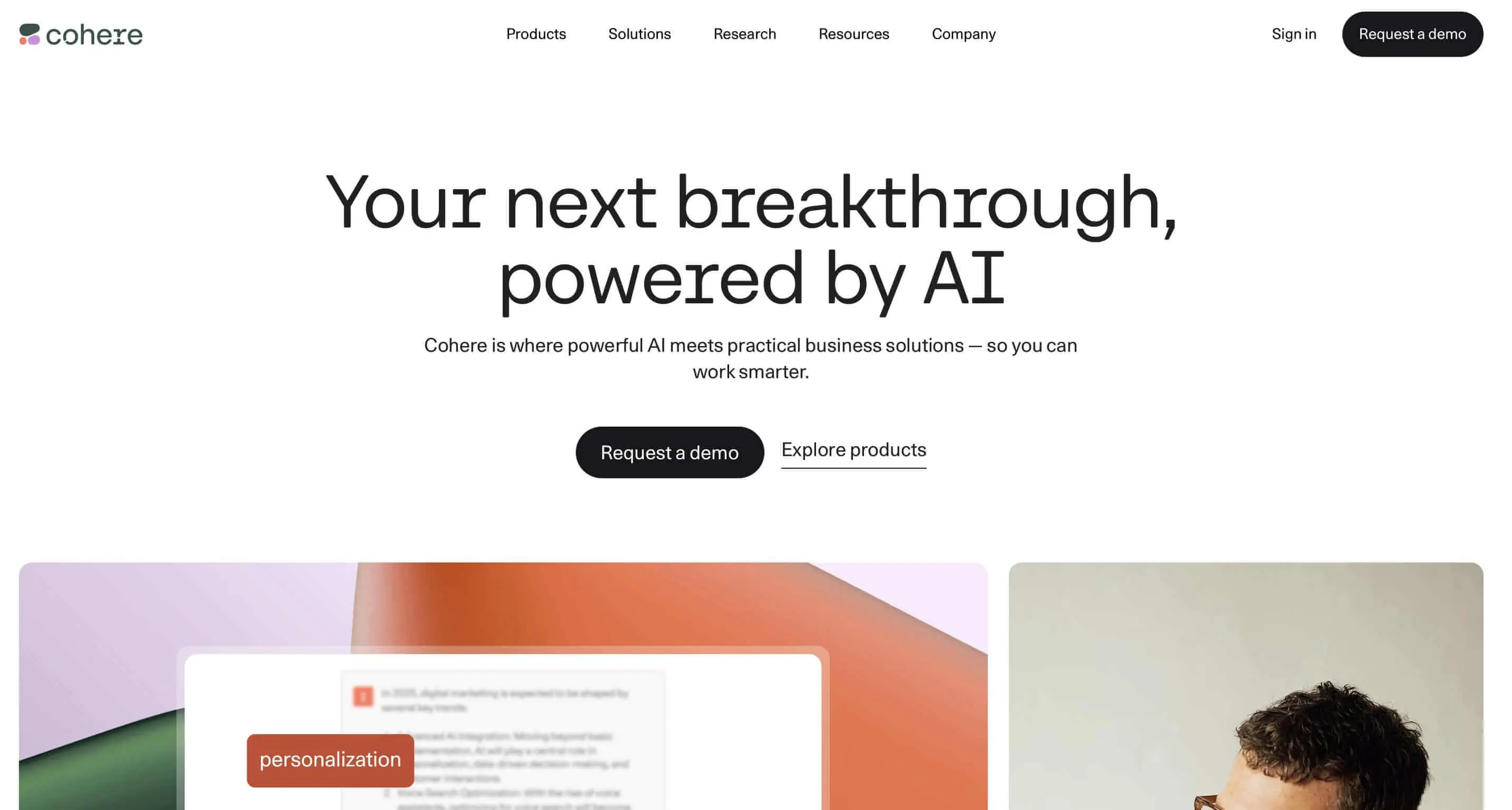
Its clearly structured API makes it easy for developers to integrate Cohere Coral into existing systems, for example, for chatbots, document search or knowledge assistants. The framework also includes tools to build RAG pipelines that are compliant and auditable, which is important in regulated sectors, like finance, healthcare or law.
| Advantages | Disadvantages |
|---|---|
| ✓ Strong focus on security, data protection and source attribution | ✗ Highly tied to the Cohere platform |
| ✓ Well-suited for regulated industries and enterprise applications | ✗ Setup and operation can be costly |
| ✗ Less flexibility than open-source alternatives |
Unstructured.io
Unstructured.io specialises in preprocessing unstructured documents. It provides libraries and tools that extract content from PDFs, HTML files, images, or other formats. It converts this content into a structured form that you can use in RAG pipelines. This makes it easier for developers to load large amounts of unstructured data into vector databases or other index structures and prepare it for retrieval by language models.
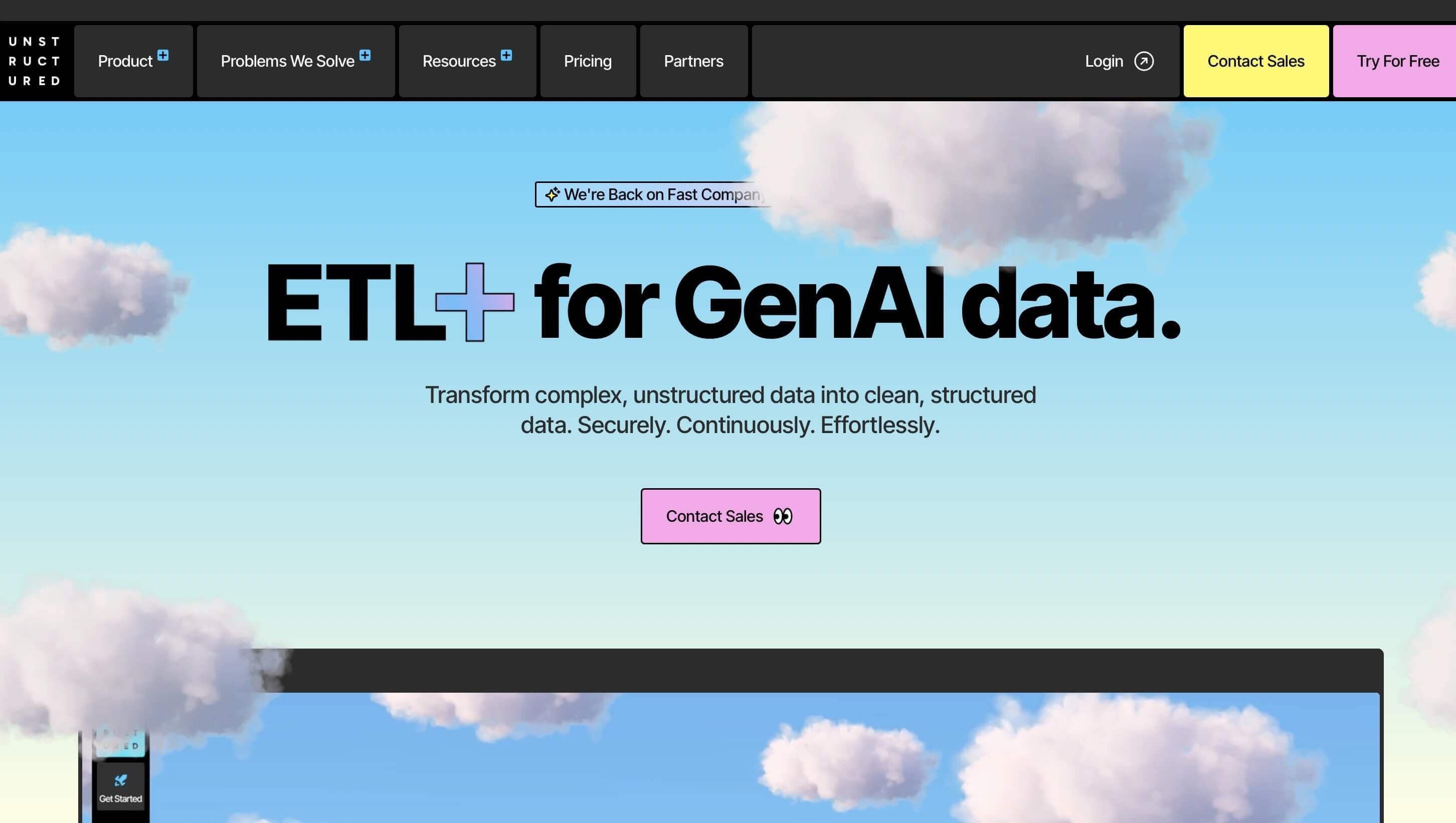
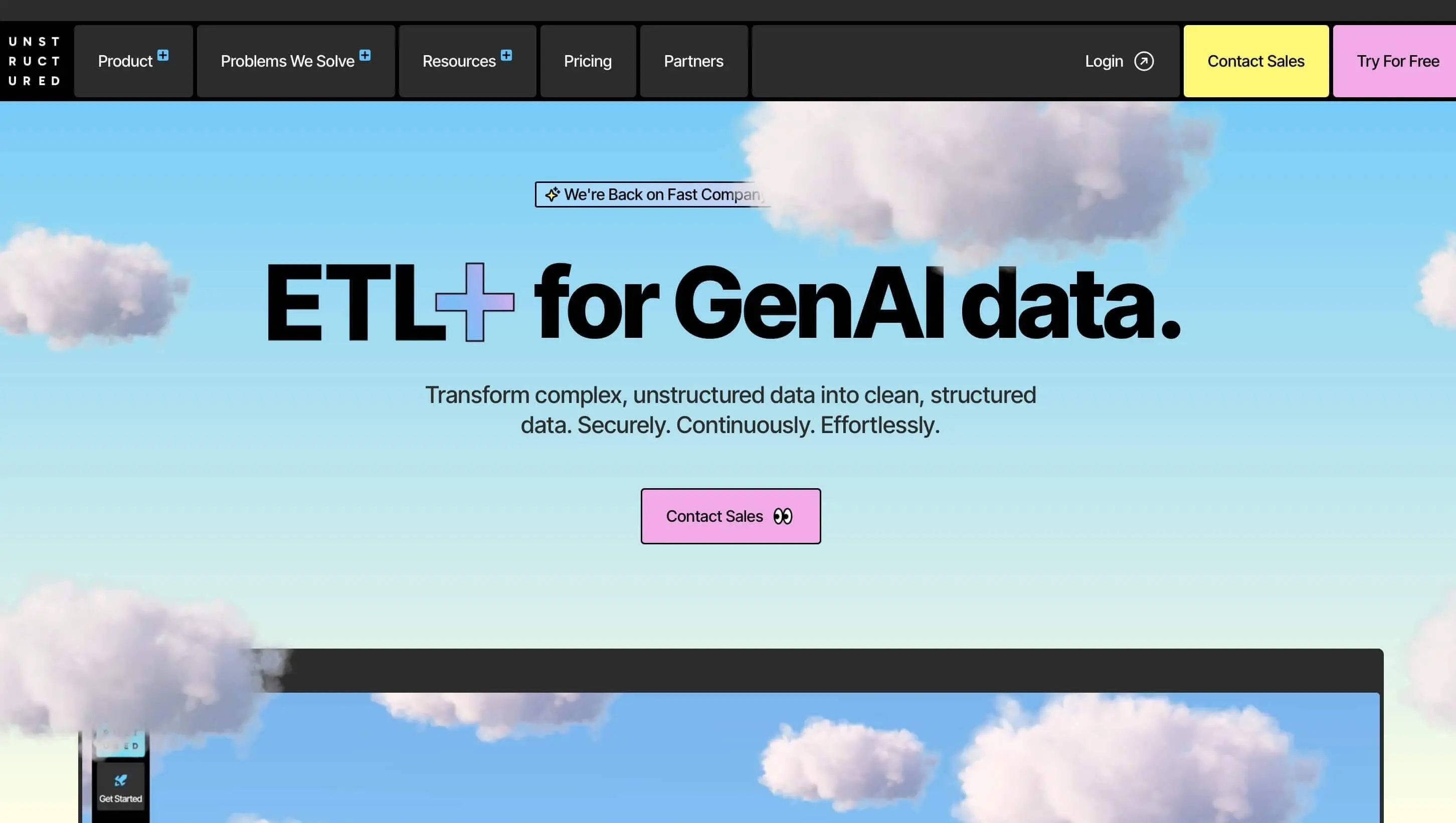
One major advantage of Unstructured.io is that it supports a range of file formats and can automatically standardise content. This helps you build RAG pipelines faster while keeping the quality of the results high. However, working with very messy or complex documents can still cause errors, and preprocessing huge datasets can require additional time and computing resources.
| Advantages | Disadvantages |
|---|---|
| ✓ Supports a wide range of file formats and unstructured data types | ✗ Processing very complex documents can be error-prone |
| ✓ Automatic chunking and standardisation | ✗ High time and resource demands with large datasets |
| ✓ Simplifies setup and integration into RAG pipelines | ✗ May require manual post-processing |
Reviewer

Christian Heldmaier
Christian Heldmaier is an experienced online marketing and SEO specialist from Karlsruhe. He has been working as an SEO Manager at IONOS since July 2020.