

Texting abbreviations: HTH!

Every field comes with its own vocabulary. New words are constantly being added to dictionaries – evidence that language is subject to diverse influences. And so, it should come as no surprise that the widespread use of smartphones has led to a slew of new terms. One of the reasons for this is that typing on a small keyboard requires a lot of effort. Even the periods in traditional abbreviations like ‘etc.’ and ‘Ms.’ are often left off to reduce the texting effort. The result is that texting acronyms and text message abbreviations get shorter and shorter.
Have you deciphered the acronym in the title yet? The expression is one of many texting acronyms that stand for frequently used words and phrases. Many text message abbreviations have found their way into everyday life offline, such as in business names like ‘Food4U’. Some phrases have even become part of spoken language, like ‘btw’ and ‘lol’. Other parts of chat language serve to take the place of non-verbal communication – winky faces, frowns, and smileys. Originally, chat language was limited to a few character combinations like emoticons. The character combination :-O, for example, symbolises the face of someone who’s surprised or astonished. Nowadays we have a near endless amount of chat smileys, which are used alongside numerous texting abbreviations. Our guide will tell you everything you need to know. And don’t forget: ‘hf irl’!
All the text message abbreviations used in the examples can be found in our glossary at the end of the article.
From texting abbreviations to internet slang
Shortening words is nothing new. Abbreviations have been around for a long time. They usually consist of the first letters of the abbreviated words or a combination of parts of the word - for example, ‘aka’, ‘e.g.’, ‘etc.’. And of course, they’re now widespread in digital communication as well.
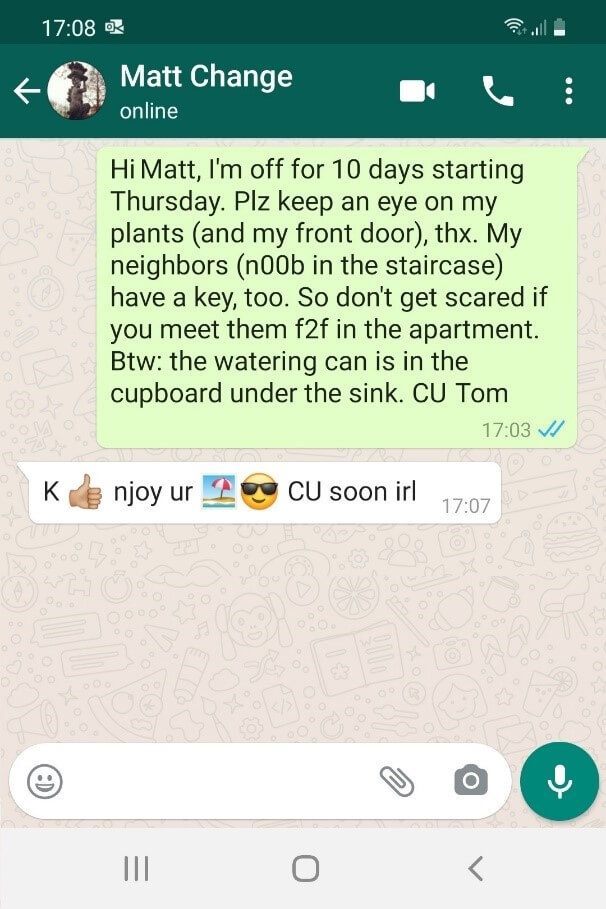
In the above example, several abbreviations and acronyms appear as a natural part of the message. ‘Please’ becomes ‘plz’ and ‘thx’ becomes ‘thanks’. ‘Btw’ is one of the most common texting acronyms and stands for ‘by the way’. The word ‘noob’ stands for ‘newbie’ and is internet slang for a clueless person.
And just like there are innumerable texting abbreviations, there are also countless ways to refer to this internet language - internet slang, chat abbreviations, texting acronyms, text message abbreviations, chat jargon, online slang, and more.
When did abbreviations make their first appearance?
Abbreviations and acronyms have been used to send messages since the early days of telegrams (not to be confused with the messaging app ‘Telegram’!). The price for sending a telegram was calculated per word, making acronyms a logical choice for the sender of the message. In addition, abbreviations were used by telegram operators to speed up transmission. So ‘Coming’ was reduced to ‘Cmg’, for example. Telegraph services began their decline in the US with the launch of the telephone. With the arrival of email in the 1980s, rapid text-based communication returned to the scene. This was arguably the starting point for modern internet slang.
On December 3, 1992, a British engineer sent the first SMS from his computer to the cell phone of a Vodafone manager. Shortly afterward, it became possible to send text messages from cell phone to cell phone. Readers who had cell phones back then can probably remember what it took to send a message – writing an ‘S’, for example, meant pressing four times on the 7 button. This was reason enough for many people to opt for abbreviation of words. And let’s not forget that text messages were limited to 160 characters.
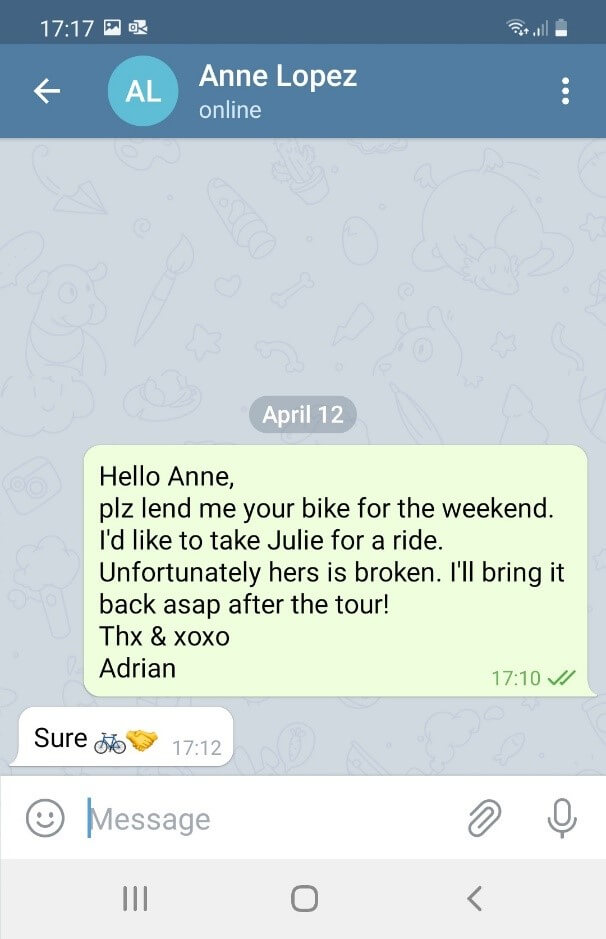
The widespread use of smartphones opened up new channels of communication: Messaging apps made it possible to send instantaneous messages back and forth with individuals or in group chats. The spread of multiplayer online computer games and the increasing popularity of e-sports also led to a separate gamer jargon.
When should texting abbreviations be used?
Text message abbreviations are mostly used in messaging apps on mobile devices, that is on devices where you only have access to an onscreen keyboard. WhatsApp is the most popular of these apps, with 95% of all users. Other apps include Telegram, Signal, WeChat, and Skype. Alternatives to Facebook Messenger also have a large market share. Apple iMesssage, which comes preinstalled on iPhones, is another popular app for messaging.
In general, the more personal the communication and the better you know your chat partner, the more appropriate it is to use chat abbreviations. Abbreviations should not be used as part of business communications. Text message abbreviations were originally developed by younger users, both to set themselves apart from others and to keep the pace of communication fast. Grammar and spelling take a backseat to speed and readability. Due to the widespread use of smartphones, texting acronyms are now also known among older users. Chat slang has even found its way into spoken language. The advertising industry uses messaging apps and text message abbreviations to reach defined target groups.
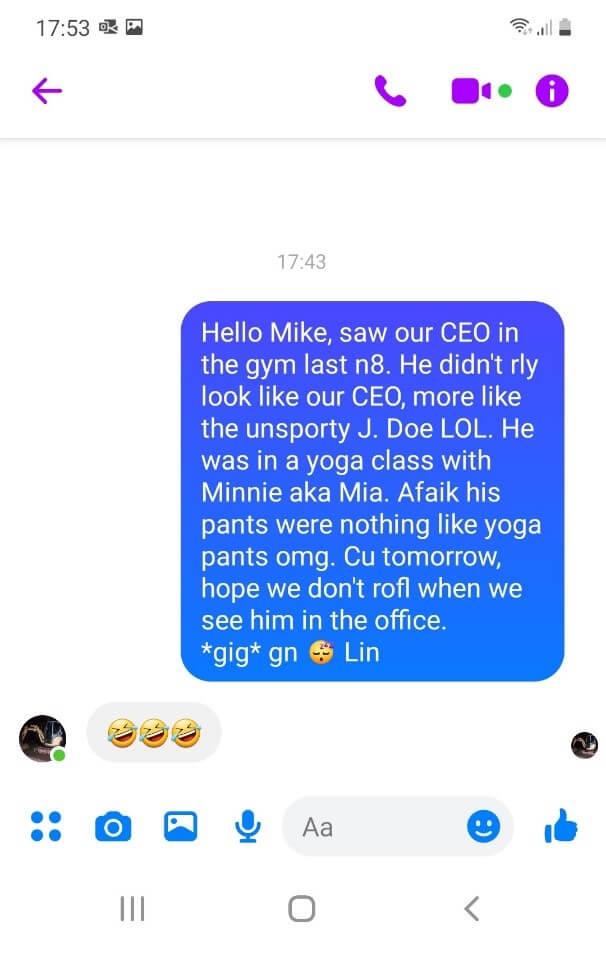
Texting abbreviations are also used in Livechats when you’re looking for technical or product support.
Another group that frequently uses texting acronyms are gamers, especially in e-sports. They’ve developed special phrases and abbreviations for the things that happen in internet computer games.
What are the most common texting abbreviations?
Text message abbreviations are constantly changing, meaning that any list of them can only be taken as a snapshot. Acronyms are almost always written with lowercase letters and without periods in between. Below you’ll find a table with around 50 of the most common texting abbreviations and acronyms.
| Abbreviation | What it stands for |
|---|---|
| 2g4u | Too good for you |
| 2L8 | Too late |
| 4U | For you |
| adl | After download |
| afaik | As far as I know |
| afk | Away from keyboard |
| aka | Also known as |
| asap | As soon as possible |
| bbl | Be back later |
| bg | Big grin |
| boon | ‘noob’ written backwards; pejorative term for beginners |
| brb | Be right back |
| btw | By the way |
| cu | See you |
| cya | See Ya, See You Again |
| dafuq / dafuq? / wtf? | What the f*** |
| eod | End of Discussion |
| eom | End of Message |
| ez (auch izi) | Easy |
| f2f | Face to face |
| FAQ | Frequently asked questions |
| fyi | For your information |
| g2g | Got to go |
| *gig* | Giggle |
| gn | Good night |
| gj | Good job |
| gl | Good luck |
| gratz | Short for ‘congratulations’ |
| hf | Have fun |
| hth | Hope that helps |
| idc | I don’t care |
| idk | I don’t know |
| ily | I love you |
| imho / imo | In my humble opinion / In my opinion |
| irl | In real life |
| k or kk | OK or Ok Ok |
| lol | laughing out loud |
| noob (auch: n00b or boon) | Newbie; pejorative term for beginners |
| n1 | Nice one |
| nsfw | Not safe/suitable for work |
| omfg | Oh my f***ing god |
| omg | Oh my god |
| plz | Please |
| rofl | Rolling over the floor laughing |
| rly? | Really? |
| scnr | Sorry, could not resist |
| tbh | To be honest |
| thx | Thanks |
| tl;dr | Too long; didn’t read |
| xoxo | Kisses and hugs |
If you want to keep up in our fast-changing world, it’s a good idea to stay up to date. This way you can easily stay in touch with your children, grandchildren, and the younger generation. We hope this guide wasn’t tl;dr!