

What are other apps like WhatsApp? 7 WhatsApp alternatives

If you’re looking for a WhatsApp alternative, you’ve probably already noticed the large number of messaging apps out there — including Telegram, Spike, Threema, Signal, Ginlo and Wire, for example. Unlike WhatsApp, most of these alternatives are open source and free of ads.
Overview of WhatsApp alternatives
The following information was last updated in December 2024.
| Available for | Encryption | Number of users | Cost | |
|---|---|---|---|---|
| Viber | iOS, Android, macOS, Windows, Linux | End-to-end | More than 800 million | Free |
| Telegram | iOS, Android, macOS, Windows, Linux | Client-to-server (standard) and end-to-end (in secret chats) | Over 700 million | Free |
| Signal | iOS, Android, macOS, Windows, Linux | End-to-end | Over 100 million | Free |
| Threema | iOS, Android, macOS, Windows, Linux | End-to-end | Over 12 million | From around $3.50 |
| Spike | iOS, Android, macOS, Windows | AES-256 | At least 100,000 teams | Free |
| Ginlo | iOS, Android, for business customers also macOS, Windows and Linux | End-to-end | Unknown | Free (for private users) |
| Wire | iOS, Android, macOS, Windows, Linux | End-to-end | Unknown | Free (for private users) |
Viber
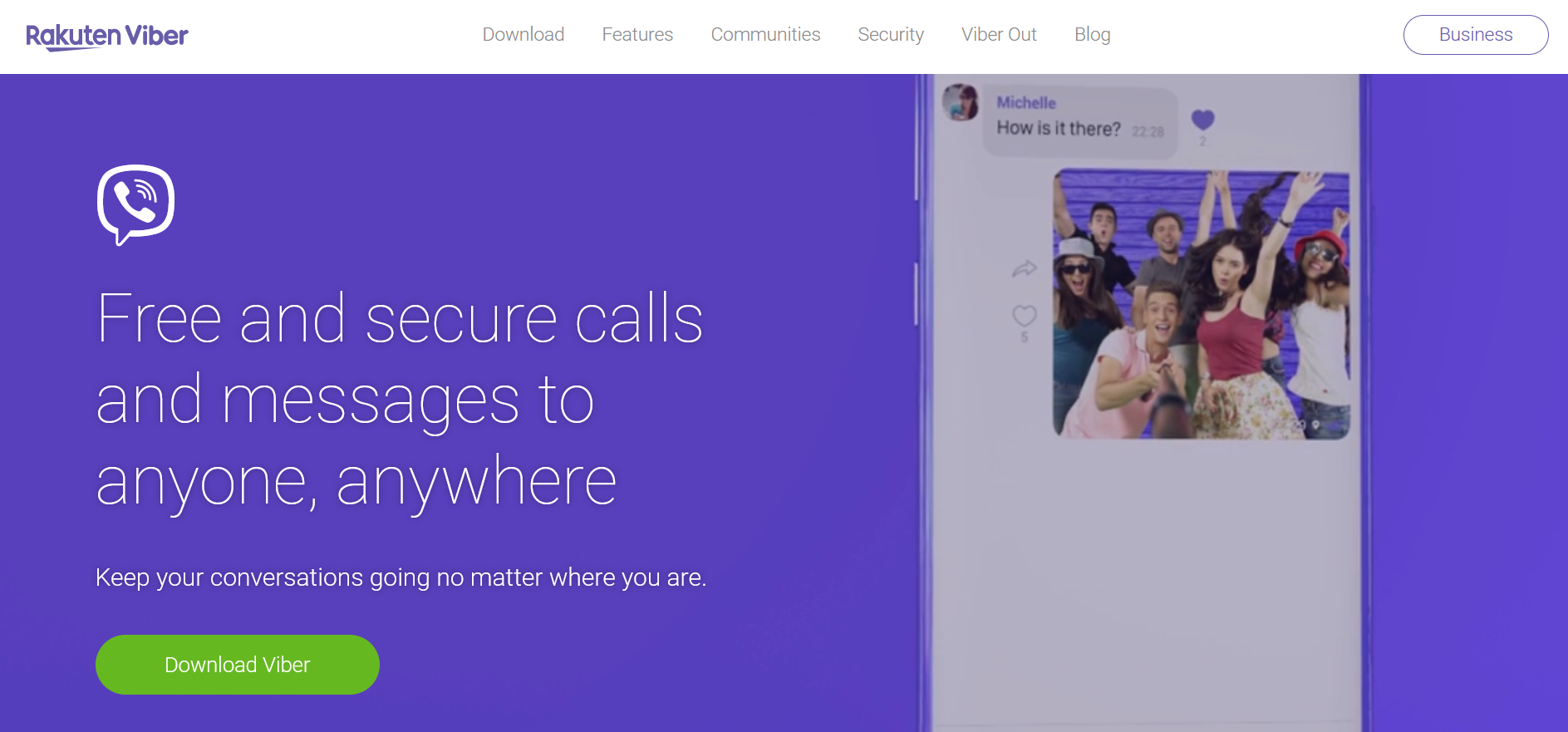
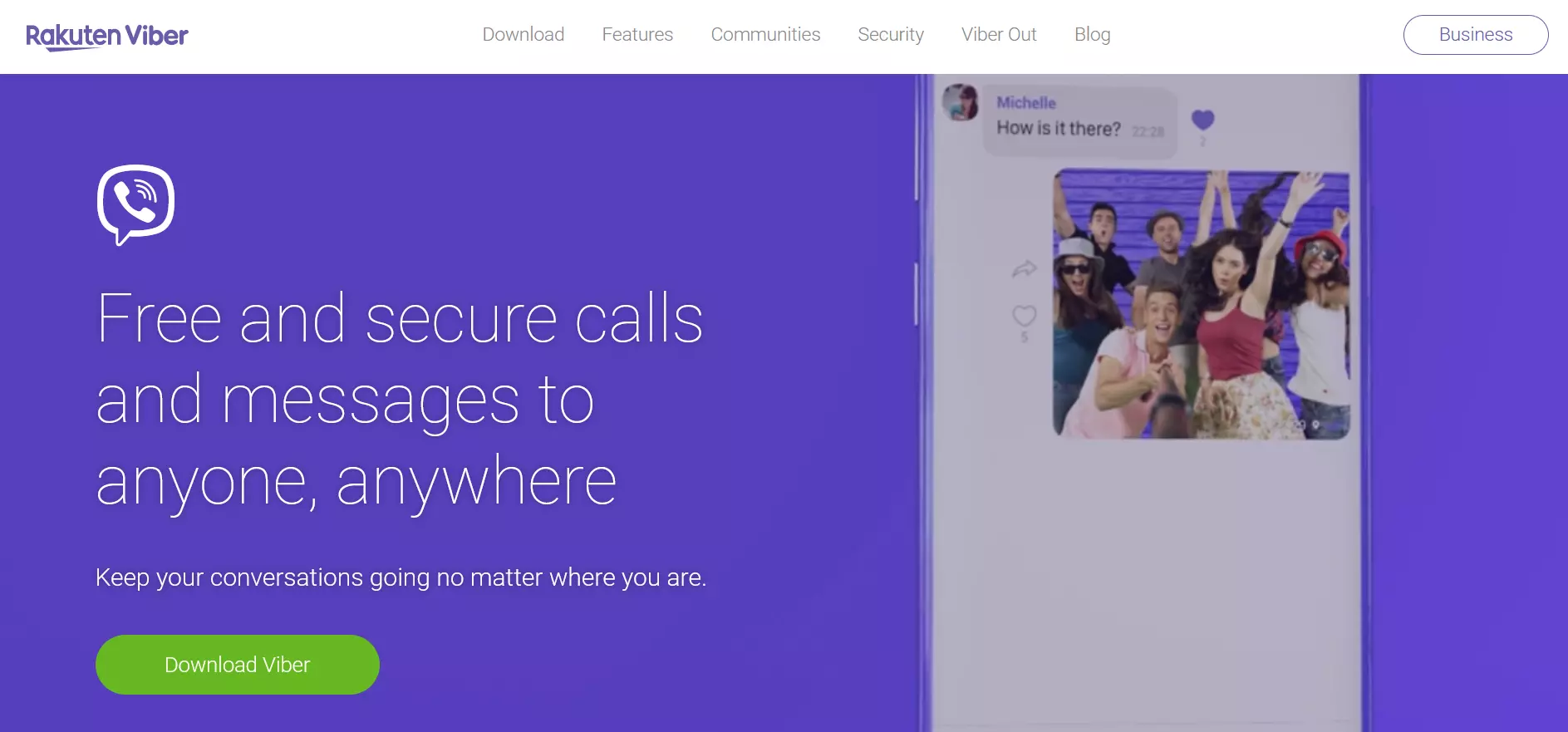
The messenger app Viber was released in 2010 and bought by the Japanese company Rakuten four years later, which is why it is now called Rakuten Viber. In addition to the offer for private individuals, there is also a business variant of the app, which is advertised using success stories from well-known brands such as Coca-Cola and FC Barcelona.
Viber has various features. Besides the usual message exchange including emojis, you can also make voice calls and video chats. If the conversation turns out to have more participants than expected, it’s not a problem since the service enables group chats with up to 250 participants. Another advantage of this messaging service is the data protection. It is possible to set up messages that self-destruct so that they automatically disappear after being read. End-to-end encryption also ensures that all chats are protected from third party access at all times — including Viber itself.
However, the messaging service also has some downsides. It can be downloaded for free, but unlike other apps, it is not ad-free. With Rakuten Advertising, companies can reach a large number of potential customers by placing their ads on Viber. Another disadvantage of Viber is that free communication can only take place between people who have the app. If you want to call someone who doesn’t have the app installed, it will only work if they have previously purchased the fee-based VoIP service Viber Out. Prices vary depending on the destination region and the selected package.
| Advantages | Disadvantages |
|---|---|
| ✓ End-to-encryption | ✗ Advertisements |
| ✓ Option to make messages self-destruct | ✗ Phone calls are only free with other Viber users |
| ✓ Group chats up to 250 participants | |
| ✓ Fun features such as emojis and Viber games |
Telegram
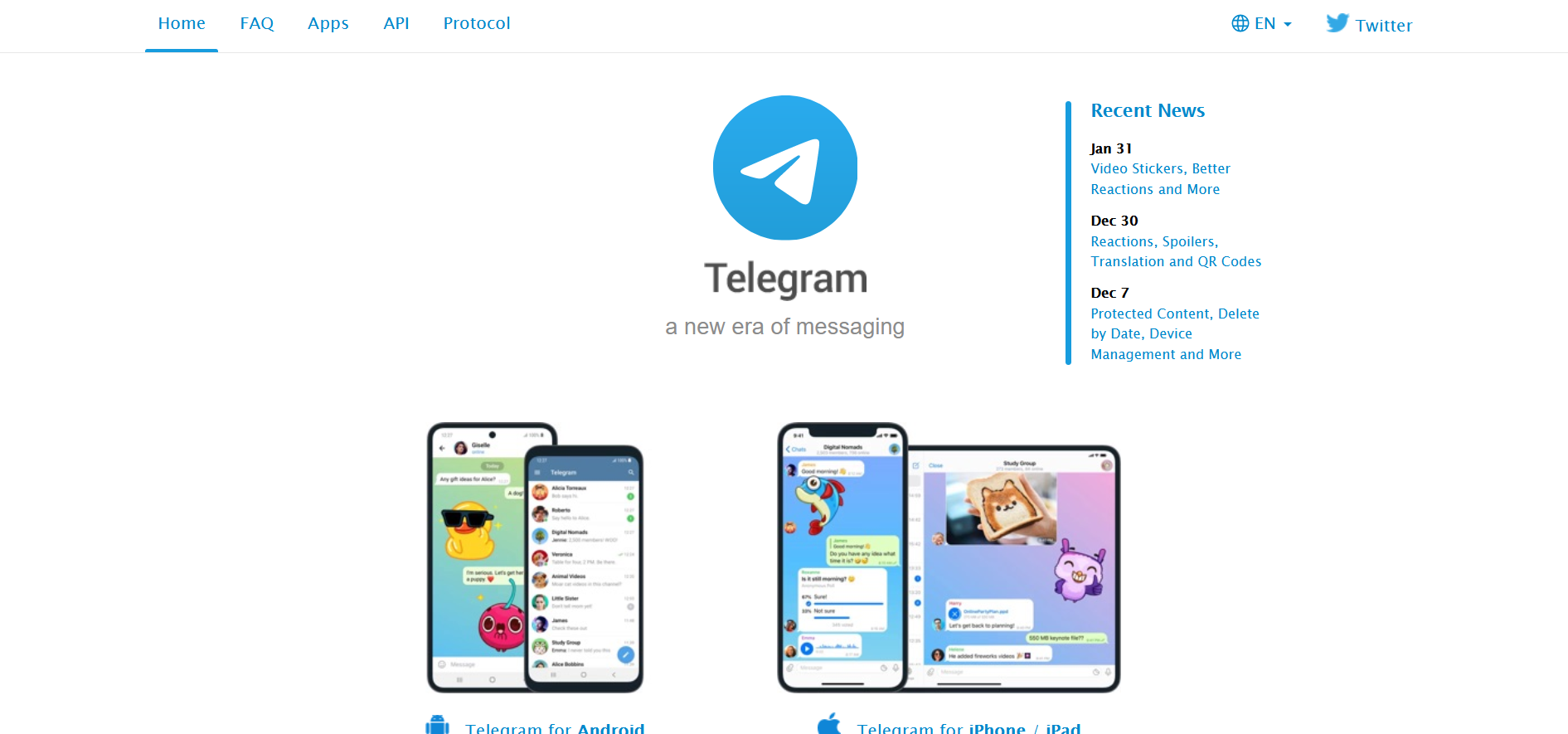
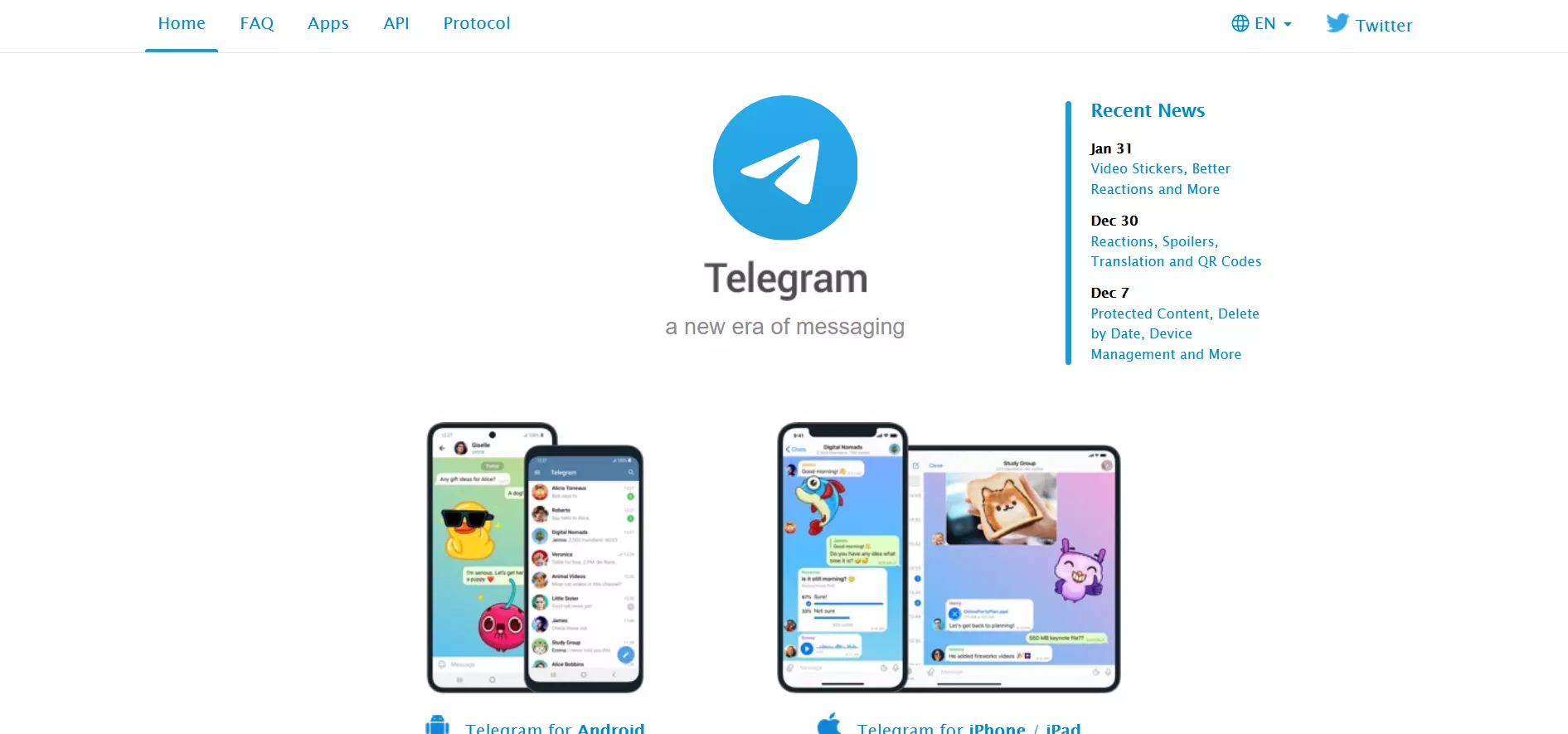
Telegram is a company run by the Russian brothers Pavel and Nikolai Durov, who are famous for founding the Russian alternative to Facebook, VKontakte. Their WhatsApp alternative has advanced the technology behind messenger apps: Telegram is cloud-based, meaning users can easily access their Telegram content across multiple mobile devices as well as on their computer. In addition, users can send an unlimited number of files, each with a size of up to two gigabytes. In contrast, WhatsApp limits the number of files that can be sent and received based on the storage capacity of the user’s device — typically a smartphone.
Telegram is considered a very secure application. The developers offer two different forms of encryption for users. For private and group chats, there’s server-client encryption, which encrypts messages as they are transmitted from sender to server and from server to recipient. Telegram offers end-to-end encryption in the form of secret chats, which ensures that only the sender and the recipient can read a message. There’s also a setting for the secret chat mode that ensures the message will automatically be deleted after a certain amount of time. Additionally, the message and/or content sent can’t be copied from the chat or forwarded to anyone else, and if the sender chooses to delete it, it will also be deleted from the recipient’s device.
It’s important to mention that the latest version of WhatsApp now also offers end-to-end encryption for all messages. Since this type of encryption isn’t possible for cloud-based content, Telegram makes a compromise here regarding data protection in favour of greater user-friendliness. Users who are concerned about this and the messenger’s lack of transparency in its corporate structure should consider looking for another alternative to WhatsApp.
| Advantages | Disadvantages |
|---|---|
| ✓ Unlimited number of files can be sent (up to 2 GB per file) | ✗ End-to-end encryption not enabled by default |
| ✓ Open-source client | ✗ Stores metadata and messages on servers |
| ✓ Cloud-based, accessible from multiple devices | ✗ Limited transparency about the company itself |
| ✓ Self-destructing messages available | ✗ Potential privacy risks due to cloud storage |
Threema
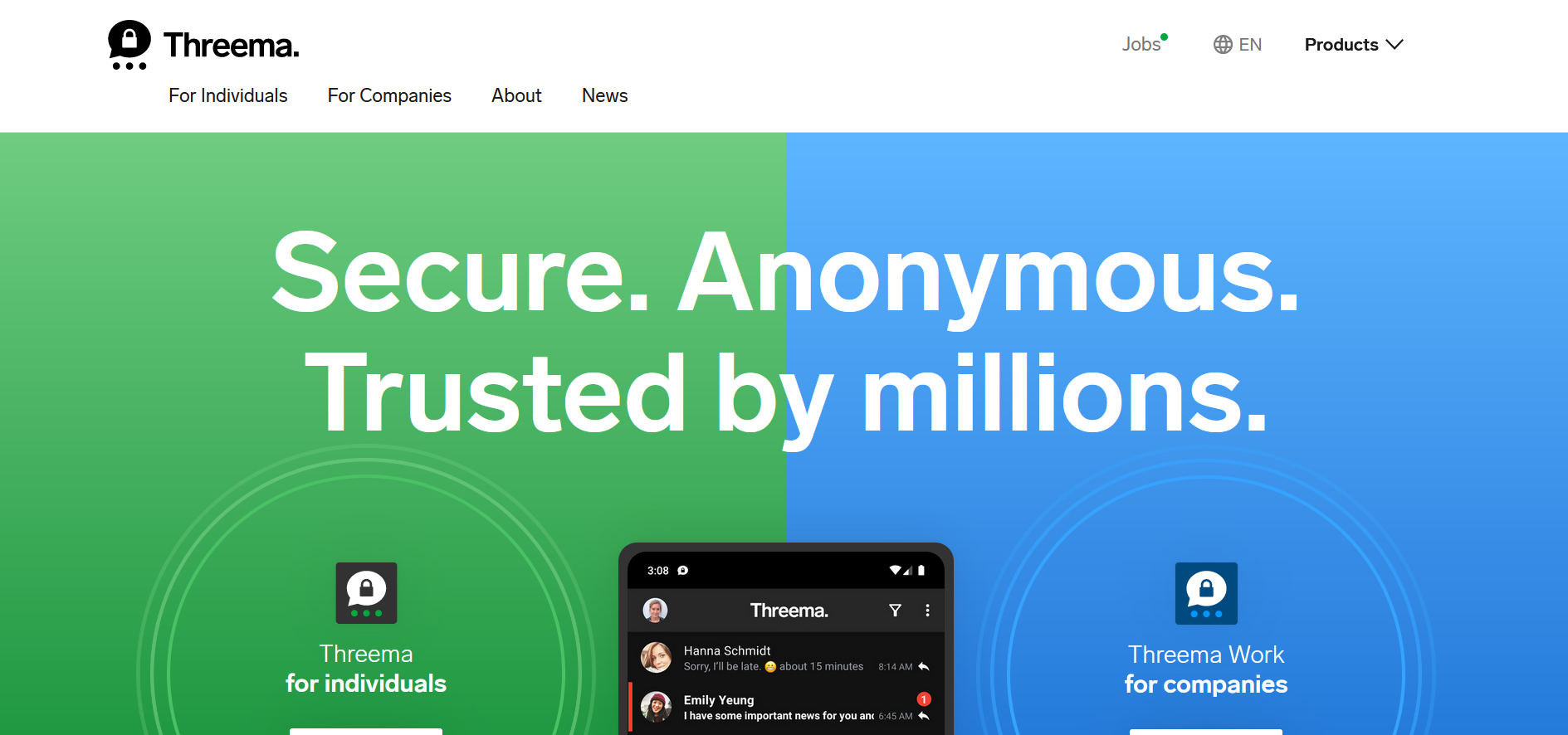
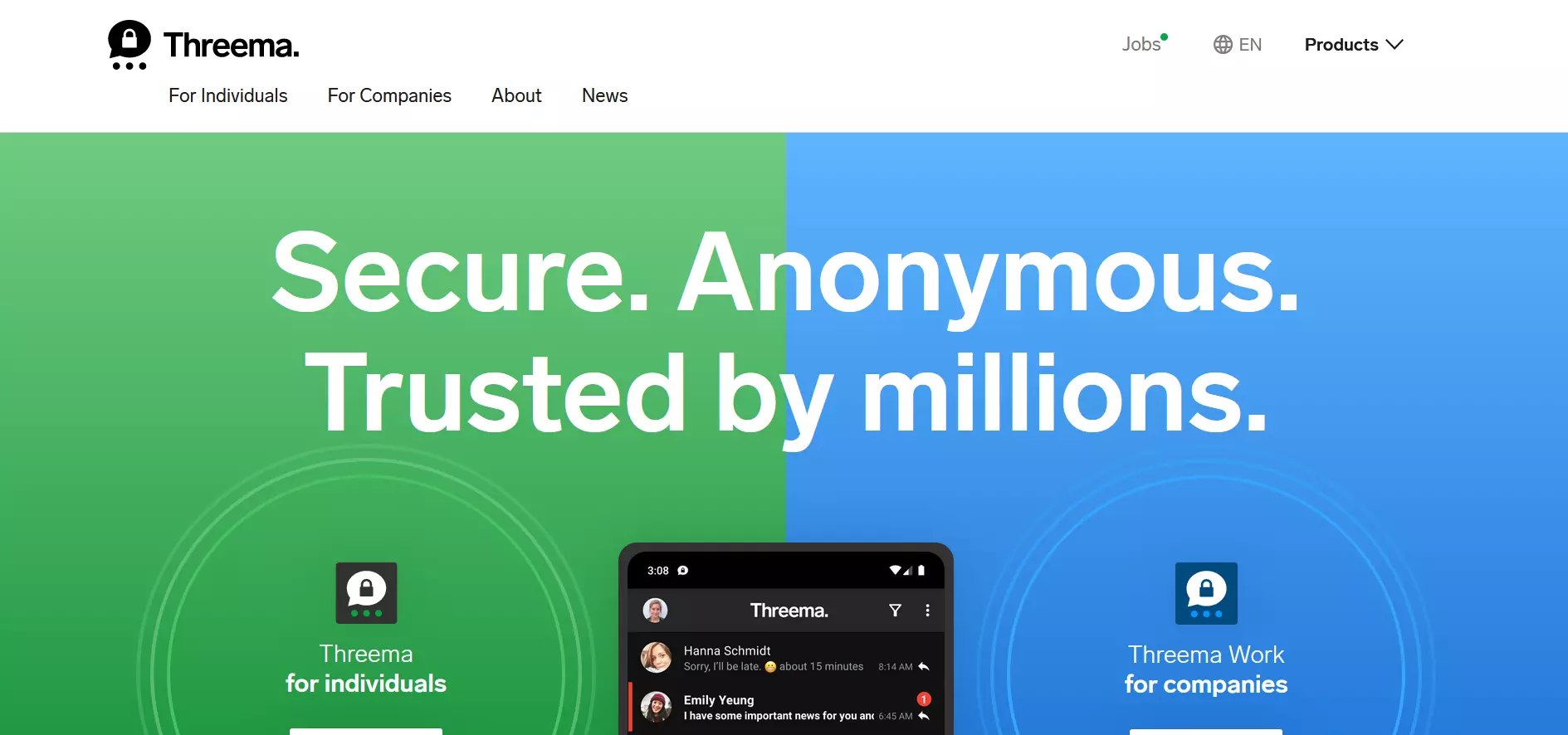
Threema is a messaging app from Switzerland. Like most alternatives to WhatsApp the app is very secure when it comes to data. Like WhatsApp, Threema uses end-to-end encryption for all messages. In addition, messages are deleted from the server as soon as they have been successfully transmitted. Additionally, Threema manages groups and contact lists exclusively on mobile devices, not on the server. When Threema synchronises contacts from your phone’s contact list, they are transferred to the server anonymously (hashed). In addition, unlike WhatsApp, Threema does not store metadata about who is communicating with whom and when. This WhatsApp alternative takes user data protection much more seriously than its competition does. Threema’s servers are located in Switzerland, where they are subject to strict data protection regulations.
Threema stands out not only for its strong data protection but also for its useful features. For example, Threema can be used without providing any personal information. When you first use the app, you are assigned a randomly generated eight-digit Threema ID, allowing for anonymous use. Threema also offers a PIN lock feature for private chats.
The catch with Threema is not only — as with any app that is similar to WhatsApp — the relatively low number of users, but also the fact that the messaging app is not free. In order to use the app, you have to buy one or more licenses for a small fee in the app store or the Threema store. In the Threema store, you can buy the Android version via PayPal, with Bitcoins as well as other payment methods.
| Advantages | Disadvantages |
|---|---|
| ✓ Encrypted phone calls are possible | ✗ Not free |
| ✓ Linking with email or cell phone number is optional | ✗ Comparatively few users |
| ✓ Open source | ✗ Messages can’t self-destruct (but are deleted from the server) |
| ✓ No advertising | |
| ✓ Company headquarters in Switzerland with strict data protection guidelines | |
| ✓ Hardly stores any metadata |
Spike
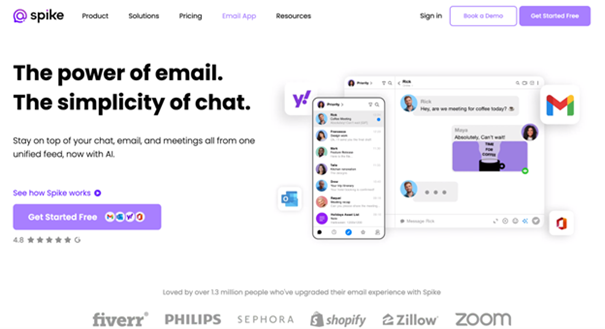
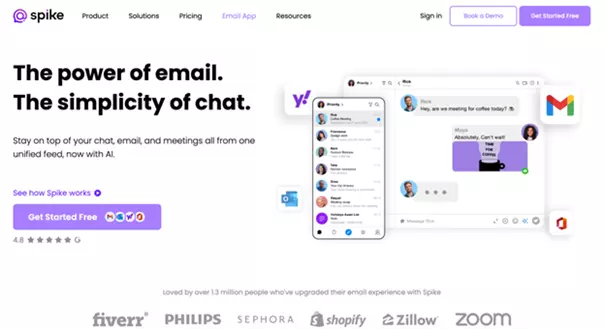
Spike is an innovative messaging, email and collaboration app that not only revolutionises communication but also serves as a compelling alternative to WhatsApp. Unlike traditional email platforms, Spike transforms your inbox into a streamlined platform for communication, eliminating the complexities of subject lines and signatures. There’s no need to provide a personal phone number when signing up, which sets it apart from other apps like WhatsApp. Instead, an email address is all you need to use Spike.
Spike’s group chat feature bears a striking resemblance to WhatsApp’s, allowing for instant creation of groups and the possibility to add any Spike user. The sole requirement is an email address, granting all group members the ability to engage in real-time messaging. Additionally, Spike enables one-on-one private messaging in both text and voice message formats, along with support for video and audio calls. However, the basic version allows a maximum of ten different group chats and does not offer the option to call more than one person at a time.
Spike relies on open standards and protocols with email, meaning you can communicate with your contacts or clients even if they don’t use Spike. Data security is a top priority for the Spike team: all data is automatically encrypted with AES-256 before transmission. Spike also offers Magic AI, an AI-powered communication assistant that streamlines workflows, summarises content, and boosts productivity.
- Write perfect emails with optional AI features
- Includes domain, spam filter and email forwarding
- Best of all, it's ad-free
Spike offers a cross-platform web application as well as apps for iOS, Android, Windows, and macOS. The basic version is free for personal use and allows you to manage one email account. For additional features, paid packages are available:
1. Pro Plan (around £3/month): Allows you to manage up to three email addresses, access unlimited search history, and provides additional storage.
2. Business Plan (around £6/month): Offers advanced features such as custom email domains (free for the first year), 1 TB of storage, and the ability to upload large files up to 100 MB.
| Advantages | Disadvantages |
|---|---|
| ✓ Free of charge for private use | ✗ Little transparency about the company itself |
| ✓ Can be used without specifying a phone number | ✗ Basic version allows a maximum of ten different group chats |
| ✓ Cross-platform (web and desktop/mobile apps) | ✗ Basic version does not include a group chat option |
| ✓ All data is transmitted and stored with unique AES-256 encryption |
Signal
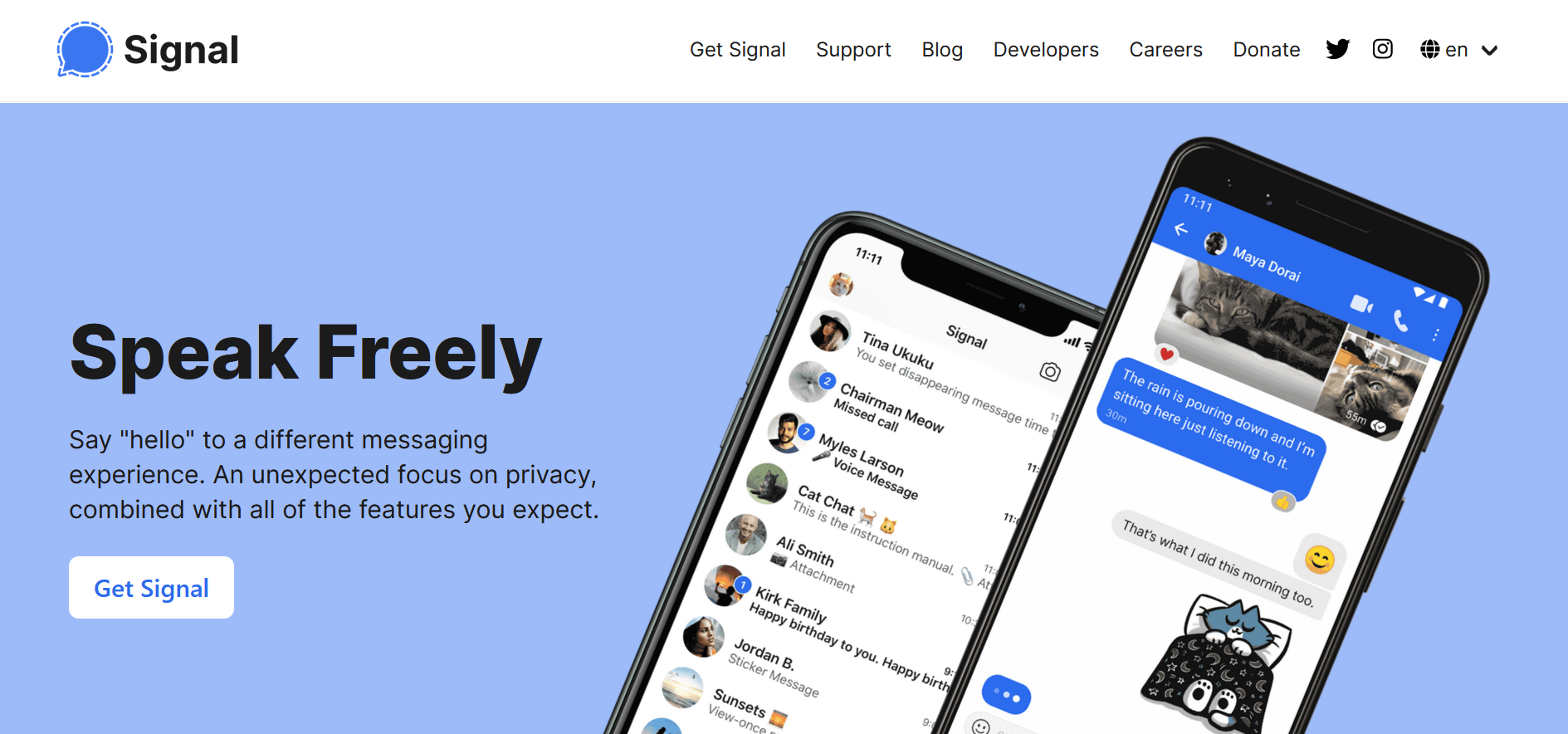

Signal is, like most alternatives to WhatsApp, relatively unknown, and its developers even more so. The creators of Signal, Open Whisper Systems, have delivered end-to-end encryption software with open-source code, which has been used by WhatsApp, Telegram and other companies to develop their own encryption. Edward Snowden uses Signal, and the team around cryptographer Moxie Marlinspike, the founder of Open Whisper Systems, has built up an excellent reputation among IT security experts. Open Whisper Systems is financed entirely by scholarship grants and donations, so it doesn’t rely on any advertising.
As might be expected from the most famous encryption technology available for messengers, security is at the forefront of everything Signal does. Both private and group chats are secured with end-to-end encryption, and telephone numbers are transmitted anonymously (hashed) to the server. In contrast, users are required to share their contact list with Signal when they sign up. Signal hardly stores any metadata and doesn’t store any information about who communicates with whom. The only thing the app can store is whether someone uses the service.
| Advantages | Disadvantages |
|---|---|
| ✓ Open source | ✗ Phone number is required for registration |
| ✓ Self-destructing and disappearing messages | |
| ✓ PIN lock function | |
| ✓ Both encrypted messages and phone calls | |
| ✓ Hardly stores any metadata |
Ginlo
The messenger service Ginlo is operated by the company ginlo.net, which is based in Germany. Like most apps similar to WhatsApp, Ginlo also enables its users to send encrypted messages and files free of charge and without advertising. Users can further protect their data by scanning a QR code when meeting someone in their contacts in person, therefore verifying their identity.
Self-destructing messages are a special feature. Pictures, videos and chats can be automatically removed as soon as the recipient has seen them. It’s also possible to send messages at a predefined time. To do this, you simply set the time you want to send the message in advance. Another special feature of the app is that users can find out about the latest news via content channels.
The app is available in a free version for private users and a business version. Businesses have the option of having the app’s design customised to their own brand. Unlike private users, business customers can download versions for Mac, Windows and Linux in addition to the Apple and Android versions.
| Advantages | Disadvantages |
|---|---|
| ✓ End-to-end encryption | ✗ Phone number is required for registration |
| ✓ Verification of personal contacts | ✗ Low user numbers |
| ✓ Self-destructive messages | |
| ✓ Messages can be scheduled | |
| ✓ Business solution for companies |
Are you looking for a tailored WhatsApp alternative for everyday business? Teamwire offers you numerous ways to collaborate such as video conferencing, broadcasting and live location features in addition to classic private messaging. You also benefit from the highest level of data protection (GDPR-compliant) and data security!
Wire
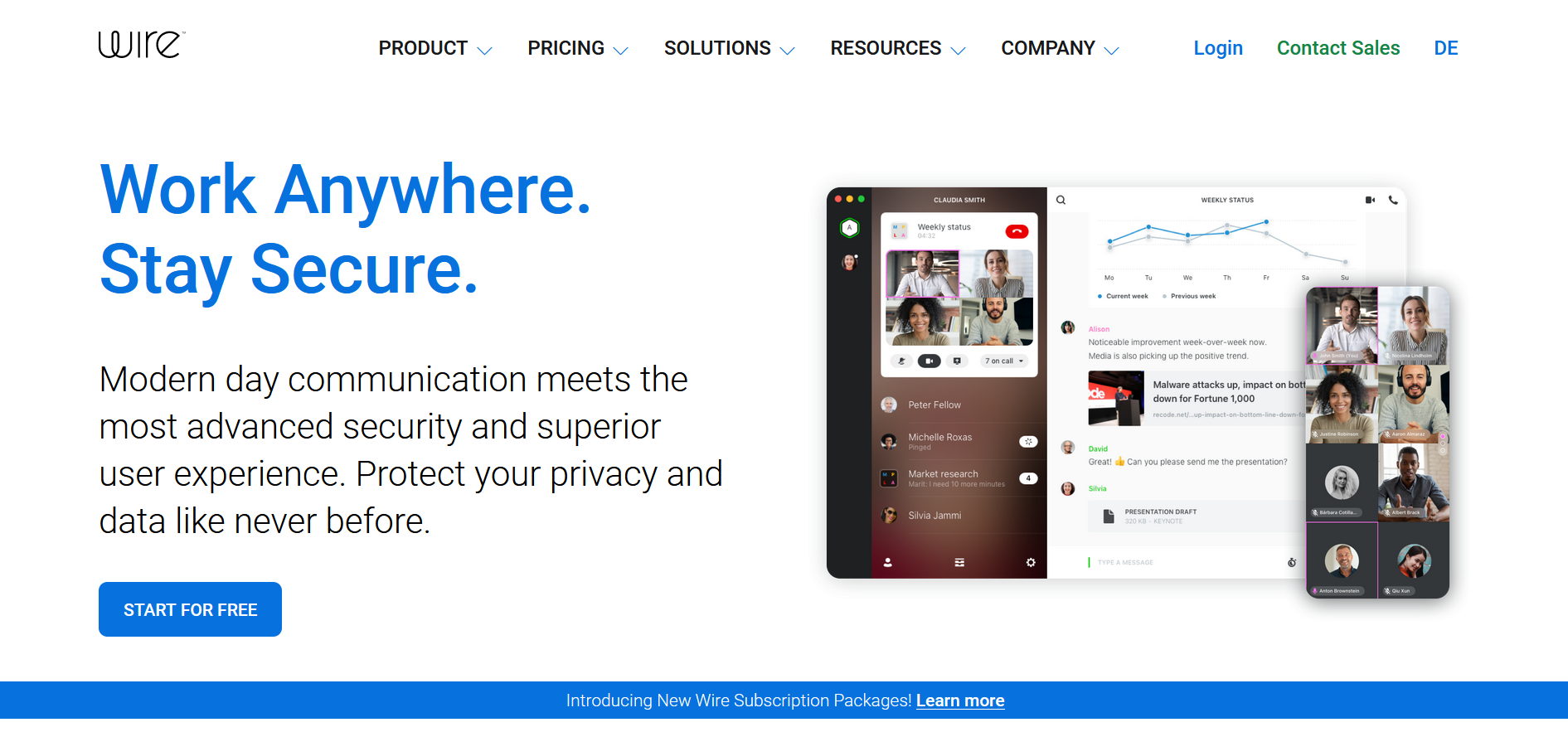
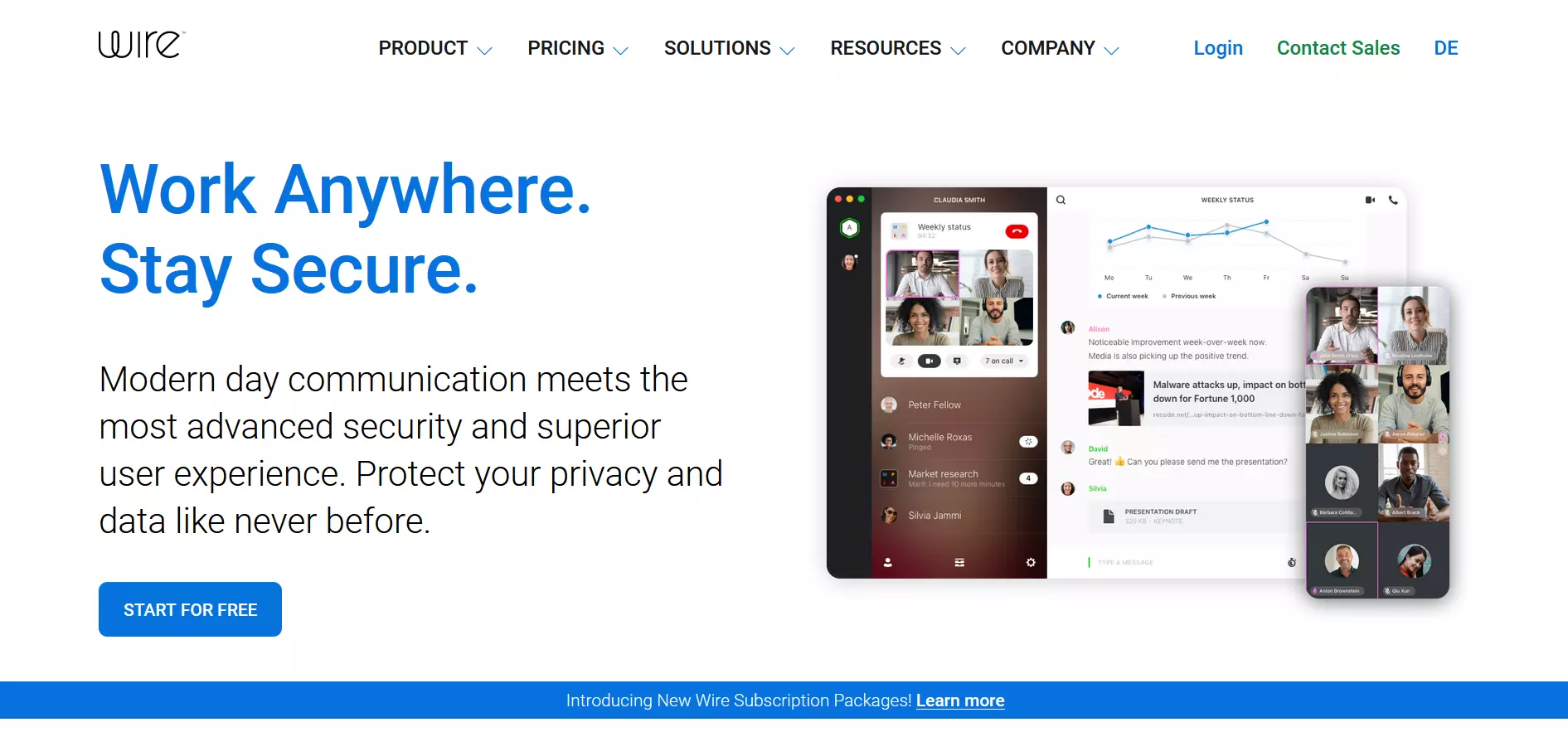
Wire is a secure messenger and WhatsApp alternative that was founded in 2012 and launched two years later. The company behind it, Wire Swiss GmbH, is based in Switzerland, while most of the technical development takes place in Berlin. There is also an office in San Francisco. Wire’s source code is publicly available, and its user experience (UX) is well designed.
Like other messaging services, Wire also offers platform independence and end-to-end encryption. Another plus point is that you can make group calls with the app thanks to voice-over-IP technology. In addition, Wire was founded by Skype co-founder Janus Friis. Just like Skype, phone calls are tap-proof.
However, like Telegram, the app stores metadata, including various user profile and device information. In addition, it’s best to be cautious with third-party functions such as YouTube or SoundCloud. This is because the data that users generate when sending such content falls under the data protection provisions of the respective third-party providers. So if you want to avoid disclosing information about your usage behaviour, it is better not to use these options.
| Advantages | Disadvantages |
|---|---|
| ✓ Subsidiaries in Germany, Switzerland and San Francisco | ✗ Low user numbers |
| ✓ Cross-platform | ✗ Stores metadata |
| ✓ Group calls possible | |
| ✓ Modern design | |
| ✓ Open source |
Summary of WhatsApp alternatives
The biggest disadvantage of WhatsApp alternatives is certainly the small user base. Few people are eager to deal with the hassle of convincing a large portion of their friends to switch to a new app before they can even start using it properly. It can be just as tricky if your entire work team relies on WhatsApp and you risk being left out because you chose not to use the most popular messaging app. Still, this should not stop you from choosing a more secure option. You can simply install multiple messaging apps and notifications from all of them will appear together on your smartphone’s home screen.
Another important point to keep in mind is that the more often you use messenger apps that do not collect metadata, the harder it becomes for anyone to build a complete and accurate profile based on your information. Over time, you might even manage to gradually convince your friends and colleagues to adopt more secure apps.
- Store, share and edit data easily
- ISO-certified European data centres
- Highly secure and GDPR compliant