

Google AdWords alternatives: the best platforms for effective SEA

Although it might be the case that as an internet user you don’t use Google’s search engine, it is still highly likely that you will end up using YouTube (part of Google since 2006), the Chrome web browser (created in 2008), or even the mobile operating system Android (released in 2008). The fact that Google and its subsidiaries are so prevalent online makes the company's platforms and applications invaluable to advertisers.
Google rarely publishes exact figures, but it is estimated that every second the internet giant receives a minimum of 64,000 search queries. Many of these requests then display advertisements to users as part of the search results. These Google Ads are controlled by the company's own advertising system. This makes the Google AdWords platform one of the most important marketing channels worldwide. Additionally, there are ads that are displayed on many other websites via the Google Display Network.
However, this does not mean that other platforms and search engines should be ignored. On the one hand, certain platforms (e.g. the social media giant Facebook) allow you to target users very specifically through various methods. On the other hand, users who decide against Google are also depriving themselves of access to a huge amount of potential customers. But there is definitely no harm in considering some of the alternatives to Google AdWords.
Advertising within search engines – the core of Search Engine Advertising (SEA) – revolves around bidding on selected search terms. If an advertiser successfully wins the bid, the advertisement in question is displayed to users who enter this particular search query in the search bar.
The best alternatives to Google AdWords
There are many different ways to promote your brand and products online. In addition to paid places in the search results of other search providers, AdWords alternatives can also give you the opportunity to build up interesting collaborations with social media marketing or content marketing. Furthermore, there is the widespread distribution of classic display ads.
Bing Ads
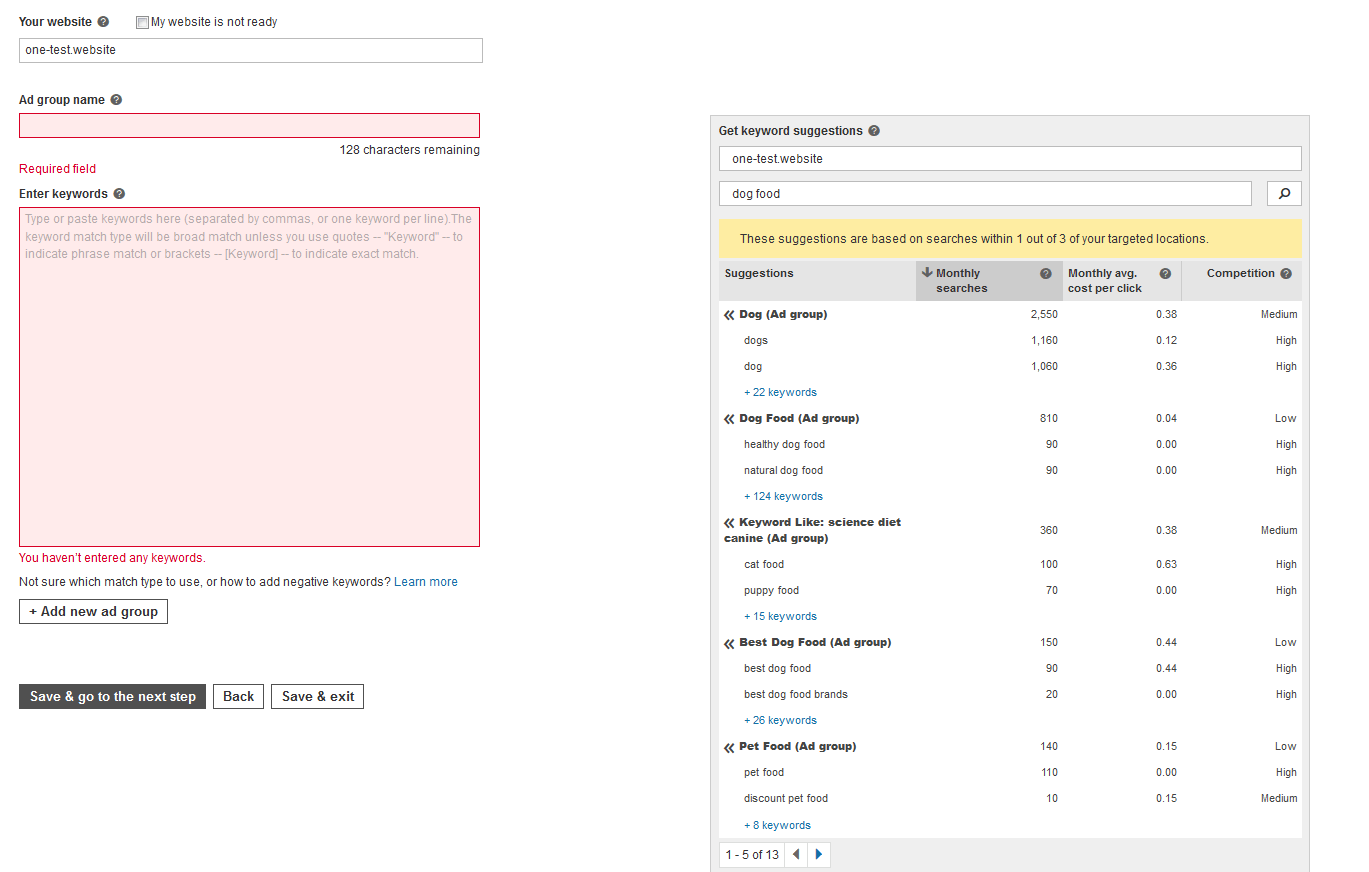
Bing, Microsoft's search engine, is Google's biggest and main competitor. Although Bing's market share is relatively small, it is still quite considerable when compared with other Google alternatives. This could be of great interest to some advertisers, as it means they can reach a relatively large target group (in 2017 Bing reportedly had a market share of over 30 percent in the US), including many mobile users from Microsoft. At the same time, there is much less competition than with Google.
As with Google, Bing Ads also operates via a bidding system when it comes to keywords. However, instead of booking an ad in the search engine, you place a bid on an ad space for a specific search term. Each time a user performs a search, an automatic auction is held on the ad spaces. This form of advertising space auction is known as 'real time bidding' (RTB) because the system makes the decision regarding who wins within a matter of milliseconds, i.e. virtually in real time.
However, as Bing tends to have far fewer advertisers in one place, the bids are also lower. This could be especially interesting for smaller companies that want to advertise with highly-popular search terms. As an advertiser, you only have to pay if someone actually clicks on the ad – this principle is called ‘pay per click’ (PPC). On top of this, Bing also has an interesting distribution network: Since the search engine is part of the 'Yahoo! Bing' network, ads are also displayed in the Yahoo! search engine.
When it comes to ad formats, Bing differs little from its huge competitor. In addition to the usual text ads presented directly in the list in the form of (selected) search results, other texts with links also appear next to the actual results. These are illustrated advertisements in the form of shop offers. Bing also displays the price of the product as part of these illustrated advertisements.
It goes without saying that, next to the giant that is Google, Bing will always be the dwarf. Arguably this is both an advantage and a disadvantage. Even with its collaboration with Yahoo! search, Bing will never reach as many users as Google. However, the prices are much lower, and the ratio of effort needed to potential efforts is significantly different. Since the operation is almost identical and it is possible to completely transfer campaigns from Google to Bing, this alternative could be very useful as an additional option.
| Pros | Cons |
|---|---|
| ✓ Less competition | ✗ Significantly less reach |
| ✓ lower prices | |
| ✓ Additional target groups |
Our introduction to Bing Ads explains how you can sign up for the Microsoft advertising service. It also goes into detail about what opportunities it offers and how you can create an advertising campaign within the search engine.
Yahoo! Gemini
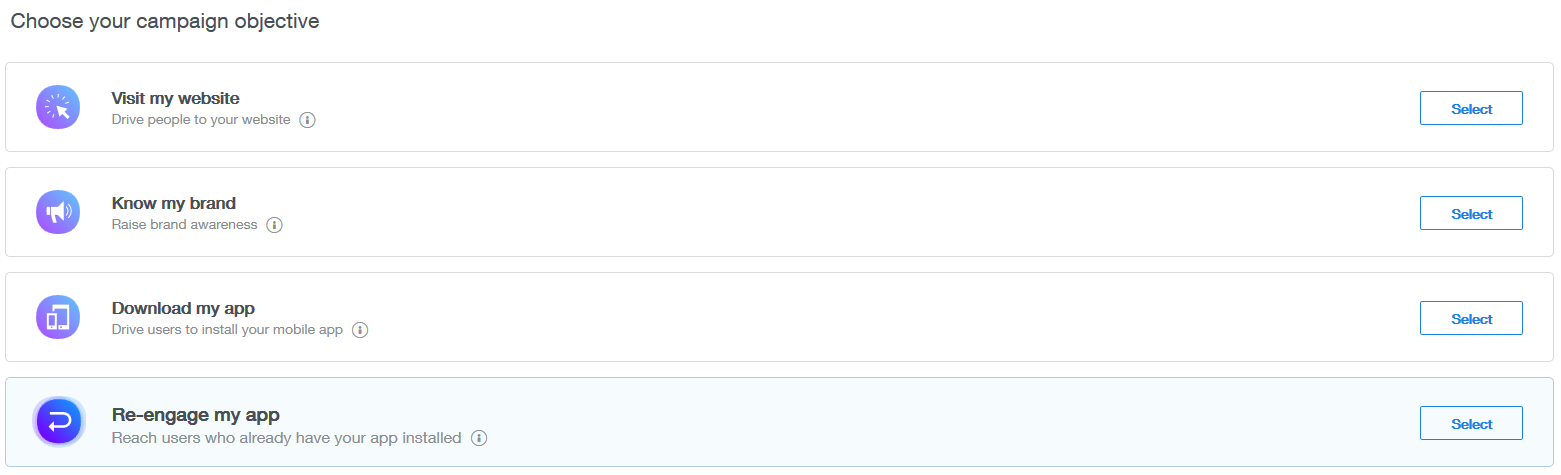
The longest serving of all the search engines also has its own advertising program. However, it should be noted that Yahoo! Gemini has only been around since 2014, and has a special focus on mobile search engine advertising. Like Bing, Yahoo! is lagging far behind Google when it comes to user numbers. Therefore both of these AdWords alternatives offer a simple service, which allows you to transfer data over to Google. Yahoo! Gemini also makes it easy to create new ads and campaigns, since it has an operating system that is very similar to that of the big competitors.
It's possible to define target groups relatively precisely: you can choose from criteria like location, gender, age group, and areas of interest. You also have the choice between the standard display and video format. With Google on the other hand, this is only possible in combination with their subsidiary, YouTube. Yahoo! Gemini will show advertisements that feature video material on both their own, as well as partner sites.
In addition to being particularly good at displaying all ad formats on mobile devices, Yahoo! Gemini also scores points with its native ads and its ability to play a company's own network content anywhere. Native ads are played out as content within the news streams of different platforms. Yahoo! itself is now perceived less as a search engine and more as a news platform. On top of this, Flickr (photo community) and Tumblr (blogging platform) also belong to Yahoo! and are integrated into the network in which Gemini distributes ads.
Since 2017, Yahoo! has also been part of Oath, a cooperation between the search engine provider AOL, under the leadership of parent company Verizon. Since AOL has also evolved from being an internet provider to a content provider, including online media such as the Huffington Post and TechCrunch, the advertising network has experienced a dramatic expansion. However the situation is different when it comes to the cooperation with Bing; while Bing Ads are also displayed in Yahoo! search results, it is not the case the other way around. This means that ads you create with Yahoo! Gemini will not appear in Bing's search results.
The payment model remains the same: ads are offered and a payment is only made once a user actually clicks on the ad (PPC). Like with Bing, the costs are much lower than the market leader, making Yahoo! a real alternative to Google AdWords. However, it is difficult to predict whether the return on investment will improve. Due to the lower number of users, it is likely that there will be far fewer leads i.e. potential customers generated. On top of this, you should not underestimate the problem of click fraud, regardless of the platform on which PPC is used.
At the end of the day, Yahoo! Gemini is less interesting for actual search engine advertising, and much more so for the likes of native ads. The large media network that Yahoo! now has at its disposal opens up a multitude of opportunities for online marketing; some of which you would never find with Google.
| Pros | Cons |
|---|---|
| ✓ Large network of content | ✗ Less useful for SEA |
| ✓ Lots of possibilities for native ads |
Amazon
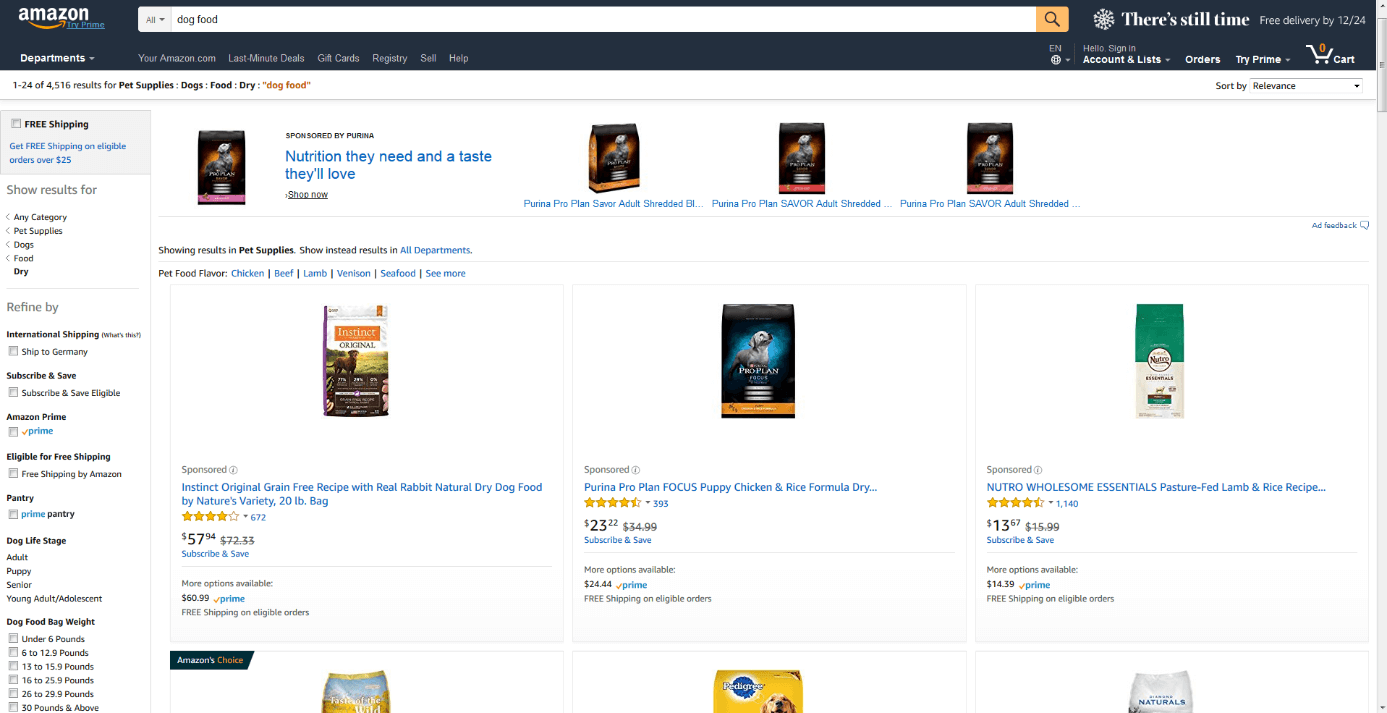
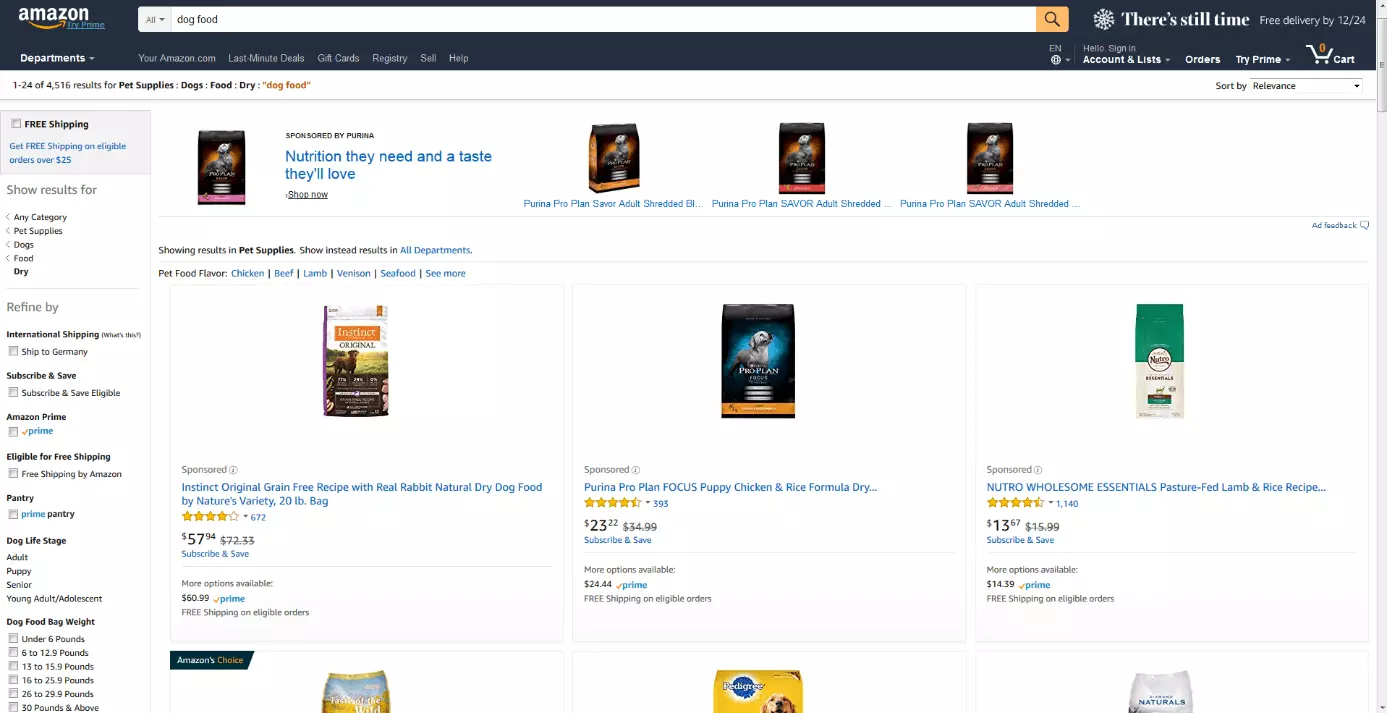
Amazon is becoming a more and more important company in the marketing world. As the range of goods on the platform (including Amazon Marketplace) becomes more extensive, the importance of the local search function is also growing. In order to find products, most customers use the search bar and subsequently receive sorted search results. Nowadays, many people also use Amazon to search for offers and product prices. This has turned Amazon into a very important field for both SEO and SEA. Given that the e-commerce platform now seems to have a market with numerous competitors for virtually every product, it is of utmost importance to be visible to customers there.
With Amazon, there are also different ad types. While sponsored products and headline search ads are dependent on keywords, the product display ads are displayed according to the interests of the specific user, or else for certain other products. This means that you can direct potential customers to your product page, either by specifying a particular area of interest or by having your ad appear as a sponsored entry on another product page. The two ad formats are based on search terms that appear either at the top of the search results (headline search ads), or else at the bottom (sponsored products). Sponsored products may also appear on the article pages of other products.
Amazon Marketing Services (AMS) is something which is available to all users who are registered with Vendor Central, Advantage Central, or Vendor Express. It's also possible to gain access if you are a marketing specialist who is representing an Amazon seller. However, this also means that it is necessary to become an Amazon partner to use the platform's marketing services. As a so-called seller, i.e. as a third-party supplier who sells his goods independently via the marketplace, you are not permitted to use the extensive marketing opportunities on offer. In this case you are limited to booking only seller central sponsored products and headline search ads.
Amazon's marketing services, as with the other AdWords alternatives, have a system wherein advertising places are assigned via auction. The highest bidder is awarded the spot, but also here it is the case that, as an advertiser, you only pay if someone actually goes ahead and clicks on the link. Whether the customer eventually buys your advertised product is irrelevant to whether you pay or not; you will always have to pay. This means that it doesn't make much sense to invest the advertising budget in products that have received a poor customer review. While these items will still be viewed, they will most likely not be bought.
Furthermore, Amazon also has another marketing program on offer. With the Amazon Advertising Platform (AAP), which is managed by Amazon Media Group (AMG), the online retail giant offers its partners some more typical online marketing opportunities. With the likes of display ads (e.g. advertising banners) you are primarily focusing on brand awareness. Here you have the option of either organizing your own campaigns or using AMG's help – however, in this case, you should have an annual marketing budget of at least £7,000. For any merchant, the advantage of using AAP remains the large collection of user data that the organization has in its possession.
This is the reason why Amazon's targeting methods are particularly effective. The online retailer knows its users very well and knows which products they are interested in. What did the user look at, but not buy? What was the last thing he or she bought? Which product types are of particular interest to them? Also, thanks to the emergence of Amazon’s voice assistant, Echo, there are likely to be even more options for advertising in the future.
When it comes to the online marketplace, Amazon is undoubtedly the undisputed number one. As a retailer, if you are already represented on the platform, it makes sense to take advantage of the advertising opportunities available. This could be crucial in order to set yourself apart from the vast competition. And given that Amazon is forever finding more and more ways to become indispensable in today's world, it definitely seems worth the effort to implement marketing methods on the platform.
| Pros | Cons |
|---|---|
| ✓ Large reach | ✗ Only relevant to online retailers |
| ✓ Various formats | ✗ Only possible in combination with being an Amazon seller |
| ✓ Very good targeting | ✗ Huge competition |
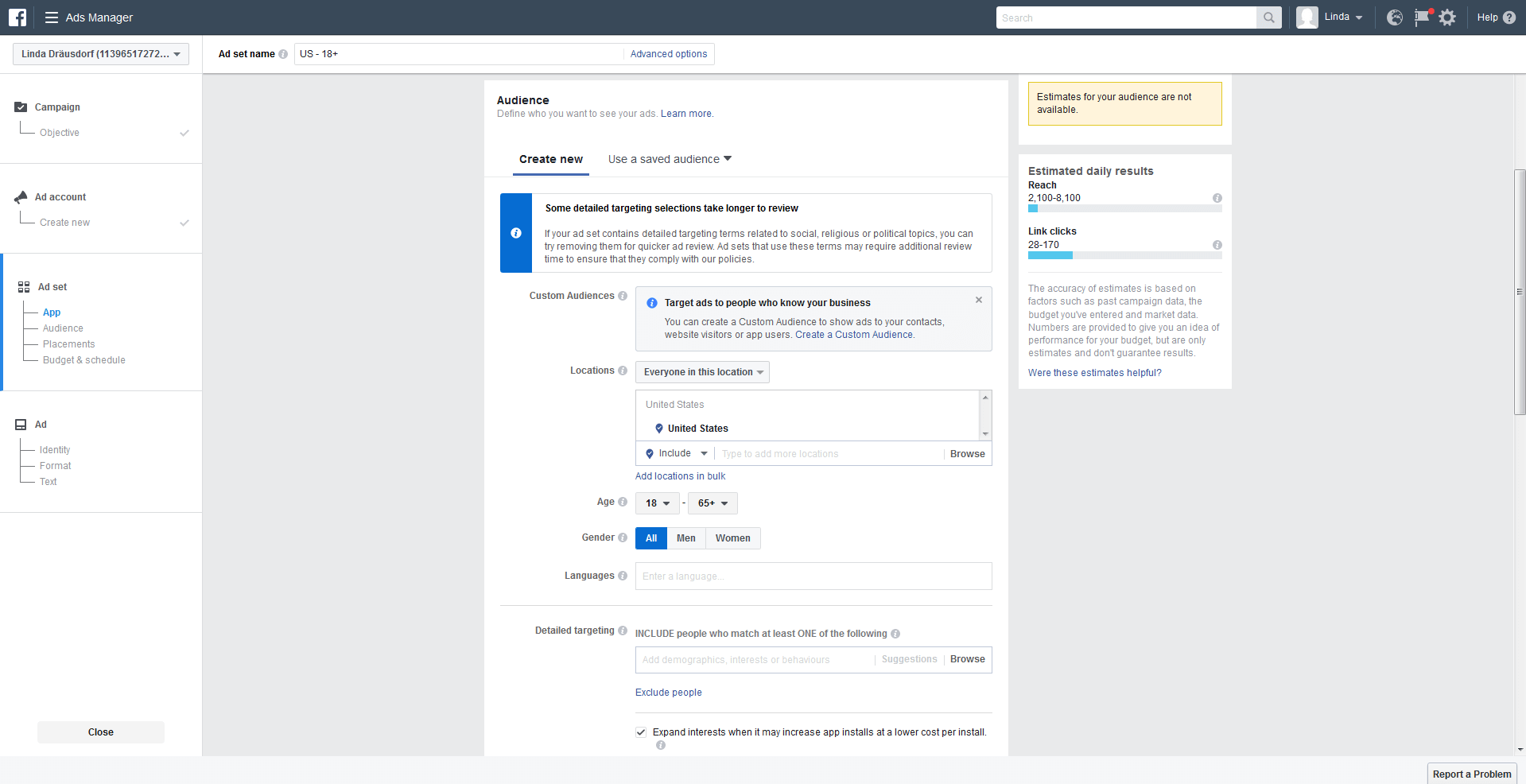
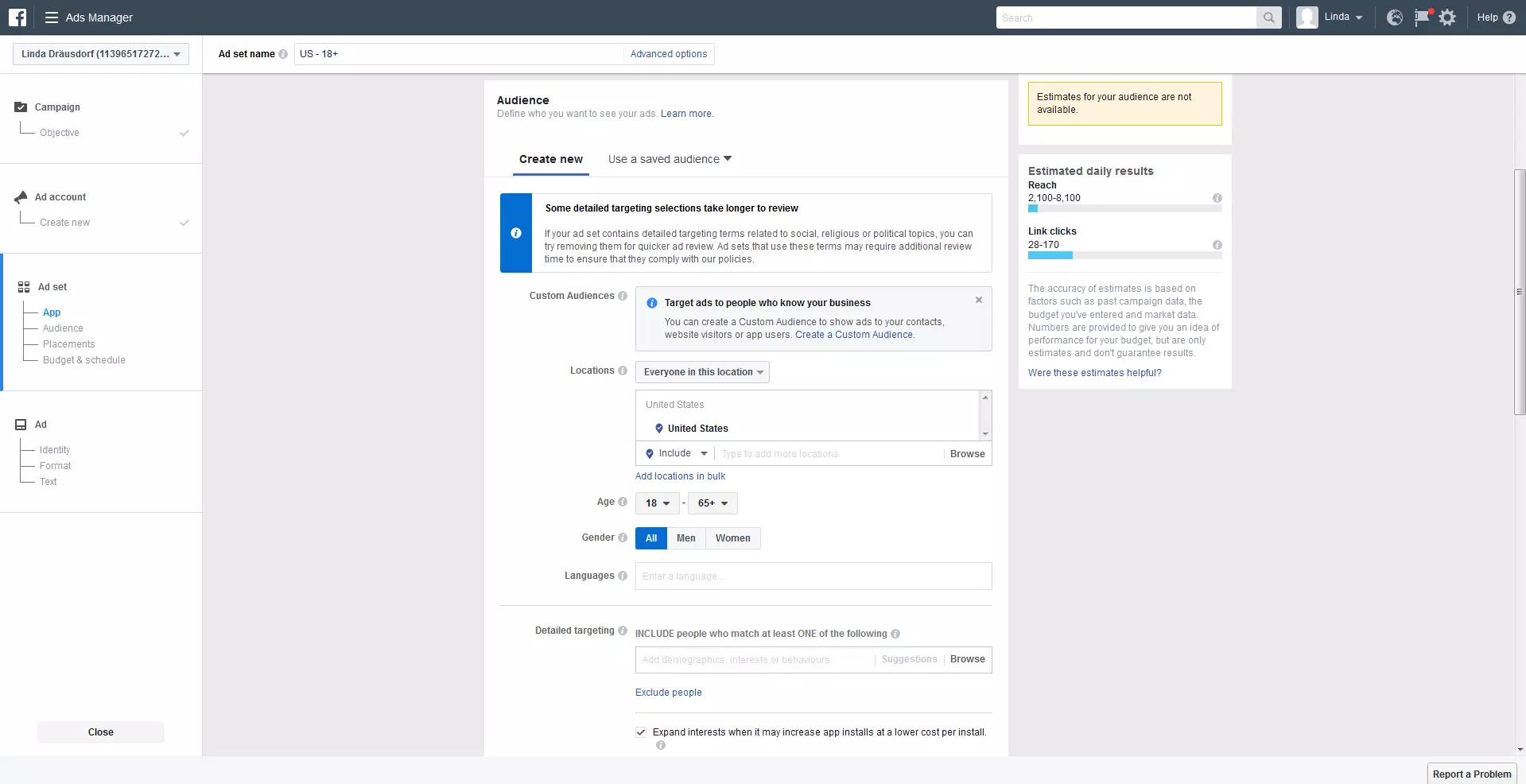
Facebook is not only a space that makes social media marketing possible, the world's leader in social media actually earns the majority of its revenue from the sale of advertising space. In contrast to viral marketing campaigns, which are (in principle) free of charge, the implementation of advertising here can be quite expensive. The social media platform offers both mixed advertising formats, as well as the more traditional display ads. The former is attainable if you sponsor your created content. Through the paid boost, Facebook distributes the post you wish to promote to more users than merely those who happen to follow your company profile.
On the other hand, advertisements provide you with a few more options. Here you have the choice of using text, photo, video, or even op to choose the more complex carousel or slideshow options. A carousel displays several photos or video in one advertisement. A slideshow, on the other hand, is an animation of photos and text. This tends to achieve better results than a normal video display, especially for users with a poorer internet connections (e.g. mobile users). Facebook also offers canvas for smartphones. This is a format that opens a full screen scrollable display when the smartphone screen is touched.
Facebook allows you to use advertising campaigns to generate leads, increase brand awareness, and/or encourage users to engage in specific interactions. It is also possible to define your target very precisely. Just like with Google and Amazon, Facebook knows its users very well. The social media giant is generally very aware of the surfing behaviour of its community; including hobbies, friends, and general interests. Furthermore, Facebook is in no way a standalone platform. The Facebook group (and advertising network) now also includes the photo sharing community Instagram, Facebook’s own instant messenger, as well as the Facebook Audience Network. The latter is a network of mobile apps who collaborate with Facebook and display ads.
On Facebook it is also auctions that determine which ads are to be displayed. As is generally customary, it is not just the highest bid that is the decisive factor. Facebook also takes into account the expected effectiveness of the advertisement, as well as the actual quality of it. This means that it is not possible to win auctions with a high advertising budget alone. It is also crucial that your advertisements have a proven past record of achieving good results.
As you create your ad campaign, depending on what or whom you are targeting, you can choose what it is you want to pay for. Is your bid based on clicks (CPC), per thousand impressions (CPM), or based around Likes, Actions, or Conversions (CPA)? This means you can adapt your bids to fit your own individual marketing strategy. It goes without saying that Facebook also makes it possible to measure the success of an advertising campaign.
For quite some time now, it has been impossible to ignore Facebook in the world of online marketing. True to the motto that customers should always be picked up where they already are, virtually every company now has some sort of presence on Facebook – from small cafes all the way up to major listed companies. However, this has also led to so much advertising 'noise' on the platform, meaning that can be quite difficult for smaller players to attract attention to themselves.
| Pros | Cons |
|---|---|
| ✓ Large reach | ✗ A lot of competition |
| ✓ Innovative ad formats | |
| ✓ Goes hand in hand with social media marketing |
It's not only Facebook that offers effective ad placement; all other major social networks offer marketing opportunities. To give an example, LinkedIn is particularly interesting when it comes to B2B strategies.
Outbrain
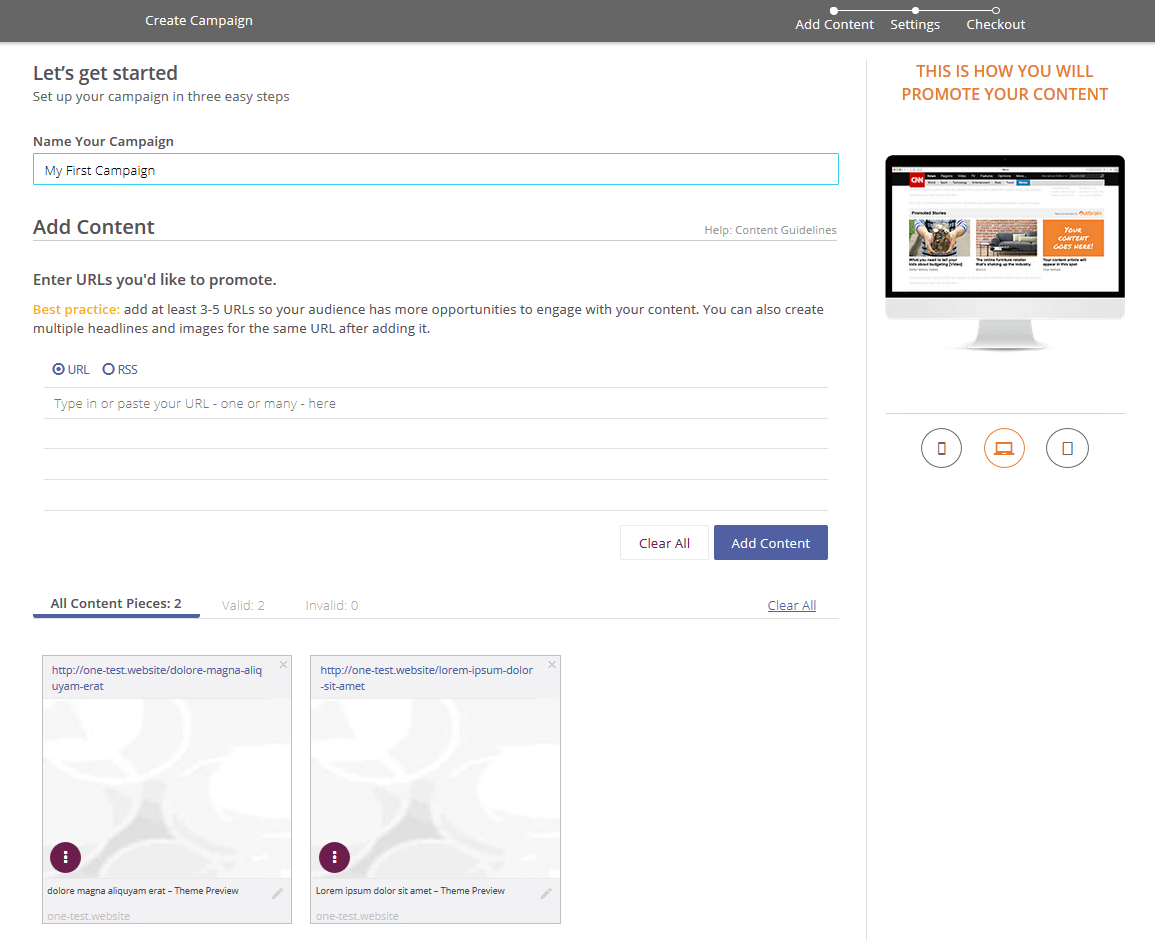
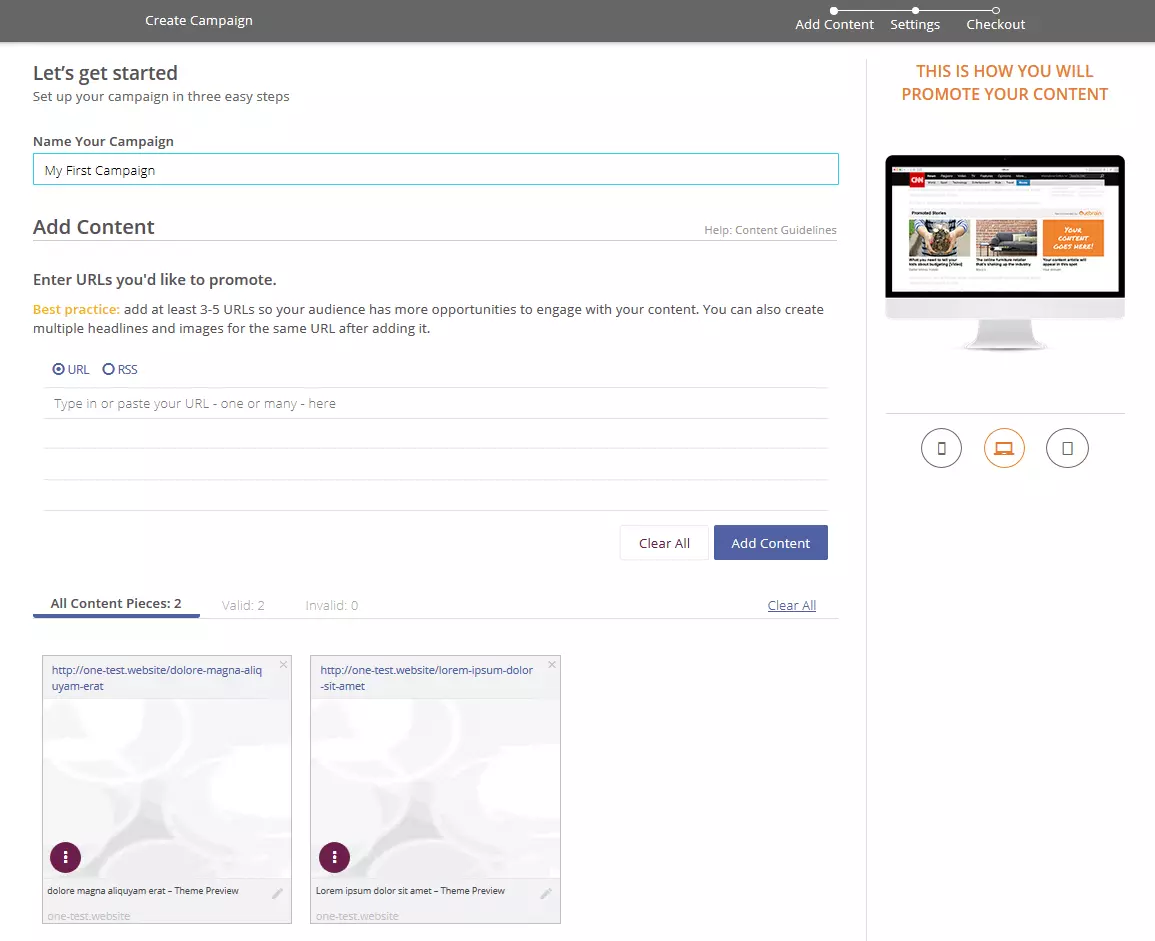
Even though social media is becoming increasingly important in the acquisition of information, a lot of content is still being generated on more traditional websites. For example, more and more people are reading newspapers and magazines online. And these users are now accustomed to receiving suggestions for further contributions after they have finished reading an article. In fact, many readers expect to receive suggestions at the end of every text that they read. This is where Outbrain comes into play.
Outbrain is a so-called content distribution network, which makes it an interesting alternative to Google AdWords. It sees itself as a company that aims to be the link between businesses and publishers. The general idea is that instead of more traditional advertisements (Display Ads), companies create editorial content that could be of interest to readers. Selected articles can also be integrated into other webpages, usually more popular ones. Naturally, the operator of the site charges a fee for this. This means that not every single advertiser has to sign a contract with every publisher. Instead, there are networks like Outbrain that do this for them.
Outbrain provides a widget that website operators can install on their respective sites. As a result, visitors to the website are also suggested articles which are not found on the same website, but instead on that of the advertiser. By clicking on the headline or the thumbnail, the user is directed to the specific article. Advertisers only incur costs when users actually click on the links (CPC). A company sets out a budget for this in advance, and once this is used up, the articles are no longer distributed.
If you do opt for Outbrain, there are further benefits that you can enjoy. According to Outbrain, 50 algorithms help to display content that really appeals to the customer. These algorithms look at the context surrounding the current article, the behaviour of the user group, as well as the surfing behavior of the user. Outbrain uses cookies for the latter of these, however, they can also be disabled via opt-out. Furthermore, Outbrain tries to understand when the relevance of an article is no longer given because, for example, if it is no longer up to date or relevant. Such articles then no longer appear in the widgets.
When creating a campaign, you select both the title and preview image. What this means is that the title of the link, as displayed by the widget, does not necessarily have to match the title of the linked article. It also becomes especially important if you are also simultaneously pursuing a SEO campaign with your content. The keyword that appears in the headline may work well for search engines but, unlike an ad, doesn't need to invite clicks. Once this step is complete, you can then decide on a budget and the CPC, which will define how you compete in the auction – Outbrain also auctions advertising spots.
It is also possible to specify the time period (if you do not want the campaign to run until the end of the budget) as well as the target group. To do this, you need to specify the locations where your content is to be on display and the devices it is to be displayed on. An information field next to your specifications indicates the expected range of coverage. With just these few settings, your campaign is ready to go online. Success is easily monitored. Additionally, A/B tests help to identify the best strategy.
It is also possible to promote only one article within a particular campaign, while still adding different images and headlines. This can be done to figure out which combinations work and which do not necessarily generate clicks. However, this link optimisation brings about one of the biggest problems for Outbrain, and other similar providers; clickbait. Instead of actually displaying relevant content, readers are encouraged to clicks with promising link titles and thumbnails. However, they are then ultimately brought to a page that contains mostly just advertising.
By establishing clear guidelines, Outbrain tries to counteract this behaviour. Along with sexual or illegal content, links that are purely for advertising purposes or have misleading titles are also prohibited. However, enforcing these rules can be difficult. The fact that there isn't more vigorous action being taken against clickbait is probably also down to the publishers. Online media companies are largely financed by Outbrain or one of its competitors.
Content distribution networks like Outbrain allow you to reach a large number of users on well-known websites such as The Guardian, CNN, and the Wallstreet Journal. Traditional advertising is not allowed through the service – something which is not necessarily a disadvantage for your marketing strategy. A bigger problem is that sponsored content links have generally fallen into disrepute, due to a number of black sheep spreading clickbait articles and fake news across Outbrain.
| Pros | Cons |
|---|---|
| ✓ Large reach | ✗ Only content marketing possible |
| ✓ Placement on reputable websites | ✗ Reputation for clickbait content and Fake news |
Taboola
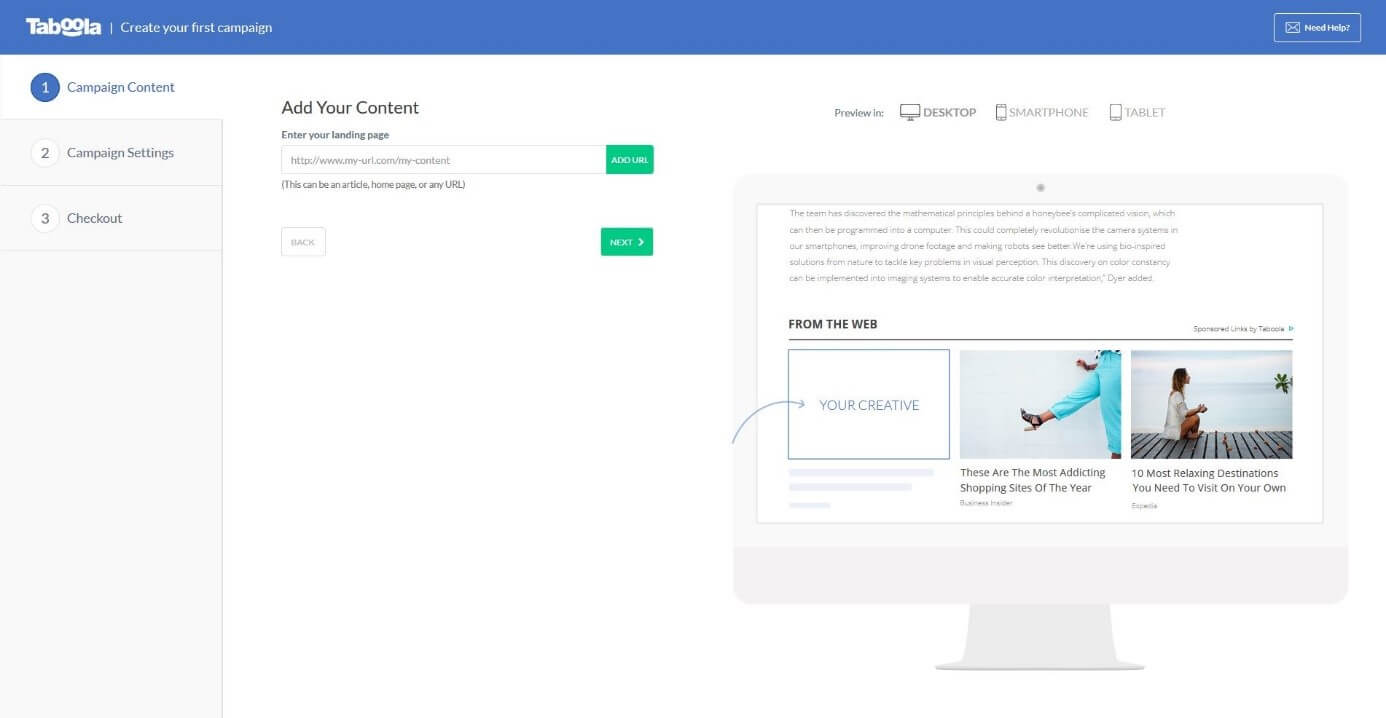
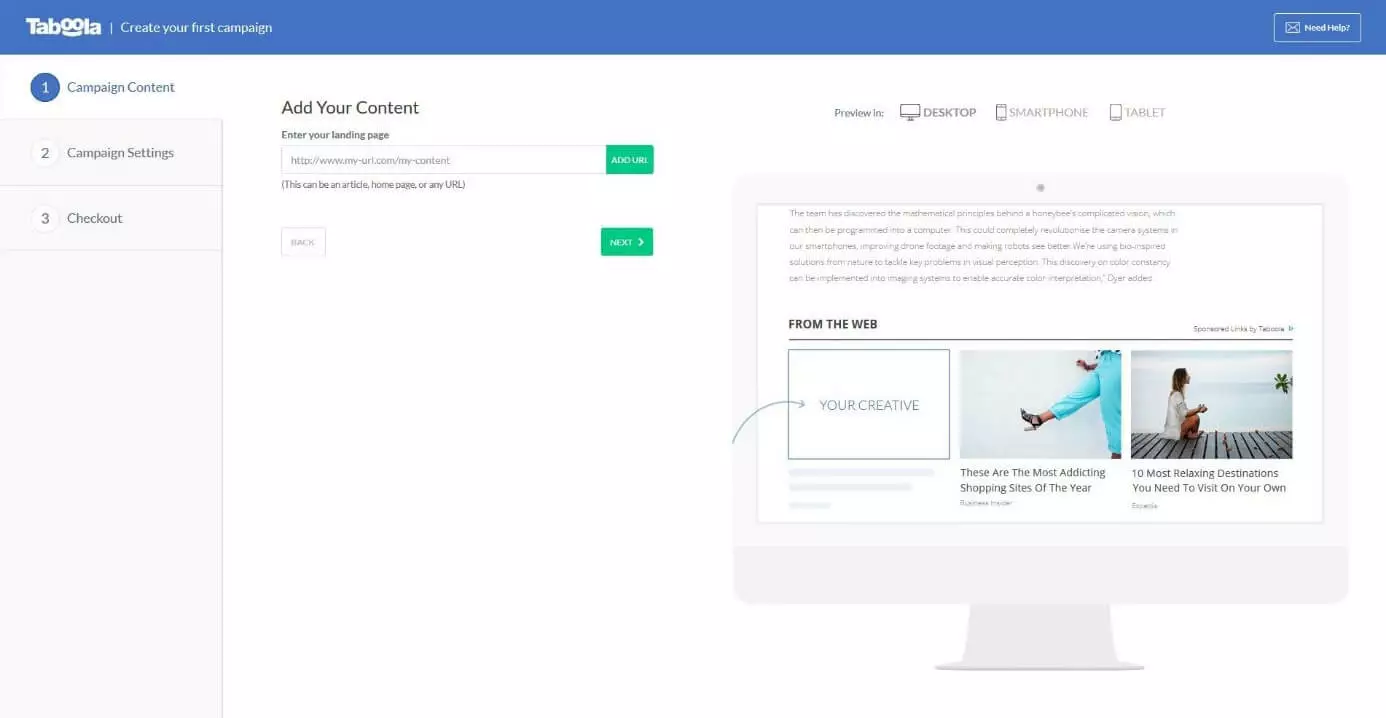
Similar to Outbrain, Taboola is a content distribution network, making it another interesting alternative to Google AdWords. At best, the differences between Taboola and its rival Outbrain are very minimal. Creating a campaign works just like with the latter: In just three steps (selecting and customising content, choosing reach and budget, entering account information) you can get your content marketing campaign online. One thing that is different, however, is the choice of content. While Outbrain only allows actual articles, Taboola also allows you to promote landing pages as well as entire websites. But according to the guidelines, linking to a website's homepage or directory is not allowed. Links to forum posts are also not permitted. On top of this, Taboola naturally prohibits content deemed to be fraudulent, offensive, and/or illegal.
Regarding the network of distribution channels of both providers, there is no significant difference when it comes to quantity or quality. But if you wish to be present across all major online media, you will need to use both providers simultaneously. This is because some sites cooperate with Outbrain and others with Taboola.
When it comes to narrowing down a target group, with Taboola (and Outbrain as well) there are a lot of limitations. This is quite a strong contrast to Google, Facebook, or Amazon. The reason for this is that content distribution networks are only intermediaries. This means that it is not possible to collect as much user data as huge online companies, which require users to disclose a great deal of information.
According to Taboola, they currently have thirty employees responsible for preventing fake news and clickbait. However, it should also be noted that Taboola's founder, Adam Singolda, places high value on freedom of expression. This leads him to justify a lot of what is disseminated via the content distribution network. Although the general concept is still enjoying relative amounts of success today, some publishers have now begun to understand that clickbait articles are having a negative effect on their reputation. This has led many to rely on their own solutions. At the end of the day, it makes this AdWords alternative only interesting for those with relatively serious advertising messages.
More so than Outbrain, Taboola is known for distributing articles with little content. This means that distributing your own content via the network is potentially risky. Nevertheless, the opportunity for such a large reach, also internationally, which these providers offer cannot be underestimated.
| Pros | Cons |
|---|---|
| ✓ Large reach | ✗ Negative associations with clickbait and fake news |
| ✓ Placement on very reputable websites |
Neben Taboola und Outbrain gibt es noch die beiden deutschen Anbieter Plista und Ligatus, die beide ganz ähnlich wie die internationale Konkurrenz funktionieren und die gleichen Vor- und Nachteile aufweisen.
Quantcast
 To display this video, third-party cookies are required. You can access and change your cookie settings here.
 Quantcast is a provider that primarily evaluates big data for the advertising industry. The US-based AdWords alternative can be seen mainly as a tracking service provider that collects data from participating websites, and similar to Google Analytics, uses it to compile statistics. Not only does Quantcast provide demographic data analysis for a particular website, but it also has the ability to track users across multiple webpages and create highly detailed profiles. Users of Quantcast Measure (the name of the analysis tool) particularly like how you can compare your own page with that of the competition – a feature you won't find on Google Analytics.
This knowledge of user groups also makes Quantcast a viable partner when it comes to the distribution of display ads. Just like Google AdWords and the other alternatives, Quantcast offers real time advertising (RTA). This means that when a user accesses a website where Quantcast ads are displayed, an auction is held in a short space of time. There are several factors, e.g. which target is being bid on, that help the system to determine which ad is to be displayed to the user at that time.
Quantcast can provide a comprehensive insight into user's surfing behaviour and interests. These are things which are of interest to advertisers. It allows you to precisely reach your target group and means less wastage of resources. However, this is what can be deemed as pretty traditional online advertising. Thanks to so-called 'banner blindness', many internet users no longer notice these sorts of ads – if AdBlocker does not automatically hide the ads.
| Pros | Cons | |
|---|---|---|
| ✓ Very accurate targeting | ✗ Only traditional display ads | |
| ✓ Large reach |
What are the Google Adwords alternatives? A quick overview
| Name | Works for | Aim | Reach | Comments |
| Bing Ads | SEA | Brand awareness Conversion Generating leads | low | 2nd most popular search engine |
| Yahoo! Gemini | SEA Native ads | Brand awareness Conversion Generating leads | medium | Part of the AOL group |
| Amazon | SEA Display ads | Conversion | high | Only for online retailers |
| Social media marketing Display ads | Brand awareness Connecting with customers Generating leads | high | Very important social network | |
| Outbrain | Content marketing | Brand awareness Connecting with customers Generating leads | high | Associated with clickbait and fake news |
| Taboola | Content marketing | Brand awareness Connecting with customers Generating leads | high | Associated with clickbait and fake news |
| Quantcast | Display ads | Brand awareness Connecting with customers Generating leads | high | Very effective targeting |