

What is server-side tracking?

Server-side tracking is a method of data collection in digital marketing, in which user data is processed on the website operator’s server instead of in the end user’s browser.
What is the purpose of server-side tracking?
Until now, tracking pixels and third-party cookies have been used in online marketing to track website visitors, collect user data and display targeted advertising. However, ad blockers, improved privacy and cookie policies, and the end of third-party cookies are forcing companies to seek alternative methods. Companies need to find methods that are capable of gathering reliable data without violating the General Data Protection Regulation or being hindered by browser restrictions. An alternative that is able to do this is server-side tracking.
Server-side tracking can be used to track and analyse various types of user interactions on a website. These typically include clicks, page views, form submissions, transactions and other actions that users perform on a website. Although server-side tracking works independently of cookies, first-party cookies can be used as part of server-side tracking to collect and store additional information about users.
Server-side tracking allows website operators to gather personal data related to user behaviour. This information is critical for making knowledgeable decisions about marketing tactics, website enhancement and user experience. Additionally, this method ensures that data can be collected precisely and reliably since it processes information directly on the server, making it less susceptible to ad blockers and similar technologies.
The ideal platform for demanding, highly scalable container applications. Built for high-performance workloads, with 24/7 expert support and broad cloud-native compatibility.
What are the advantages of server-side tracking?
Server-side tracking offers a number of advantages over conventional client-side tracking:
- Compliance with data protection: By processing user data on your own server, it makes it easier to comply with data protection guidelines, in particular, with the strict requirements of the General Data Protection Regulation (GDPR) in Europe.
- Increased security: Processing data on a server reduces security risks such as data leaks or cross-site scripting attacks. Sensitive information is not processed in the user’s browser, which reduces the risk of data misuse.
- Future-proof first-party data strategy: Server-side tracking supports a future-proof first-party data strategy that allows companies to collect and use their own data directly instead of relying on third-party cookies.
- Cookie-free tracking: Server-side tracking allows companies to harness the potential of cookie-free tracking and alternative data collection methods to understand user behaviour and create personalised experiences without relying on cookies.
- Better data quality: Server-side tracking can lead to more accurate and reliable data. Since the processing takes place on the server, the data is less susceptible to ad blockers and mechanisms designed to prevent tracking.
- Enriched data: Server-side tracking enables companies to enrich their data and collect additional information about users. By combining tracking data with other data sources, companies can create a comprehensive picture of their target groups and create personalised experiences.
- Scalability: Server-side tracking facilitates the management of large amounts of data, scaling effectively with the website’s traffic. This guarantees efficient data processing, even for websites with high visitor numbers.
- Flexibility: By implementing your own tracking logic and integrating it into various analytics platforms, server-side tracking offers a high degree of flexibility. Website operators can adapt their tracking requirements and develop customised solutions.
How does server-side tracking work?
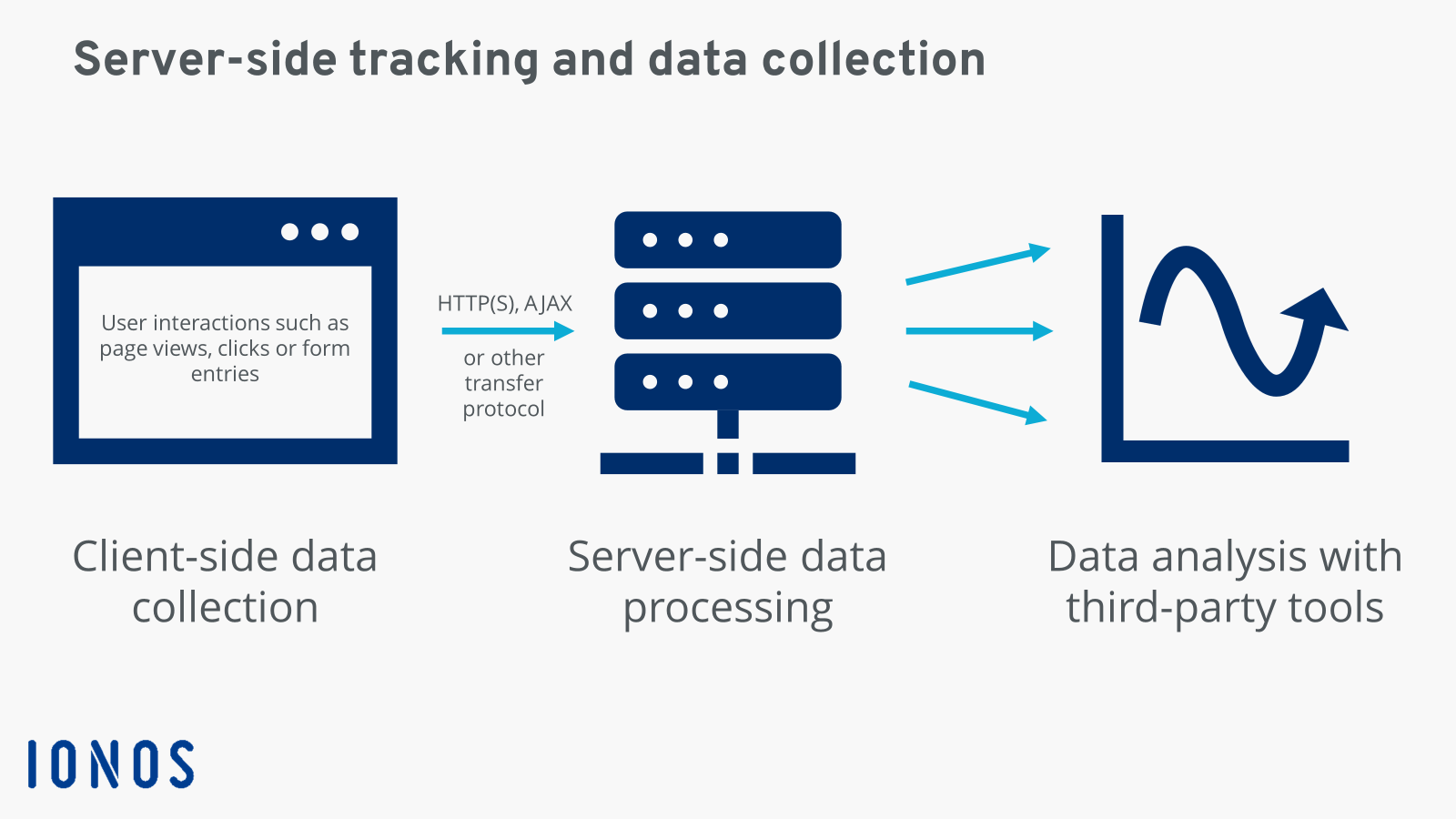
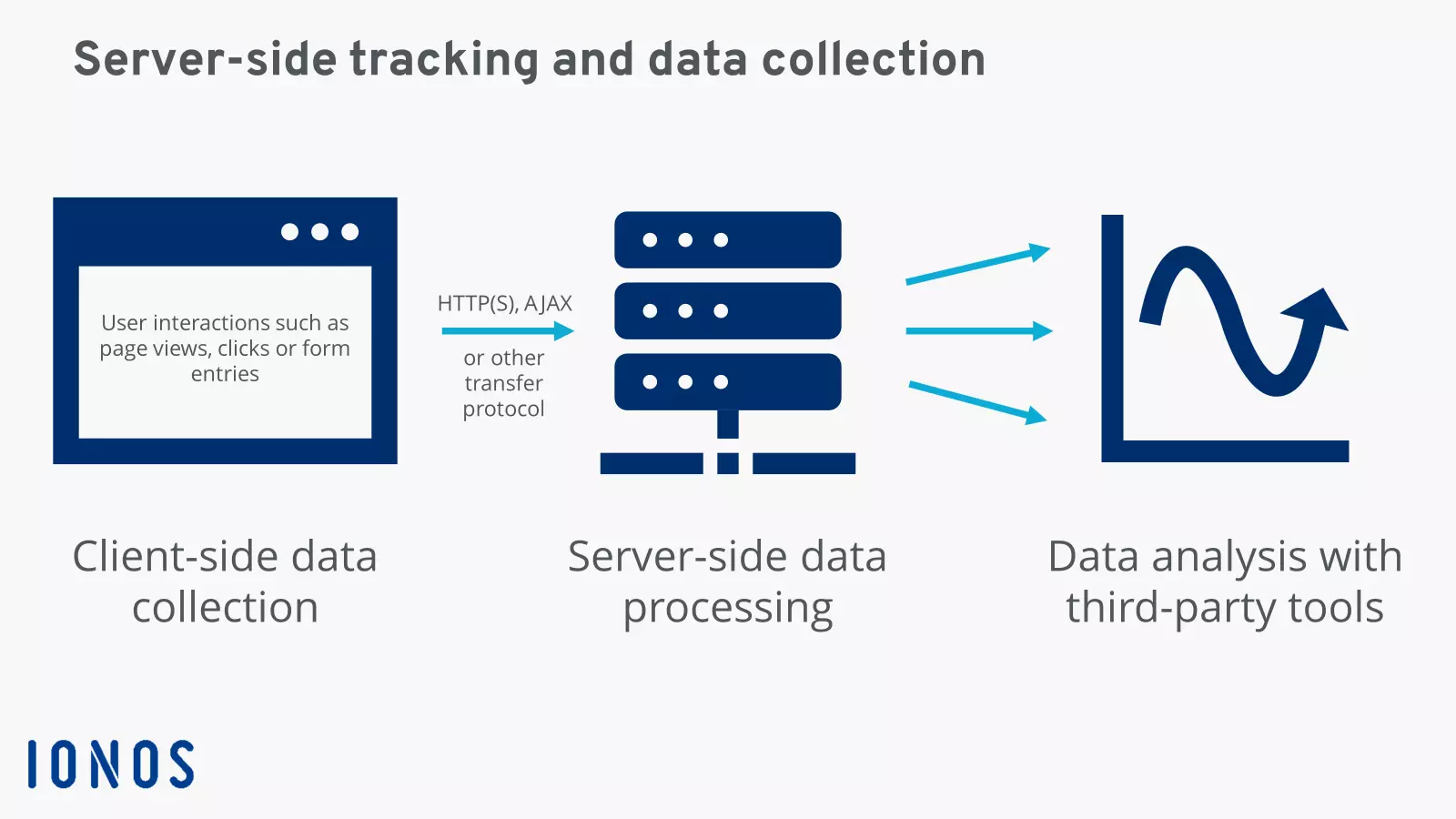
In contrast to conventional client-side tracking, where data processing takes place in the user’s browser, server-side tracking involves processing user data on the website operator’s server. This is done by installing a JavaScript code on the website that collects data, which is then sent to the server that is hosting the website. There, the data is processed in compliance with data protection regulations before it is finally forwarded to third-party providers such as Google Analytics. The process of server-side tracking together with client-side JavaScript is as follows:
- Client-side data collection: When a user visits a website, the JavaScript tracking script is loaded and executed in the browser. This script records the user’s interactions on the website, such as clicks, page views and form entries.
- Data transfer to the server: Data gathered by JavaScript is transmitted to the website owner’s server, either instantly or periodically. Typically, this transmission occurs through HTTP requests, AJAX requests or other data transmission methods.
- Server-side processing: Incoming data is analysed and processed on the server. This typically involves extracting relevant information from the data received, such as the user’s IP address, the time an action was taken and other user-defined data.
- Aggregation and storage: The processed data is stored in a database or analytics platform and used for subsequent analyses and reports.
- Sharing with analysis tools: After processing, data can be forwarded to analytics tools, databases or other endpoints for further analysis or use in other systems.
Reviewer

Christian Heldmaier
Christian Heldmaier is an experienced online marketing and SEO specialist from Karlsruhe. He has been working as an SEO Manager at IONOS since July 2020.